English
 Français
 Türkçe
 Español
 Русский


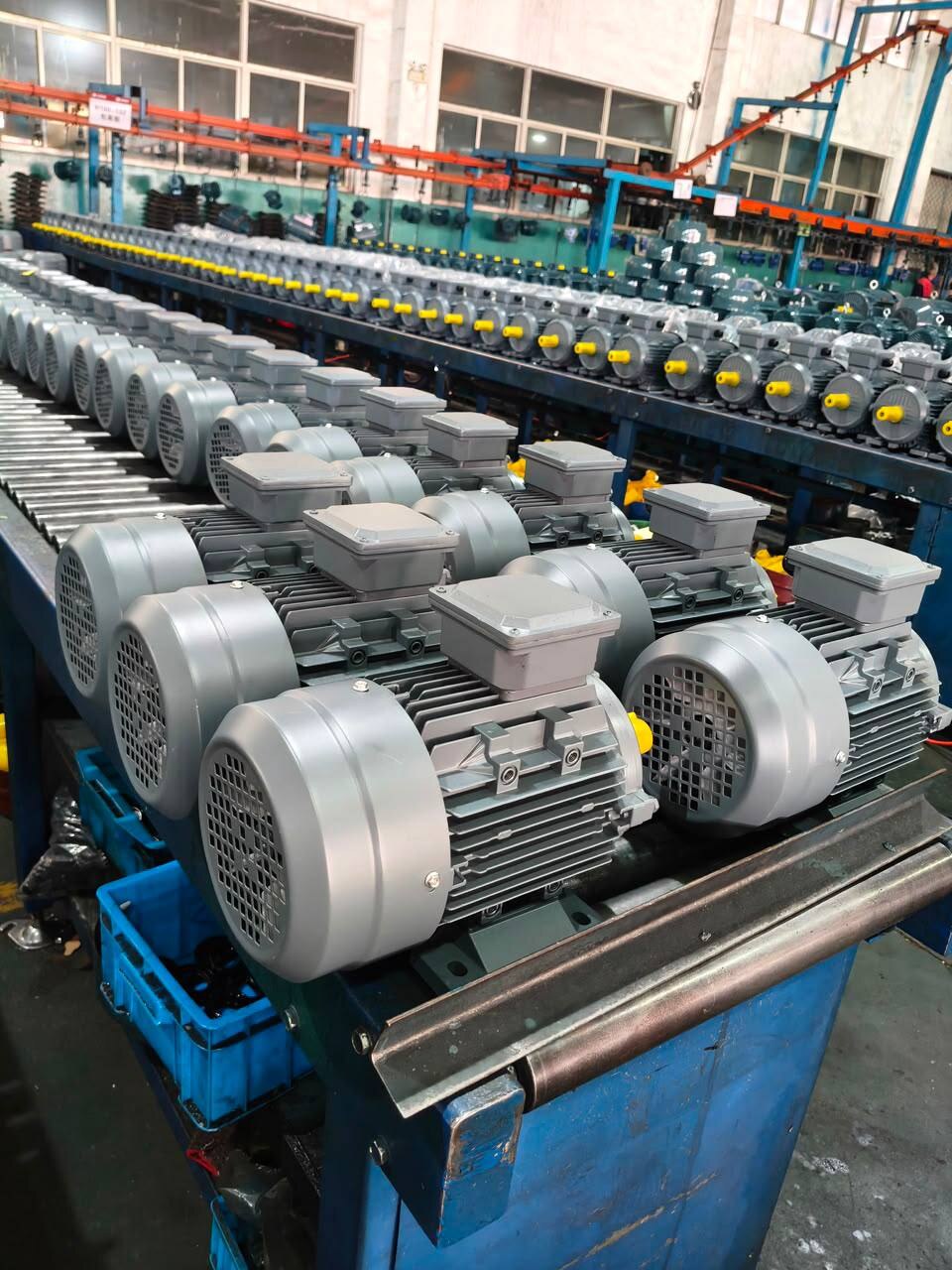

On a dough kneading machine, the spiral or fork arm folds the dough with a slow but powerful movement; on most models the bowl also turns about its own axis. This need for low speed and high torque means the motor almost always works through a gearbox or a belt-and-pulley stage. When replacing the motor, you therefore have to look not only at the motor itself, but also at how it connects to the gearbox, at the resistance of the dough at start-up and at the humidity of the bakery environment. In this article we explain, step by step, how to match a three-phase motor and gearbox on a dough kneading machine.
Power flow in a kneading machine
Kneading machines used in commercial bakeries and pastry shops have two drive groups: the main drive that turns the kneading arm and the second drive that turns the bowl. On some machines both are fed from the same motor through belt and gear stages; on others each group has its own motor.
- Motor: Usually a 4-pole three-phase motor in the 1,500 rpm class; its nameplate speed under load is around 1,450 rpm.
- Gearbox or belt stage: Reduces the motor speed to the low speed the arm needs and increases torque by the same ratio.
- Kneading arm and bowl: They carry the resistance of the dough; this resistance varies with dough stiffness, water content and how full the bowl is.
In a replacement, the motor's place in this chain must be kept: the same speed, the same connection and the torque the gearbox expects.
Three checks when connecting a motor to a gearbox
On geared kneading machines, the motor usually sits directly on the gearbox input flange. For this connection to work without problems, the following three dimensions must be the same as on the old motor:
- Flange: The spigot diameter, pitch circle and number of holes at the gearbox input must match the motor flange. A B5 flange has large through holes, a B14 flange small tapped holes; having the same name does not mean having the same dimensions.
- Shaft: The diameter, length and keyway of the motor shaft must fit the gearbox input bore.
- Frame size: If the old motor's IEC frame size (such as 100L, 112M) is the same as the new motor's, the flange and shaft dimensions are also expected to be the same; this must still be confirmed with the technical drawing.
If this connection follows standard IEC dimensions, a standard three-phase motor can be used directly. If the machine builder made the motor integrated with the gearbox, on a non-standard shaft or flange, a special motor is needed; in that case the right way is to ask with the nameplate and photos of the shaft and flange. More information on gearbox input flange compatibility is on the motors for gearboxes page.
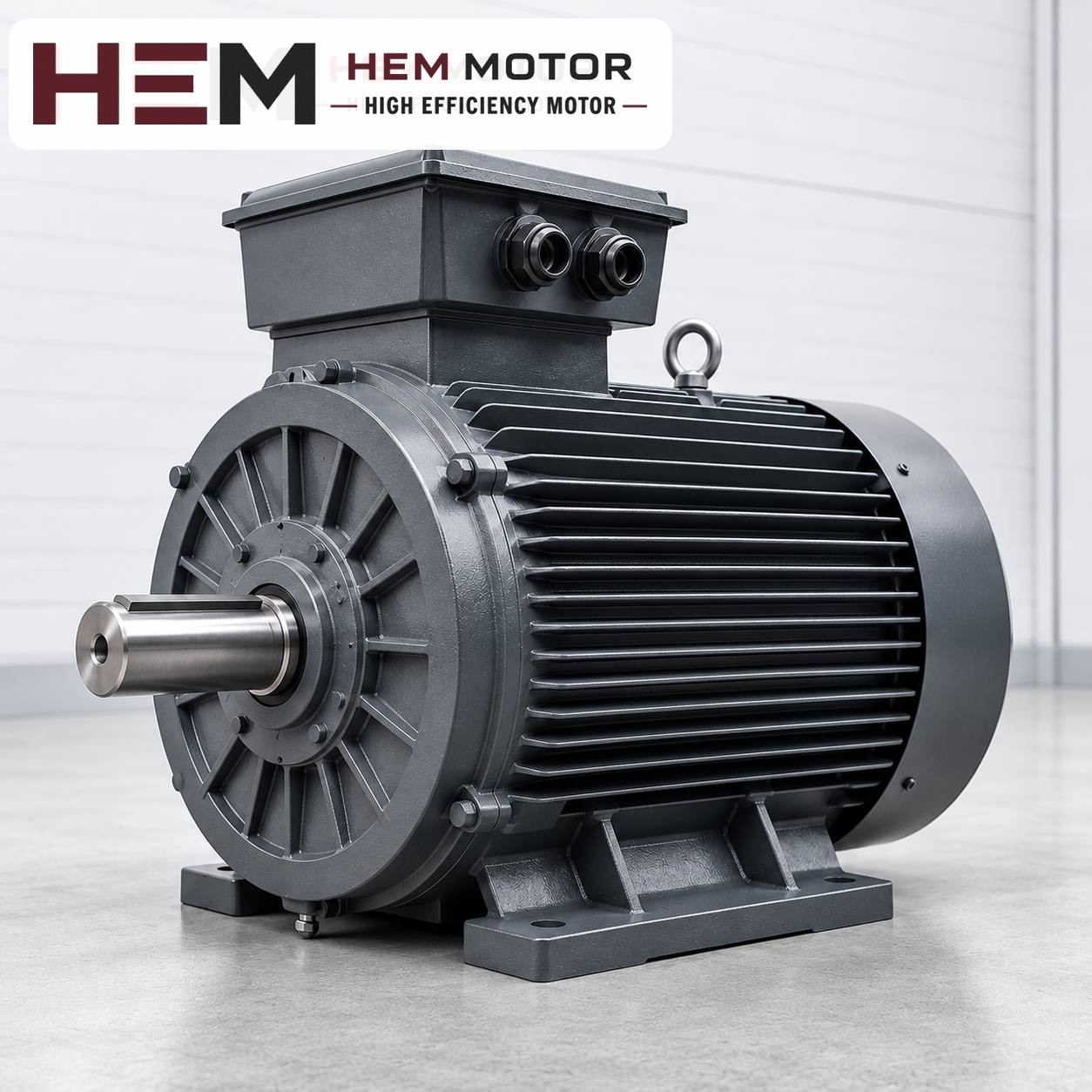
HEM Motor models do not list the mounting arrangement per model. Foot, flange, combined and vertical options are provided according to frame size, and the flange size is verified during the order. You can compare dimensions in the 2D technical drawings and the 2026 technical catalogue.
Starting load and two speeds
A kneading machine is often started with a full bowl. Cold, stiff dough puts high resistance on the motor in the first seconds. That is why starting behaviour matters:
- Direct-on-line starting: Starting torque is high; common at small powers. Motors with a 230/400 V (Δ/Y) nameplate are connected in star on a 400 V supply.
- Star-delta starting: It lowers the starting current but also reduces the starting torque. It can strain the motor when starting with a full bowl. Motors with a 400/690 V (Δ/Y) nameplate are suitable for this method.
- Starting with a drive: Provides soft starting and speed adjustment. Our three-phase series are suitable for speed adjustment with a frequency inverter; if the motor will run at low speed with full torque for long periods, an external fan may be needed, and if the drive cable is long, a dv/dt or sine filter is considered. State these conditions in the order; details in the inverter question.
Many kneading machines have two speeds: slow mixing and fast kneading. If these two speeds are provided by a drive or by a two-stage gearbox, a standard motor is suitable. If the speeds are obtained with two separate windings inside the motor, that is, if the motor nameplate shows two powers and two speeds, it is a two-speed motor and is not treated as the same as a standard motor. For such a motor, a special motor should be enquired about with a nameplate photo.