English
 Türkçe

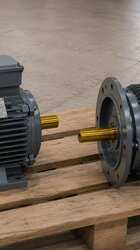
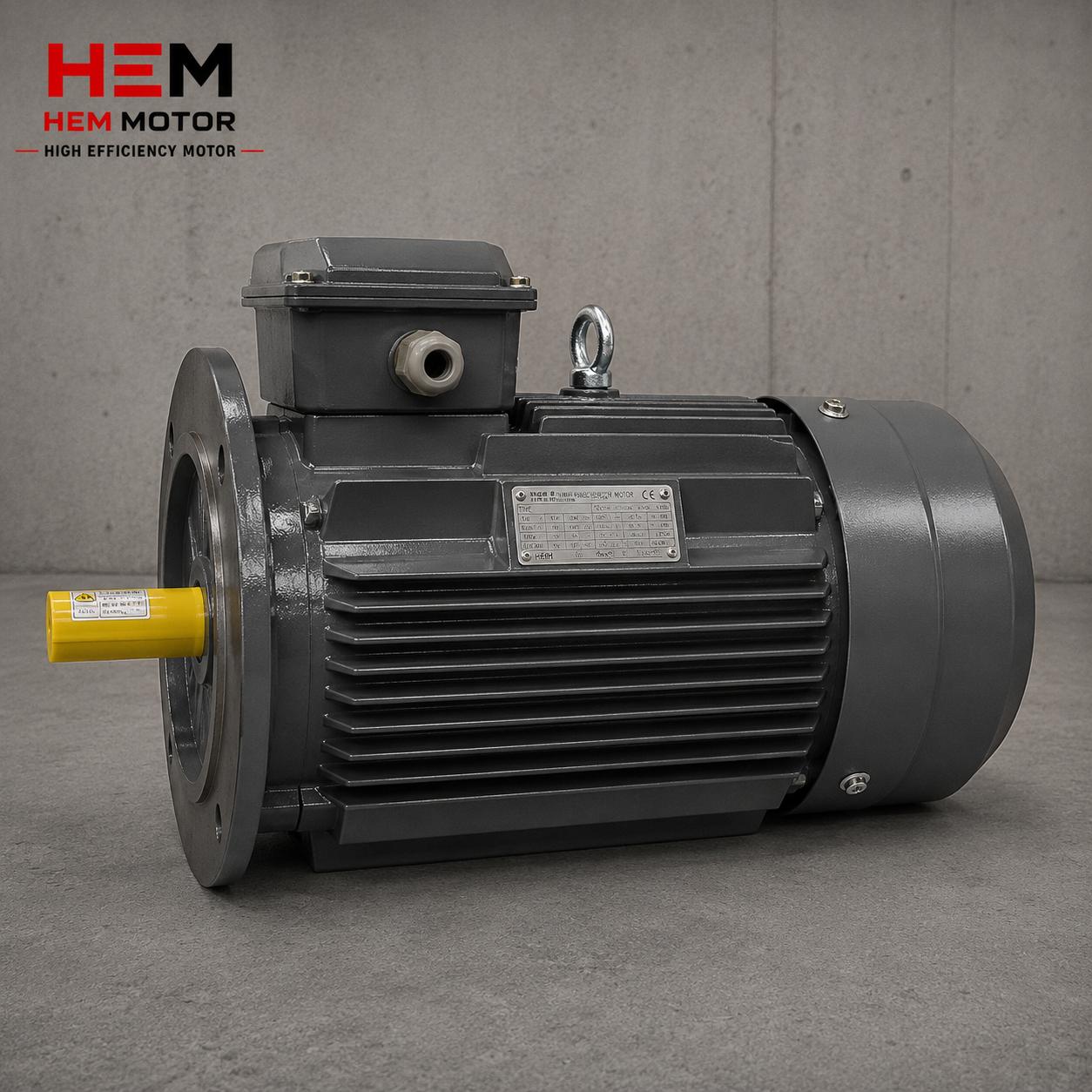

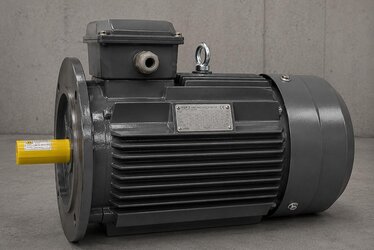
Selecting the right electric motor is far more than reading a kW value from a nameplate. A wrongly chosen motor either overheats and burns because it is undersized, wastes energy and money because it is oversized, or cannot be mounted at all due to a mounting-connection mismatch. This comprehensive roadmap offers a step-by-step flow from need identification to the right order. Each step uses the output of the previous one as its input, so that you end up with a complete technical specification and can order the correct motor in one go, without errors. Without quoting any fixed price, we focus only on the technical decisions that determine the selection.
Step 1: Application and Load Analysis
Every selection begins with what the motor will drive: a pump, a fan, a conveyor, a crusher, a gearbox? The load type defines the motor's starting torque, speed-torque characteristic and duty profile. For example, centrifugal pumps and fans need low starting torque; conveyors, crushers and mixers require high starting torque and overload capacity. If the load inertia (J) is high, the starting time lengthens and the motor heats up. So clarify the application first. When determining the load type, answer three questions: is the load steady or pulsating; does it start under full load or unloaded; and how many times per day does it start. These three answers directly affect the power margin, the torque class and the duty type. A wrong application analysis breaks all the following steps, because each step uses this input. To find the right product by application, see our pump, fan and blower motors, crusher and stone crushing motors and industrial general-purpose motors categories. To understand the speed-torque curve, our speed-torque (M-n) curve and breakdown torque article gives the foundation.
Step 2: Power (kW) and Speed / Pole Count
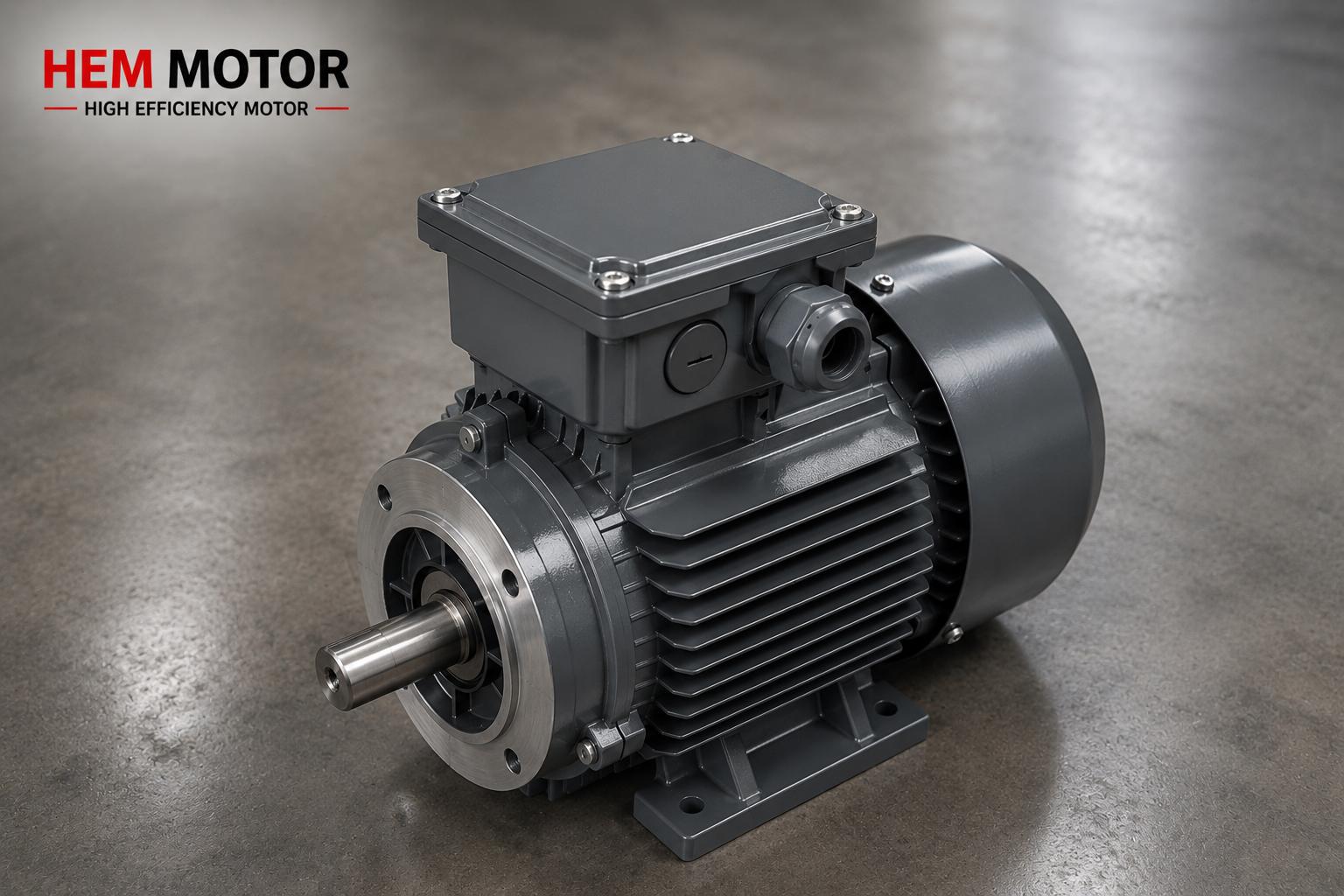
Once the application is known, the required power and speed are set. Power should be selected to the real load demand; an oversized motor runs inefficiently at part load. Speed relates directly to pole count: 2 poles about 3000 rpm, 4 poles 1500 rpm, 6 poles 1000 rpm, 8 poles 750 rpm (slightly lower in practice due to slip). Pumps and fans are usually 2 or 4 pole; conveyors, mixers and gearbox inputs prefer 4 or 6 pole. A common mistake here is choosing the power larger than needed just to be safe. An oversized motor is both more expensive and runs at a low power factor at part load, raising the reactive penalty risk. The right approach is to calculate the load realistically and leave a reasonable power margin (for example 10-15%). On the speed side, the actual running speed is slightly below the synchronous speed due to slip; a 4-pole motor runs at about 1440-1470 rpm under load. This difference must be taken into account when calculating pump flow and fan air flow. We covered pole selection in which of 2, 4, 6 poles, correct power scaling in motor load ratio and correct sizing, and HP-kW conversion in HP or kW.
Step 3: Efficiency Class (IE2 / IE3 / IE4)
After power and speed are set, the efficiency class is chosen. This is both a legal requirement and an operating-cost decision. In Turkey and the EU, 0.75-1000 kW DOL three-phase motors must be at least IE3, and 75-200 kW at certain poles must be IE4. In continuous, high-runtime applications, a higher efficiency class pays for itself quickly. We covered the regulation in IE3 and IE4 efficiency mandate and the investment decision in IE3 vs IE4 investment. You can choose the right class from our high-efficiency motors category.
Step 4: Mounting Type (IM / B3-B5-B35)
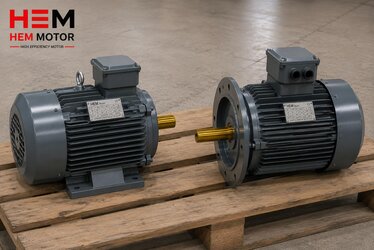
How the motor connects to the machine defines the mounting type. A B3 foot-mounted motor bolts to the ground or a base; a B5 large-flange motor connects directly to a gearbox, pump or machine body; a B14 small-flange motor suits lighter applications. B35 includes both feet and flange. A wrong mounting type means the motor simply cannot be fitted. We explained the B5 versus B14 difference in B5 vs B14 mounting type selection and reading the mounting code in IM mounting code reading. For vertical applications, see vertical mounting V1/V5 shaft down.
Step 5: Protection Class (IP)
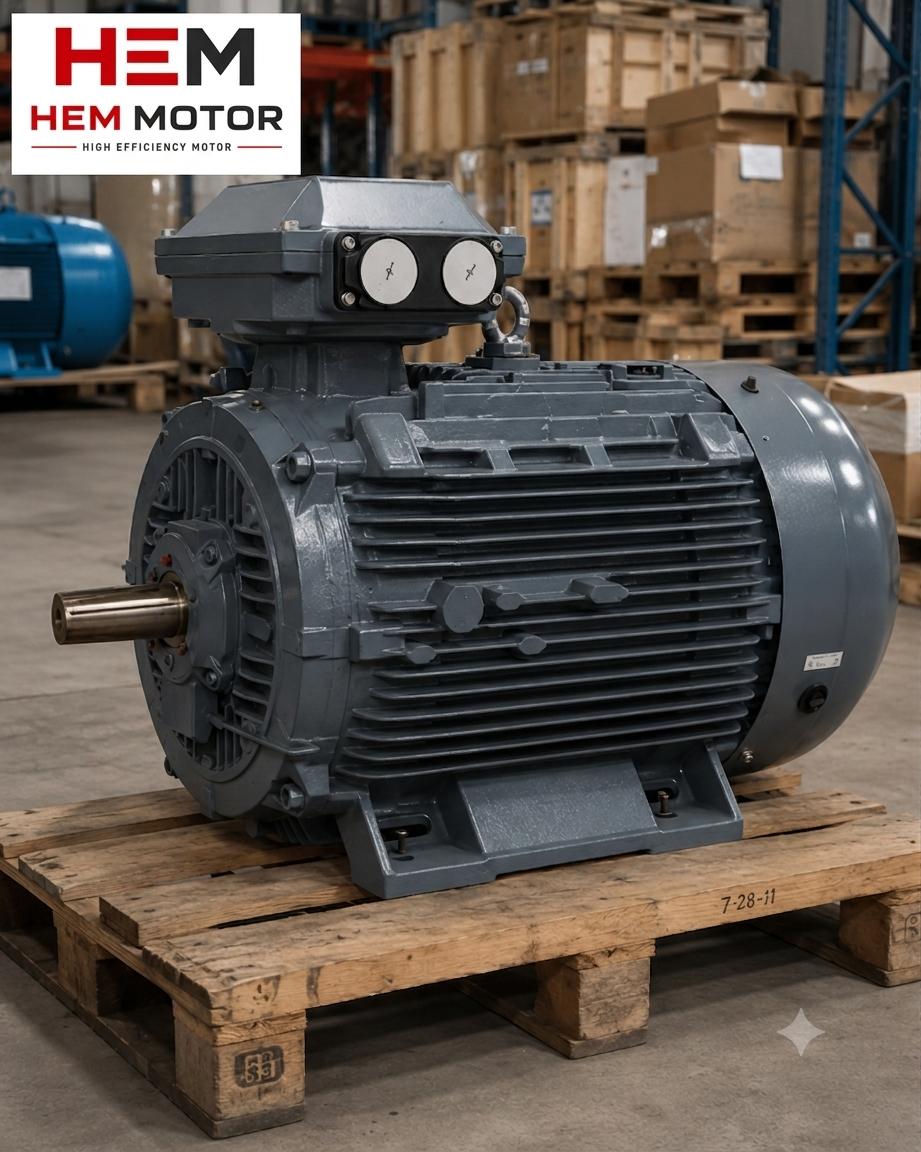
The IP protection class shows the motor's resistance to dust and water. Standard industrial motors are IP55; dusty, outdoor and humid environments make this sufficient. Food and beverage plants with high-pressure washdown may need IP65/IP66 or even IP69K. A wrong IP choice leads to early failure from moisture and dust. Our IP protection class selection and IP69K washdown protection articles help you set the right class.
Step 6: Duty Type (S1-S6)
The motor's working rhythm defines the duty type. S1 continuous duty is the most common; pumps, fans and conveyors fall here. S3-S6 define intermittent or periodic loads; for frequent start-stop and jogging applications the motor's thermal limit is different. A wrong duty type causes overheating in frequent starts. Our duty type (S1-S6) selection and starts-per-hour limit articles clarify this decision.
Step 7: Ambient Conditions (Temperature / Altitude / Dust)
Standard motors are designed for 40°C ambient and 1000 m altitude. At higher temperature or altitude the motor power drops (derating) and a larger frame may be needed. Dusty, corrosive or salty environments require extra protection. Skipping this step means unexpected heating and failure in the field. Our high altitude and hot environment derating and temperature rise class articles ease this calculation.
Step 8: Frame Material
If the environment is harsh, the frame material comes to the fore. An aluminum frame is light and economical; a cast-iron frame is more durable for heavy duty, vibration and impact. Outdoor, crushing-screening, cement and mining applications prefer cast iron. Our cast iron vs aluminum frame article helps you choose the right material; you can also review our cast-iron body motor category.
Step 9: Accessories and Additional Equipment
To complete the selection, evaluate extra equipment: PTC/PT100 thermal protection, an external forced-cooling fan (especially with a VFD at low speed), higher IP protection, special paint/cataphoresis, brake, encoder. These improve both safety and life. Our PT100 and PTC temperature monitoring and external forced-cooling fan articles explain these. If it will run on a VFD, see VFD with asynchronous motor.
Step 10: Supply, Lead Time and Order
Once all technical decisions are set, you move to supply: from stock or a production order? Lead time, shipping and commissioning planning affect the project. For a correct, fast quote you must convey all parameters completely. Our 8 details to provide when requesting a quote and from-stock delivery vs production order articles ease this step. Matching the nameplate exactly before ordering helps you avoid the wrong motor being delivered, and on delivery you can perform an acceptance inspection.
Additional Decision: Starting Method
Motor selection is completed by deciding how it will be started. At small powers, direct-on-line (DOL) starting is enough; but at large powers the high starting current stresses the grid and causes voltage drop. In that case star-delta, a soft starter (softstarter) or a frequency drive (VFD) is needed. The starting method affects not only the panel but also the motor selection: in applications with frequent start-stop and speed control, a VFD-compatible motor must be chosen. We covered the star-delta versus soft starter comparison in our star-delta or softstarter article and how to reduce starting current in our starting current (LRA) reduction content. Since starting current is critical on generator-fed sites, see our how many kVA generator for how many kW motor article.
Additional Decision: Is a Gear Reducer Needed?
If your application needs low speed and high torque, you should consider the motor not alone but together with a gear reducer. Conveyors, mixers, cranes and many agriculture/mill applications require a geared motor. Here the question arises whether to buy the motor and reducer separately or to prefer a monoblock geared motor. Correct output speed is achieved with worm and bevel-helical reducers; IEC connection compatibility (B5/B14 flange, frame size) is critical. Our geared motor vs separate motor + reducer and worm reducer motor matching articles clarify this decision. For monoblock selection, see our monoblock geared motor purchasing content.
Additional Decision: Explosive or Special Environment (Exproof)
Some applications are not safe with a standard motor. In environments with flammable gas, dust or vapor (paint, chemicals, flour mills, fuel), an exproof (ATEX) motor is mandatory. Putting a standard motor in such an environment creates a serious safety risk. In the selection flow, be sure to evaluate this risk at the environment-analysis step. We covered when an exproof motor is required in our when is an exproof (ATEX) motor required article, and the standard versus exproof comparison in our exproof or standard asynchronous motor content.
Ordering with the Right Data: Nameplate and Matching
If you are replacing an existing motor, the fastest and most error-free path is to match the nameplate data exactly. When the kW, speed, voltage, frequency, frame size, mounting type, IP and efficiency class on the nameplate are read correctly, the risk of a wrong order disappears. We explained reading the nameplate in our reading the IE3 motor nameplate article, and replacing an existing brand with an equivalent in our direct replacement of an old brand motor content. The decision of whether to buy a new motor or rewind the existing one is clarified by our rewind or buy new article.
Frequently Asked Questions
Is oversizing a motor harmful?
Yes. An oversized motor runs at low efficiency and low power factor at part load; it increases energy use and raises the reactive penalty risk. The correct approach is to calculate the load realistically and leave a reasonable power margin. Our load-ratio and sizing article explains this balance.
Should I select by speed or by pole count?
They are two sides of the same decision. Determine the running speed you need; that speed gives the pole count. If you want 1500 rpm choose a 4-pole motor, if 3000 rpm a 2-pole motor. Due to slip the actual speed is slightly lower; for example a 4-pole motor runs at about 1440-1470 rpm.
Can I change the mounting type later?
Converting B3 to B5 or vice versa is not always practical and requires flange/foot compatibility. The best practice is to select the mounting type correctly from the start, according to your machine's connection surface. Our B5/B14 and IM code articles help you settle this before ordering.
Get a Quote
We evaluate your application, power, speed, mounting and protection requirements together and define the right motor in one go. Reach us via our contact page or at +90 (532) 345 49 86; we support you from need identification to order. Visit our home page for our full product range.
Selection Checklist
- Have the application and load type (starting torque, inertia) been determined?
- Are the required power (kW) and speed/pole count clarified?
- Has the efficiency class (IE3/IE4) been chosen legally and economically?
- Is the mounting type (B3/B5/B14/B35, IM code) suitable for the machine?
- Is the IP protection class correct for the environment?
- Does the duty type (S1-S6) match the working rhythm?
- Have derating and protection been evaluated for the environment (temperature/altitude/dust)?
- Have the frame material, accessories and supply/lead time been planned?