English
 Türkçe

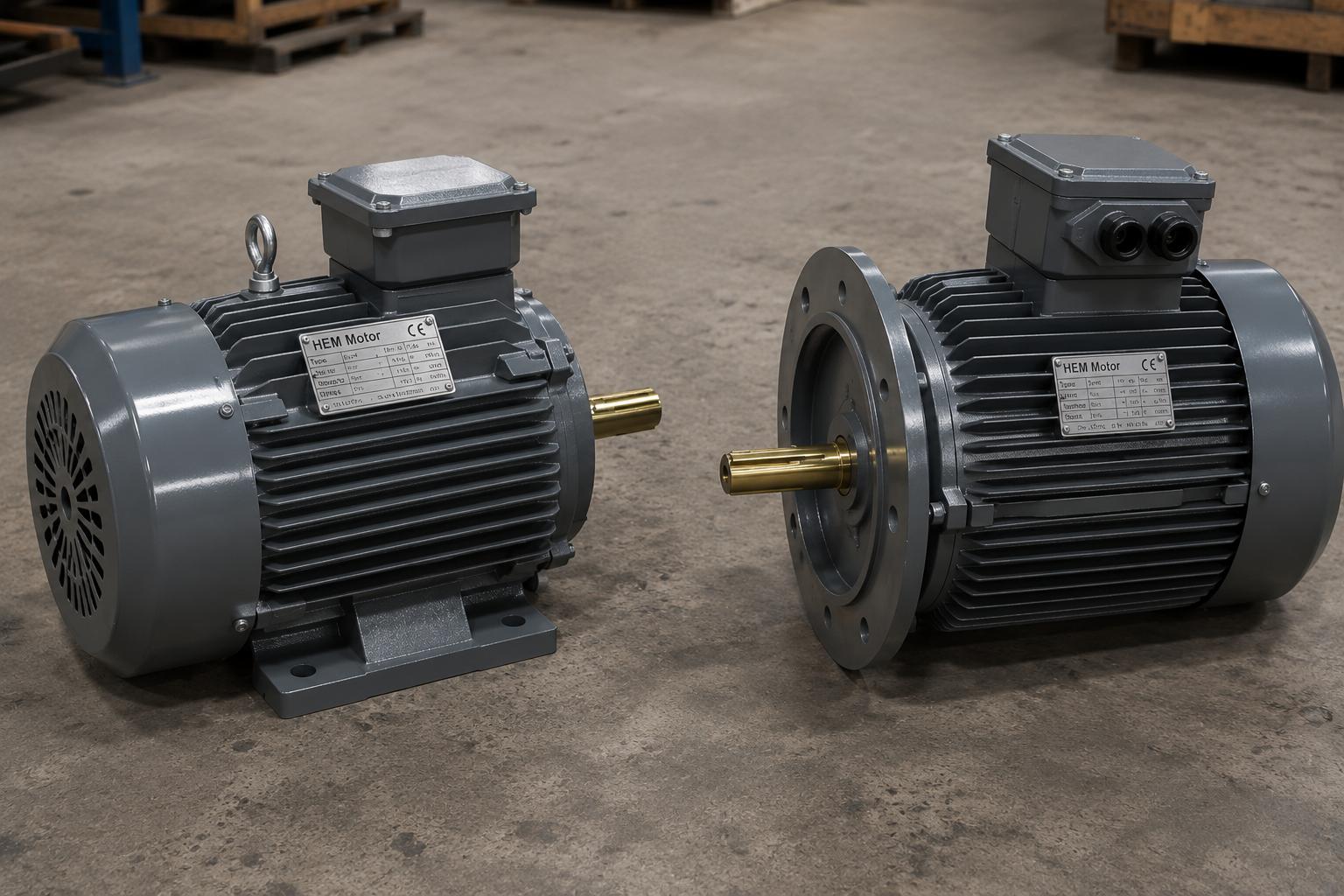

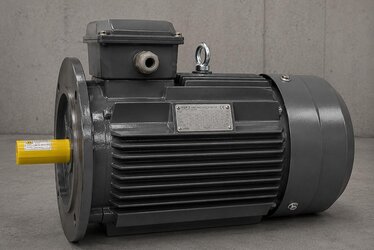
When an electric motor that has run flawlessly in a plant for years finally burns out, the purchasing engineer almost always faces the same question: "This motor's brand is no longer available in the country, or the lead time is far too long; can I replace it like for like with a motor from another brand?" The answer to this question lies in perhaps the most powerful convenience of the modern electric motor industry: standardisation. Because low-voltage asynchronous motors are built worldwide to the same dimensional standard, two motors with an identical frame number will sit on the same base, carry the same coupling and bolt to the same flange even if their brands differ.
This gives industrial plants an invaluable freedom: it frees the motor from being a hostage to its brand. In a failure that halts production, you are not forced to wait months for the original brand's lead time; you can procure an equivalent of the same frame, power and speed from stock and restart the line within hours. But using this freedom safely requires knowing which dimensions must match and which details must never be overlooked.
In this article we walk through, step by step, how to safely replace an old-brand motor in the field with the equivalent of another manufacturer. We explain the standard-based logic of brand transition, the four critical criteria that define equivalence, and the brand-specific exceptions you must watch for, all from a technical perspective. Our goal is to help you build a decision mechanism so you can look at the nameplate of your burnt-out motor and select the right equivalent.
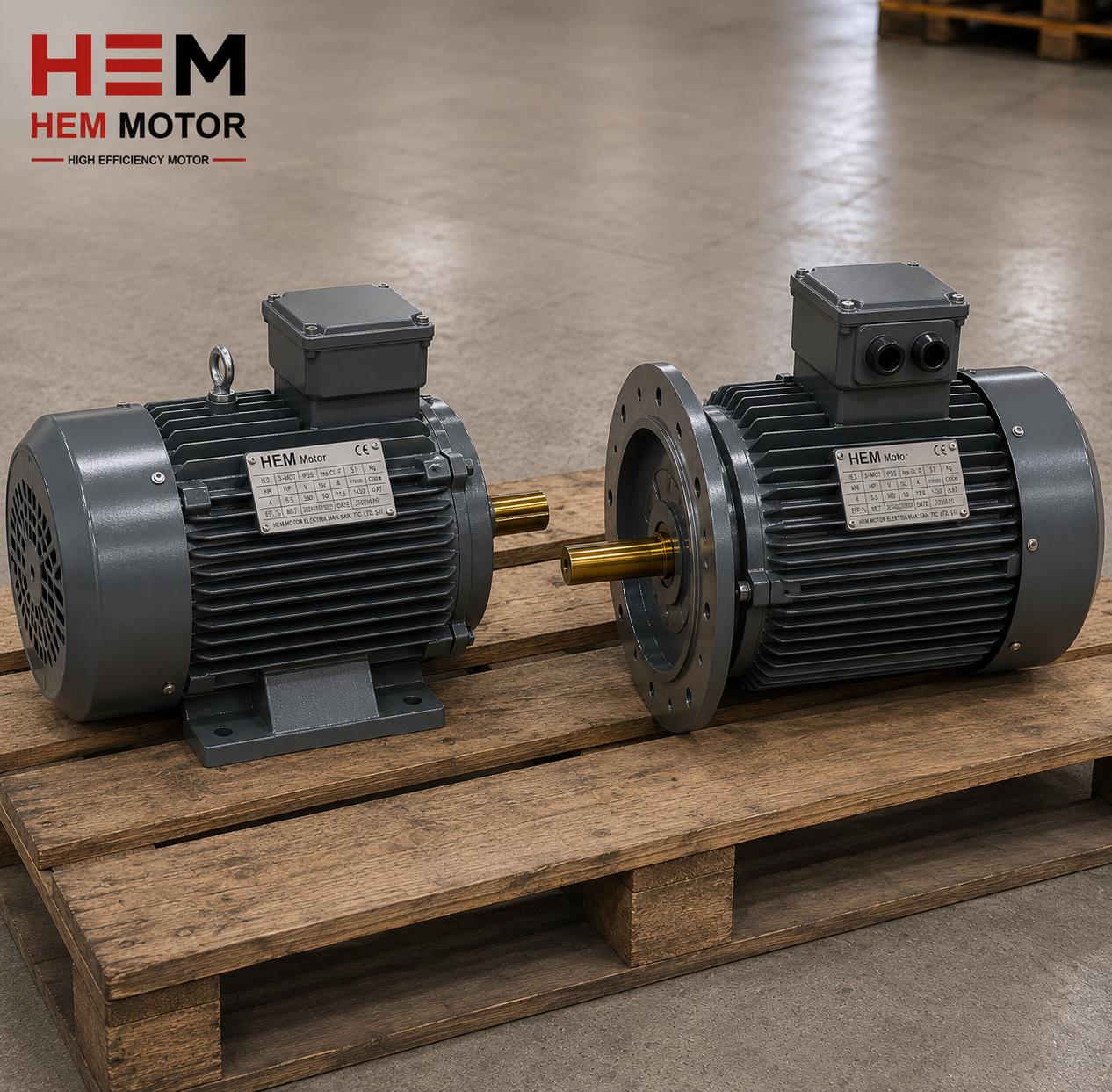
Why Are Different Brands Interchangeable? The Power of the IEC Standard
The greatest stroke of luck in the electric motor world is a decision made decades ago: the mechanical dimensions of low-voltage three-phase asynchronous motors are fixed by an international standard. The European-rooted IEC 60072 standard defines every dimension, from the height of the motor body to the position of the foot holes, from the shaft diameter to the shaft length. As a result, when one manufacturer in Germany, another in Italy and a third in Türkiye produce a motor bearing the same frame number, those motors become mechanically interchangeable.
At the heart of this standardisation lies the frame size. If the nameplate reads "132M", for example, the number 132 gives the height of the shaft centre above the base in millimetres. In other words, the shaft of a 132-frame motor, regardless of brand, sits exactly 132 mm above the foot plane. The letter M denotes the body length (medium). This simple code is the foundation of like-for-like replacement in the field: two motors with the same frame number bolt to the same foundation holes and their shafts remain on the same line, even if the brand logos differ.
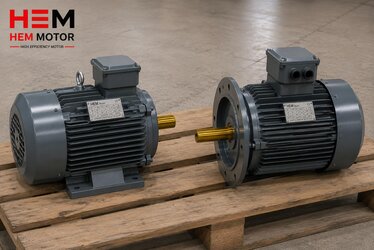
The standard fixes not only the shaft height but also the centre-to-centre distance of the foot holes. These are called the base dimensions and are usually expressed with codes beginning with "B". Therefore, when you remove the old motor and install the new one, you do not need to drill new holes or replace the base. The standard also fixes the flange dimensions; in a B5 mounting, for instance, the flange diameter, bolt-circle diameter and number of holes are set by the frame. For this reason, flanged motors of the same frame are also interchangeable regardless of brand.
Another dimension of this standardisation is the shaft itself. The IEC defines the shaft diameter, shaft length and keyway dimensions for each frame. So a coupling, pulley or chain sprocket fits the same shaft even when the brand changes. Within the scope of our professional electric motor supply and consultancy services, the request we encounter most often is precisely this: correctly identifying the like-for-like replacement equivalent. When a customer sends the nameplate of a burnt-out motor, the standard lets us identify the suitable equivalent within minutes.
The Four Criteria of Equivalence: What Must Be Checked on the Nameplate
For a motor to be genuinely interchangeable with another brand's motor like for like, four fundamental criteria must match. These criteria are read from the old motor's nameplate (rating plate) and compared with the new motor's technical datasheet. Overlooking any one of them results in a motor that does not fit or does not run correctly in the field. The nameplate is the motor's identity card; so recording it with a clear photograph at the start of the replacement process is a good habit.
1. Frame Size and Mounting Type
The first and most important criterion is the frame size. Standard values such as 80, 90, 100, 112, 132, 160, 180, 200, 225 and 250 exist. In addition, the mounting type must match exactly. The two most common types are foot-mounted (B3) and flange-mounted (B5); their combination, B35, is both footed and flanged. If your old motor is a B5 flange type, your new motor must also be B5 with the same flange size (for example FF265). Selecting the wrong flange means the motor cannot be attached to the equipment at all. The motor's operating position must also be considered; horizontal (B3) and vertical (V1, V3) positions differ in terms of bearings and lubrication.
2. Power and Speed
The second criterion is the motor's rated power (kW) and its pole-dependent speed. A 2-pole motor runs at roughly 2900 rpm, a 4-pole at 1450 rpm, a 6-pole at 960 rpm and an 8-pole at around 720 rpm. Although it is possible to obtain the same power from a 4-pole and a 2-pole motor, the speed changes entirely, so the machine you drive runs at the wrong speed. For this reason power and speed are evaluated together. In speed-sensitive applications such as pumps, fans or conveyors, preserving the pole count is mandatory; on a centrifugal pump, for example, a change in speed directly affects flow and pressure.
3. Voltage, Frequency and Connection
The third criterion is electrical compatibility. The mains voltage (for example 400 V), the frequency (50 Hz) and the winding connection scheme (star-delta) must match. Some old motors were wound for 380 V while the new standard is 400 V; this difference usually stays within tolerance but requires attention on very old motors. Also, if the motor runs with a soft starter or frequency converter, the new motor must be compatible with that drive; the need for insulated bearings under converter operation in particular must not be overlooked.
4. Shaft Diameter and Length
The fourth criterion is the shaft dimension on which the coupling or pulley sits. The IEC standard fixes the shaft diameter for each frame; for a 132 frame, for instance, the shaft diameter is typically 38 mm. However, in special applications the shaft may be extended or the keyway machined differently. Therefore the shaft diameter and length must always be compared as the final step. The threaded centre hole at the shaft end and the key dimension also affect coupling mounting and should be on the checklist.
- Frame size: must be identical (shaft height in millimetres)
- Mounting type: B3 / B5 / B35 must match, flange size identical
- Power and speed: kW and pole count must be preserved
- Voltage and frequency: compatible with the mains and with each other
- Shaft diameter and length: checked for coupling/pulley fit
- Protection class (IP): suitable for the environment, at least as high as the old motor
- Efficiency class (IE): at least as high as the old motor, preferably higher
Brand-Specific Exceptions: Points That Demand Care Despite the Standard
Although the IEC standard guarantees most of the mechanical compatibility, there are brand-specific details that can cause friction in the field. Knowing these in advance is the key to avoiding surprises on installation day.
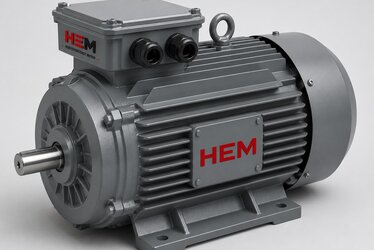
The first exception is the position of the terminal box. The standard usually defines the terminal box on top; however, on some old motors the box may be on the side. If cable entry comes from a particular direction and space is tight, the box orientation can complicate installation. On most modern motors the terminal box can be rotated in 4x90-degree steps, which solves the issue in most cases. The second exception is the efficiency class. Modern motors are produced in IE3 or IE4 efficiency classes; an old IE1 motor may come at the same power but with a slightly longer body, because higher efficiency requires more copper and laminations. In that case, even though the frame number is the same, the overall length of the motor may grow by a few centimetres and the coupling distance may change.
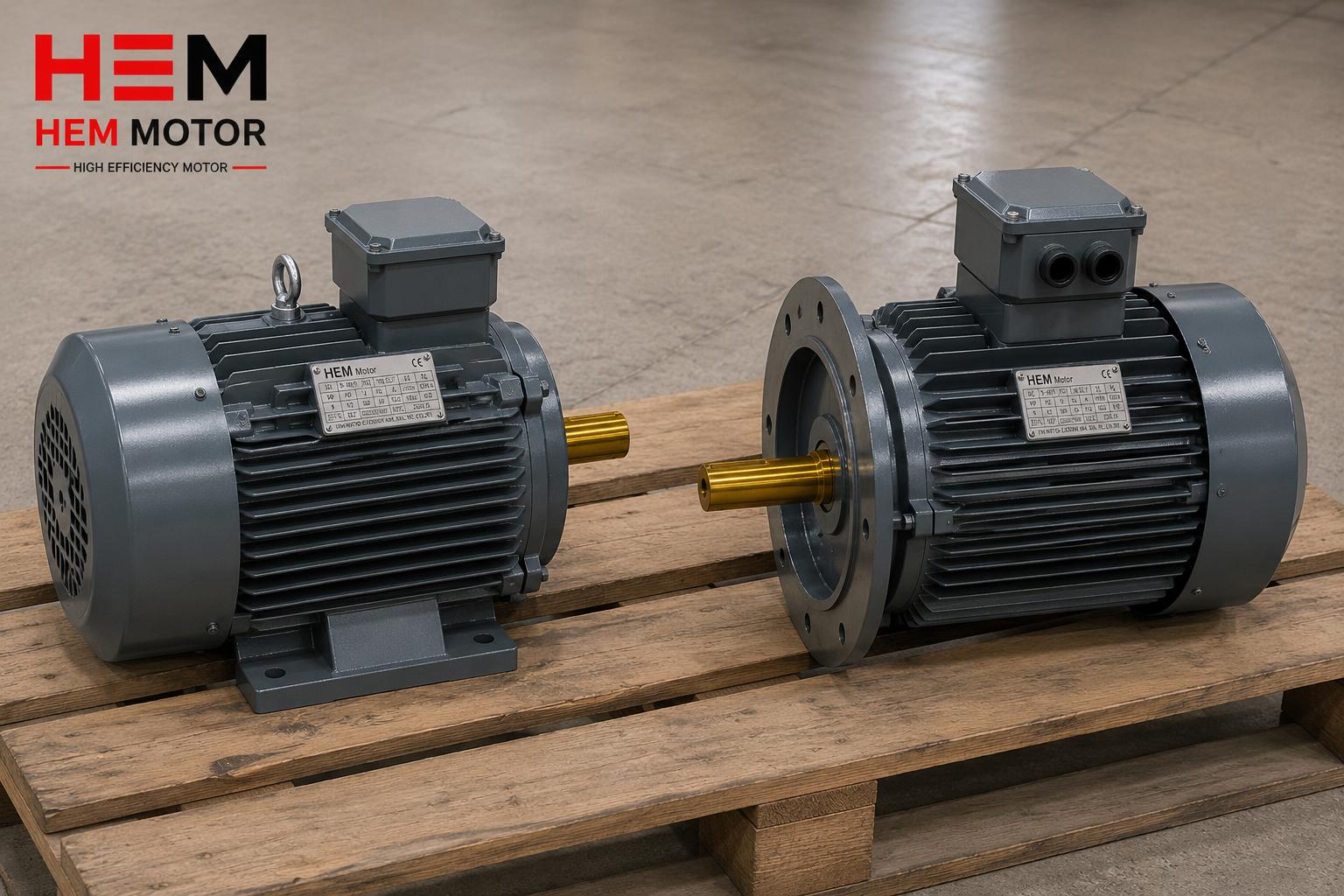
The third exception is a special shaft or special flange. Some OEM machines order the motor with a special shaft end or a custom-drilled flange. In this case a standard equivalent does not fit directly and the shaft may need machining. The fourth exception is weight and thermal behaviour; although high-efficiency new motors run cooler, some old motors operate with lower speed slip and may show a slightly different torque curve under load. This must be considered in applications demanding high starting torque, such as cranes or presses. When we supply an equivalent motor from our broad stock network, detecting these special cases up front and offering a solution at the quotation stage saves our customers from losing time in the field. Once the correct equivalent is identified, our fast quotation and dispatch processes minimise downtime.
Step-by-Step Replacement in the Field
After identifying the equivalent motor, the physical change in the field also requires discipline. Before removing the old motor, photograph and label the cable connection terminals. When removing the coupling, use heat or a puller and do not damage the shaft. After installing the new motor, always check the coupling alignment (concentricity); even if the standard frame is identical, small misalignments introduced during installation shorten bearing life. Using a dial indicator or laser alignment tool prevents long-term failures in the field.
On first run, check the direction of rotation. On three-phase motors the rotation can be reversed by swapping two phases; on pumps and fans the wrong direction causes serious damage. Finally, measure the current and compare it with the nameplate value; at no-load the current should be around one third of the rated value. Under load the current should not exceed the rated value; if it does, it indicates the motor was wrongly selected or a mechanical overload exists.
The Stock Advantage: Finding the Equivalent Without Waiting
The greatest practical benefit of like-for-like replacement is the freedom of brand-independent supply. Instead of waiting months for the original brand of the burnt-out motor, you can procure a ready, in-stock equivalent of the same frame, power and speed and restart production within hours. On the supply side, what is critical for us is keeping motors in shelf stock across a wide frame range, from 0.75 kW to hundreds of kW. So in an urgent failure, the moment the customer sends the nameplate information, they learn whether the equivalent motor is in stock and a same-day dispatch plan is made.
This approach also simplifies a plant's spare-parts strategy. Instead of being tied to a single brand, you can select among standard IEC-frame motors the equivalent with the most favourable delivery time and quote. This both reduces lead-time risk and increases supply flexibility. Brand independence, used correctly, is one of the most powerful tools for lowering a plant's downtime cost.
Frequently Asked Questions
Can I fit a motor with the same frame number but a different brand blindly?
If the frame number and mounting type (B3/B5/B35) are the same, mechanical compatibility is largely guaranteed, because both motors are built to the same IEC dimensional standard. However, rather than fitting blindly, you should also verify the power, speed, voltage and shaft diameter from the nameplate. In particular, if the efficiency class has risen, the overall length of the motor may grow; it is best to confirm by measuring the coupling distance. These simple checks reduce the risk of a non-fitting motor in the field almost to zero.
Can I replace my old 380 V motor with a 400 V motor?
Yes, in most cases you can. Because modern motors are usually produced with a wide voltage tolerance (for example 380-420 V), a motor rated at 400 V will run trouble-free within tolerance on a 380 V mains. Still, on very old or specially wound motors you should pay attention to the connection scheme (star-delta) on the nameplate and, if in doubt, have the winding compatibility confirmed. If a frequency converter is used, the voltage can also be set through the drive, so this difference often disappears entirely.
How do you quickly find the equivalent of a motor whose brand is unavailable?
The only thing you need to send us is a photograph of the old motor's rating plate. With the frame number, power, speed, voltage and mounting type on the plate, we can identify the equivalent motor in our stock within minutes. Because we keep a wide frame range in shelf stock, for most standard powers we can produce a same-day quotation and dispatch plan, minimising your failure-related downtime. If there are special-shaft or special-flange cases, we resolve those too at the quotation stage.