English
 Türkçe

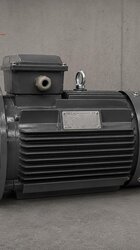
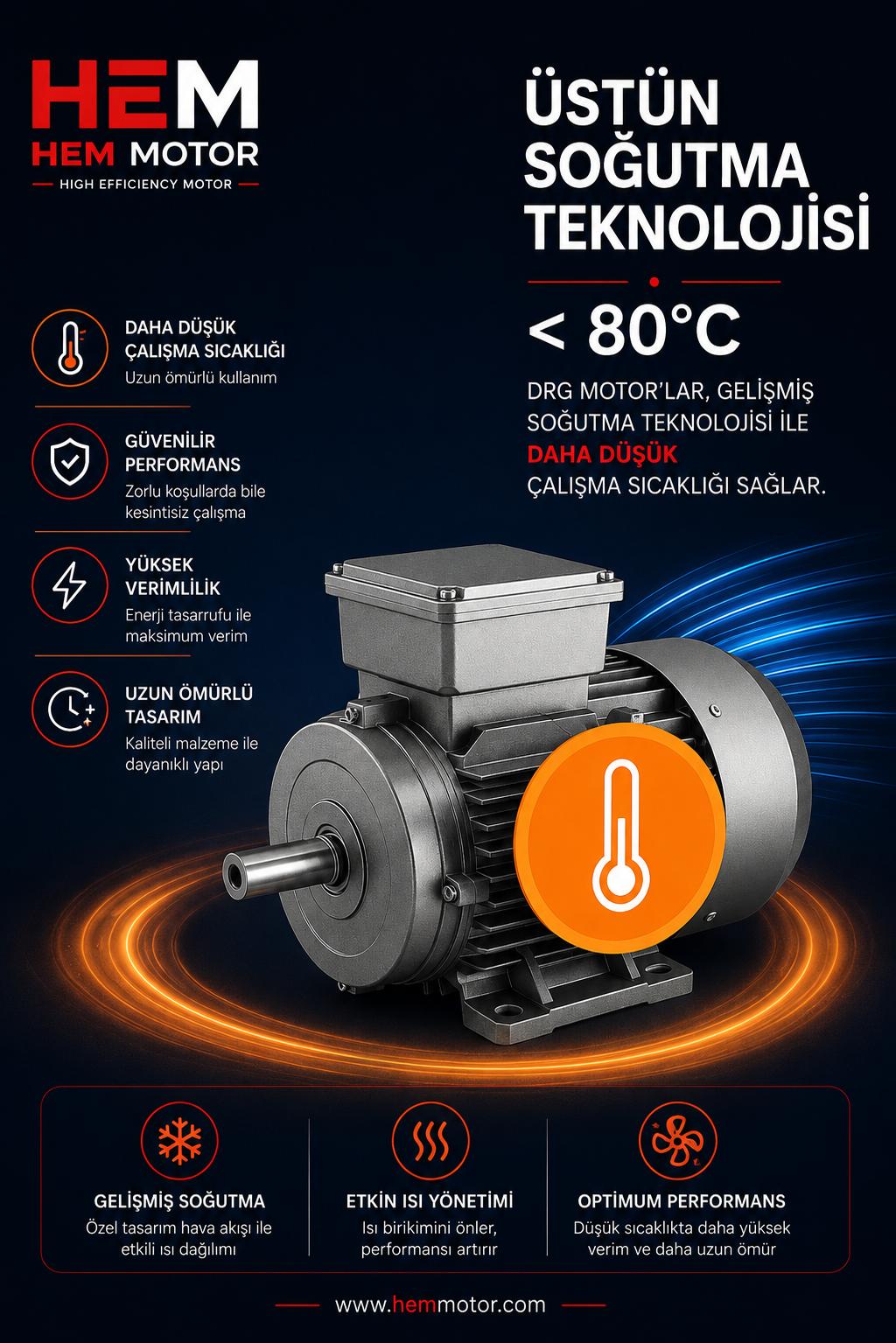

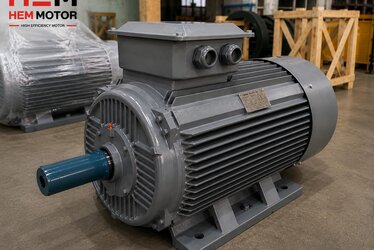
When buying an asynchronous motor, the labels "insulation class: F" and "temperature rise: B (80K)" on the nameplate tell you far more than the rated power figure. These two values determine how hot the winding will run, how many years it will last, and whether it can hold its power in a hot environment. Once understood correctly, you can tell which of two motors with the same kW rating is actually more durable and safer. In this guide we cover insulation classes (B, F, H), the temperature rise (Delta T) concept, why the combination of F insulation with B temperature rise is a quality marker, and power derating in ambient temperatures above 40 degrees.
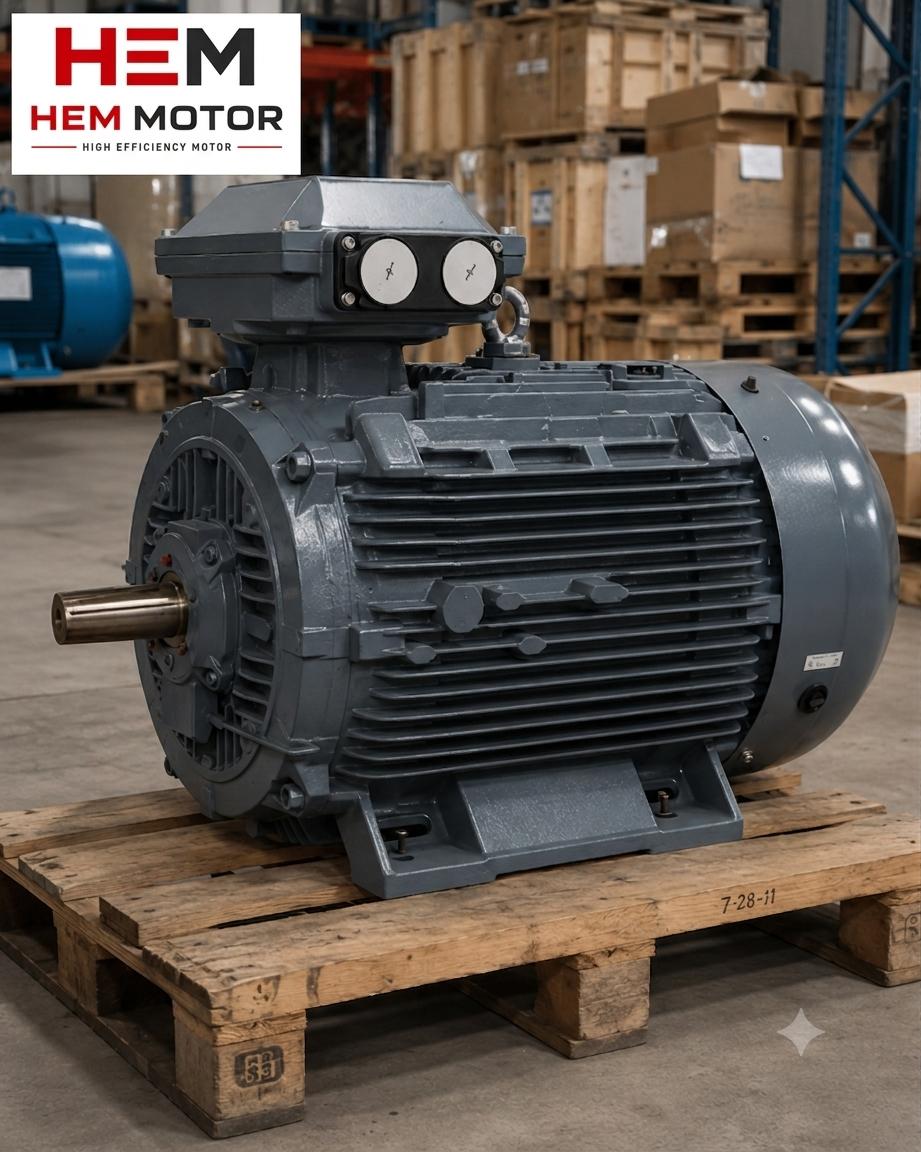
What Is Insulation Class and Why Does It Matter?
The heart of an asynchronous motor is the copper winding in the stator. The enamel coating on the wires, the inter-layer insulation and the impregnating resin together form the motor insulation system. The insulation class defines the highest winding temperature this system can withstand continuously. According to IEC 60034-1, the most common classes are:
- Class B: maximum winding temperature 130 degrees.
- Class F: maximum winding temperature 155 degrees.
- Class H: maximum winding temperature 180 degrees.
These temperatures cover the standard 40 degree ambient, the winding self-heating and a "hot spot" margin together. Today, the vast majority of quality industrial motors are built with at least Class F insulation; HEM Motor range motors are also supplied with Class F insulation as standard. The higher the insulation class, the higher the temperature the winding can run at without degrading. Our articles on IE3 motor winding and insulation class (F/H) and insulation class selection in hot, dusty environments complement this topic.
What Is Temperature Rise (Delta T)?
Temperature rise shows how far above the ambient temperature the winding climbs when the motor runs at rated load. It is expressed in Kelvin (K) and appears on the nameplate mostly as "Delta T" or "temp. rise". The standard temperature rise limits are:
- B temperature rise: about 80K. That is, the winding runs 80 degrees hotter than ambient.
- F temperature rise: about 105K.
- H temperature rise: about 125K.
At 40 degrees ambient, a motor running with B temperature rise (80K) reaches an average winding temperature of around 120 degrees. Even when the hot spot margin is added, this stays below the 155 degree limit of Class F insulation. This is where the key concept enters: thermal reserve.
F Insulation + B Temperature Rise (80K): Why Thermal Reserve Matters
If a motor has Class F insulation but only heats up to the B level (80K), there is roughly a 25 degree safety margin between the temperature the insulation can withstand (155 degrees) and the actual winding temperature. This margin is called thermal reserve. The biggest practical benefit of thermal reserve is winding life.
There is an approximate rule for insulation life: for every 10 degree increase in the continuous winding temperature, insulation life is halved. Conversely, heating Class F insulation only to the B level (keeping it limited to 80K) significantly extends the theoretical life of the winding. That is why the "F insulation, B temperature rise" combination is recognised in the industry as a marker of quality and reliability. In continuous (S1) duty, at high ambient temperatures, or when running on a variable frequency drive, this reserve is vital. For selecting duty type see our electric motor duty type (S1-S6) selection article, and for temperature monitoring our PT100 and PTC thermistor winding temperature monitoring article.
The Practical Value of Thermal Reserve
Thermal reserve does not only mean long life; it also means operational flexibility. A motor with a wide thermal reserve:
- Tolerates brief unexpected overloads without endangering its winding.
- Runs more safely on motors with a high service factor (SF); we explained this in IE3 motor service factor and overload capacity.
- Withstands the rising current when the supply voltage drops; the detail is in IE3 motor voltage tolerance.
When Ambient Temperature Is Above 40 Degrees: Derating
All temperature values on standard motor nameplates are given assuming 40 degrees ambient and altitudes up to 1000 metres. When the ambient rises above this limit, the winding cools less easily and reaches a higher temperature at the same load. There are two ways to compensate:
- Power derating: running the motor at a load below its rated power to limit heating. For example at 50 degrees ambient the motor is used somewhat below rated power; at 55 degrees this margin grows further.
- Choosing a higher insulation class: selecting Class H instead of F, or a motor with a wider thermal reserve.
Here another advantage of the F insulation + B temperature rise combination appears: the 25 degree thermal reserve you hold reduces or fully removes the need for derating at high ambient temperatures. This is critical when selecting motors for hot zones, enclosed panels or near furnaces. We covered the field side in high altitude and hot environment derating calculation and cooling methods in IC411 and IC416 cooling methods.
Design Factors Affecting Temperature Rise
Why can two motors with the same kW and same insulation class have different temperature rise? Because heating is directly tied to copper cross-section, winding quality, frame material and cooling design:
- Copper winding cross-section: thicker, 100% copper winding has lower resistance and produces less heat. We examined the copper vs aluminium winding difference in copper vs aluminium winding difference.
- Frame material: a cast iron frame dissipates heat to the environment better. We compared cast iron frame advantages in cast iron vs aluminium frame.
- Efficiency class: IE4 and IE5 motors produce fewer losses, so they run cooler. We explained where the losses drop in IE4 motor efficiency losses.
- Cooling fan design: fan blade geometry and cooling fins govern heat dissipation; see IE4 motor cooling and fan design.
A high-efficiency motor (for example IE4 Super Premium) heats up less at the same load, so it has both a wider thermal reserve and a longer service life. Our IE4 threshold in pumps, fans and compressors article turns this decision into practice.
Reading the Nameplate Correctly
On the motor nameplate you typically see the following temperature-related data: insulation class (Ins. Cl. F), temperature rise (Temp. rise B), ambient temperature (Amb. 40 C) and duty type (S1). Read together, these four values clarify the thermal behaviour of the motor. To interpret the whole nameplate correctly, our reading the IE3 motor nameplate and nameplate matching to avoid wrong delivery articles guide you. We gathered motor life and early failure causes in electric motor lifespan and early failure causes.
The Effect of Altitude and Cooling Design on Temperature Rise
A factor as important as ambient temperature but often overlooked is altitude. Standard motor ratings are valid up to 1000 metres. At higher altitudes, because air density falls, the motor fan moves less air at the same speed and cooling weakens; as a result the winding reaches a higher temperature at the same load. In plants built at high altitude, either some power derating is applied or a motor with a wider thermal reserve is selected. Where altitude and a hot environment combine (for example mining and cement plants on high plateaus) these two effects stack and require careful calculation.
Cooling design also directly determines temperature rise. In a standard surface-cooled (IC411) motor, heat is dissipated through the frame fins; keeping the fins clean and clear is critical. Fins coated with dust, fibre or an oil film block heat dissipation and unnecessarily heat the winding. So in dusty environments periodic cleaning is the cheapest way to preserve thermal reserve. In forced-cooled (IC416) solutions an independent fan keeps cooling even when the motor is stopped; this matters on drive motors running at low speed for long periods. We covered this topic in detail in cooling fins and dirt accumulation in cast iron motors and the derating calculation in high altitude and hot environment derating.
How Does the Thermal Class Determine Motor Life?
The life of an asynchronous motor is most often the life not of a mechanical part but of the winding insulation. A bearing can be replaced and a fan renewed, but when the winding insulation degrades the motor is practically considered to have ended its economic life. Insulation degradation is not sudden but gradual: high temperature slowly breaks down the chemical structure of the varnish and insulating materials, makes them lose flexibility and become brittle. At that point, when vibration, moisture and voltage surges come into play, a short circuit forms between the windings.
This is why the "F insulation, B temperature rise" combination is not merely nameplate information but a direct investment protection strategy. Running the winding below the insulation limit, with a wide thermal reserve, slows the chemical ageing of the insulation. In practice this means fewer unplanned stoppages, lower maintenance cost and the motor running for many years without needing a second or third rewind. On a critical continuously running line, this difference means the small quality premium paid at purchase returns many times over the years. We gathered the maintenance practices that extend motor life in electric motor maintenance and periodic check schedule and the decision between rewinding and replacing in rewind the motor or buy new.
Thermal Class in Motors Running on a Frequency Drive (VFD)
If the motor is fed through a frequency drive, the heating picture changes and thermal reserve becomes even more critical. There are two main reasons. First, the high-frequency switching waveform the drive produces creates additional harmonic losses, and therefore additional heating, in the winding compared with standard grid supply. Second, when the motor runs at low speed, its own frame-mounted cooling fan also turns slowly and its cooling capacity falls; yet the motor is still under load.
When these two effects combine, a motor running on a drive can run hotter than a grid-fed motor at the same load. A motor with a wide thermal reserve (F insulation, B temperature rise) safely absorbs this extra heat. If running at very low speed for long periods, an independent (forced) cooling fan may be needed. For thermal protection in drive applications, a PTC thermistor or PT100 sensor embedded in the winding is a strong safeguard. We covered the drive side of the topic in variable frequency drive (VFD) with an asynchronous motor and the noise and vibration side in noise and vibration in electric motors. For correct efficiency class selection see our efficiency class and correct sizing article.
Frequently Asked Questions
Can an F insulation motor run up to 155 degrees?
The insulation system is designed to withstand 155 degrees, but the motor is not intended to run continuously at this temperature. With the "F insulation, B temperature rise (80K)" combination the winding normally stays around 120 degrees; 155 degrees is a ceiling for brief overloads and the hot spot. Running the winding continuously near 155 degrees rapidly shortens insulation life.
Is B temperature rise or F temperature rise better?
Of two motors with the same Class F insulation, the one running at B (80K) temperature rise is generally more durable and reliable thanks to its wider thermal reserve. A motor running at F temperature rise (105K) operates closer to the insulation limit and is more likely to require derating in hot environments. For continuous critical applications, B temperature rise is preferred.
What should I do in my plant where ambient exceeds 50 degrees?
There are two options: running the motor at a somewhat reduced load (derating) or choosing a motor with a wider thermal reserve or Class H insulation. Which route is more economical depends on runtime, power and ambient conditions. Share your plant conditions and we can determine the right temperature class and power margin together.
Get a Quote
Let us determine together the right insulation class and temperature rise combination for your asynchronous motor based on your plant ambient temperature, duty type and load profile. For our motors with standard F insulation + B temperature rise (80K), 100% copper winding and cast iron frame, reach us via our contact page or request a quote on +90 (532) 345 49 86. You can review our product range on our efficient electric motors and worm gear reducers pages, and all our content on our blog home page.
Purchasing and Selection Checklist
- Verify the insulation class: prefer at least Class F.
- Check the temperature rise: target the B (80K) level for critical applications.
- Measure the ambient temperature: plan derating or a higher insulation class if above 40 degrees.
- Determine the duty type: thermal reserve matters more in continuous (S1) operation.
- Evaluate the frame material: a cast iron frame is an advantage in hot, harsh environments.
- Consider raising the efficiency class: IE4/IE5 motors run cooler.
- Request temperature monitoring: plan PT100 or PTC thermistor equipment on critical motors.
- Compare the nameplate before ordering: prevent the wrong motor from being delivered.