English
 Türkçe

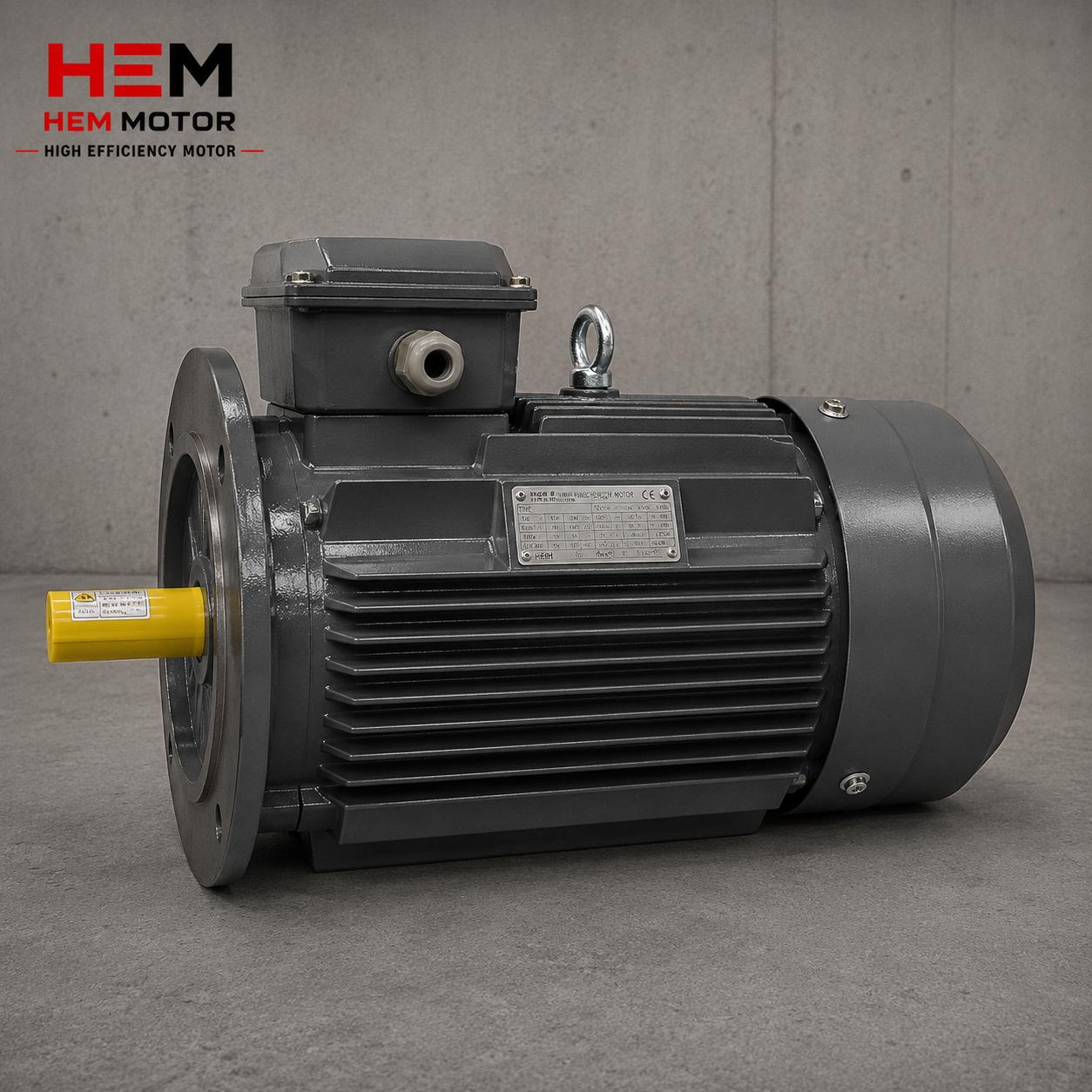

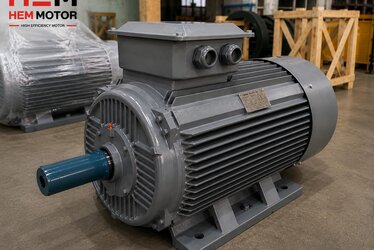
Whether you should order a squirrel cage or a slip-ring (wound rotor) asynchronous motor is a more critical purchasing decision than it first appears. A motor delivered with the wrong rotor type will either struggle to drive the machine or stress your supply and fuses during starting; both cases mean downtime, extra cost and warranty disputes. As HEM Motor, with our identity as both manufacturer and supplier, we recommend the correct rotor type by looking at the load profile in your hands. This article clarifies the difference between squirrel cage and slip-ring rotors in an asynchronous motor from a purchasing and supply perspective, and shows with concrete examples which one to quote for which load.
Squirrel Cage vs Slip-Ring Rotor: Why the Structural Difference Matters
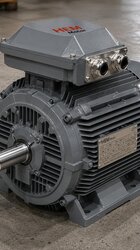
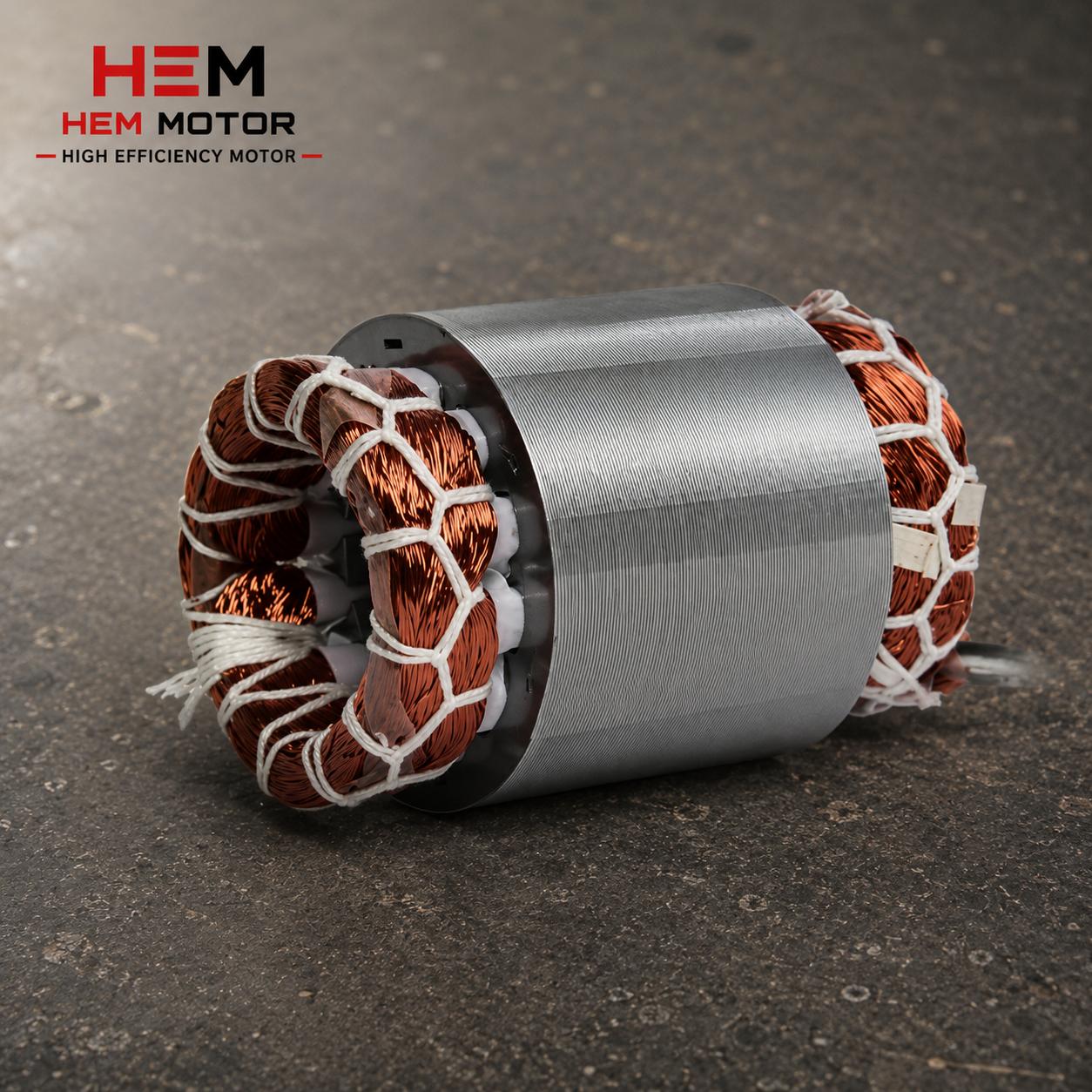
Both motor types are identical on the stator side; the difference is in the rotor. A squirrel cage asynchronous motor consists of bars placed in the rotor slots and joined at both ends by short-circuit rings. No electrical connection leaves the rotor, and there are no brushes or slip rings. This construction produces the most common industrial motor: low maintenance, robust, economical and widely available from stock. Almost all of the HEM Motor IE4 electric motor and IE3 electric motor range uses the squirrel cage rotor.
In a slip-ring (wound rotor) motor, the rotor is wound and its winding ends connect to slip rings on the shaft and from there to brushes. This allows external resistance to be added to the rotor circuit. The added resistance raises torque at the moment of starting while reducing the starting current. The construction is more complex and requires regular maintenance because of brush and slip-ring wear. For this reason, slip-ring motors are not used in general applications but only in special cases requiring high inertia and heavy starting. This distinction is the basis of a correct three-phase motor order.
The Two Types in Terms of Maintenance, Life and Total Cost
In the purchasing decision, long-term cost must be considered alongside the initial price. In a squirrel cage motor there is no brush, slip ring or rotor winding, so there is no part that wears and is regularly replaced; maintenance is largely limited to bearings and general cleaning. This means low operating cost and a long, trouble-free life. In a slip-ring motor, brushes wear, slip-ring surfaces require maintenance over time and brush dust must be cleaned; this extra maintenance raises the total cost of ownership. For this reason, a slip-ring motor is not preferred unless the application genuinely requires it.
When evaluating the real cost of a motor, energy consumption, maintenance and downtime risk must be considered together. The wide availability of squirrel cage motors in IE3 and IE4 efficiency classes also keeps energy cost low. We covered the total cost of ownership approach in detail in our TCO calculation article; for the effect of correct sizing on efficiency, our load ratio and correct sizing article is also a guide.
Starting Torque and Starting Current: This Is Where the Real Decision Is Made
When selecting a motor, two questions must be asked together: How much torque does the load demand at start, and can the supply or generator handle the starting current? Squirrel cage motors draw a starting current of 6-8 times the rated current under direct-on-line (DOL) starting. In most applications this is no problem; however, with high-inertia loads the extended starting time both heats the motor and causes voltage dips on the supply.
In a slip-ring motor, rotor resistance is switched in and out in steps to obtain high starting torque at low current. The starting current is kept under control while torque stays at a level that sets the load in motion without strain. This is a critical advantage especially on generator-fed sites. Our articles on star-delta vs softstarter and starting a crusher motor, where we cover starting current and starting methods in depth, complement this topic.
Which Load Calls for a Squirrel Cage Motor?
For pumps, fans, compressors, conveyors, geared drives, general industrial machinery and virtually all low-to-medium inertia applications, the squirrel cage motor is the right choice. These motors are supplied quickly from stock, are available in IE3 and IE4 efficiency levels within our high efficiency electric motors class, and carry a low maintenance burden. For loads such as centrifugal pumps or fans whose torque rises with speed, the squirrel cage starting characteristic is already sufficient; our centrifugal pump motor selection article details this sizing.
Which Load Calls for a Slip-Ring (Wound Rotor) Motor?
High-inertia, heavy-starting loads are the classic territory of the slip-ring motor: large crusher and mill drives, heavy crane and hoisting systems, large fans, belt conveyor starts and applications requiring loaded starts. Here the load demands high torque while stationary; with a squirrel cage motor the starting current rises dangerously. On impact-loaded and high-inertia drives such as crushers, flywheel and inertia calculation matter alongside rotor type; we covered this in our motor selection for impact loads article.
Mounting Type and Mechanical Fit Are Independent of Rotor Type
After the rotor type decision is made, how the motor will connect to the machine must be handled as a separate heading. Whether squirrel cage or slip-ring, the motor mounting type (B3 foot, B5 large flange, B35 foot plus flange) is selected according to the application. While the flanged (B5) type is common in directly coupled applications such as pumps and fans, the foot (B3) type is preferred in machines driven by belt and pulley. The shaft diameter, key dimension and flange holes must match the machine exactly; otherwise, even if it arrives with the right rotor type, the motor cannot be mechanically mounted. We covered this matching in our shaft diameter and key dimensions article.
Determining the connection type correctly also prevents ordering mistakes. For machine manufacturers, we explained the difference between B5 and B14 flanges in our B5 vs B14 connection type selection article. As HEM Motor, by confirming both the rotor type and the mounting and shaft dimensions together, we deliver the motor in full compatibility with your machine.
What Has Replaced the Slip-Ring Motor Today?
In modern supply practice, many applications that once required a slip-ring motor are now solved with a squirrel cage motor plus a variable frequency drive (VFD) or softstarter. The frequency drive limits starting current, controls torque and additionally offers variable speed; brush and slip-ring maintenance is eliminated. For this reason, in new investments we mostly recommend the squirrel cage motor together with a drive. Our asynchronous motor with frequency drive article details this solution. Still, if an existing slip-ring system needs a like-for-like renewal, we supply the equivalent rotor type.
A Practical Selection Table by Load Type
To simplify the decision for the buyer, it is useful to group loads by their behaviour. Loads whose torque demand rises with speed (centrifugal pumps, fans, blowers) run most efficiently with a squirrel cage motor; starting is easy on these loads because the load torque is also low at low speed. Loads demanding constant torque (conveyors, geared drives, screw feeders, mixers) are again solved with a squirrel cage motor, with a suitable starting method if needed. Loads demanding high inertia and high torque while stationary (large mills, heavy cranes, loaded starts of large fans) are the territory of the slip-ring motor or the squirrel cage motor plus drive solution.
This classification is the key to ordering the right motor the first time. A choice in the wrong group means either a motor that struggles at start or one that is more expensive than necessary with a high maintenance burden. We covered the constant versus variable torque distinction in our motor selection in variable speed applications article, and the torque classes in our Design N/H torque classes article.
Supply, Stock and Lead Time
The rotor type decision also directly affects the lead time. Because squirrel cage motors are standard products, they are quickly available from stock over a wide power and speed range; this is a great advantage when an urgent replacement is needed. Slip-ring motors, on the other hand, are usually supplied to special order and with a longer lead time. Therefore, if a fast solution is needed due to the failure of an existing motor and the application allows it, the squirrel cage motor plus drive combination is often commissioned faster. We explained stock and lead-time planning in our from stock or to order article, and the critical spare motor strategy in our critical spare motor list article.
Evaluate Pole Count, Speed and Efficiency Class Together
The rotor type decision alone is not enough. Pole count (speed), power and efficiency class must be determined at the same time. 2 poles correspond to 3000 rpm, 4 poles to 1500 rpm and 6 poles to 1000 rpm synchronous speed; actual speed drops slightly due to slip. For the correct pole choice see our which pole for which job article, and on slip see slip and actual speed. As HEM Motor, within our IE3/IE4 motor range we supply cast-iron squirrel cage motors from 0.25 kW to 355 kW, at 1000/1500/3000 rpm, with B3/B5/B35 mounting options, from stock and to order.
To avoid choosing the wrong mounting type, we recommend reviewing the B3, B5, B14 and B35 options on our electric motor mounting types page. If you are considering a geared drive, we can quote the motor together with our worm gear reducers and helical worm gear reducers ranges. For the wider picture see our electric motors blog category and homepage.
The Stator Structure and Efficiency Advantage of the Squirrel Cage Motor
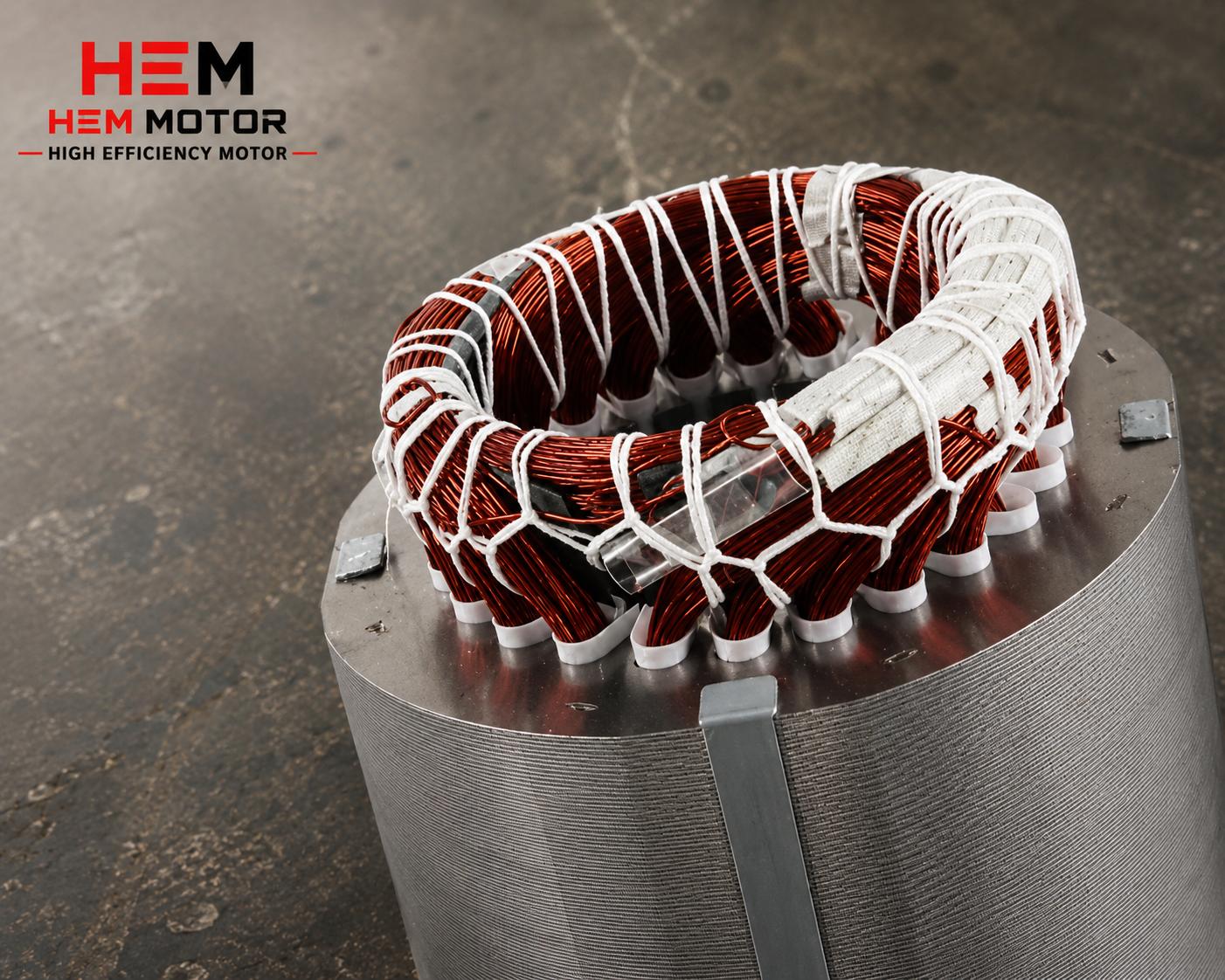
In a squirrel cage motor, efficiency largely depends on the quality of the stator winding and the rotor bars. The use of 100% copper winding in the motors offered in the HEM Motor range means lower winding losses and higher efficiency; this enables IE3 and IE4 efficiency classes to be achieved. The cast-iron body, in turn, offers an advantage in both mechanical strength and heat dissipation. These structural choices make it easier for the motor to be the right decision both in the initial investment and in the long term. You can examine the effect of the difference between copper and aluminium winding on efficiency and life in our copper vs aluminium winding article.
In a slip-ring motor, the extra losses introduced by the rotor winding and the brush-slip-ring system lower the overall efficiency somewhat. For this reason, in terms of modern energy efficiency targets too, the squirrel cage motor plus drive solution is often more advantageous. We detailed which efficiency class is required at which power in our IE3 and IE4 efficiency mandate article.
How to Order the Right Motor the First Time
When rotor type, pole count, power and mounting type are clarified together, the motor arrives correct the first time and commissioning proceeds smoothly. A wrong rotor type choice is not only a technical problem but also a loss of time and cost: it means returning the motor, re-supplying it and the facility waiting. Therefore, defining the application correctly at the purchasing stage is the most critical step. We collected the common mistakes when buying a motor and the correct purchasing steps in our mistakes when buying an electric motor article.
As HEM Motor, with our manufacturer and seller identity, at the quotation stage we evaluate the load profile of your application together, clarify the squirrel cage or slip-ring rotor decision and also recommend the necessary protection and starting equipment. We listed the information you should share with us for a fast and correct quote in our information to provide when requesting a quote article.
Frequently Asked Questions
Is a squirrel cage motor sufficient for every application?
For the great majority of pump, fan, compressor, conveyor and general industrial drives, the squirrel cage asynchronous motor is more than sufficient; it is low maintenance, economical and quickly available from stock. Only in special applications requiring very high inertia and loaded heavy starting do we evaluate a slip-ring motor or a squirrel cage motor plus frequency drive solution. When you share your need, we recommend the right type based on your load profile.
Can I buy a frequency-driven squirrel cage motor instead of a slip-ring motor?
In most new investments, yes. The frequency drive limits starting current, controls starting torque and provides variable speed; brush and slip-ring maintenance is eliminated. If you need a like-for-like renewal of an existing slip-ring system, we also supply the equivalent rotor type. We evaluate together which solution is more advantageous in total cost for your application.
What information should I provide to select the right motor?
It is enough to share the driven machine (pump, fan, crusher, etc.), required power (kW), speed or pole count, mounting type (B3/B5/B35), required efficiency class (IE3/IE4) and supply (grid or generator). With this information we clarify both the rotor type and the suitable frame size and offer you a specific quotation rather than generic electric motor prices.
Get a Quote
If you are not sure which rotor type suits your application, the HEM Motor engineering team will clarify the squirrel cage or slip-ring/wound rotor asynchronous motor based on your load profile and plan the fastest supply according to stock. Call us now at +90 (532) 345 49 86 or send your request through our contact page; let us quote the right motor with the right mounting and efficiency class.