English
 Türkçe

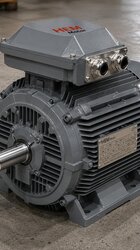
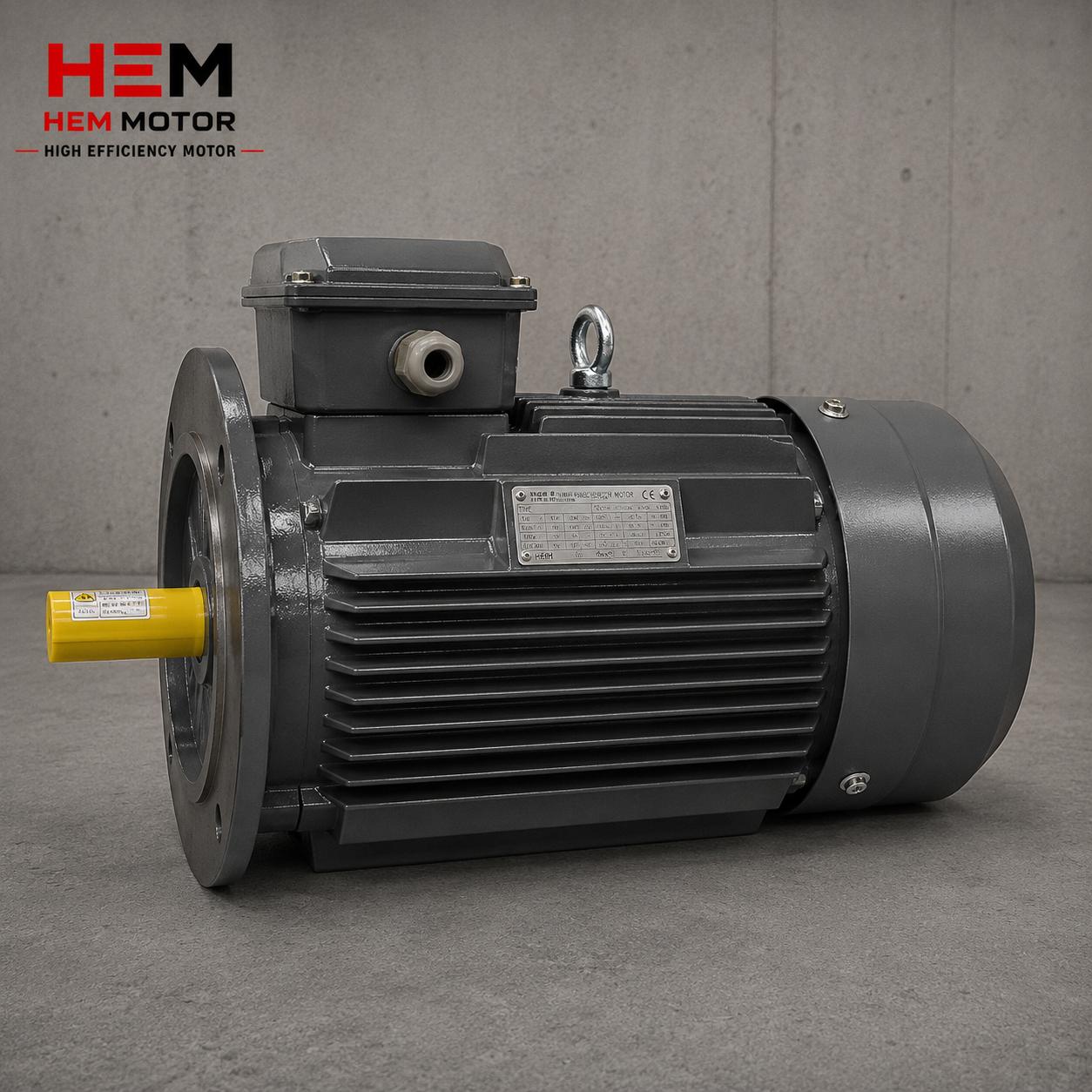

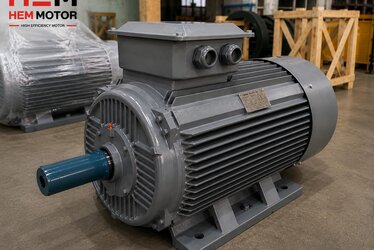
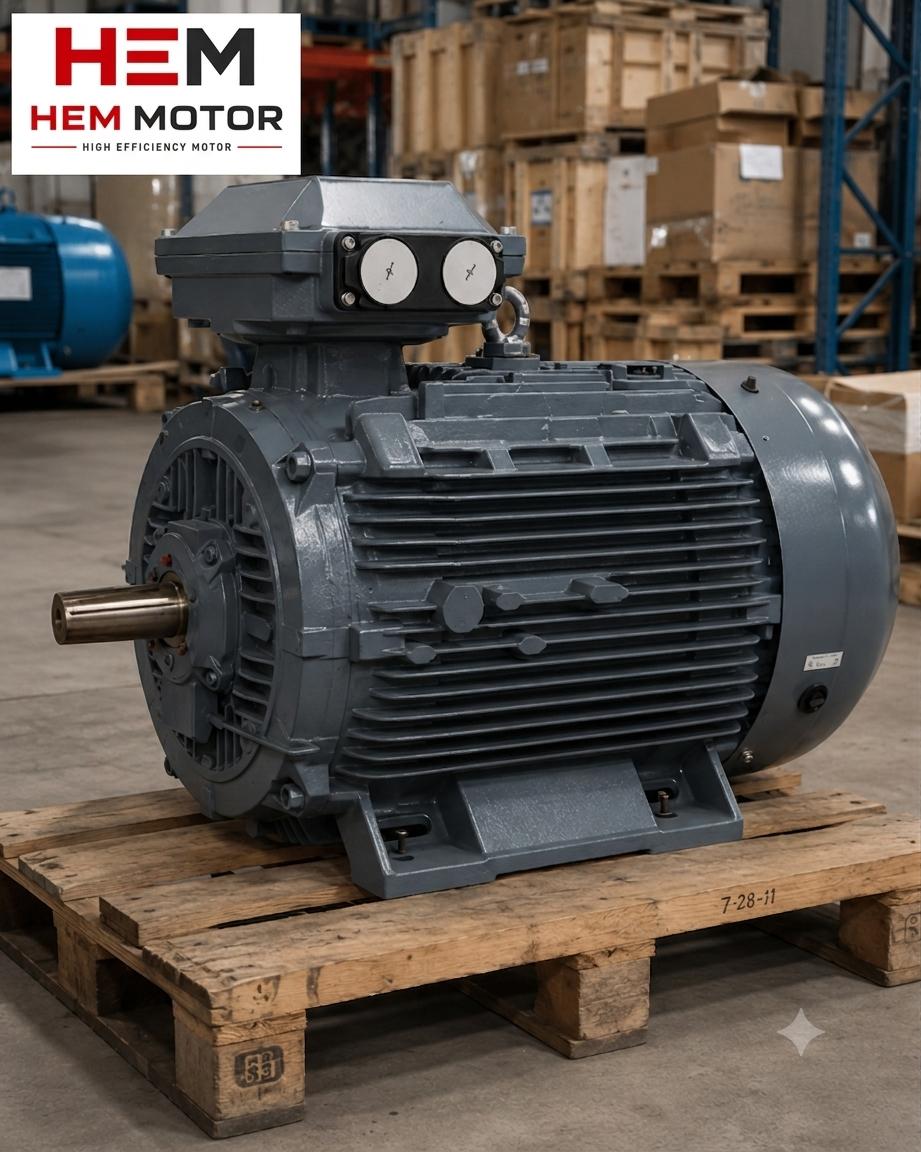
When buying an asynchronous motor, most buyers look only at power (kW) and speed (rpm); yet for hard-starting loads one more parameter is critical: the torque class (Design N / Design H) and the starting torque. A motor with the wrong torque class, even if it is of sufficient power on paper, cannot move the load, struggles at start, overheats and trips the protection relay. In this article we address the torque classes and starting torque of a three-phase asynchronous motor from a purchasing angle: which load requires which class and what you must state in the order. As HEM Motor, a manufacturer and supplier since 1979, we recommend the motor with the torque characteristic suited to your load.
What Is the Torque Class (Design N / Design H), and What Does It Mean for the Buyer?
The torque class defines the torque characteristic an asynchronous motor produces during starting and running. Under the IEC standard, the two most common classes are Design N and Design H. Design N defines general-purpose motors with standard starting torque; it is sufficient for pumps, fans and many general drives in industry. Design H has higher starting torque; it is designed for high-inertia and hard-starting loads. For the buyer, this difference means: if your load demands high torque at start, increasing the power alone is not enough; you must choose the right torque class. Beyond Design N, the standard also defines other classes describing different torque and inrush-current combinations; but in practice the distinction most commonly seen in industry is between standard-torque motors and high-starting-torque motors. What matters is not memorizing a nameplate code, but correctly estimating how much torque your load demands at start and choosing the motor accordingly.
An important point here is that power (kW) and torque (Nm) are different things. Power is torque multiplied by speed; at the same power, a motor can show a different starting torque characteristic. So the assumption "I chose enough kW, it will start" is misleading. The difficulty of starting is related less to the motor's power than to the torque class and the load's inertia/resistance character. We covered the effect of pole-number choice on speed and torque in our 2, 4, 6 pole selection article; it is a topic to evaluate together with the torque class.
Starting Torque, Breakdown Torque and Rated Torque
Three torque values stand out in motor selection. Starting torque is the torque the motor produces as it goes from standstill to motion; it must be greater than the load's counter-torque so it can move the load. Breakdown (maximum) torque is the highest torque the motor can deliver; it is a safety margin against sudden load increases. Rated torque is the nominal torque the motor delivers continuously. In hard-starting or suddenly loaded applications, sufficient starting and breakdown torque keeps the motor from stalling and overstraining. Evaluating these values according to your load's character is the basis of choosing the right motor.
Which Load Requires Which Torque Class?
The key to the right choice is recognizing the load's starting character. We can roughly divide loads into two groups:
Standard Start (Loads Where Design N Is Enough)
Centrifugal pumps, fans, blowers and many general industrial drives require low torque at start, because the load rises gradually with speed. In these applications, the Design N standard torque class is usually enough. We covered centrifugal pump and fan motor selection in our centrifugal pump motor selection and blower and fan motor selection articles. For these loads, what matters is matching the motor's power and speed correctly to the load's flow/head curve. Applications such as booster pumps, fire pumps and ventilation fans also mostly fall into this group; the low load at start makes the standard torque class sufficient. We compiled the points to watch in fire pump motor selection in our fire pump motor article; in these applications reliability and continuous operation matter as much as torque.
Hard Start (Loads Where Design H Is Needed)
Conveyor belts, crushers, mills, mixers, presses and augers, which are high-inertia or high-initial-resistance loads, require high torque at start. In these applications, Design H or high-starting-torque motors are preferred; a standard motor may struggle at start with these loads. Especially conveyors that start full and crushers that start loaded demand a high breakaway torque at the moment of start; if the motor cannot deliver this torque, it either cannot start at all or stays at high current for a long time and overheats. So motor selection for such loads must be done with a starting-torque and inertia calculation, not just kW. We covered reducing motor failure and downtime cost in stone crushing and crusher plants in our crusher motor failure and downtime cost article. We compiled motor selection in heavy load-profile applications such as plastic crushing and injection in our motor selection by load profile article, and conveyor belt motor selection in our conveyor belt motor article. In woodworking workshops, equipment such as band saws, planers and aspiration have a different starting character; we compiled the motor needs list for these applications in our woodworking workshop motor needs list article. Facilities with mixers and augers, such as concrete batching plants, also require high starting torque; we covered this in our concrete batching plant motor supply article.
Relationship with Inrush Current and Starting Method
High starting torque usually comes with high inrush current. During direct-on-line (DOL) starting, the motor draws several times its rated current; this both strains the grid and affects the protection devices. So for hard-starting loads, the starting method (star-delta, soft starter or frequency drive) matters as much as the torque class. But beware: star-delta starting also lowers the starting torque; so choosing star-delta on a hard-starting load can cause the motor to fail to move the load. We compared starting methods in our star-delta or soft starter article.
Starting with a frequency drive (VFD) both limits the inrush current and provides high torque at low speed, bringing great ease to hard-starting loads. We covered when drive operation is needed and how to select it in our VFD with asynchronous motor article. On generator-fed sites, inrush current is a separate constraint; we compiled this topic in our motor selection on generator-run sites article.
The Relationship Between Speed, Slip and Torque
In an asynchronous motor, torque, speed and slip are linked. The motor slows slightly under load (slip), and this slip is what produces the torque. As the load rises, slip increases and the motor produces more torque; but once breakdown torque is reached, the motor can stall. So understanding why the real speed is below the synchronous speed and how slip changes under load is useful for the right choice. We detailed the slip and real speed relationship in our slip and actual speed article. The right pole and speed choice must be evaluated together with the load's torque need.
In geared drives, torque is increased by the reducer: the motor runs at low torque and high torque is obtained at the output via the reducer. So for a hard-starting but low-speed load, a geared solution can be more efficient than a directly high-torque motor. We covered the geared-motor vs separate motor+reducer decision in our geared motor or separate article. You can review worm and helical reducer options on our worm gear reducers and helical worm gear reducers pages. We covered which electric motor suits the reducer and IEC frame/flange matching in our reducer-motor matching article; in a geared solution, the motor's torque need must be evaluated together with the torque calculation at the reducer output.
What Should You State in the Order?
To buy the motor with the right torque characteristic first time, you must share the load's starting character as well as the power and speed. We recommend conveying this data: the type of machine driven (pump, fan, conveyor, crusher, etc.), whether the load is hard to start, the inertia situation, the starting method and, if any, the required torque class (Design N/H). This data prevents you from buying a motor that cannot move the load or that is oversized. We compiled the full list of data to provide when requesting a quote in our data to give when requesting a quote article.
In renewal projects, sharing the data on the existing motor's nameplate is the fastest route; but if the old motor was already struggling at start, you should review the torque class or power rather than buy an exact copy. To prevent the wrong motor arriving, we explained nameplate matching in our nameplate matching article. We covered at which load ratio you should run the motor for correct sizing in our load ratio and correct sizing article.
Starting Frequency and Duty Type: Not Just the First Start
An often-skipped issue in torque selection is how frequently the start is repeated. Some applications start once a day and run continuously (S1); others stop and start many times a minute (e.g. some press, crane and automation applications). In frequently starting motors, each start means high current and heating; so not only the starting torque but also the duty type and thermal endurance affect the choice. In frequently starting applications, a larger frame or a higher insulation class may be needed so the motor can handle this cycle without overheating. We covered using PT100 and PTC thermistors to monitor winding temperature and protect the motor from overheating in our temperature monitoring article.
When the duty type is misjudged, even a motor in the right torque class on paper can fail early in the field. So at the quotation stage it is important to answer the question "how many times a day/hour does the motor start". We compiled the symptoms and causes of electric motor failures and when replacement is needed in our failure symptoms and causes article; recognizing these symptoms early in frequently starting motors reduces downtime.
Overload Protection and the Right Protection Equipment
As important as choosing the right torque class is protecting the motor against overload and starting strain. If, on a hard-starting load, the motor draws high current for a long time, the thermal overload relay trips to protect the motor; but the protection devices must be chosen correctly for the inrush current. A wrongly set protection either trips unnecessarily or does not protect the motor enough. We compiled the protection equipment to request with the motor in our protection equipment article.
Phase sequence and direction of rotation are also a critical check at commissioning; especially in direction-sensitive loads such as conveyors and pumps, the wrong direction can cause damage. We covered the direction of rotation and phase sequence check in our direction of rotation and phase sequence article. We compiled the commissioning and first-start steps in our commissioning checklist article; these checks are especially important on hard-starting loads.
Load-Matched Asynchronous Motor Supply from HEM Motor
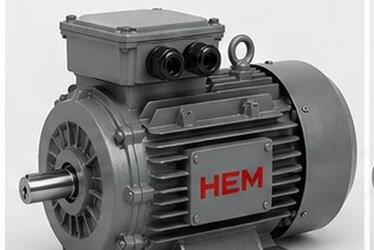
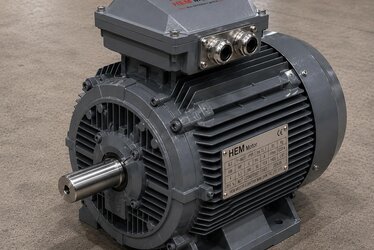
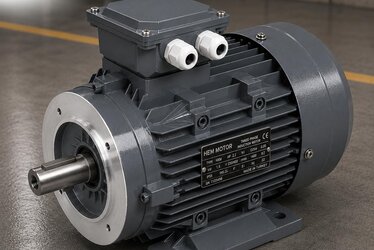
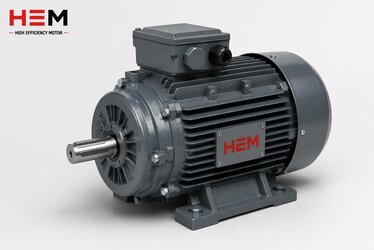
As HEM Motor, we supply IE3 and IE4 three-phase asynchronous motors with 100% copper winding, cast iron body, IP55 protection and F class insulation from 0.55 kW to 355 kW. We have high-starting-torque motor options for plastic crushing, woodworking and high-torque applications. Share your load's starting character; let us recommend the motor in the right torque class. You can review our full range from our home page.
Frequently Asked Questions
If I buy a more powerful motor, will it move the load?
Not always. The difficulty of starting is related less to power than to the torque class and the load's inertia/resistance character. An oversized motor with the wrong torque characteristic both runs inefficiently and may still struggle at start. The right approach is to choose power and torque class together according to the load's character.
What is the difference between Design N and Design H?
Design N defines general-purpose motors with standard starting torque, while Design H defines motors with higher starting torque designed for hard-starting loads. For loads such as pumps and fans, Design N is usually enough; for high-inertia/resistance loads such as conveyors, crushers and mills, Design H is preferred.
Does star-delta starting cause a problem on a hard-starting load?
Yes, it can. Star-delta starting lowers the inrush current but also lowers the starting torque. On a hard-starting load, this can cause the motor to fail to move the load. For such loads, a soft starter or frequency drive may be more suitable; the starting method must be chosen according to the load character.
Get a Quote
HEM Motor is at your side for selecting a three-phase asynchronous motor in the torque class suited to your load's starting character. Share the machine driven, the load's starting difficulty, the power and the starting method; let us recommend the right motor. Call now: +90 (532) 345 49 86 or reach us via our contact page. For our full range, visit the HEM Motor home page.