English
 Türkçe

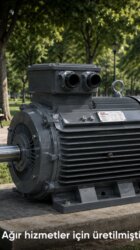
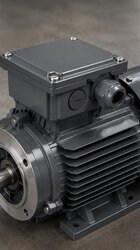
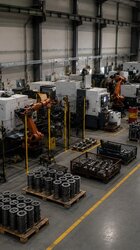
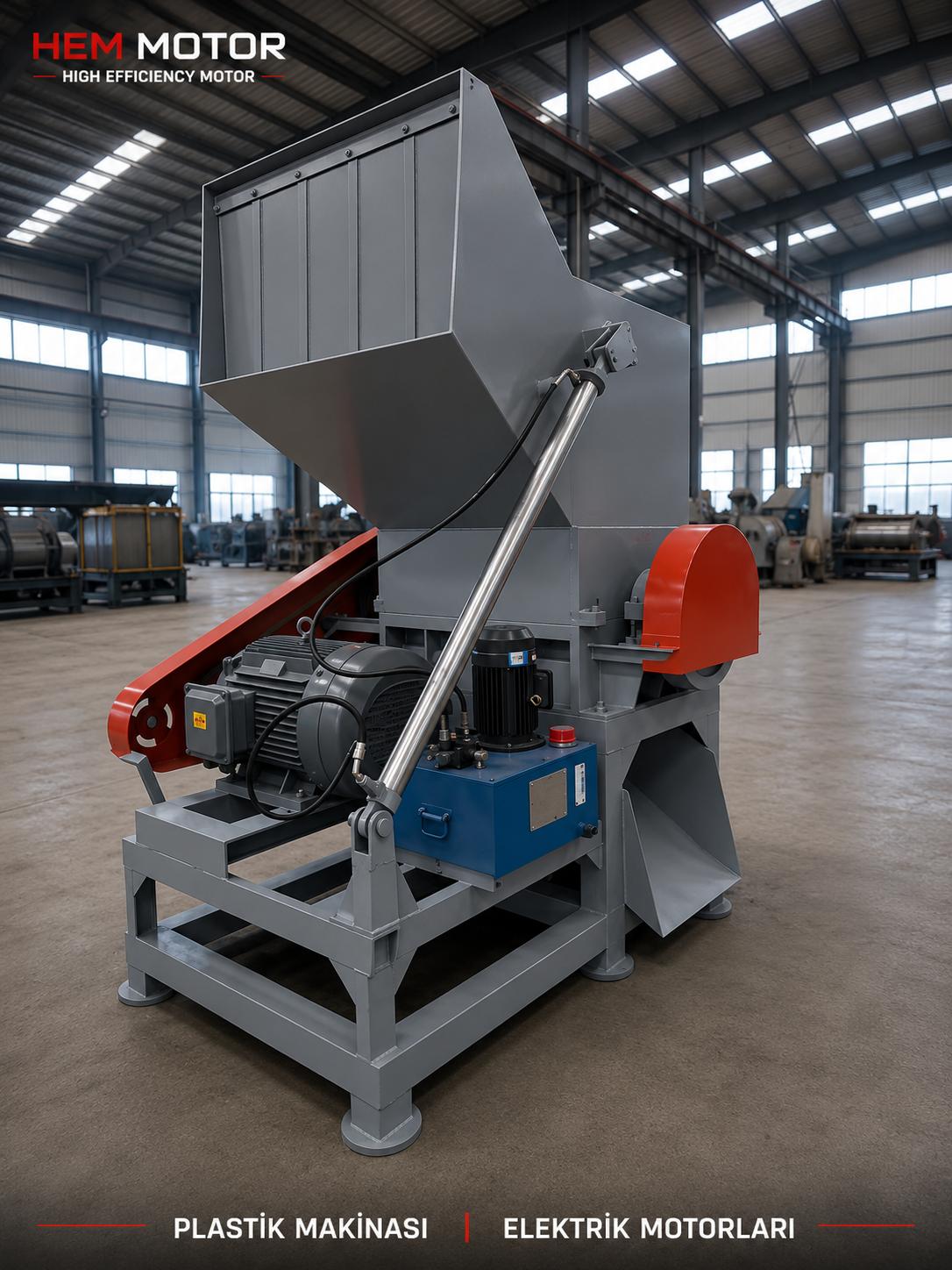

In the same plant, two electric motors that often stand side by side work in two entirely different load worlds and need two completely different buying decisions. In a plastic injection or crushing plant, the crusher that shatters the material braces against impact load, sudden blockages and foreign-object shocks every shift; while the conveyor or feeder motor carrying the same material turns at a far smoother, more predictable load. Selecting these two motors with the same logic, "how many kW do I need," is the most common and most expensive mistake. Because a motor bought for the wrong load profile reveals itself within the first months with a burnt winding or bearing damage. In this article we address motor selection for injection and crushing machines along the load-profile axis, and explain how to set the power margin and why an IE4 motor makes a real difference on long cycles.
Looking only at power in motor selection is like looking only at a vehicle's horsepower and not asking whether it will be used off-road or in the city. What truly matters is the character of the load the motor will face: is it steady or impact-based, does it stop often, does it meet sudden shocks? In a plastics plant the answer to this question is completely different for crushing and conveying motors, and that difference is the foundation of the right purchase.
Two Different Load Worlds: Crushing and Conveying
In a plastics plant the crusher and the feeding/conveying equipment, though physically side by side, work on two separate planets from the motor's point of view. Seeing this difference clearly reveals why a single selection logic does not work.
The Crusher's Load Profile
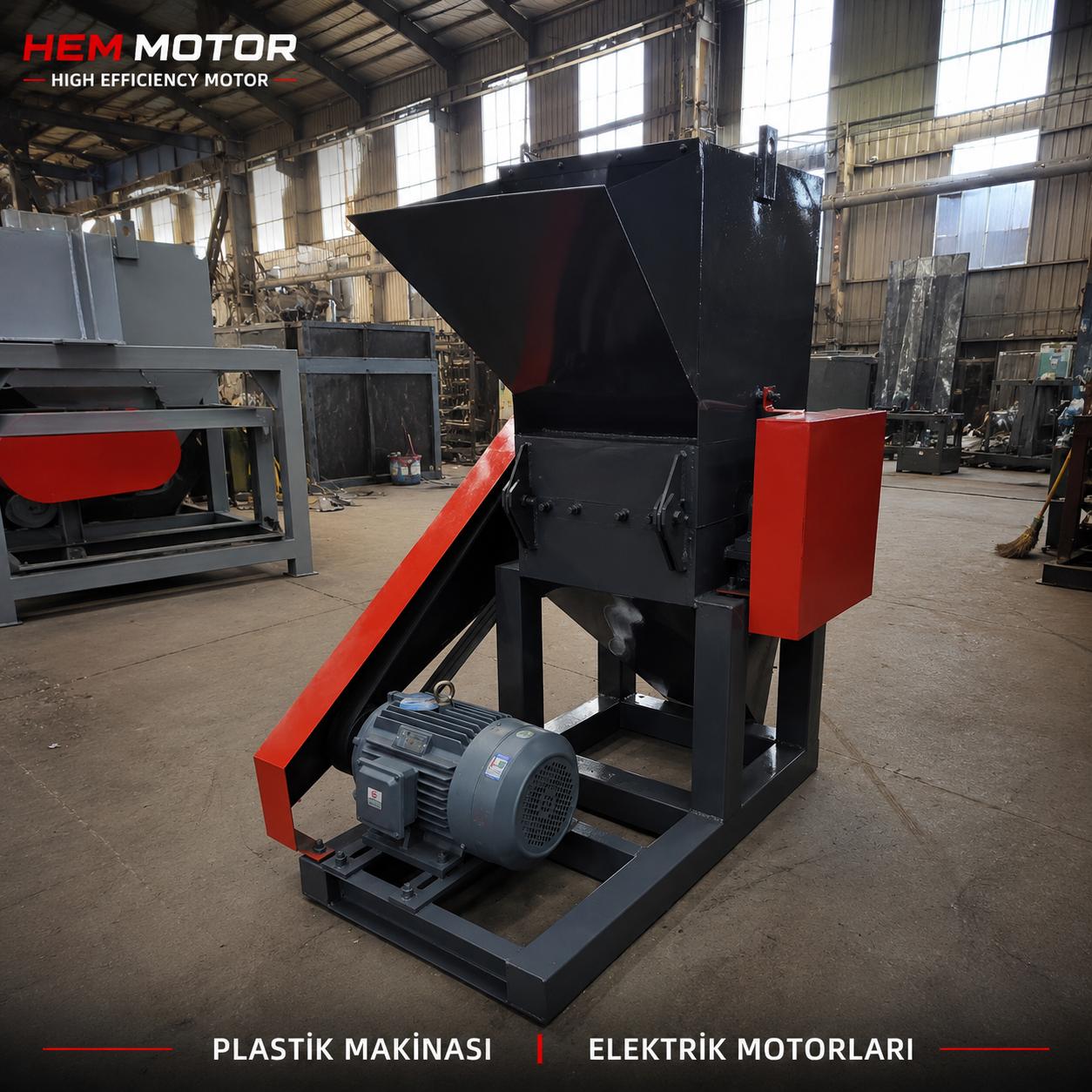
The crusher works under impact and variable load. Every piece entering the blades is of different hardness and size; when a metal screw or hard foreign object enters, the motor faces an instantaneous, very high shock torque. Moreover, when material jams the blades a sudden blockage occurs and the motor draws high current as it approaches stall. This profile demands high starting torque, strong shock resistance and good cooling. A wrongly selected crusher motor burns its winding quickly under these shocks.
The Conveying and Feeding Motor's Load Profile
The conveyor belt or feeder motor, by contrast, turns under a far smoother and steady load. Material flow is relatively continuous and predictable; sudden shocks and blockages are rare. Here the priority is not shock resistance but efficient and stable operation over long hours. On these motors the real gain comes from focusing on energy efficiency without inflating the power margin unnecessarily.
How Is the Power Margin Set?
The power margin determines how much headroom the motor's rated power leaves above the real working load. The wrong margin is expensive in both directions: too little margin burns the motor, while too much leads to buying an unnecessarily large and inefficient motor. The right margin is set according to the load profile.
- Wide margin for impact loads: in applications experiencing shock and blockage, such as a crusher, a generous power margin is left to handle sudden torque peaks.
- Narrow margin for steady loads: in predictable applications such as conveying, an exaggerated margin only lowers efficiency and raises cost; a measured margin is enough.
- Starting frequency: on motors that stop and start often, the heat build-up at each start should also be reflected in the margin.
- Ambient temperature: in hot environments the motor's cooling capability drops, so the power margin is increased accordingly.
When these criteria are evaluated together, the motor is neither undersized nor needlessly large. When determining the power and frame type suited to the application, the right choice can be made by reviewing our heavy-duty electric motor solutions according to the load profile.
Why Does an IE4 Motor Make a Difference on Long Cycles?
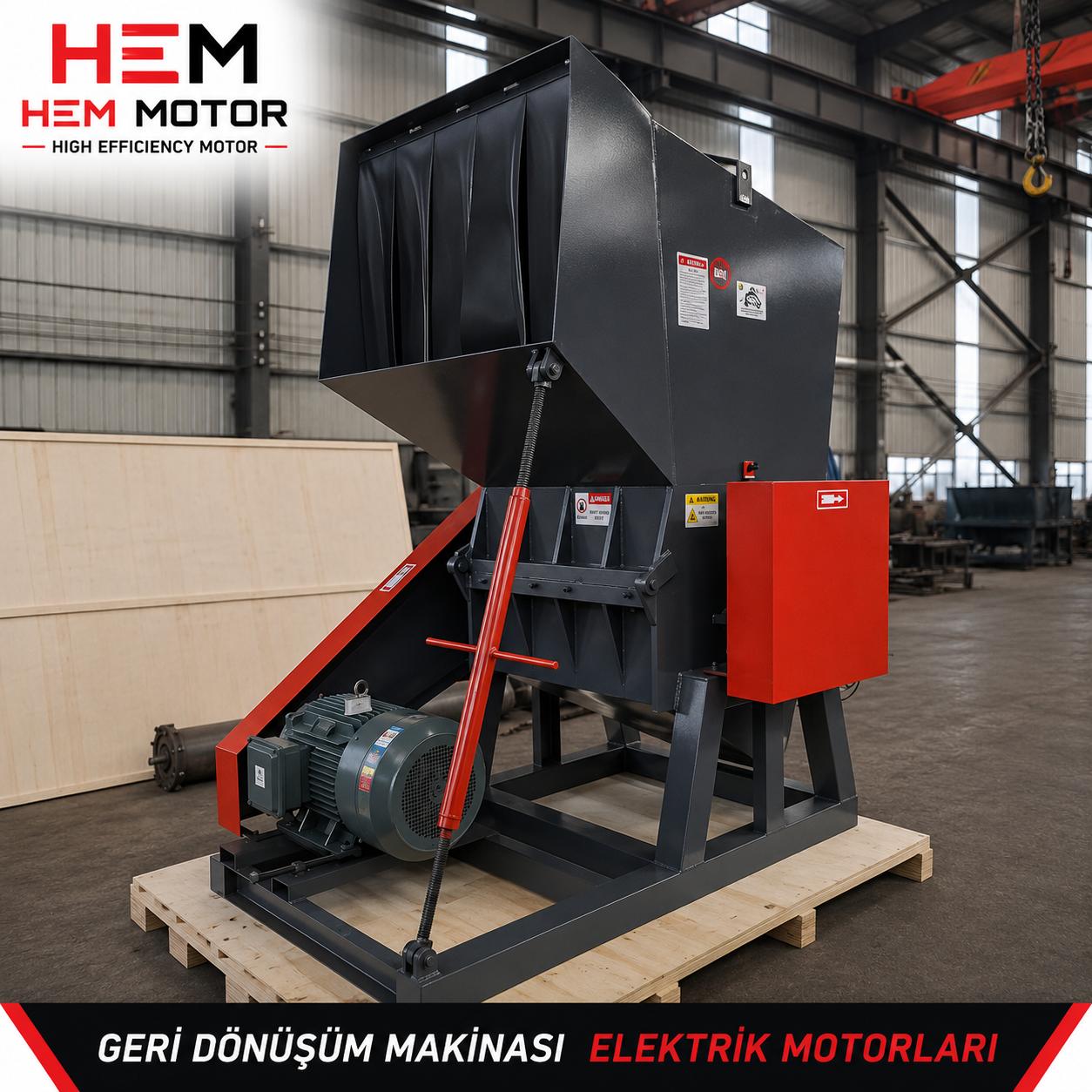
In applications running long hours a day, often without interruption, such as injection and conveying, the motor's efficiency class feeds directly into the energy bill. IE4 efficiency class motors do the same work with less energy loss; while this difference looks negligible on short runs, on long cycles it turns into serious saving across the year.
- Low energy consumption: high efficiency means producing the same mechanical power with less electricity; on a continuously running line this difference accumulates.
- Less heat: inefficiency turns into heat; an IE4 motor runs cooler, extending bearing and winding life.
- Lower operating cost: energy saving over a long life usually repays the IE4 motor's purchase-price gap.
- Stable performance: a high-efficiency motor runs more stably through load fluctuations and trips its protection relay less often.
For this reason, choosing IE4 for continuously running injection and conveying motors is a decision that looks at total operating cost rather than purchase price. In short but impact-heavy cycles such as crushing, however, the priority is shock resistance and the right power margin rather than efficiency.
Practical Steps for the Right Motor Selection
Making the right decision for each motor in an injection and crushing plant becomes clear in the following order:
- Define the load character: will the motor run under impact or steady load? This is the foundation of the whole selection.
- Assess shock and blockage risk: if foreign objects and sudden jams are possible, a wide power margin and high starting torque are essential.
- Account for running time: on long, continuously running motors the IE4 efficiency class comes to the fore.
- Add environmental conditions: temperature, dust and humidity affect both the power margin and the protection class.
When these steps are complete, each motor is selected to suit its own load world. Clarifying the right power, efficiency class and frame type and obtaining a supply quote together with stock status is the soundest way to secure uninterrupted operation of the lines.
The Hidden Costs of a Wrong Load-Profile Choice
A motor selected for the wrong load profile usually causes no trouble on the first day; that is why the mistake goes unnoticed. The problem accumulates quietly over weeks and months and finally reveals itself at the worst moment, at production peak. Seeing these hidden costs makes clear why the right choice must be made from the start:
- Early winding burnout: when too little margin is left on a crusher motor, every blockage and shock torque heats the winding; heat build-up tires the insulation and the motor burns out far ahead of time.
- Accelerated bearing wear: the bearings of a motor running under impact load but not selected for it are damaged early by constant shock.
- Needless energy cost: an oversized motor chosen for a steady-load application such as conveying usually runs at low load and low efficiency, consuming extra electricity.
- Frequent protection trips: a motor that does not match the load profile trips its relay often even in normal operation, causing unwanted line stoppages.
- Repeated maintenance: the same motor fails again and again; each failure brings both part and downtime cost.
The common feature of these costs is that they are invisible at the moment of purchase. However attractive the motor's price tag looks, a wrong load-profile choice turns it into the most expensive item over time. The right decision comes from selecting the motor according to the load world it will work in.
The Injection Machine's Distinct Load Character
Alongside crushing and conveying, the plastic injection machine also has its own distinct load character. The injection cycle consists of stages such as filling, pressure holding, cooling and mould opening, and the load on the motor changes at each stage. This cyclic structure causes the motor to change load frequently and to demand high torque regularly.
- Cyclic load: in every injection cycle the load rises and falls; the motor must be selected to suit this rhythm.
- High continuity: injection lines often run all day, uninterrupted across shifts; this brings the efficiency class to the fore.
- Thermal balance: under continuous cycling it matters that the motor reaches thermal balance and stays stable at that balance.
In an injection application this cyclic and continuous structure demands both the right power margin and a high efficiency class at the same time. Evaluating the suitable motor and, where needed, a compatible reducer together by reviewing our motor and reducer range makes it easier to make a balanced choice according to the cycle load.
How Cooling and Protection Class Relate to the Load Profile
The load profile determines not only the power margin but also the motor's cooling and protection requirements. A motor running under impact and continuous load produces more heat; the cooling capability must be sufficient to expel that heat. Likewise, the crushing and plastics-processing environment is demanding in terms of dust, swarf and moisture; a wrong protection class drives even a motor chosen for the right load profile to early failure.
- Sufficient cooling: on continuously and cyclically running motors, a cooling structure able to dissipate the heat produced is essential; otherwise the winding temperature rises to a critical level.
- Protection against dust and swarf: in a plastic-crushing environment, if airborne particles enter the motor they both disrupt cooling and wear the insulation; the right protection class prevents this.
- Moisture resistance: in plants using cooling water and washdown, protecting the motor against moisture directly affects winding life.
- Hot-environment margin: in plants with high ambient temperature, the motor's cooling capability drops, so the power margin is increased accordingly.
For this reason motor selection is a holistic decision in which load profile, cooling and protection class are considered together. Focusing only on power and neglecting these three dimensions makes a seemingly right choice fail on site. The right motor is the one that meets the load it will carry, the heat it produces and the environment it will sit in all at once.
Frequently Asked Questions
Can I select the crushing and conveying motor by the same criterion?
No, you should not. The crusher works under impact load, sudden blockage and foreign-object shock; it therefore demands a wide power margin, high starting torque and strong shock resistance. The conveying motor, by contrast, turns under steady, predictable load; here the priority is not shock resistance but efficient and stable operation over long hours. Selecting both with the same "how many kW" logic leads to the crusher motor burning out early or the conveying motor being needlessly large and inefficient.
How wide should I set the power margin?
The power margin varies with the load profile. In impact applications experiencing shock and blockage, such as crushing, a generous margin is needed to handle sudden torque peaks. In steady-load applications such as conveying, an exaggerated margin only lowers efficiency and raises cost; a measured margin is enough. Starting frequency and ambient temperature should also be added to the margin; on motors that start often or work in hot environments the margin is kept a little wider.
Is an IE4 motor necessary in every application?
No, the advantage of IE4 depends on running time. On injection and conveying motors running long hours a day, often without interruption, IE4's high efficiency turns into serious energy saving across the year and repays the purchase-price gap. But in short, infrequent or impact-heavy crushing applications, the priority is not efficiency but shock resistance and the right power margin. The IE4 choice should therefore be made by looking at how long the motor will run.