English
 Türkçe



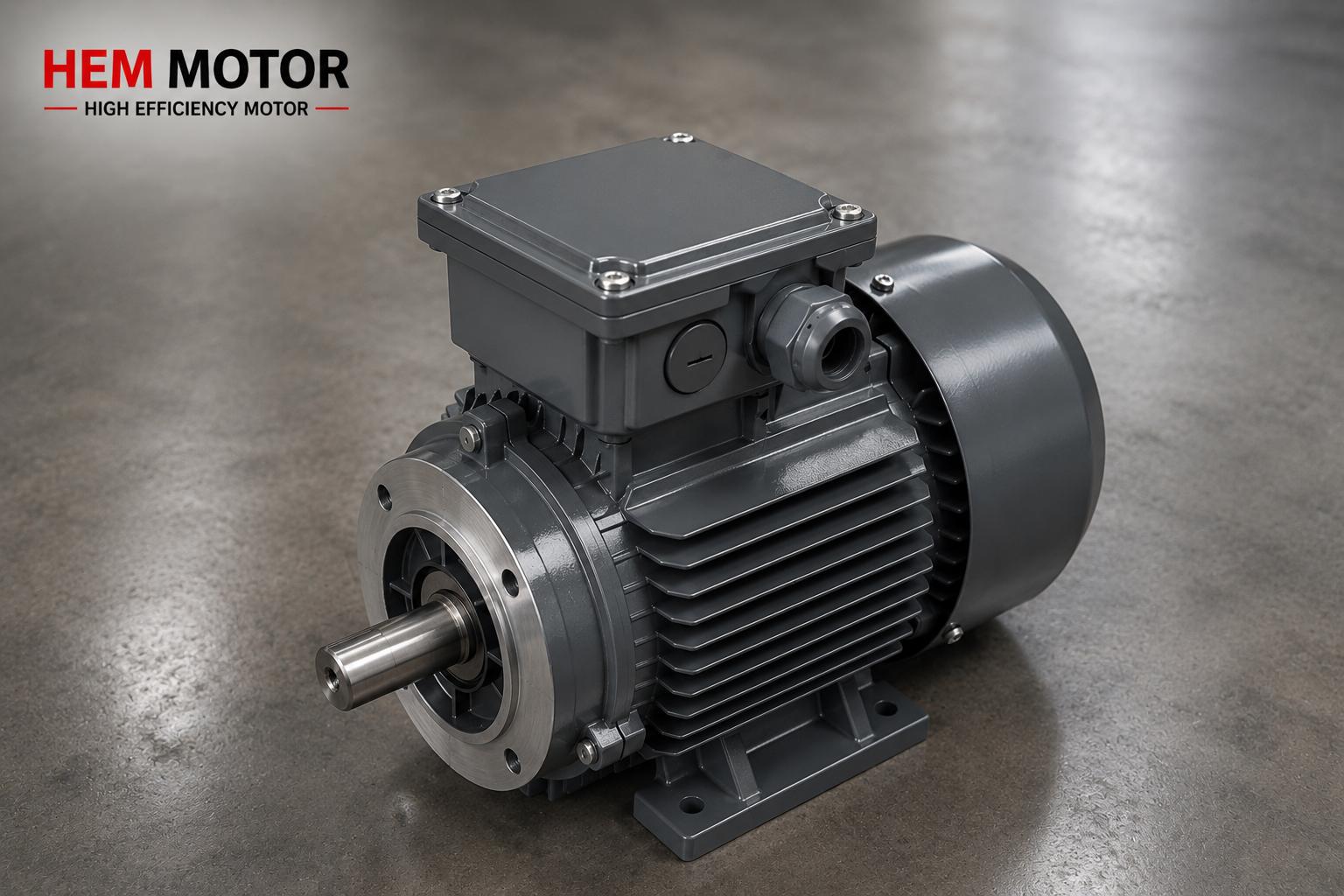

When a conveyor belt motor fails, the situation is far more serious than a single machine stopping. The conveyor is the backbone of a production line; when that belt stops, all the stations it feeds, the packaging lines and the dispatch points stop at once. For this reason a conveyor motor failure is a critical emergency in which minutes turn directly into production loss. The worst move at this moment is sending the burnt motor to a rewinder and waiting for days. The best approach is to turn panic into data in the first minutes, gather the motor's information quickly, and find and fit a direct replacement motor from stock. In this guide we provide what to do in the first 30 minutes of a conveyor belt motor failure, the steps to verify a replacement motor, and the checklists you can use for a direct swap.
Our aim is to enable you to find the right conveyor belt motor replacement in the shortest time and get the line running again when a critical line stops.
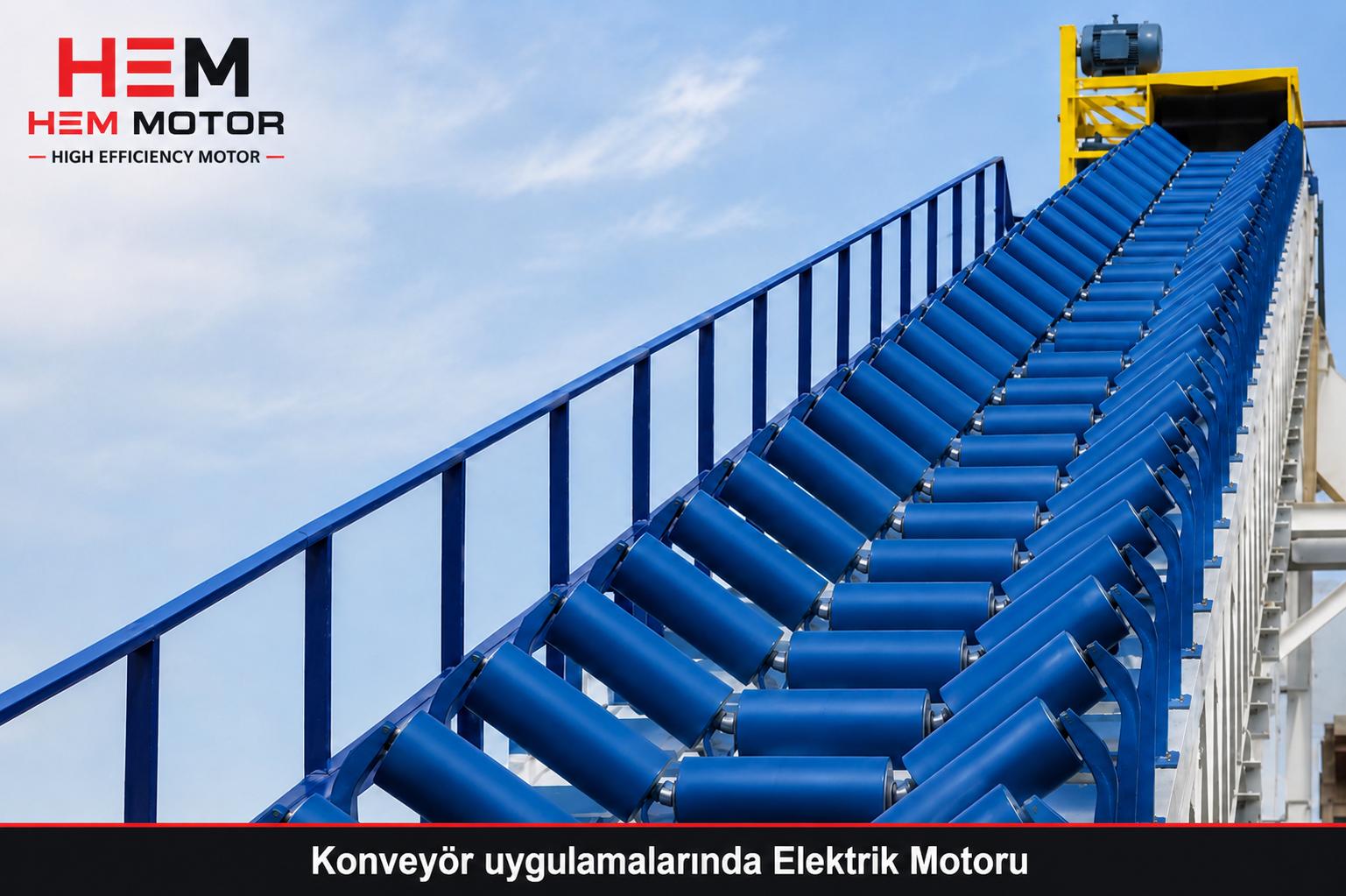
The First 30 Minutes: Turn Panic into Data
At the moment of failure, time is the most valuable resource and panic is the biggest enemy. In the first 30 minutes the goal is to fully document what the motor is and to create the correct replacement request. Using this time with discipline saves you from weeks of uncertainty in the following hours.
- Stop the motor and ensure safety: Cut the power, apply lockout-tagout (LOTO); intervention on a hot or damaged motor must be safe.
- Photograph the nameplate: Clearly record all values on the motor's nameplate (power, speed, voltage, current, frame, mounting).
- Note the mechanical connection: How is it connected to the gearbox (flange, coupling, belt), what is the shaft diameter and direction, on which side?
- Record the failure symptom: Burnt smell, blown fuse, tripping thermal, noise or vibration; this information is valuable for root cause.
When these steps are complete, you have a clear data set to convey to the supplier. Instead of a vague "I need a conveyor motor" request, you create a technical description that makes a direct replacement possible.
Nameplate Values: The Basis of Replacement
A direct replacement relies on transferring the values on the motor's nameplate completely. In a three-phase electric motor replacement, all of the following values must match; if even one does not, the motor either will not seat mechanically or will change the line's speed and performance.
- Power (kW/HP): Directly determines the conveyor's carrying capacity.
- Speed/number of poles: Determines belt speed; the wrong speed disrupts the line's pace.
- Frame size (IEC frame) and mounting type: B3 (foot), B5/B14 (flange) or B35; critical for the gearbox connection.
- Shaft diameter and length: For the coupling or pulley connection to fit.
- Voltage, frequency and protection class: Values such as 400V/50Hz, IP55.
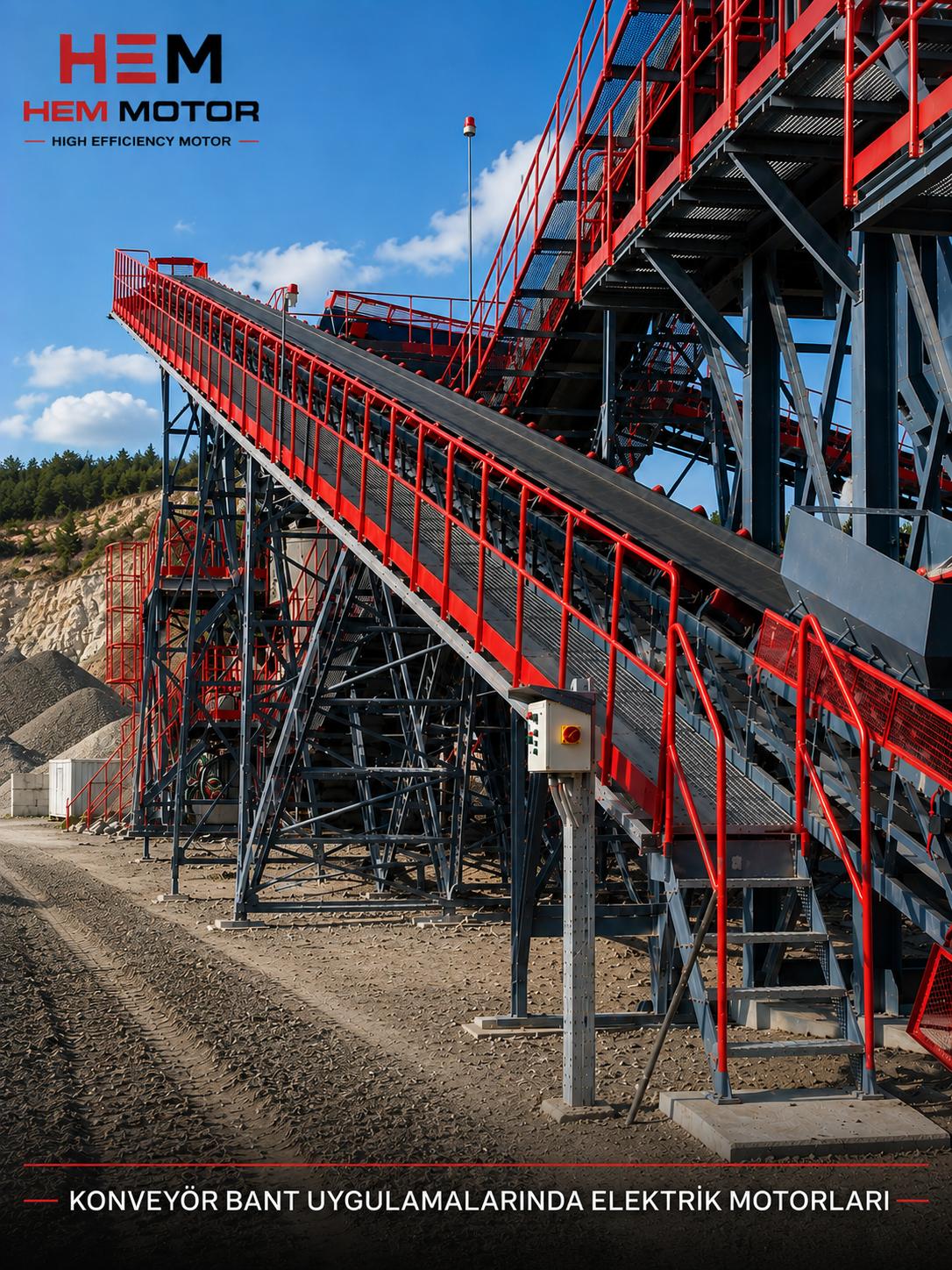
Rewind or Replace? The Right Emergency Decision
Sending the burnt motor to a rewinder looks economical at first glance; but in an emergency line stoppage this choice is often the most expensive decision. The rewind process, together with transport and the workshop cycle, can take 3-7 working days, and the line stops throughout. A direct replacement motor available from stock, however, can be fitted the same day or within hours.
The most robust strategy is this: at the moment of failure, find a direct replacement motor from stock and run the line immediately, while sending the burnt motor for inspection or rewinding in the background. This way production does not stop, and the burnt motor can later be kept as a spare. In terms of stock and supply, planning the direct replacements of critical conveyor motors in advance eliminates waiting time at the moment of failure. For up-to-date electric motor prices and stock availability, the healthiest approach is to clarify your technical specifications and request a quote. For a wider product range you may also evaluate the geared conveyor motor and standard-frame motor options.
Replacement Verification Checklist
You must verify that the replacement motor you found really fits directly before fitting it. The checklist below prevents surprises during installation.
- Do the power (kW) and speed (rpm) values match?
- Are the frame size (IEC frame) and mounting type (B3/B5/B35) the same?
- Do the shaft diameter and length fit the existing coupling/pulley?
- Are the terminal box orientation and cable entry suitable for the installation?
- Are the voltage, frequency and connection type (star/delta) correct?
- Can the rotation direction be set to the conveyor's running direction?
- Is the protection class (IP) suitable for the environmental conditions?
When this list is fully verified, the replacement motor can be fitted safely and the line is recommissioned in the shortest time.
Direct Swap: Installation Steps
After the replacement is verified, the swap must be done quickly but carefully. An incorrectly connected motor can stop the line for longer or damage the new motor.
- Mechanical alignment: The motor must be connected axially aligned to the gearbox or pulley; misalignment shortens bearing and shaft life.
- Rotation direction check: The phase sequence must be checked before energizing; reverse rotation runs the belt in the wrong direction.
- Protection settings: The thermal relay and phase protection must be set to the new motor's current values.
- Test run: A short unloaded test should be done, followed by gradual loading.
Root-Cause Analysis: Not Experiencing the Same Failure Again
Getting the line running again is the first priority; but a replacement done without understanding why the motor burned can quickly lead to the same failure recurring. Conveyor motors often burn not from a direct manufacturing defect but due to operating conditions. For this reason a root-cause inspection must be done after or in parallel with the replacement. The appearance of the burnt motor's winding, which phase was affected and the bearing condition give important clues about the real cause of the failure.
Among the most common causes are continuous overloading, phase loss, voltage imbalance, motor strain due to a jammed belt, and insufficient cooling. For example, if material accumulating on the belt constantly overloads the motor, even the highest-quality replacement motor will burn again over time. Therefore a swap done without removing the root cause of the failure only postpones the problem.
- Overload: Belt jamming or loading above capacity constantly strains the motor.
- Phase loss: The loss of one phase exposes the remaining windings to excess current and burns them.
- Insufficient cooling: A fan cover clogged with dust causes the motor to overheat.
Preparation Before Failure: A Backup Plan for Critical Lines
The fastest case for emergency replacement is when preparation is done before the failure. The nameplate information, mechanical connection details and direct replacement references of the motors running on critical conveyor lines should be recorded in advance. This way, the 30-minute data-gathering process at the moment of failure shrinks to minutes, because the necessary information is already ready.
The strongest preparation is to keep a physical spare motor for critical lines. When a spare motor is ready on the shelf, the line is run immediately without waiting for supply when a failure occurs. This strategy pays for itself within a few failures, especially on lines where the hourly cost of downtime is high. Choosing a motor in a standard frame and common power ratings makes both stocking spares and finding replacements later easier.
- Advance record: Keep the nameplate and connection information of critical motors ready.
- Physical spare: Keep a spare motor on the shelf for lines where downtime is expensive.
- Standard frame preference: Common power and frame make fast replacement possible.
Frequently Asked Questions
Why is replacement recommended instead of rewinding when a conveyor motor burns?
Because rewinding, together with transport and the workshop cycle, can take 3-7 days, and the line stops throughout. A direct replacement motor from stock, however, can be fitted the same day and production continues. The burnt motor can be rewound in the background and kept as a spare.
Which values must match for the replacement motor to fit directly?
Power (kW), speed/number of poles, frame size (IEC frame), mounting type, shaft diameter and length, voltage and frequency must match. If even one of these values does not fit, the motor either will not seat mechanically or will change the belt speed and performance.
What should I do in the first 30 minutes of a failure?
First cut the power and ensure safety (LOTO). Then photograph the motor's nameplate and note the mechanical connection details and failure symptoms. This data set enables you to get a fast and accurate replacement quote from the supplier and turns panic into a structured process.