English
 Türkçe



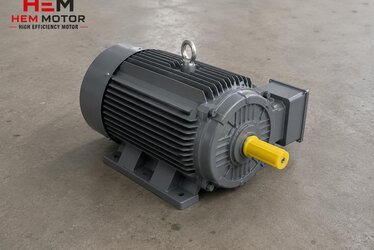
In cement factories, the end of the production line is the packing and bagging section where the product becomes bags and pallets. This section is one of the dustiest and harshest environments in the entire plant: cement dust is constantly suspended in the air, equipment runs continuously at high pace, and the smallest motor failure stops the entire dispatch line. Therefore cement packing and bagging line electric motors require IP66 sealing resistant to extremely dusty environments, continuous heavy duty (S1) and a robust cast iron body. In this guide we address cement bagging line motors on an equipment basis, from the rotary packer to the palletizer robot, from belt feeding to dusty environment IP protection.
Equipment Requiring Motors on the Cement Packing and Bagging Line
When planning the bagging line from a motor requirement perspective, the line must be separated into filling, transport, palletizing and auxiliary systems. Each piece of equipment requires a different load profile and speed range, but the environmental condition (extreme dust) is common to all.
Rotary Packer Drive
In high-capacity cement plants, bags are filled with a rotary packer that has multiple filling spouts arranged on a rotating carousel. The carousel rotates continuously and each filling spout fills a bag in turn. This drive demands constant and continuous torque; S1 duty type is essential. The motor is usually 4-pole, cast iron body, high-efficiency and matched with a reducer to turn the carousel at low speed. For reducer-motor matching, the IEC frame and flange matching for worm gear reducers guide is used; worm gear reducers and bevel helical reducers are common in this application.
Palletizer and Robot Arm
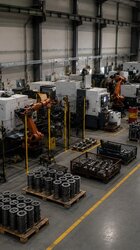
Filled bags are stacked onto pallets with a palletizer machine or robot arm. The palletizer has separate motors for lifting, transport and stacking; these movements have a start-stop profile, so frequent cycling and high starting torque are important. For motor selection logic in robotic stacking lines, the press, CNC and robot line motor supply content serves as an example. In palletizer drives, the flange type must be selected correctly for compatibility with the reducer input.
Belt Feed and Bag Transport Conveyors
Empty bags are conveyed to the filling spout and filled bags to the palletizer. These belt drives are medium-power, continuously running motors. For conveyor motor selection, the belt motors and packaging machinery motors in the efficient electric motors category come to the fore. To avoid stopping the line in case of a sudden conveyor motor failure, a conveyor belt motor emergency replacement list should be kept ready.
Dust Collection (Aspiration) and Fan Motors
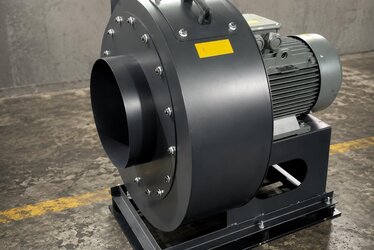
To remove cement dust from filling and packing points, aspirator and bag filter (jet pulse) fans operate. These fan motors are continuous-duty, high-efficiency motors. For dust collection fan motor selection, the fan motor selection in aspirator and dust collection systems content is a direct reference.
Extremely Dusty Environment and IP66 Sealing
The most defining requirement of the cement bagging line is dust sealing. Fine cement dust suspended in the air can penetrate the smallest opening of a standard motor and damage the winding insulation, bearings and cooling fan. Therefore protection class and sealing design must be selected carefully.
Why Is IP55 Insufficient, Why Is IP66 Necessary?
The standard industrial motor is in IP55 protection class and provides protection against dust; however, in environments with very fine and continuously suspended dust such as cement, complete dust-tightness (IP6x) is required. IP66 provides complete dust-tightness and protection against powerful water jets; this both prevents dust ingress and enables surface cleaning by pressurized washing. For the distinction between IP protection classes, the dust sealing and IP65/IP66 protection content is a direct reference. For the dusty cement process in general, the cement factory electric motors content is also complementary.
Sealing Details: Terminal Box and Bearings
Dust sealing does not end with the protection class label alone; terminal box sealing, cable glands and bearing seals must also be selected to keep dust out. For terminal and cable connection, the cast iron motor terminal box and cable connection content provides direction. To preserve bearing life in a dust and wear environment, the principles of bearing and bearing life in cast iron motors must be observed.
Cast Iron Body and Cooling
In continuously running, frequently cycling bagging motors, the cast iron body provides mechanical strength and heat dissipation. In a dusty environment, the motor's cooling fan and fins can become clogged with dust accumulation; therefore periodic cleaning and correct cooling design are important. On cooling, the IE4 motor cooling and fan design content provides direction. For body protection in open and dusty fields, the corrosion and open field in cast iron motors content can also be evaluated.
Heavy Duty, Power and Efficiency Selection
When sizing a motor on the cement bagging line, duty type (S1 heavy duty), capacity (bags/hour) and efficiency class must be evaluated together.
S1 Heavy Duty Duty Type
The bagging line mostly runs uninterrupted throughout the shift; therefore motors must be suitable for S1 continuous duty. In start-stop equipment such as palletizers, frequent cycling and high starting torque are at the forefront. Operating at the correct load ratio is critical for efficiency and lifetime; the motor load ratio, efficiency and correct sizing guide provides direction. For managing the motor fleet in three-shift plants, the three-shift facilities motor fleet management content is useful.
Efficiency Class: IE3 and IE4
Energy cost is high in continuously running bagging and aspiration motors. IE3 is mandatory for three-phase motors of 0.75 kW and above, and IE4 in certain power ranges. For the investment decision, IE3 vs IE4 investment and TCO calculation should be reviewed. For the mandate timeline, refer to the IE3/IE4 efficiency mandate regulation.
Pole, Speed and Capacity
Rotary packer and conveyor drives mostly run on 4- or 6-pole motors, while aspirator fans run on 2- or 4-pole motors. Pole selection determines output speed; the 2/4/6 pole selection in asynchronous motors content is a reference. When variable capacity is needed, using a VFD frequency drive with an asynchronous motor adjusts the line speed to demand.
Connection, Replacement and Supply Planning
In bagging line equipment, the motor is usually connected to the equipment via a reducer. Flange and shaft compatibility must be exact with the machine. For flange selection use B5 vs B14 mounting type selection; for shaft and key compatibility use the motor shaft diameter and key dimensions guides. When replacing the existing motor one-to-one, the nameplate matching and old brand motor direct replacement contents provide direction. Since downtime cost is high in plants producing 24/7 like cement, critical spare motor stock is essential; the critical spare motor list and stock planning and from stock delivery vs production order contents clarify your supply strategy.
Commissioning, Monitoring and Maintenance
Commissioning a motor on the cement bagging line begins with correct lubrication of the reducer and drive chain and checking the rotation direction. The rotary packer carousel rotating in the wrong direction causes filling errors. For first-start steps, the commissioning and first startup checklist should be followed. In frequently cycling palletizer motors, the starting frequency must be compatible with the duty type; excessive cycling heats the motor.
In an extremely dusty environment, the most critical maintenance item is cleaning the dust accumulation on the cooling fan and fins; a clogged cooling motor overheats. Temperature monitoring (PT100 and thermistor) catches this risk early; the motor temperature monitoring with PT100 and thermistor content provides direction. To recognize similar fault symptoms in the dusty cement process, the electric motor failures symptoms and causes content is useful. For warranty coverage, the electric motor warranty coverage should be reviewed.
Energy Efficiency and Total Cost
In 24/7 running bagging and aspiration motors, energy is the largest item of annual cost. To compile the plant motor inventory by efficiency class, an energy efficiency audit and motor inventory study is recommended. For the payback of replacing old motors with high-efficiency ones, the replacing the old motor with IE4 and payback content can be reviewed. For savings with a frequency drive in aspirator fans, the high-efficiency motor and frequency drive savings resource is helpful.
Shipping, Commissioning and Regional Supply
Cement factories are mostly in out-of-town locations close to quarries; shipping planning is important. To reduce the risk of damage in shipping, the electric motor shipping damage checklist should be followed. For shipping to facilities in Anatolia, the motor shipping guide to Anatolia facilities and for Central Anatolia the Ankara and Central Anatolia supply contents provide direction. For other main equipment motors in the cement plant, the cement factory electric motors content is complementary. You can reach our entire product range via our homepage.
Frequently Asked Questions
Why is IP55 insufficient in a cement bagging motor?
IP55 provides protection against dust but not complete sealing. Because cement dust is very fine and continuously suspended in the air, it can penetrate through the smallest opening and damage the winding and bearings. IP66 provides complete dust-tightness and protection against powerful water jets, keeping dust out and allowing pressurized washing; therefore it is preferred on the bagging line.
How many poles should a rotary packer motor have?
The rotary packer carousel rotates at low speed with constant, continuous torque. Therefore a 4-pole motor is usually matched with a reducer and reduced to a low output speed. S1 continuous duty and a high efficiency class are essential. Power is determined according to capacity (bags/hour).
Why is a spare motor critical on the bagging line?
Cement plants mostly produce 24/7 and the bagging line is the single outlet point of dispatch. A single motor failure stops all dispatch and incurs high cost. Therefore keeping an exact spare motor in stock for critical equipment such as the rotary packer, palletizer and aspirator minimizes downtime.
Get a Quote
For your cement packing and bagging line, let us jointly determine the correct power, speed and dust sealing for rotary packer, palletizer, belt feed and aspirator motors. For fast supply of IP66 fully sealed, cast iron body, S1 heavy-duty motors suitable for extremely dusty environments, contact us: +90 (532) 345 49 86. Share your line capacity and equipment list and reach us via our contact page; we will prepare a quote the same day.
Purchasing and Selection Checklist
- Has power (kW), pole/speed and duty type (S1 heavy duty) been determined for each piece of equipment?
- Has IP66 complete dust-tightness been requested for the extremely dusty environment?
- Have terminal box sealing, cable glands and bearing seals been selected against dust?
- Has IE3/IE4 efficiency class been verified for continuous equipment?
- Has high starting torque been planned for frequently cycling equipment such as palletizers?
- Has IEC frame and flange compatibility with the reducer input been verified?
- Has an exact spare motor in stock been planned for the rotary packer, palletizer and aspirator?
- Have nameplate, shaft diameter and flange dimensions been checked one-to-one when replacing the existing motor?