English
 Türkçe

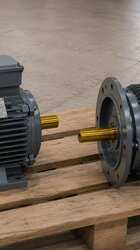
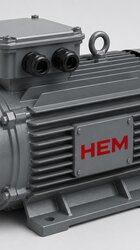
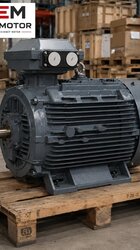

When buying an electric motor, the topic of warranty is brushed over in most talks with a single sentence: "two-year warranty." This sentence gives the buyer confidence, and usually no further questions are asked. Yet the real importance of a warranty emerges not while the motor runs smoothly, but when it fails. At that moment, questions whose answers were never clarified surface one by one: Is winding burnout covered? Who will remove the motor from its place? Will the faulty motor be repaired or replaced with a new one? Will the production line stop during this process, and if so, who bears that time? When these questions are not clarified at the moment of purchase, a simple failure can turn into weeks of uncertainty. In this guide we explain what a standard electric motor warranty does and does not cover, plus the questions you should ask before buying, with a checklist.
Our aim is to help you understand the right electric motor warranty and, by asking the right questions before buying, eliminate the uncertainties you might face later.
What Exactly Does a Warranty Cover?
A standard manufacturer's warranty usually covers material and workmanship defects. That is, if a defect arising from the motor's manufacture (faulty winding, defective bearing, casting flaw, etc.) appears within the warranty period, the manufacturer remedies it. But the limits of the warranty are narrower than most buyers think.
- Within scope: Defects arising from production, material and workmanship; failures occurring under normal operating conditions.
- Usually out of scope: Incorrect installation, overloading, voltage imbalance, dry running, flooding, lightning, wrong supply and user-caused damage.
- Disputed area: Winding burnout. Whether the cause of burnout is a manufacturing defect or an operating condition is often determined by inspection.
For this reason, the phrase "two-year warranty" alone does not give enough information; what really matters is which types of failure are covered and how out-of-scope situations are defined.
Winding Burnout: The Most Critical Question
The most common serious failure in electric motors is winding burnout. But burnout does not always arise from a manufacturing defect; overload, phase loss, voltage imbalance, insufficient cooling and frequent starting can also burn the winding. In this case the critical question is: when the winding burns, will the manufacturer evaluate it within the warranty, or exclude it as "operating error"?
When buying a three-phase electric motor, you need to clarify from the start how an inspection will be conducted in case of winding burnout and under what conditions it is considered within scope. Using protective equipment such as a phase protection relay and thermal protection both prevents the failure and supports the operator's position in warranty disputes.
The Invisible Dimension of Warranty: Logistics and Downtime
A warranty is not just about "will the faulty part be replaced." The real cost and delay are often hidden in logistics and downtime. When a motor fails, if the following questions are not clear, the process drags on for weeks:
- Who does the removal? Is removing the faulty motor and fitting the new one within the warranty, or is this labour the buyer's?
- Who pays for transport? Who covers the cost of sending the motor for inspection and bringing it back?
- Repair or new one? Will the manufacturer choose to repair the motor or replace it with a new one? Repair may take longer than a new motor.
- Inspection time: How long will it take to determine whether the failure is within warranty?
- Will the line stop? If production stops during this process, what backup solution will the operator use?
When these questions are not discussed at the moment of purchase, even if the warranty "exists," the process becomes unworkable in practice and the operator is forced to wait at the moment of greatest need.
Spare Motor Strategy: The Complement to Warranty
A warranty can partly cover the cost of a failure; but it does not compensate for production downtime. For a motor running on a critical line, the most robust strategy is to keep a spare motor alongside the warranty. At the moment of failure the spare motor is fitted, production continues, and the warranty process of the faulty motor runs in the background. In terms of stock and supply, planning spares for critical motors in advance secures uninterrupted production together with the warranty. For up-to-date electric motor prices and stock availability, the healthiest approach is to clarify your technical specifications and request a quote. For a wider product range you may also evaluate the warrantied electric motor and standard-frame motor options.
Warranty Document and Registration: The Details on Paper
For the warranty to work in practice, the documents obtained at the moment of purchase must be complete and kept. When a failure occurs, the first thing requested is the presentation of the invoice and warranty document. When these documents are lost or the warranty start date is not clarified, even an in-scope failure can be excluded. For this reason the motor's serial number, invoice date and warranty terms should be recorded together.
Some manufacturers require that the motor was commissioned under certain conditions for the warranty to be valid: for example, fitting suitable protective equipment, supply at the correct voltage and installation by an authorized person. When these conditions are not met, the warranty may be deemed void. Therefore a warranty is a right to be protected not only at purchase but also throughout commissioning and operation.
- Document keeping: Invoice, warranty document and serial number should be kept together.
- Commissioning record: Protective equipment and correct installation should be documented.
- Start date: The date from which the warranty period runs should be in writing.
Warranty and After-Sales Service Are Not the Same
Most businesses confuse warranty with after-sales service. A warranty is a commitment against production and material defects for a certain period; after-sales service is the technical support, spare-parts supply and replacement availability that continue even after the warranty ends. A motor's real value is measured as much by spare-part and replacement availability after the warranty ends as by the warranty period itself.
A motor produced in standard frame dimensions and common power ratings can be easily supported even in the post-warranty period, because parts such as bearings, end shields and terminal boxes, along with a direct replacement motor, can be obtained quickly. For this reason, in the purchase decision, you should look not only at the warranty period but also at long-term support and supply continuity.
- Warranty: A commitment against production/material defects for a set period.
- After-sales service: Support and spare-parts access continuing even after the warranty ends.
- Supply continuity: The ability to find replacements and spares later determines real value.
Checklist Before Buying
Before buying a motor, asking the following warranty-related questions clearly eliminates the uncertainties you might face later:
- How long is the warranty and from which date does it start (invoice or commissioning)?
- Which types of failure are within scope and which are out of scope?
- How is winding burnout evaluated and how does the inspection process work?
- Who is responsible for removal, installation and transport labour?
- In case of failure, is repair or replacement preferred, and what is the typical duration?
- Is a spare motor provided under warranty, or is waiting required?
- What protective equipment (thermal, phase relay) is required for the warranty to be valid?
Reviewing this list during the purchase discussion reveals the real conditions behind the phrase "two-year warranty" and prevents surprises at the moment of failure.
Frequently Asked Questions
Is winding burnout always covered by warranty?
No. If the winding burnout arises from a manufacturing defect it is usually within scope; but if it burned due to overload, phase loss, voltage imbalance or misuse, it is mostly considered out of scope. For this reason, using protective equipment and documenting the cause of failure is important.
Does the warranty cover the cost of my production downtime?
Standard warranties usually cover only the repair or replacement of the faulty product; they do not cover indirect losses from production downtime. For this reason, keeping a spare motor on critical lines is the most effective protection against downtime cost.
When does the warranty period start?
This varies from seller to seller; for some it starts from the invoice date, for others from the commissioning date. For a motor that has waited in stock a long time, this difference can be important. For this reason the warranty start date should be clarified at the moment of purchase.