English
 Türkçe

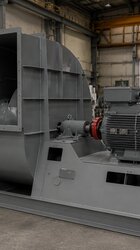
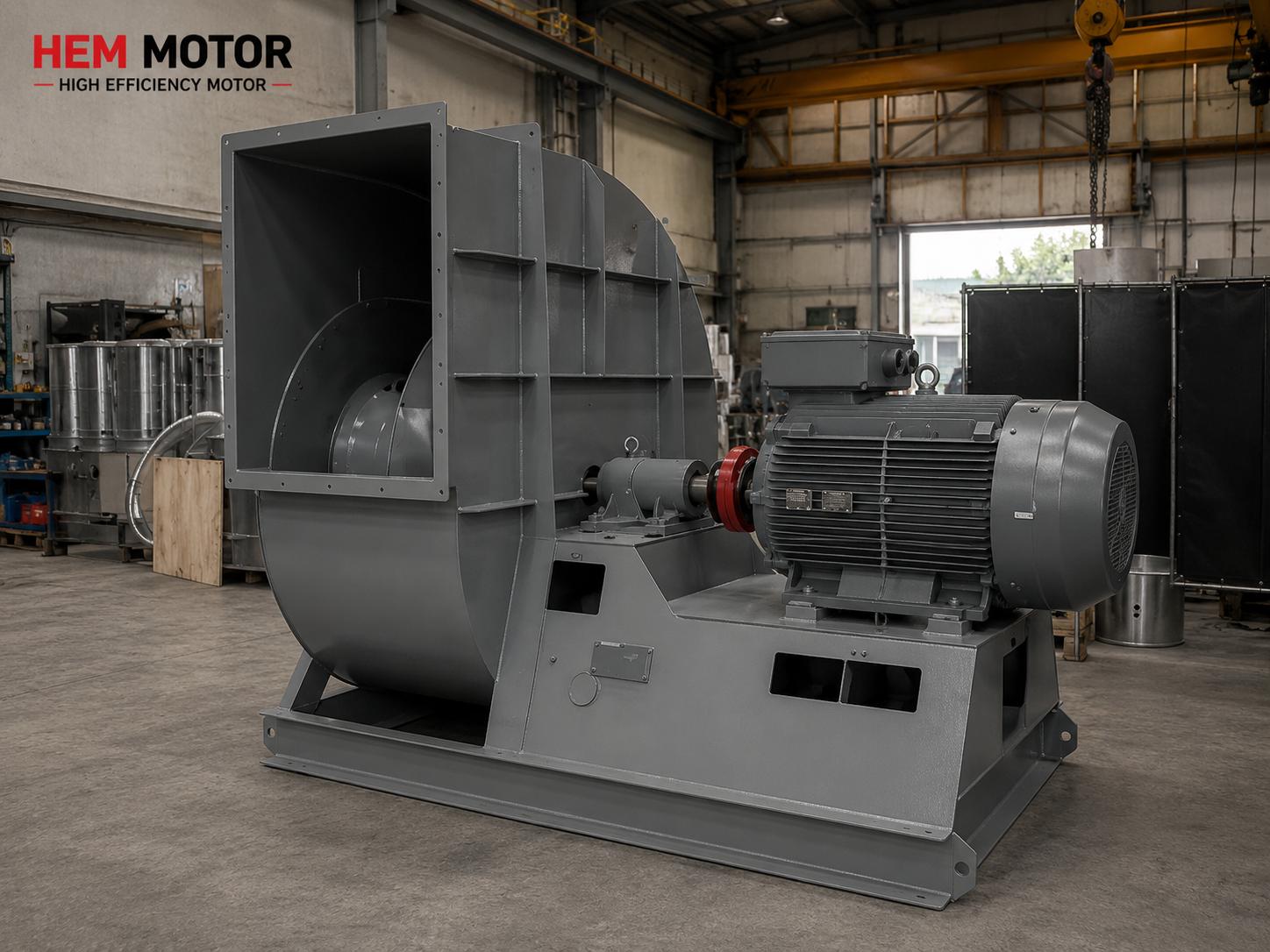

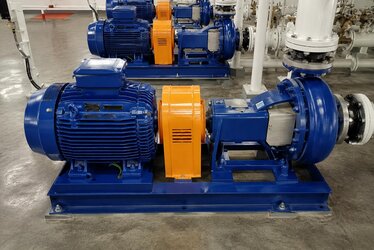
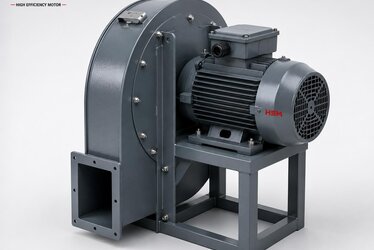
If an extraction system runs next to the band saw in your woodworking shop, on the elevator line of your grain mill, or in the grinding section of your foundry, then the heart of that system is the fan motor. In dust collection and extraction applications, a wrongly selected motor either leaves the suction power inadequate or fails quickly in the dusty environment. In this article we explain fan motor selection specifically for dust collection and extraction systems: which protection class is needed in dusty conditions, which duty type is mandatory for continuous operation, how speed relates to airflow, and how to determine the right motor for radial and centrifugal fans. As HEM Motor, with our identity as both manufacturer and seller, we supply fan motors suited to extraction systems quickly from stock.
Unlike general ventilation and smoke exhaust applications, this article is written specifically for dust collection and extraction. HVAC projects and emergency smoke exhaust systems have different dynamics; you can review our separate articles on HVAC fan motor supply and smoke exhaust fan motors. Here our focus is industrial extraction lines where dust, shavings and particulate are heavy and the motor runs without interruption all day long.
The Role of the Fan Motor in Dust Collection Systems
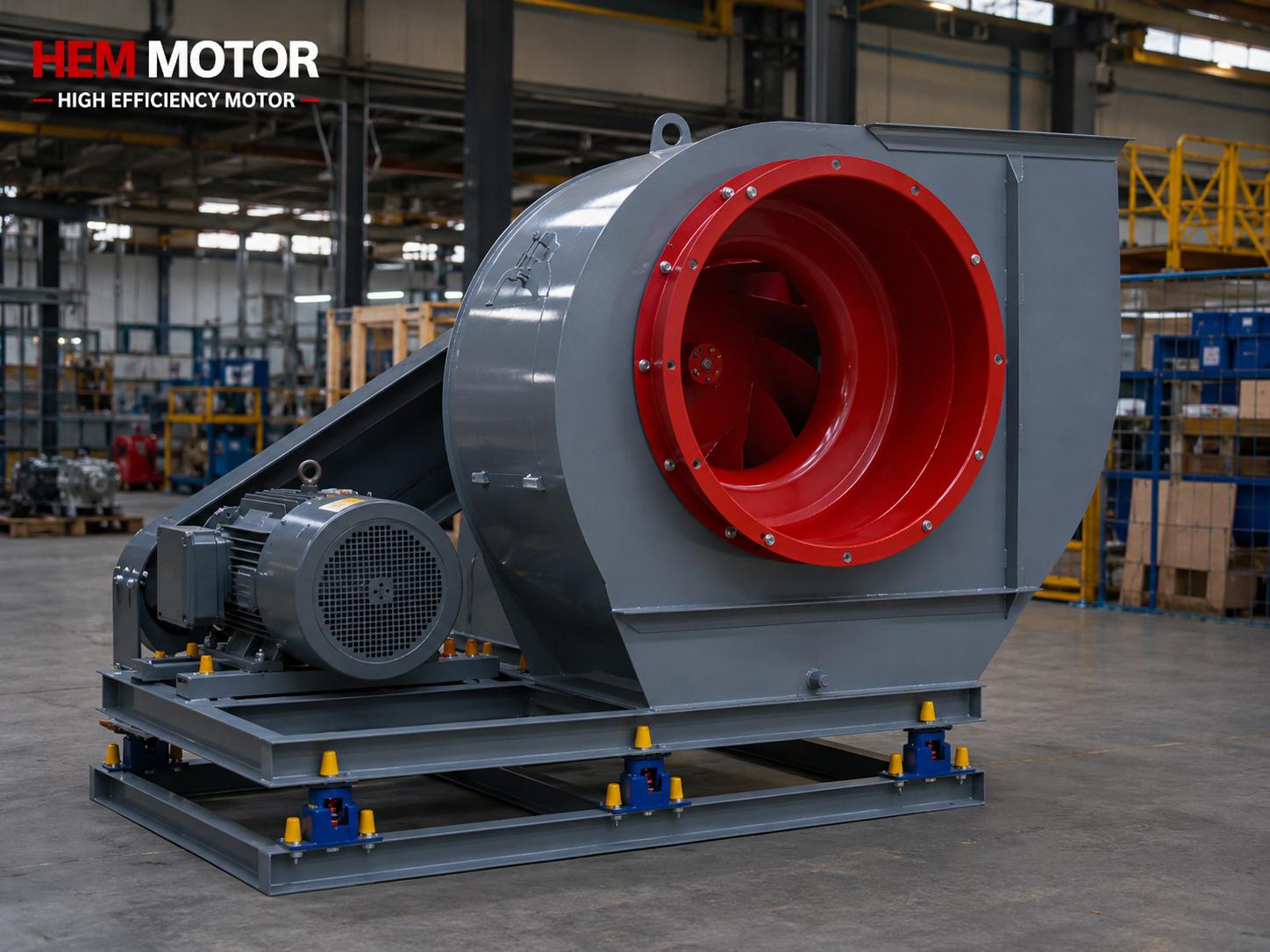
A dust collection system consists of suction hoods, a ducting network, a filter unit (bag or cartridge filter), and the fan that drives this airflow. The motor turning the fan is responsible for almost all of the energy the system consumes. For this reason, motor selection is not simply a question of "how many kW"; parameters such as how dusty the environment is, the operating duration and the required airflow directly determine the motor type. In extraction lines the motor usually drives a radial (centrifugal) fan, because radial fans have the character to push dusty air at high pressure through long duct runs. Choosing the wrong fan motor in an extraction system creates a chain of problems: an underpowered motor loses suction as the filter clogs and dust accumulates in the workspace; an oversized motor wastes energy unnecessarily and raises the investment cost. That is why matching the motor to the system's actual airflow and pressure requirement directly determines both performance and operating cost.
Woodworking Shops and Furniture Production
In woodworking shops, band saws, planers, calibrating sanders and milling machines generate heavy shavings and fine dust. Continuously extracting this dust from the environment is mandatory both for worker health and fire safety. Here the fan motor runs without interruption all day long, so it must be suited to a continuous duty regime (S1) and to the IP55 protection class that withstands a dusty environment. Our article on the woodworking workshop motor requirement list, which collectively covers the motors needed when setting up a woodworking shop, also addresses the other machine motors beyond extraction.
Grain, Mill and Feed Facilities
In flour mills, feed factories and grain processing facilities, extraction is critical both for product conveying and dust control. In these plants, flour dust and grain dust both carry an explosion risk and abrade the equipment. Here too, the extraction and fan motors must be suited to S1 continuous operation and protected to IP55. You can review all mill and feed facility motors in our feed factory and mill motors article.
Foundry, Grinding and Metalworking
In foundries, sand and metal dust, and in grinding and sanding sections metal particles, demand heavy extraction. In these environments the dust is both abrasive and heavy; therefore the fan and motor require higher pressure and a rugged construction. Cast iron body, IP55 protected motors with reinforced bearings are preferred under these tough conditions. Because metal dust is conductive and creates a short circuit risk when it leaks into the terminal box, motors with solid sealing are also especially important in this sector. Since the extraction fan in foundry and grinding lines usually works against high static pressure, the motor is also expected to be of a power and a sturdy body capable of carrying this continuous high load.
Motor Protection in a Dusty Environment: Why IP55?
The motor of a dust collection system, by definition, runs in a dusty environment. Fine dust entering the motor insulates the windings, blocks cooling and abrades the bearings. For this reason the IP55 protection class is accepted as standard in extraction and dust collection applications. IP55 means the motor is protected against dust and resistant to water jets coming from every direction. Especially in environments with very fine and dense dust (for example flour or wood dust), the soundness of the cooling fan cover and the terminal box gaskets is also important. Our industrial fan motor range is produced for exactly this purpose with IP55 protection, F-class insulation and a heavy-duty bearing structure.
In much dustier or more humid special environments, protection classes above IP55 (for example IP56/IP65) may also be requested. Correctly determining which protection class your application truly requires lets you both avoid unnecessary cost and prevent the motor from failing prematurely. On this subject, our article on cast iron or aluminum frame guides body and protection selection according to ambient conditions.
Continuous Operation: Why Is S1 Duty Type Essential?
Dust collection systems generally run without interruption throughout production, that is for the duration of the shift. The motor turns for hours, even days, without stopping. For this reason it is essential that the fan motor is suited to a continuous duty type, namely the S1 duty regime. S1 expresses that the motor can run continuously at its rated power until it reaches thermal equilibrium. Using a motor designed for intermittent operation on a continuous extraction line leads to overheating and early winding failure.
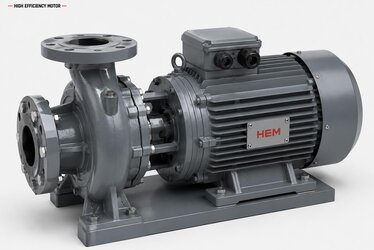
HEM's ventilation electric motors series is produced for radial fan, scroll fan and general ventilation applications, suited to S1 continuous operation, with 100% copper windings and a cast iron body. In a continuously running system the efficiency class is also directly reflected in the electricity bill; that is why IE4 motor and IE3 options provide significant savings over the long term. We detailed the effect of the efficiency class in fan applications in our article on the IE4 threshold in pumps, fans and compressors.
The Speed-Airflow Relationship: Choosing the Right Motor Speed
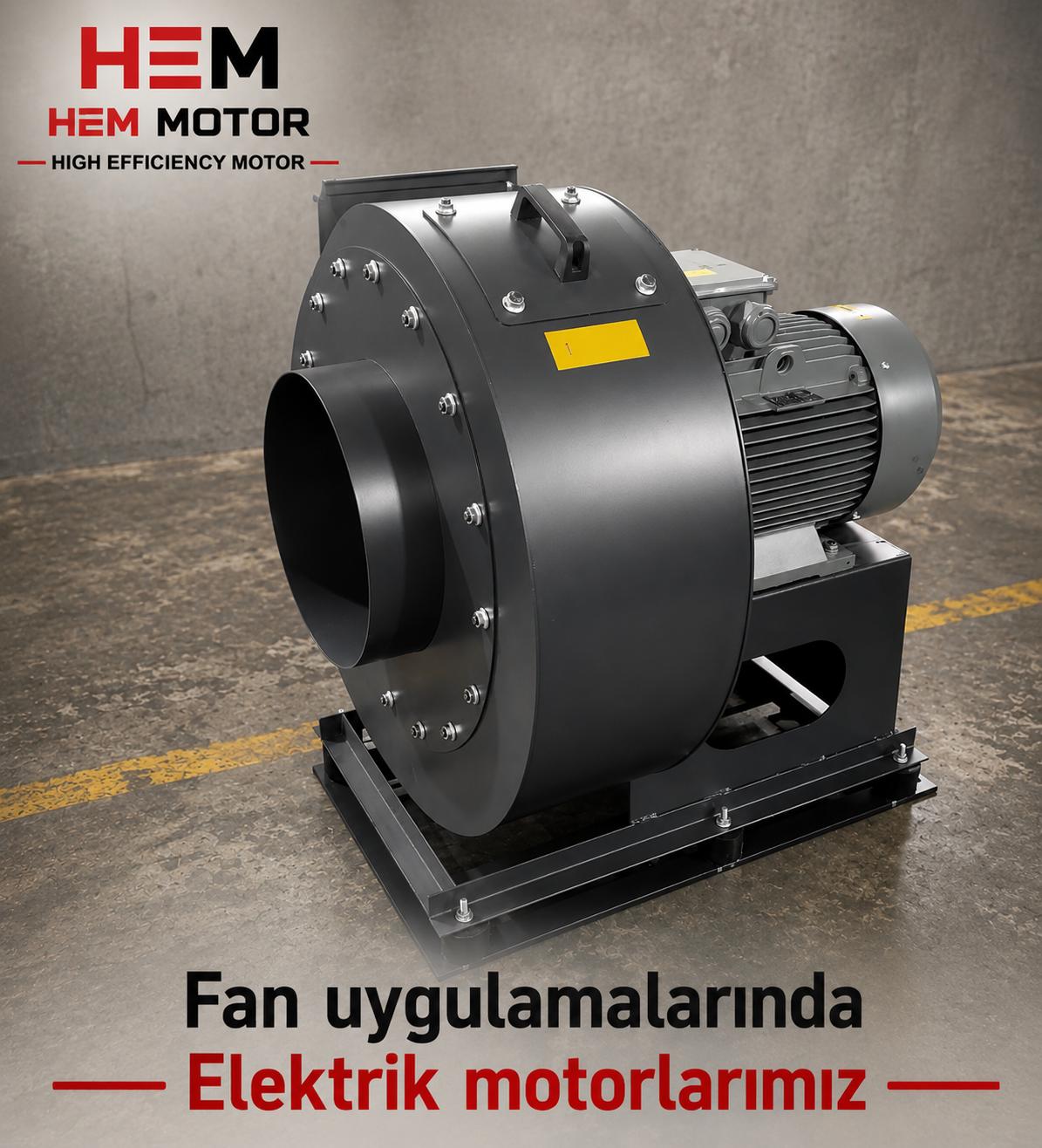
In an extraction system the motor speed directly determines the airflow (air volume) and pressure the fan delivers. According to fan laws, airflow varies in direct proportion to speed, pressure with the square of the speed, and power with the cube of the speed. This clearly shows how much the speed selection affects energy consumption. In practice, the most commonly used speeds in extraction and dust collection applications are as follows:
- 3000 rpm (2 pole): High-speed, high-airflow extractors and compact fan applications. Preferred at points requiring high suction.
- 1500 rpm (4 pole): The most balanced choice for most general extraction and radial fan applications; ideal in terms of efficiency and noise.
- 1000 rpm (6 pole): For large-diameter fans and systems requiring quieter operation.
To select the right speed you need to know the airflow and pressure values the system requires. At the wrong speed the motor either provides insufficient suction or consumes more energy than necessary. If you are undecided about pole count and speed selection, our asynchronous motor pole selection guide offers a clear framework. Since the fan motor is mostly a three-phase motor, the three-phase mains connection and the correct direction of rotation are as important as the selection itself.
Radial (Centrifugal) Fan or Axial Fan?
In dust collection systems the fan type also affects motor selection. There are two main types:
- Radial (centrifugal) fan: Directs the air through 90 degrees to produce high pressure. Preferred in long duct runs, filtered systems and high-resistance extraction. The vast majority of dust collection systems use radial fans.
- Axial fan: Pushes the air along the axis, providing high airflow but low pressure. More suitable for general ventilation and cooling; it falls short on high-resistance dust lines.
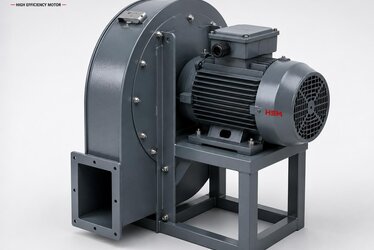
Since dust collection and extraction predominantly use radial fans, the motor is also selected according to the pressure and continuity conditions this fan requires. For scroll-housing radial fans, B3 foot-mounted or B5 flange-mounted motors are widely used. Our B5 or B14 guide makes mounting type selection easier.
The way the motor connects to the fan also affects the selection. In directly coupled systems (the motor shaft connected directly to the fan impeller) the motor speed equals the fan speed; in this case you need to achieve the desired airflow with a motor of the right speed. In belt-and-pulley driven systems, the fan speed can be adjusted via the pulley ratio, so different fan speeds are obtained with a standard-speed motor. Although directly coupled systems are quieter and require less maintenance, belt-and-pulley systems offer speed flexibility. Depending on the design of your extraction line, one of these two methods is chosen and the motor is sized accordingly.
Practices That Extend Motor Life in a Dusty Environment
Selecting the right motor is as important as using it correctly in the dusty environment when it comes to life. The practices that extend motor life on extraction lines are as follows:
- Keep the cooling fan cover clean: If the grille of the motor's rear cooling fan is clogged with dust, the motor cannot cool sufficiently and overheats. Periodic cleaning is simple but very effective.
- Check the terminal seals: Dust entering the terminal box creates a risk of sparking and short circuit at the connections. The soundness of the gasket and cable glands must be maintained.
- Follow bearing maintenance: In dusty and heavy-duty applications, the bearing is the most worn part of the motor. A reinforced bearing structure and regular inspection extend life.
- Run at the right power: As the filter clogs, system resistance increases; if the motor is continuously overloaded it overheats. Filter maintenance also protects the motor's life.
These practices noticeably reduce motor failures, especially in environments where fine particles such as wood dust and flour dust are heavy. Cast iron body, IP55 protected motors designed for dusty environments also minimize this maintenance burden.
Sourcing the Right Motor from Stock for the Extraction Line
When the fan motor in a dust collection system fails, the system stops and the production environment quickly fills with dust; this is unacceptable both for worker health and for continuity. For this reason, rapid replacement is critical for extraction and fan motors. As HEM Motor, we keep industrial fan motors and ventilation motors ready in stock in the most requested power and speed combinations. You can see all efficient motor options in our efficient electric motors category. In an emergency replacement, sharing the nameplate information of the existing motor enables us to supply the right motor in the shortest time.
Summary Checklist for Extraction Fan Motor Selection
When selecting a fan motor for a dust collection system, clarify the following points: the protection class suited to the dustiness of the environment (generally IP55), the S1 duty type for continuous operation, the speed suited to the system's airflow and pressure requirement (generally 1500 or 3000 rpm), the mounting suited to the fan type (B3/B5), and a high efficiency class because of the continuous operation (IE3/IE4). For the right power and body match, our frame size and power matching guide helps you select a motor that is neither too small nor too large. If you are renewing an existing extractor motor, our article on direct replacement of an old brand motor guides you in a one-to-one match from the nameplate information.
Frequently Asked Questions
Which protection class is needed for a dust collection fan motor?
In extraction and dust collection applications, the IP55 protection class is recommended as standard. IP55 means the motor is protected against dust and resistant to water jets. In environments with very fine and dense dust, or in humid special environments, classes above IP55 may also be requested. If you tell us the dustiness and humidity conditions of your application, we determine the right protection class together.
Why must an extractor motor be suited to continuous operation (S1)?
Dust collection systems run without interruption throughout the shift. The S1 duty type shows that the motor can run continuously at its rated power and in thermal equilibrium. A motor designed for intermittent operation overheats on a continuous extraction line and its winding fails early. For this reason the S1 continuous duty regime is essential for extraction and fan motors.
How do I determine the power of the fan motor?
The power of the fan motor depends on the desired airflow, the system pressure (duct and filter resistance) and the efficiency of the fan. If you are renewing an existing system, the nameplate values of the old motor (kW, speed, body) are the starting point. In a new system, the fan manufacturer's airflow-pressure curve is decisive. Send us your system information or the nameplate of the existing motor; let us select the motor together at the right power, speed and protection class. Selecting the power larger than necessary needlessly increases both the initial investment and energy consumption; selecting it smaller than necessary brings insufficient suction and early failure. The right power match is the key to your extraction system running efficiently for many years.
Get a Quote
Woodworking shop, mill, feed facility or foundry line; we supply the right fan motor for your dust collection and extraction system quickly from stock. With IP55 protection, S1 continuous operation and the right speed, our industrial electric motor options let us optimize your suction performance and energy efficiency together. You can reach us at Phone: +90 (532) 345 49 86 or convey your request from our contact us page. We await your quote request for fan motor selection and delivery times.