English
 Türkçe


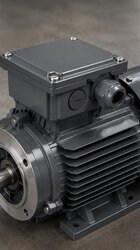
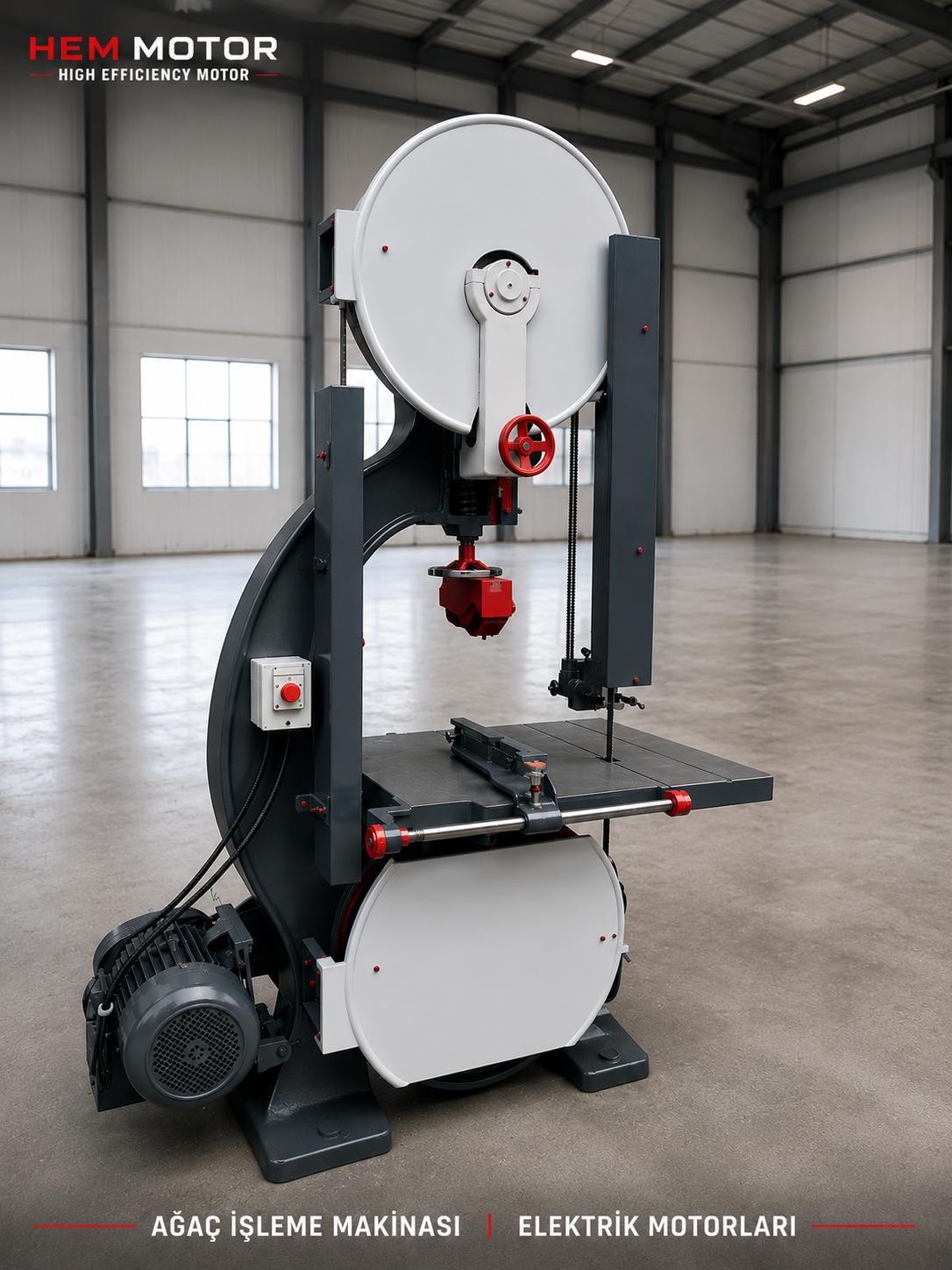

When setting up a new woodworking workshop, most entrepreneurs first draw up a machine list: band saw, planer, thicknesser, spindle moulder, circular saw and an extraction system. The visible column of this list is the machines. The invisible second column is the motors that turn each of them. What truly determines the workshop's performance and continuity is, more often than not, this second column.
From the band saw to the extraction fan, every machine needs the right electric motor with its own power, speed and mechanical characteristics. Sourcing this whole need at once, from a single manufacturer, saves a great deal of install time, zeroes the risk of a mismatched part and turns the advantages of bulk buying in the business's favour. In this article we cover, step by step, which motor suits which machine, how the chip-and-dust environment affects motor selection, and what bulk supply brings.
Motor Needs, Machine by Machine
The motor for each woodworking machine is chosen according to that machine's cutting principle. Whether a cutter sees a continuous or an impact load, whether its speed needs to be high or low, and how hard it strains at start-up are the basic inputs of motor selection. Below we summarise the motor needs of the machines that form the backbone of the workshop:
- Band saw: The motor turning the flywheels must deliver a balanced, vibration-free speed; vibration shows up directly in cut quality and blade life. A steady, medium-speed motor is usually preferred.
- Planer and thicknesser: The motor on the cutter block runs at high speed and must withstand sudden load surges in hardwood; starting torque and speed stability matter.
- Circular saw: On this machine, which needs a stable speed for a high-speed, clean cut, the motor's ability to hold speed under load is decisive.
- Spindle moulder (shaper): High speed and smooth running directly affect the quality of the cut surface.
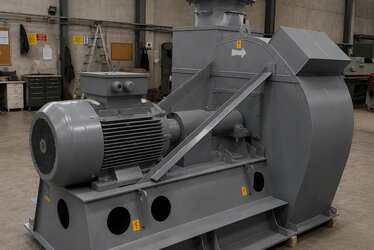
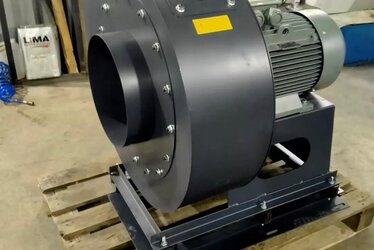
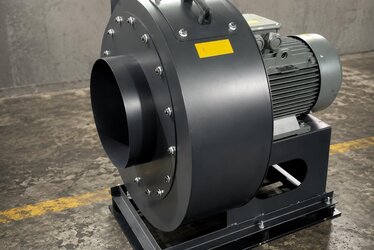
- Extraction fan: The fan motor that pulls the chips and dust of the whole workshop must suit continuous duty and be sized to the fan load.
This list shows how varied the workshop's motor need is. Although the power and speed of each is set separately, together they form a complementary system. A well-designed electric motor solution unites all the workshop's machines under a single supply logic.
The Effect of the Chip-and-Dust Environment on Motor Selection
A woodworking workshop is a demanding environment for motors. There is constant fine sawdust and dust in the air; these particles stick to the motor's cooling fins, clog the ventilation channels and over time cause the motor to overheat. Wood dust is also dry and flammable, so the protection class must not be neglected in motor selection.
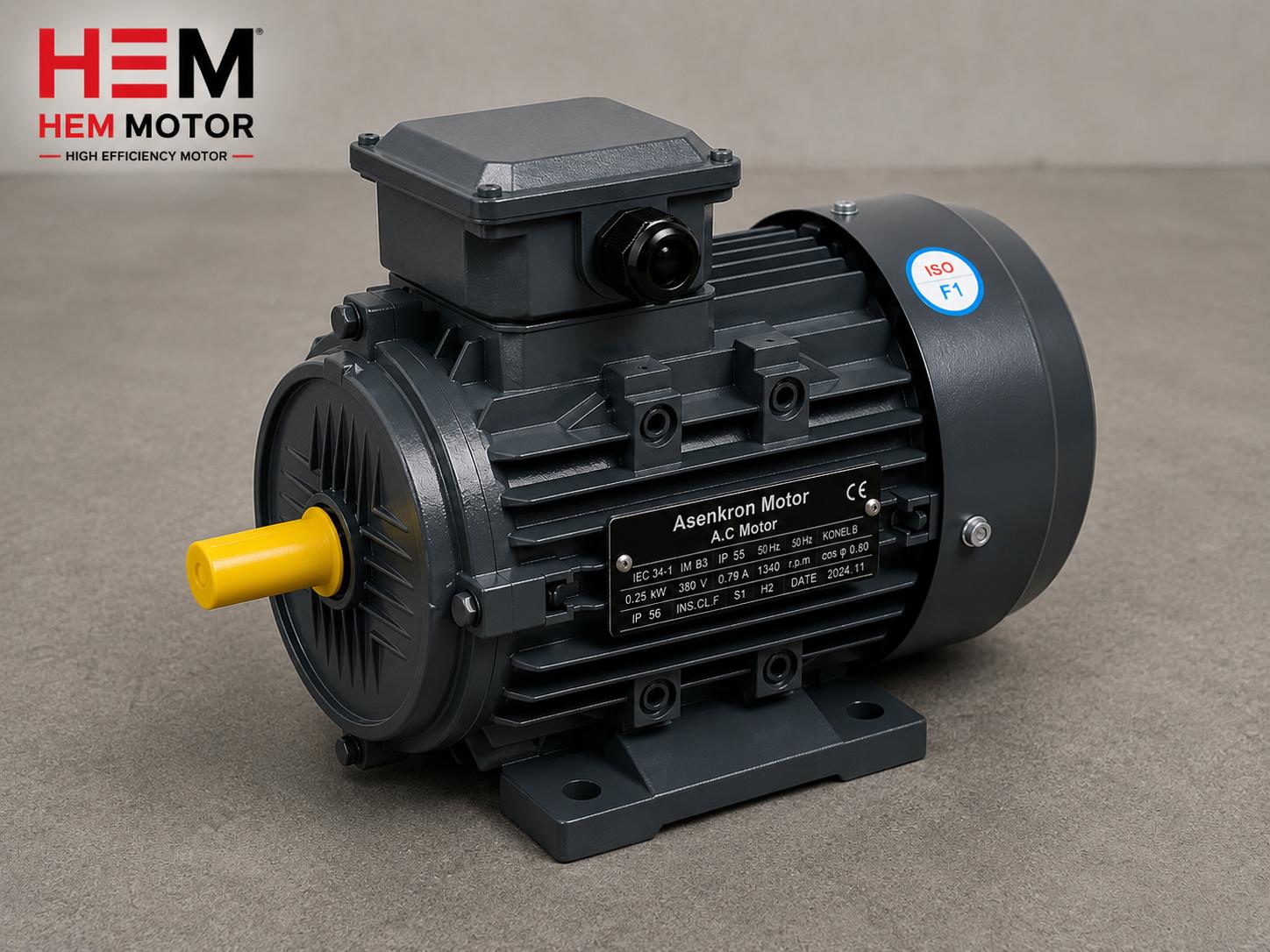
The main points to watch when selecting a motor for this environment are:
- Protection class (IP): A motor with an adequate protection class against dust ingress prevents fine sawdust from reaching the winding.
- Cooling fan and cowl: A design that allows periodic cleaning so the fan cowl does not clog with chips extends motor life.
- Surface temperature: A motor on which dust accumulates runs hotter than normal; leaving an adequate power margin keeps the heating in check.
- Easy maintenance access: Placing the motor where it can be cleaned easily reduces failures caused by dust build-up.
The chip environment is a place where a motor cannot be run unprotected. When cooling is affected by dust, winding temperature can rise unnoticed. For this reason, in workshop motors the protection class and regular cleaning are not just a recommendation but a requirement that determines life.
What Bulk Supply Brings
Buying motors one by one, at different times and from different sources, is a common but costly habit in workshop setup. Sourcing the whole motor need at once, from a single manufacturer, has concrete advantages:
- Time saved at install: When all the motors arrive together the assembly team works without interruption; no machine waiting for a missing motor delays the setup.
- Mismatch risk zeroed: Motors from the same source arrive with standard frames, connections and nameplate data; connection and mounting compatibility is guaranteed from the start.
- Bulk-buying edge: A need gathered under a single quote means a simpler supply process and better terms.
- One point of contact: When a problem arises or a spare is needed, dealing with a single supplier speeds things up.
- Standard stock management: Motors chosen in similar frames make future spare-part and maintenance management easier.
Bulk supply is not just a purchasing convenience but an investment in the workshop's long-term continuity. To turn the requirement list into a single quote, you can review our full product and solution range and plan the motors suited to your machine fleet in one pass.
A Practical Way to Build the Requirement List
The soundest way to prepare the workshop motor requirement list is to gather the needed motor data from each machine's nameplate or catalogue. On each line you write the machine name, the required power, speed, mounting type (foot, flange or both) and any special requests. When this list is complete, the workshop's entire motor need becomes visible in a single table.
This structure also prepares the best ground for fast supply from stock. Faced with a complete list, the supplier can quote the right motors in one pass and the risk of a missing item disappears. The way to build a new workshop on solid foundations runs through carefully adding this invisible second column, the motor list, next to the machine list.
Connection Type and Mounting Details
On woodworking machines, the motor's connection type determines how easy the mounting will be. Some machines bolt the motor to the floor or body through its feet; foot-mounted (B3) motors suit these. Other machines connect the motor directly to the cutter shaft or a body surface with a flange; in that case a flange-mounted (B5 or B14) motor is needed. A motor arriving with the wrong connection type causes serious delay during mounting in the field.
Alongside the connection type, the shaft diameter and length matter too. Because the pulley, coupling or cutter shaft is fitted directly to the motor shaft, the shaft dimensions must be compatible with the machine. Noting the connection type and shaft dimensions for each machine while preparing the requirement list saves time at mounting. A well-designed list lets the motors seat correctly on the first try.
- Foot-mounted motor (B3): Suits machines bolted to the floor or body through feet.
- Flange-mounted motor (B5/B14): Needed on machines where the motor connects directly to a surface or shaft.
- Shaft dimensions: Shaft diameter and length must match the machine for pulley and coupling compatibility.
- Direction of rotation: On some cutters the direction of rotation is critical; it should be added to the order note.
The Special Importance of the Extraction System
The workshop's most neglected but most critical motor is the extraction fan motor. The extraction system pulls the chips and dust produced by all the machines, keeping the working environment clean and reducing fire risk. This fan motor runs for most of the day, often even when all the machines are off; for this reason a motor suited to continuous duty and matched exactly to the fan load must be chosen.
When selecting the extraction fan motor, the power the fan requires must be calculated correctly. An underpowered motor cannot turn the fan adequately and the suction stays weak, which leads to chips building up in the workshop. An overpowered motor consumes unnecessary energy. A fan motor chosen at the right power and suited to continuous duty is the foundation of keeping the workshop clean and safe. Planning the extraction motor on the same list and within the same supply as the other machine motors ensures the system is built as a whole.
Planning for the Workshop's Growth
When a workshop is set up, future growth is often overlooked. Yet over time new machines are added, production rises and the electrical infrastructure begins to strain. While preparing the motor requirement list, planning the workshop's electrical panel and feed line with enough capacity to carry future additions prevents costly revisions later.
In addition, choosing motors in standard frames and speeds eases both adding new machines and managing spare parts in the future. A standard motor fleet minimises compatibility problems during growth. To meet your workshop's need today while also thinking about its growth tomorrow, you can review our broad asynchronous motor range and build a scalable motor plan.
Frequently Asked Questions
Can I use the same type of motor for all the machines in the workshop?
No, because each machine's cutting principle and speed need differ. While the planer and circular saw want high speed, the band saw needs a more balanced, vibration-free speed; the extraction fan needs a motor suited to continuous duty and sized to the fan load. However, choosing the motors in similar frame standards and from a single source keeps the variety manageable and eases spare-part management. So even if the type is not the same, the supply logic can be single.
Is a special motor essential for the dusty environment?
A woodworking environment is demanding in terms of dust and chips, so motors with an adequate protection class against dust ingress should be preferred. Alongside this, a cooling fan cowl that can be cleaned regularly and an adequate power margin keep the dust-induced heating under control. A fully special motor is not always required, but ignoring the protection class and maintenance access shortens motor life in a chip environment.
Why should I buy the motors all at once in bulk?
Sourcing the whole motor need at once from a single manufacturer saves install time because the assembly team works without waiting for a missing motor. Motors from the same source arriving with standard frames and connections eliminate the risk of a mismatched part. Bulk buying also gives a simpler supply process and faster communication through one point of contact. Motors chosen in similar frames make future spare and maintenance management easier as well.