English
 Türkçe




Port and terminal operations depend on long-haul belt conveyors to move bulk cargo (coal, grain, clinker, ore, fertilizer) from ship to storage, and from storage to wagon or truck. These conveyors sometimes extend for hundreds of meters, sometimes for kilometers, and operate continuously under heavy load. Therefore port belt conveyor drive motors require high starting torque, the correct starting method and corrosion protection against the salty marine environment. In this guide we address port and terminal long-haul conveyor motors from loading-unloading scenarios to geared drives, from soft-starter starting to IP66 corrosion protection, clarifying the purchasing decision on an engineering basis.
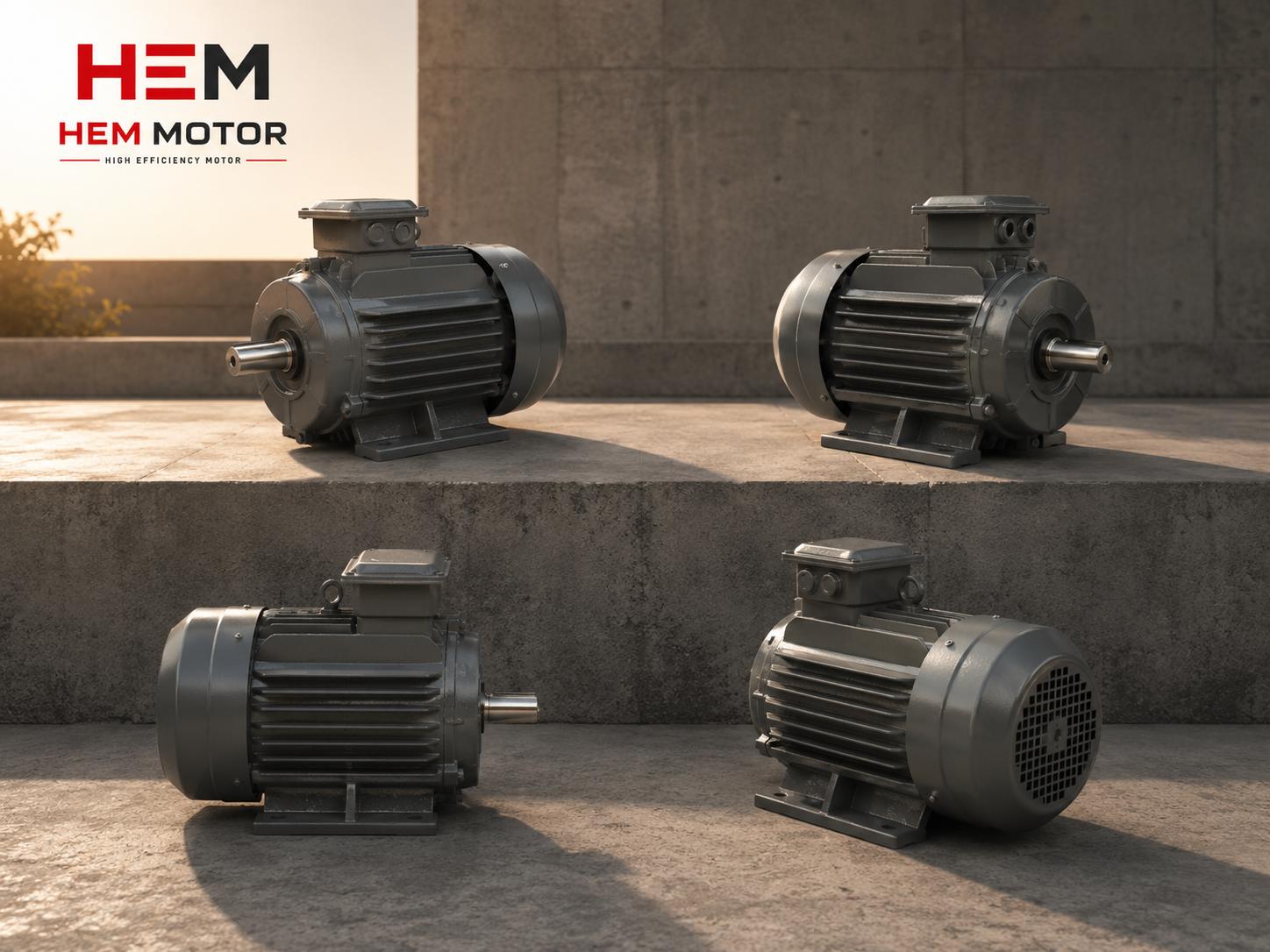
Conveyor Systems and Motor Requirements at Ports and Terminals
When planning a conveyor line at a port terminal from a motor requirement perspective, the line must be separated into drive points and auxiliary equipment. While the main drive motor carries the load, auxiliary motors such as take-up, feed and scraper ensure the continuity of the line.
Long-Haul Main Drive Motor
The main drive motor of a long belt conveyor must generate high starting torque to move the loaded belt from rest to motion. The longer and more loaded the belt, the higher the starting resistance. Therefore the main drive is usually done with cast iron body, high-efficiency motors suitable for continuous duty (S1), and the motor is matched with a reducer to turn the drum at low speed with high torque. For long-distance conveyor drive logic, the mine and open-pit long-distance belt conveyor motors content is a direct reference. For general belt motor selection principles, the conveyor belt motors in the efficient electric motors category can be reviewed.
Loading and Unloading (Ship Loader / Unloader) Drives
Ship loaders and unloaders consist of mobile towers, boom conveyors and slewing mechanisms. These systems have separate motors for slewing, luffing and belt drive. Because the loading-unloading pace is variable, motors may be exposed to a frequent start-stop profile; correct power and starting are important in this load profile. When a reducer is needed for conveyor drive, worm gear reducers and K-series bevel helical reducers are preferred; for reducer-motor matching, the IEC frame and flange matching guide is used.
Take-Up, Feed and Scraper Motors
On long lines, take-up systems that maintain belt tension, feed bunker drives and belt cleaner/scraper motors are auxiliary but critical equipment. Their failure can stop the entire line. Therefore critical spare motor planning must be done; the critical spare motor list and stock planning content provides direction on this. To quickly bring the line back online in case of a sudden conveyor motor failure, a conveyor belt motor emergency replacement list should be ready.
High Starting Torque and Starting Solutions
The most critical engineering problem of a long-haul conveyor is starting. Starting a loaded belt with direct-on-line starting both strains the grid by drawing high starting current and can cause mechanical damage by creating sudden tension at the belt and splice points. Therefore controlled starting methods are used.
Stepped Starting with Soft Starter
The soft starter starts the belt smoothly by gradually increasing the voltage applied to the motor; it limits the starting current and reduces mechanical shock. It is the most common solution on long and loaded belts. For a comparison of starting methods, the star-delta and soft starter in asynchronous motors content provides direction. In applications with a heavy starting profile similar to conveyors, the principles in crusher motor starting also apply.
Liquid Resistance Starter
On very long and very loaded belts, the starting torque is softened and the load is balanced between multiple drives by using a liquid resistance starter together with slip-ring rotor motors. This solution is preferred in high-power port conveyors. For load sharing in multiple drives, motors must be selected to be compatible with each other.
Soft Start and Speed Control with Frequency Drive (VFD)
A frequency drive offers both controlled starting and the ability to adjust belt speed according to load. It provides energy savings under variable load. For VFD applications, the VFD frequency drive with asynchronous motor content provides direction. If generator supply is involved in high-power drives, starting current becomes critical; the generator kVA - motor kW matching guide resolves this situation.
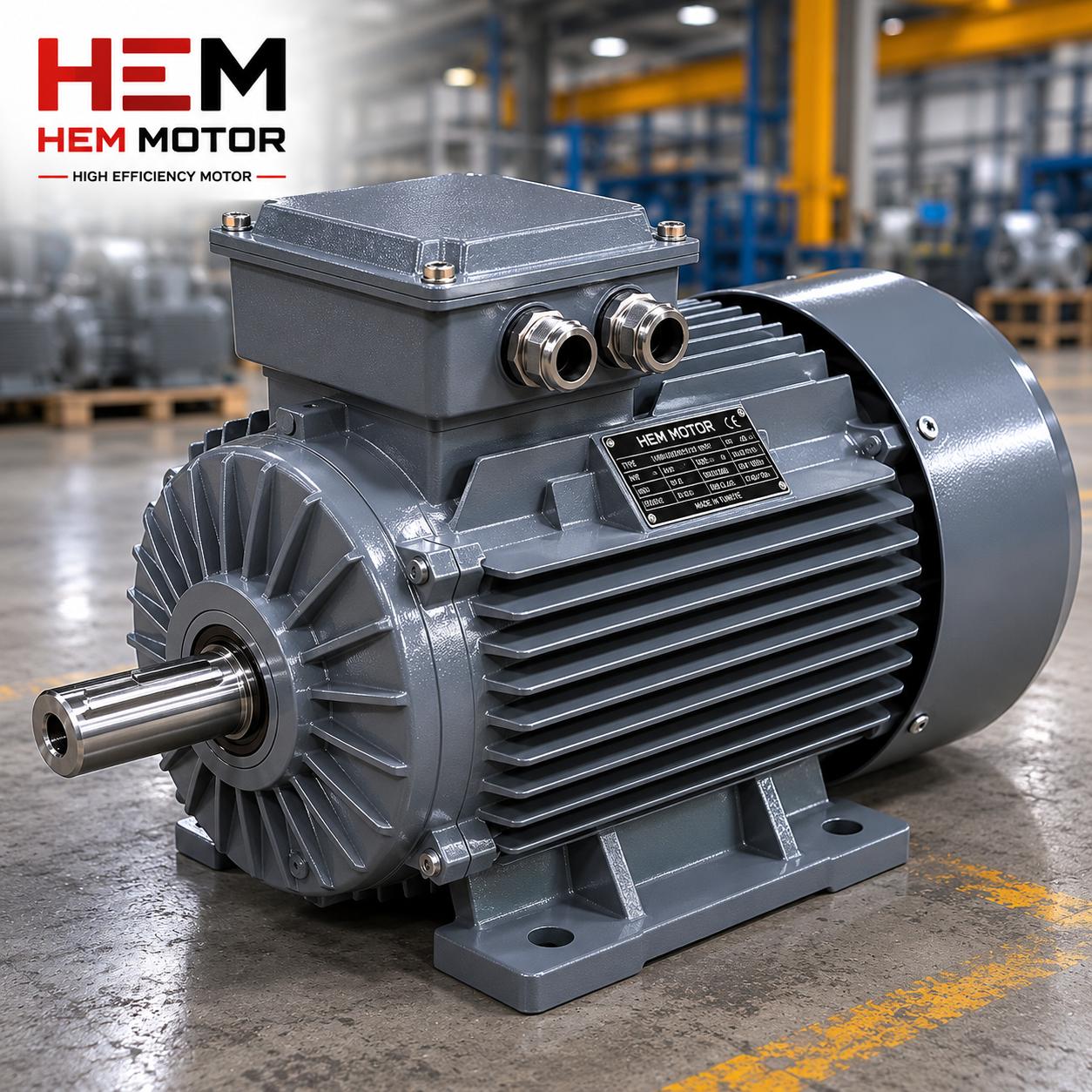
Salty Marine Environment and Corrosion Protection
The port environment presents one of the harshest open-field conditions for a motor: salty sea air, high humidity, rain, wind-borne dust and continuous exposure to the open air. These conditions accelerate corrosion and shorten the life of a standard motor. Therefore a corrosion-resistant design is essential.
IP66 Protection Class
For port conveyor motors exposed to rain and pressurized water jets in the open field, IP66 protection class is recommended. IP66 provides complete dust-tightness and protection against powerful water jets. For the distinction between IP protection classes, the classification logic in dust sealing and IP65/IP66 protection also applies to port conditions.
Surface and Body Protection Against Corrosion
In a salty environment, the motor body is protected with special paint/coating systems (C4/C5 corrosion category). While the cast iron body provides mechanical strength, a suitable surface coating delays the corrosive effect of salty air. For managing motor corrosion in the open field, the corrosion and open field in cast iron motors content is a direct reference. For similar principles in seawater and salty environment pump-motor applications, corrosion protection in seawater and saltwater pump motors can be reviewed. For ship and marine motors, the ship and marine electric motors content is also complementary.
Bearings and Lubrication
In conveyor drive motors operating under continuous heavy load and vibration, bearing life is critical. A reinforced bearing structure and correct lubrication reduce unplanned downtime. For factors affecting bearing life, the bearing and bearing life in cast iron motors content provides direction.
Power, Speed, Efficiency and Supply Planning
When sizing port conveyor motors, belt length, incline, conveyed material density and capacity (tons/hour) are evaluated together. In high-power drives, the supply and commissioning plan is also critical.
Duty Type and Load Profile
Port conveyors mostly operate in S1 continuous duty, running for hours at full load. Operating at the correct load ratio is important for efficiency and lifetime; the motor load ratio and correct sizing guide provides direction. When low-speed direct drive is required, the low-speed high-pole motor option is also evaluated.
Efficiency Class and Energy
In continuously running high-power conveyor motors, energy cost constitutes a large portion of the annual total. Selecting an IE3/IE4 efficiency class provides significant long-term savings; IE3 vs IE4 investment and TCO calculation clarify this decision. For the efficiency mandate, refer to the IE3/IE4 mandate regulation.
High-Power Supply and Lead Time
Port conveyor drives are often at high powers of 90 kW and above. For these motors, lead time, shipping and commissioning planning must be done in advance; the 90 kW and above high-power motor supply content describes this process. For critical supply assurance, the supply contracts and critical stock assurance model is also suitable for port operations. When replacing the existing motor one-to-one, the nameplate matching and shaft-flange compatibility via shaft diameter and key dimensions guides are used.
Commissioning, Monitoring and Maintenance
Commissioning a port conveyor requires correct parameterization of the starting equipment (soft starter, drive) with the motor. On loaded starting, motor current and ramp time must be monitored; too short a ramp causes belt shock, too long a ramp causes motor heating. For first-start steps, the commissioning and first startup checklist should be followed. On long lines with multiple drives, load sharing between motors must be balanced; otherwise one motor is overloaded.
In conveyor motors operating in the open field, temperature monitoring (PT100 and thermistor) reduces unplanned downtime; the motor temperature monitoring with PT100 and thermistor content provides direction on this. In a salty environment, the terminal box must be checked regularly for moisture and corrosion, and cable glands must be sealed. To distinguish faults within and outside warranty, the electric motor warranty coverage content is useful. For similar open-field protection principles in mine and quarry sites, the motor protection in quarry and mine content can also be evaluated.
Energy Efficiency and Total Cost
In continuously running high-power conveyor drives, energy is the largest item of annual operating cost. To compile the plant's motor inventory by efficiency class and prioritize the investment, an energy efficiency audit and motor inventory study is recommended. For the payback of replacing old motors with high-efficiency ones, the replacing the old motor with IE4 and payback content can be reviewed. For savings under variable load with a frequency drive, the high-efficiency motor and frequency drive savings resource is helpful.
Shipping, Commissioning and Regional Supply
High-power port conveyor motors are heavy and bulky; the shipping and commissioning plan must be done in advance. To reduce the risk of damage in shipping, the electric motor shipping damage checklist should be followed. For shipping options to ports and terminals in Anatolia, the motor shipping guide to Anatolia facilities content provides direction. For ports in the Marmara region, the supply to Kocaeli and Gebze industry and Bursa and Marmara supply contents are suitable. You can reach our entire product range via our homepage.
Frequently Asked Questions
Why is direct-on-line starting insufficient on a long belt conveyor?
A loaded and long belt shows high starting resistance when moving from rest to motion. With direct-on-line starting, the motor draws high starting current, causing voltage drops on the grid and sudden tension on the belt. Stepped starting with a soft starter, liquid resistance starter or VFD prevents these problems and extends belt life.
Which IP protection class is required in a port environment?
For motors exposed to rain, salty air and, when needed, pressurized washing in the open field, IP66 is recommended. IP66 provides complete dust-tightness and protection against powerful water jets. Additionally, a surface coating suitable for the C4/C5 corrosion category delays the corrosive effect of salty air.
Should I drive the conveyor motor with a reducer or directly?
The belt drum demands high torque at low speed, while the motor runs at high speed. Therefore on most long-haul conveyors the motor is matched with a reducer (worm gear or bevel helical). Direct drive with a very low-speed, high-pole motor is rarely economical. Reducer-motor IEC frame and flange compatibility must be verified at the selection stage.
Get a Quote
For your port and terminal long-haul belt conveyors, let us jointly determine the correct power, reducer matching and starting method for main drive, loading-unloading and auxiliary motors. For fast supply of IP66 corrosion-protected, cast iron body high-torque motors suitable for the salty marine environment, contact us: +90 (532) 345 49 86. Share your belt length, incline and capacity information and reach us via our contact page; we will prepare a quote the same day.
Purchasing and Selection Checklist
- Have belt length, incline, material density and capacity (tons/hour) been defined?
- Has high starting torque and the correct reducer ratio been calculated for the main drive?
- Has the starting method (soft starter / liquid resistance / VFD) been selected according to the load profile?
- Has IP66 protection and C4/C5 corrosion coating been requested for the open field?
- Has S1 duty type and IE3/IE4 efficiency class been verified for continuous equipment?
- Has lead time, shipping and commissioning planning been done for high power?
- Has spare motor stock been planned for critical auxiliaries such as take-up, feed and scraper?
- Have nameplate, shaft diameter and flange dimensions been checked one-to-one when replacing the existing motor?