English
 Türkçe

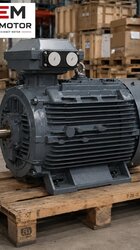
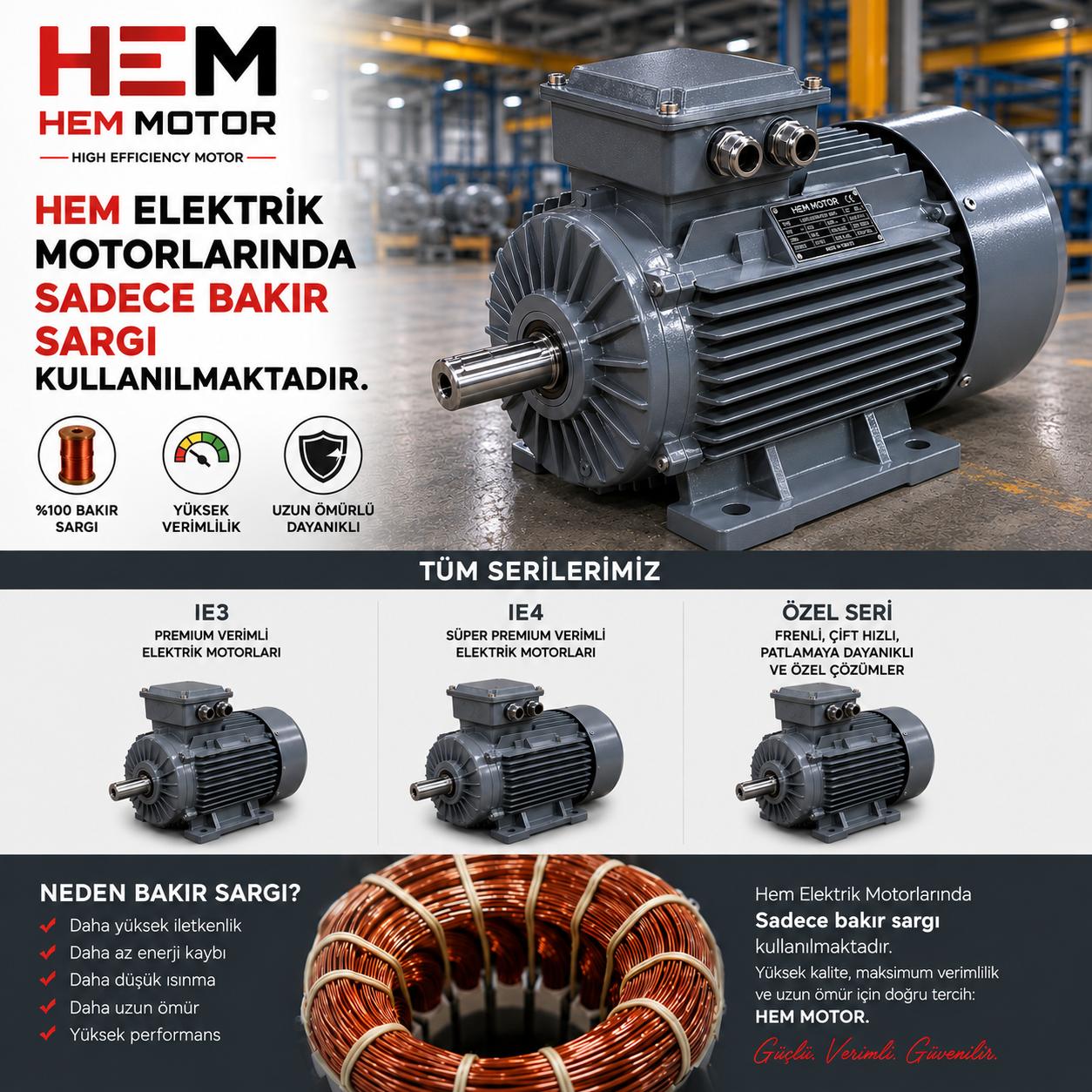

The efficiency class of an electric motor is no longer merely a preference affecting the energy bill; in certain power bands it is a direct legal requirement. Ordering a motor of the wrong class means both non-compliance with current regulation and years of extra consumption. Moreover, because the new sale of low-efficiency motors is being phased out, not knowing the correct class can also cause delays in the procurement process. In this article we clarify, using the real regulatory timeline, which power the IE3 and IE4 efficiency mandate covers and from which date; we provide the framework to help you make the right decision on your plant's next motor purchase.
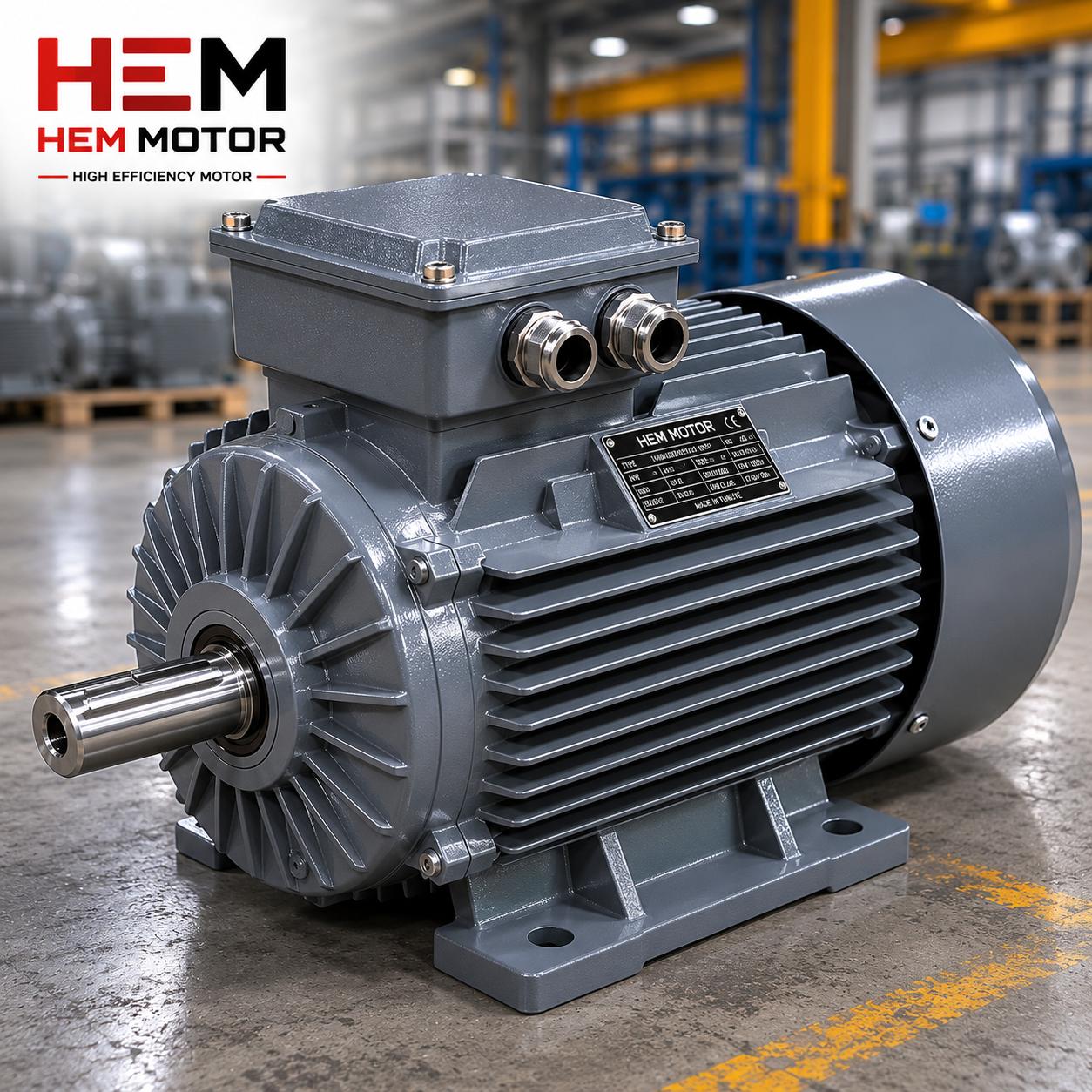
What Is an Efficiency Class and Why Did It Become a Legal Matter?
The efficiency of electric motors is defined under the international standard IEC 60034-30-1 with IE (International Efficiency) classes. IE1 means standard efficiency, IE2 high efficiency, IE3 premium efficiency, and IE4 super premium efficiency. As the class rises, the motor is expected to do the same work with fewer losses, that is, to draw less electricity from the grid.
The reason these classes entered regulation is simple: most of the electricity consumed in industry is spent by motors. Gradually removing low-efficiency motors from the market delivers serious energy savings on a national scale. That is why both the European Union's ecodesign regulations and the relevant local communiqués raise the minimum efficiency class in certain power ranges, limiting the new sale of lower classes.
The Practical Difference Between IE1, IE2, IE3 and IE4
Although the difference is expressed in small percentages, on a motor that runs for years those percentages turn into large sums. For example, on an 11 kW motor the efficiency gap between IE2 and IE4 may be a few points; but when the motor runs thousands of hours a year, that gap corresponds to an energy cost that overshadows the motor's purchase price. The purpose of the regulation is precisely to prevent this invisible loss from the start.
Which Power Is Required from Which Date?
The regulation does not change everything on a single date; it applies a phased timeline by power band. The general logic is as follows:
- For motors between 0.75 kW and 1,000 kW, the minimum class is set as IE3. New sales below IE3 for standard three-phase motors in this band are restricted.
- In certain power ranges (such as medium-to-large powers between 75 kW and 200 kW), the minimum class has been raised to IE4 in the next phase. In this band IE4 is now expected rather than IE3.
- At very small powers (such as 0.12 kW – 0.75 kW) and for special-application motors (brake, Ex-proof, high-speed, etc.), separate rules and transition periods apply.
The key point is this: as time advances, the minimum class rises and the scope widens. A power band where IE3 suffices today may fall under the IE4 mandate tomorrow. Therefore, when making a new investment, it is wise to anticipate not only today's rules but those that will apply throughout the motor's life. For current class and power options, review our electric motor prices page.
What About Motors Bought Before the Transition Date?
The regulation generally covers products "newly placed on the market"; you are not forced to remove a motor you bought and began using before the date. However, for new purchases and when renewing stock, you must comply with the current minimum class. This makes it critical for your supplier's stock to be kept up to date with the correct classes.
The Two-Sided Cost of Choosing the Wrong Class
The cost of choosing the wrong-class motor is two-sided. The first is the risk of non-compliance; supplying a motor below the mandatory class as new can create both legal and commercial problems. The second, and often more insidious, is excess energy consumption. A low-class motor loses money unnoticed for years because it never appears as a separate line on the bill.
Considered together, choosing the right class is actually a savings decision. The small extra investment of preferring IE4 over IE3 amortizes quickly on heavily used motors. When deciding, you must weigh the motor's power, running hours, and the criticality of the application together.
The Importance of Correct-Class Supply and Stock
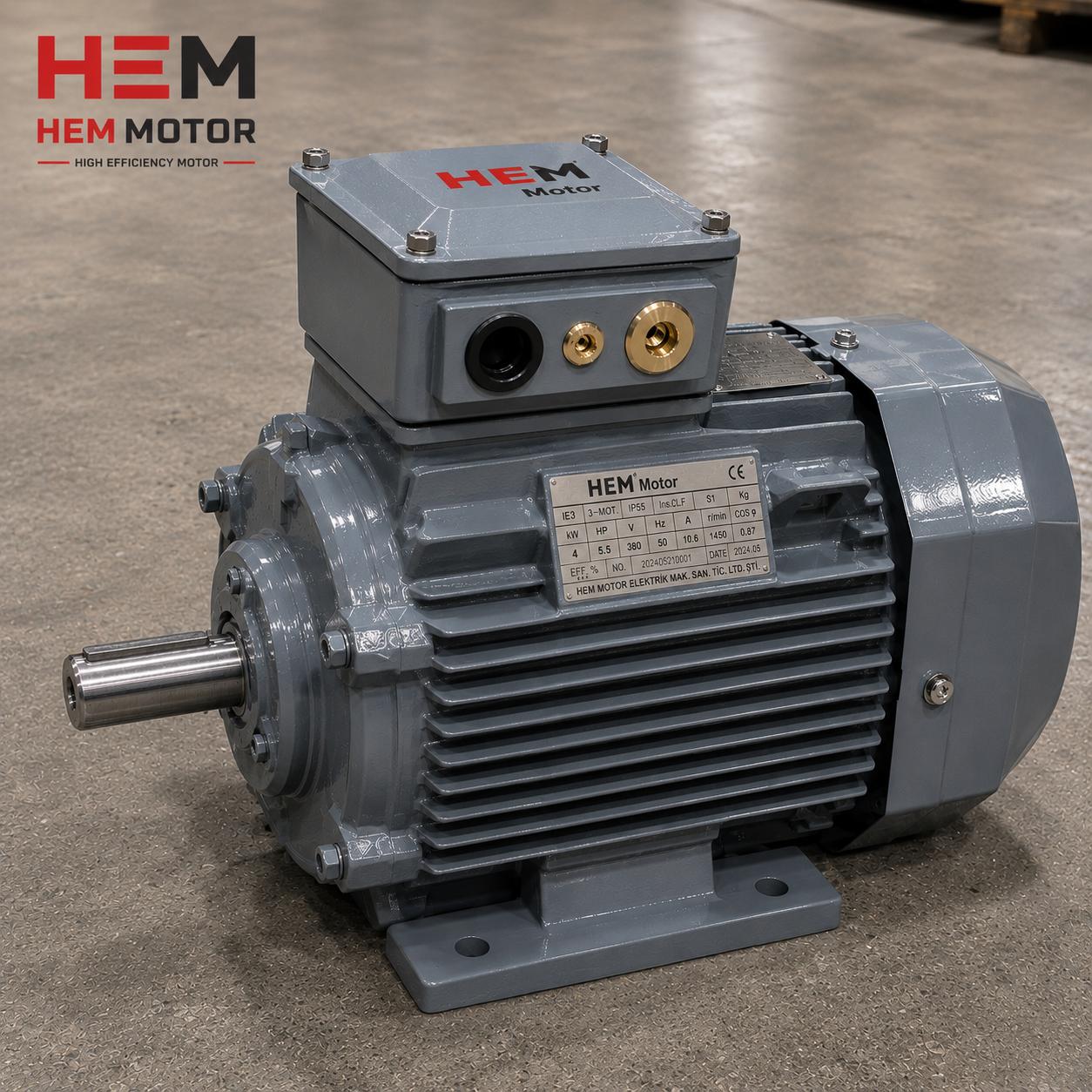
Quickly sourcing a compliant motor is the way to make the right decision without stopping production. In a motor failure, being able to find an equivalent of the same power and mounting type but in the current efficiency class quickly from stock is a major advantage. A broad IE3 and IE4 motor stock offers both regulatory compliance and fast shipping together. For urgent needs, short delivery times and project-based quotation support ease the move to the correct class. To review different power and mounting options and get a quote tailored to your needs, reach the product range through our electric motor prices page.
Frequently Asked Questions
Am I legally required to replace my existing IE2 motor?
No. The regulation generally covers motors newly placed on the market; you do not have to remove a motor you are already using. However, when that motor fails and you buy a new one, you must choose a model compliant with the current minimum class. Also, for heavily used IE2 motors, moving to IE4 often makes sense for energy savings even when not mandatory.
Is IE4 mandatory for every power?
No. The mandate depends on the power band and the date. In many power ranges the minimum class is still IE3; in certain medium-to-large powers it has been raised to IE4. It is safest to confirm before ordering which tier your motor's power falls into.
Are special motors (brake, Ex-proof) also subject to this mandate?
Such special-application motors may have separate rules and different transition periods in the regulation. The phased increase seen in standard three-phase asynchronous motors may work differently for these special types; that is why class requirements should be separately confirmed for special motor purchases.