English
 Türkçe

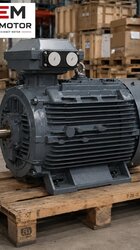
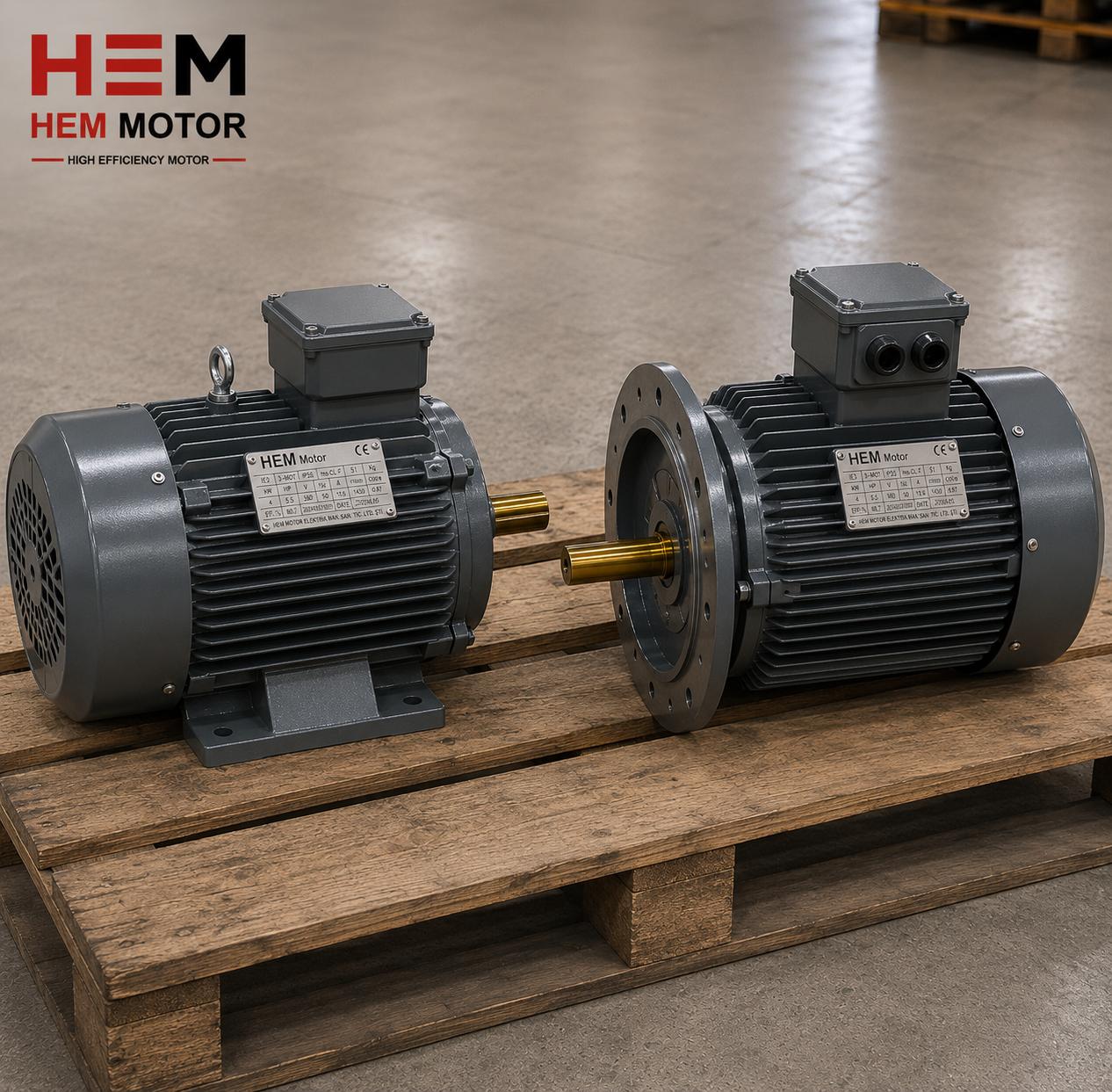

When buying an IE3 electric motor, there is one piece of nameplate information that is often overlooked yet decisive for the application's service life: the cooling code. Defined by the IEC 60034-6 standard, this code describes how the motor is cooled, and IC411 and IC416 are the two most common options. IC411 describes the classic totally enclosed fan-cooled (TEFC) construction; IC416 describes forced cooling provided by a separate motor-driven blower. Especially in motors running at low speed with a variable frequency drive (VFD), this distinction is as critical as whether the motor survives or burns out. At HEM Motor, we supply our IE3 motors with a cooling construction matched to the application. In this article we explain in detail what cooling codes mean, the difference between IC411 and IC416, and the criteria for correct application-based supply.
What Does the IEC 60034-6 Cooling Code Tell Us?
The IEC 60034-6 standard classifies the cooling methods of electrical machines using codes beginning with the "IC" (International Cooling) prefix. The digits following the prefix indicate the arrangement of the cooling circuit, the coolant (usually air) and how the coolant is moved. This allows motors from different manufacturers to be compared in the same language. The three most common codes for industrial asynchronous motors are:
- IC410: A fanless enclosed motor cooled only by natural convection and radiation from the body surface. Usually seen in special applications and very low ratings.
- IC411: A totally enclosed motor cooled by a shaft-mounted fan; this is the classic TEFC construction and is self-ventilated.
- IC416: A force-cooled motor where cooling is provided by a blower driven by a separate motor independent of the main motor shaft.
Understanding these codes correctly is the first step in placing a motor into the right application. To review the general framework of cooling methods, we recommend our content on electric motor cooling methods IC411 IC416.
IC411 (TEFC): The Self-Ventilated Standard Construction
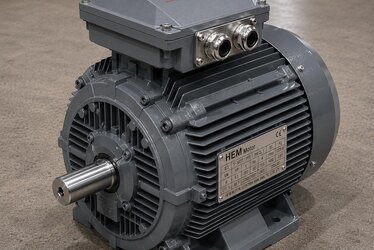
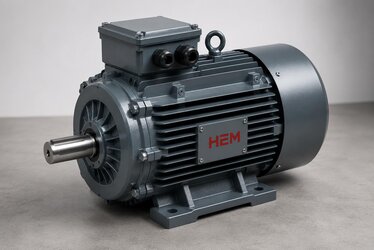
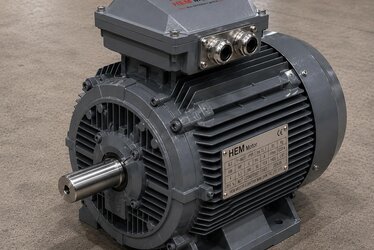
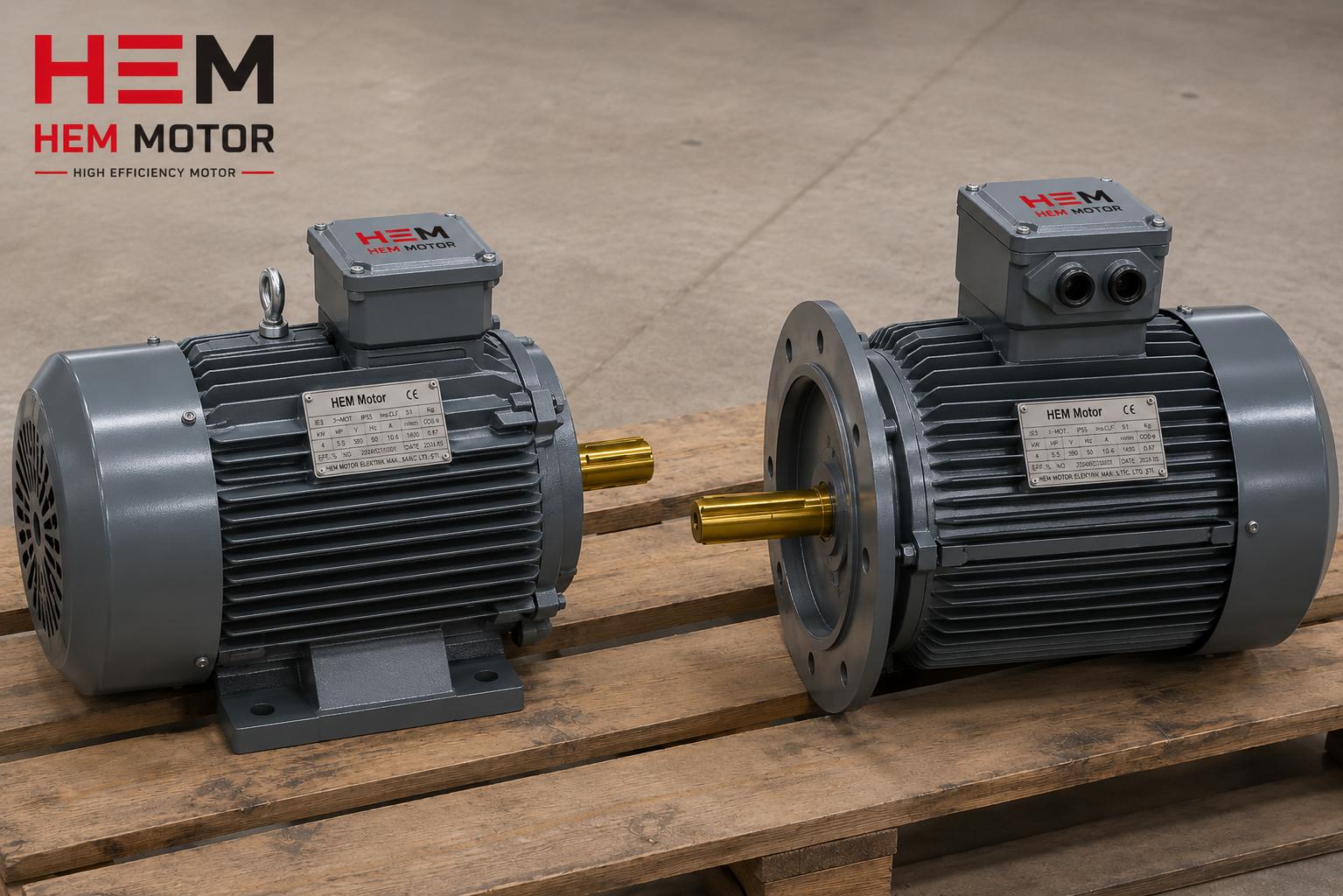
IC411 is the code for the "Totally Enclosed Fan-Cooled" construction. In these motors a radial fan is mounted on the rear of the motor, on the shaft itself. The fan rotates on the same axis and at the same speed as the motor; it creates an air flow along the cooling fins on the body to expel heat. Because the interior of the motor is sealed from the external environment (together with the IP55 protection class), dust and water ingress are prevented; cooling is achieved entirely by air flow over the outside of the body.
The greatest advantage of the IC411 construction is its simplicity and durability: it requires no additional supply, cabling or control. However, it has a critical limitation: because the fan is connected to the motor shaft, the cooling capacity depends on the motor speed. As the motor slows down, the fan slows too and the air volume it provides drops. For this reason IC411 motors are ideal for applications running at constant or high speed.
The second and third digits of the IC code also carry meaning. In IC411 the middle "1" indicates that the internal coolant (the air inside the body) is in indirect contact with the body surface, while the final "1" indicates that the coolant is moved by a component connected to the shaft (the integral fan). In IC416, the final "6" indicates that the coolant is moved by a separately driven component independent of the motor. This small difference in digits creates a very large difference in field behaviour: one means speed-dependent cooling, the other means cooling independent of speed. Reading this code on the nameplate at the supply stage is the fastest way to verify that a motor suits the application.
With a correct body design and an adequately sized fan, the IC411 construction offers an excellent thermal balance at rated speed. In an S1 continuous duty cycle, running at rated load and rated speed, an IC411 motor comfortably keeps the body temperature below the limits permitted by Class F insulation. Problems only begin when the motor is run far below its rated speed while the load torque remains high. Therefore, when selecting IC411, the real speed profile of the application must always be questioned.
The Role of the Cast Iron Body and Cooling Fins
In IC411 motors a significant part of the cooling performance depends on the body design. Cast iron bodies enlarge the heat transfer surface with wide cooling fins and efficiently convert the air flow produced by the fan into heat rejection. The high thermal mass of cast iron smooths temperature fluctuations during sudden load changes; this protects winding life under Class F insulation. To examine insulation behaviour in hot and dusty environments, our article on insulation class in hot dusty environments and cast iron is useful.
IC416: A Low-Speed Solution with Forced (Independent) Cooling
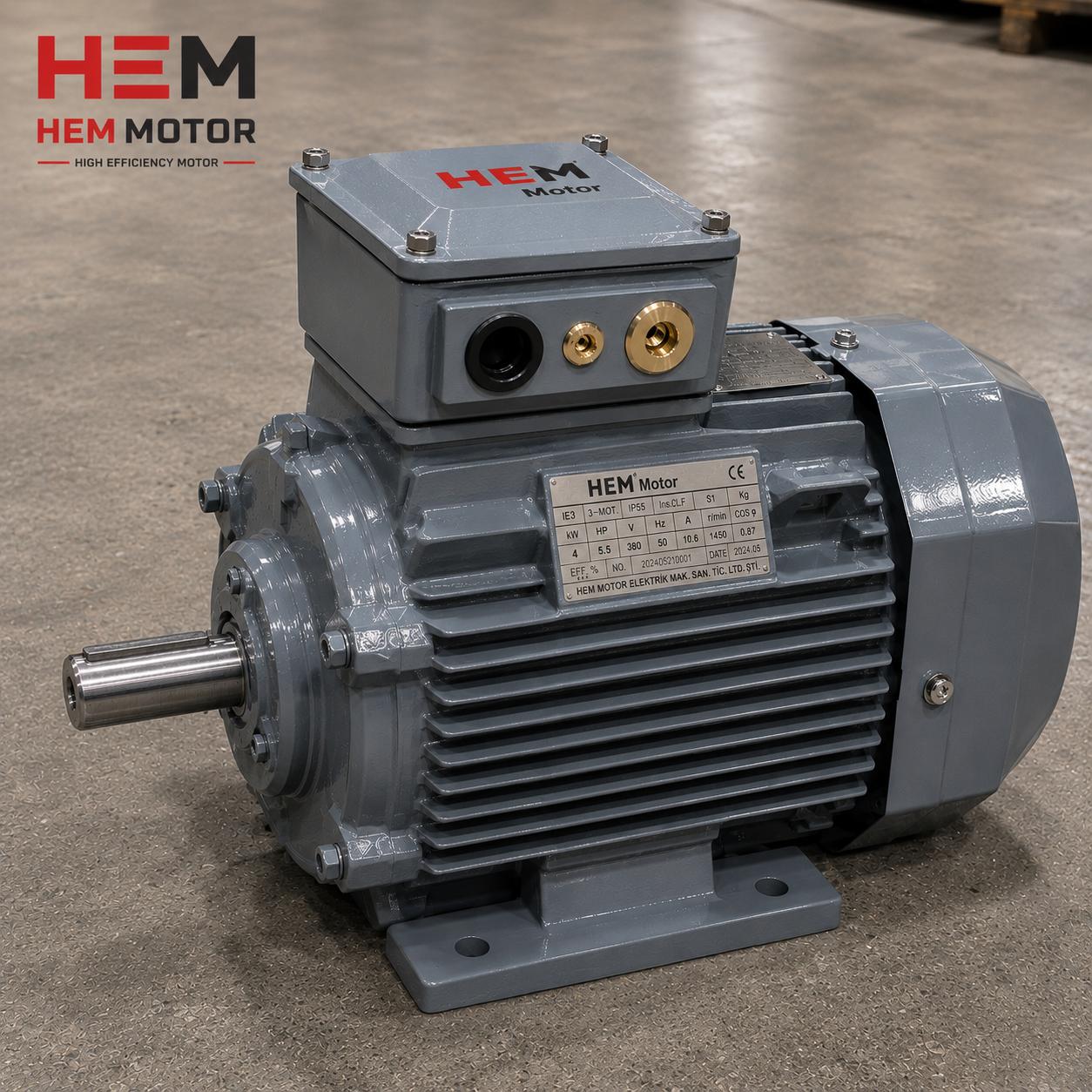
IC416 is the construction where motor cooling is provided by a blower unit driven by a separate small motor entirely independent of the main shaft. This blower produces a constant air volume regardless of the main motor's speed. In other words, even if the main motor runs at a very low speed close to standstill, the cooling fan keeps rotating at full capacity and guarantees that the windings are sufficiently cooled.
The main reason for IC416 is motors run at variable speed with a VFD. A VFD can run a motor far below its rated speed, for example at 10-30% speed, for long periods. In an IC411 construction the fan also rotates very slowly at this low speed, so cooling capacity drops sharply; yet in constant-torque applications the motor continues to draw high current even at low speed and produces the same heat. When cooling is insufficient, the motor overheats. In this case there are two options: either the motor is run with appropriate derating (power reduction), or IC416 forced cooling is used. Forced cooling allows the motor to deliver its rated torque continuously across the entire speed range.
The independent blower is typically mounted on the rear cover or body of the motor and is usually driven by a small asynchronous motor. This blower is switched in together with the main motor or through a separate contactor when the main motor is energised. The important point is that the blower keeps running until just before the main motor stops and can continue cooling for a while after stopping, because rejecting the residual heat at the moment of shutdown is also valuable for winding life. For this reason, in IC416 systems the blower supply must be fused separately from the main motor and correctly arranged in the control scheme. To protect the main motor if the blower fails, adding a protection relay that monitors fan current or air flow is also good engineering practice.
VFD and Loss of Self-Cooling at Low Speed
The air volume produced by a shaft-mounted fan is roughly proportional to speed. If the speed halves, the air volume also drops by about half; at much lower speeds cooling almost stops. In a constant-torque load (where the motor produces full load torque at low speed), heat generation does not decrease, so the self-cooled IC411 motor falls short in this regime. This is exactly where IC416 comes in. You can find the general principles of driving asynchronous motors with a VFD and their low-speed behaviour in our content on VFD frequency drive with asynchronous motor.
Choosing the Right Cooling Code by Application
To choose the right cooling code, the application's speed profile, torque characteristic and duty cycle must be evaluated together.
- Constant/high-speed applications: For loads running at rated speed such as pumps, fans and compressors, IC411 (TEFC) is sufficient and the most economical solution.
- Wide speed range + constant torque: In VFD-fed constant-torque applications such as extruders, mixers and conveyors producing torque at low speed, IC416 forced cooling is required.
- Duty cycle: In S1 continuous operation thermal balance is important; long continuous running at low speed may make IC416 mandatory.
- Derating alternative: If IC416 will not be used, the motor must be oversized so it runs at a lower load at low speed (derating).
- Protection class: In both constructions, IP55 protection and Class F insulation provide resistance to dust/water and temperature.
In IE4 motors the fan and cooling design is even more precise in pursuit of higher efficiency; on this topic our article on IE4 motor cooling and fan design covers cooling optimisation in depth. You can review the relationship between winding/insulation class and heat in our content on IE3 motor winding and insulation class F/H.
Correct Supply from the HEM Motor IE3 Range
At HEM Motor we manufacture our IE3 motors from 0.55 to 355 kW, in IP55 protection class, with Class F insulation, 100% copper windings and cast iron or aluminium body options. While the IC411 (TEFC) construction offers the most common and reliable solution in standard applications, for projects requiring constant torque at low speed with a VFD we supply our motors application-specifically with the IC416 forced-cooling construction. To determine the correct combination of power, speed and cooling, review our IE3 efficient asynchronous electric motors and general purpose industrial type motors product groups, and contact us for current electric motor prices.
Frequently Asked Questions
What is the main difference between IC411 and IC416?
In IC411 the cooling fan is connected to the motor shaft and rotates at the same speed as the motor (TEFC, self-ventilation). In IC416, cooling is provided by a separate motor-driven blower independent of the motor; this fan produces a constant air volume regardless of motor speed. IC416 is preferred in VFD applications because it provides full cooling even at low speed.
Why is IC416 needed on a VFD-fed motor?
A VFD can run a motor far below its rated speed for long periods. In an IC411 construction the shaft fan slows at low speed, so cooling becomes insufficient; in constant-torque applications the motor produces the same heat and overheats. IC416 forced cooling provides a constant air volume with an independent fan, enabling the motor to deliver its rated torque continuously across the entire speed range. The alternative is to oversize the motor by derating it.
Can every motor be converted to IC416?
IC416 requires mounting an independent blower unit on the motor and is usually planned at the manufacturing stage or with a suitable body construction. Therefore it is best to state the requirement up front and supply the motor as IC416. In the HEM Motor IE3 range, an IC411 or IC416 cooling construction can be offered depending on the application.