English
 Türkçe

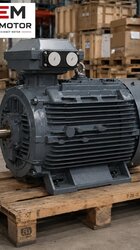

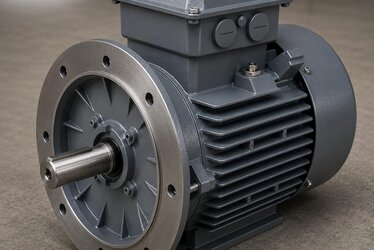
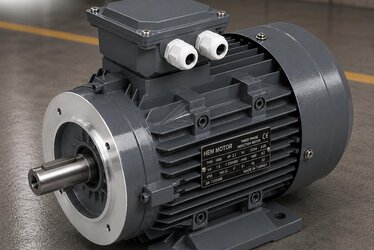
200 kW and 250 kW are two powerful motor classes at the heart of compressors, large pumps, fans, mills and process lines in industry. These powers now fall in the range where the IE3 efficiency class is mandatory; that is, at these capacities supplying an IE2 or lower-efficiency motor is not possible under regulation. Correct procurement does not end with stating the kW value; speed (pole), frame size, starting method, cooling type and, most importantly, the lead-time and stock plan must be considered together. A wrong selection or a late delivery of a motor at this power can hold up an entire production line. In this article, HEM Motor covers speed-pole selection, the 315 and 355 frame logic, high-power starting and cooling and a fast stock-supply plan for IE3 200 and 250 kW motors.
Why Is IE3 Mandatory? Efficiency Class at 200 and 250 kW
The IE3 (Premium Efficiency) class has been made legally mandatory in certain power ranges, and 200-250 kW is right inside that requirement. Because a motor at this power runs continuously, the efficiency difference reflects directly on the energy bill. An IE3 motor runs with lower losses than IE2; on a 250 kW motor turning thousands of hours a year, this difference means an energy saving far beyond the purchase cost of the motor. We explained which power requires which class from which date in detail in our IE3 and IE4 efficiency mandate article.
To make concrete why efficiency matters so much: a motor's efficiency shows how much of the electrical energy it draws is converted into useful mechanical power. The rest turns into heat, that is, loss. At a power such as 250 kW, a small improvement in efficiency means hundreds or even thousands of kilowatt-hours of energy saving per year. On a continuously running motor, this difference accumulates to a very significant amount over the motor's life. This is exactly the logic behind the IE3 mandate: requiring the highest efficiency on the large motors that consume the most energy.
Choosing IE3 at high power is not just a legal obligation but also a smart business decision. In this power class, even a difference of a few percent in efficiency turns into a significant gain in annual consumption. For this reason, at powers such as 200 and 250 kW, IE3 is the right choice both for regulatory compliance and for total cost of ownership.
Speed and Pole Selection at 200 and 250 kW
At these powers the most common options are 2-pole (about 3000 rpm), 4-pole (about 1500 rpm) and 6-pole (about 1000 rpm) motors. Speed selection is determined by the driven machine:
- 2-pole (3000 rpm): High-speed centrifugal compressors, large blowers and some high-flow pumps.
- 4-pole (1500 rpm): The most common choice; general pumps, fans and process drives.
- 6-pole (1000 rpm): Low-speed, high-torque applications; some mills and agitators.
As speed rises, torque at the same power falls; as pole count rises (speed falls) torque increases but the frame also grows. So pole selection is both a mechanical and an economic decision. We covered the speed-pole-frame relationship at lower power in our 132 and 160 kW IE3 motor article; 200-250 kW is one step above that line.
Frame Selection: Around 315 and 355
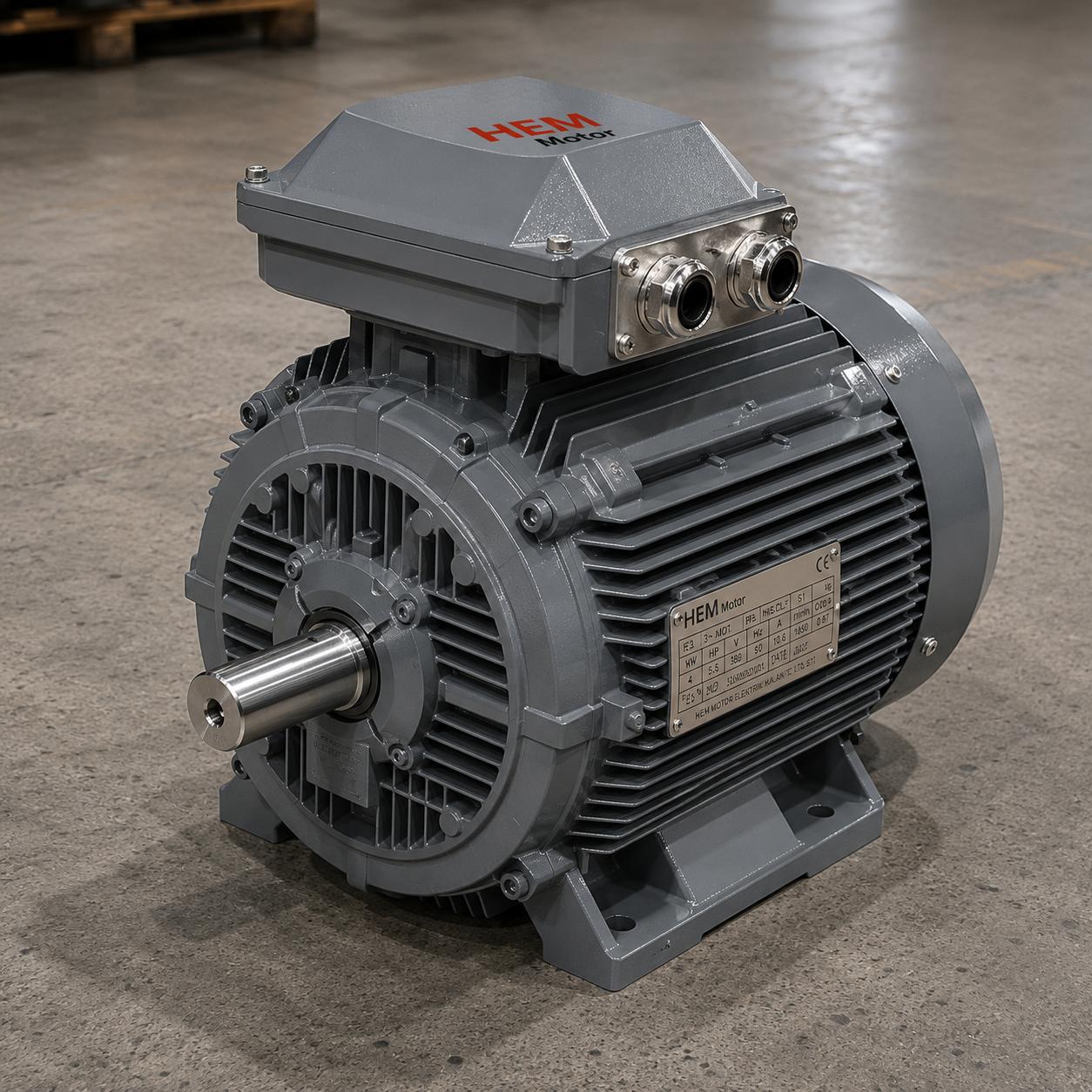
The 200 and 250 kW powers typically correspond to the 315 to 355 frame range on the IEC scale. The exact frame varies with pole count and manufacturer design: the low-speed (6-pole) version usually moves up a frame because more copper and a larger rotor are needed. As the frame grows, the foot-hole spacing, shaft diameter, coupling size and mounting dimensions change, so the frame must be confirmed together with the existing foundation and drive line.
Especially if you are replacing a motor with an equivalent, exact matching of frame and mounting dimensions is critical. You can find the shaft diameter and frame table in our shaft diameter and frame table (IEC 56-355) article; on a replacement order this table ensures an error-free match.
IE3 200 and 250 kW Speed, Frame and Current Table
The table below summarises pole, synchronous speed, typical frame and approximate rated current (400 V) for 200 and 250 kW IE3 motors. Values may vary with manufacturer design; exact figures are confirmed from the motor nameplate.
| Power | Pole | Synchronous speed | Typical frame | Approx. current (400V) |
|---|---|---|---|---|
| 200 kW | 2 pole | 3000 rpm | 315 | ~340 A |
| 200 kW | 4 pole | 1500 rpm | 315 | ~350 A |
| 200 kW | 6 pole | 1000 rpm | 315-355 | ~360 A |
| 250 kW | 2 pole | 3000 rpm | 315-355 | ~425 A |
| 250 kW | 4 pole | 1500 rpm | 355 | ~435 A |
| 250 kW | 6 pole | 1000 rpm | 355 | ~450 A |
The current values in the table form the basis for cable cross-section, fuse and contactor selection. We detailed the correct protection and cable calculation according to rated current in our rated current: cable, fuse and contactor selection article. At high power, a wrong cable cross-section causes both efficiency loss and a safety risk.
High-Power Starting: For 200 and 250 kW
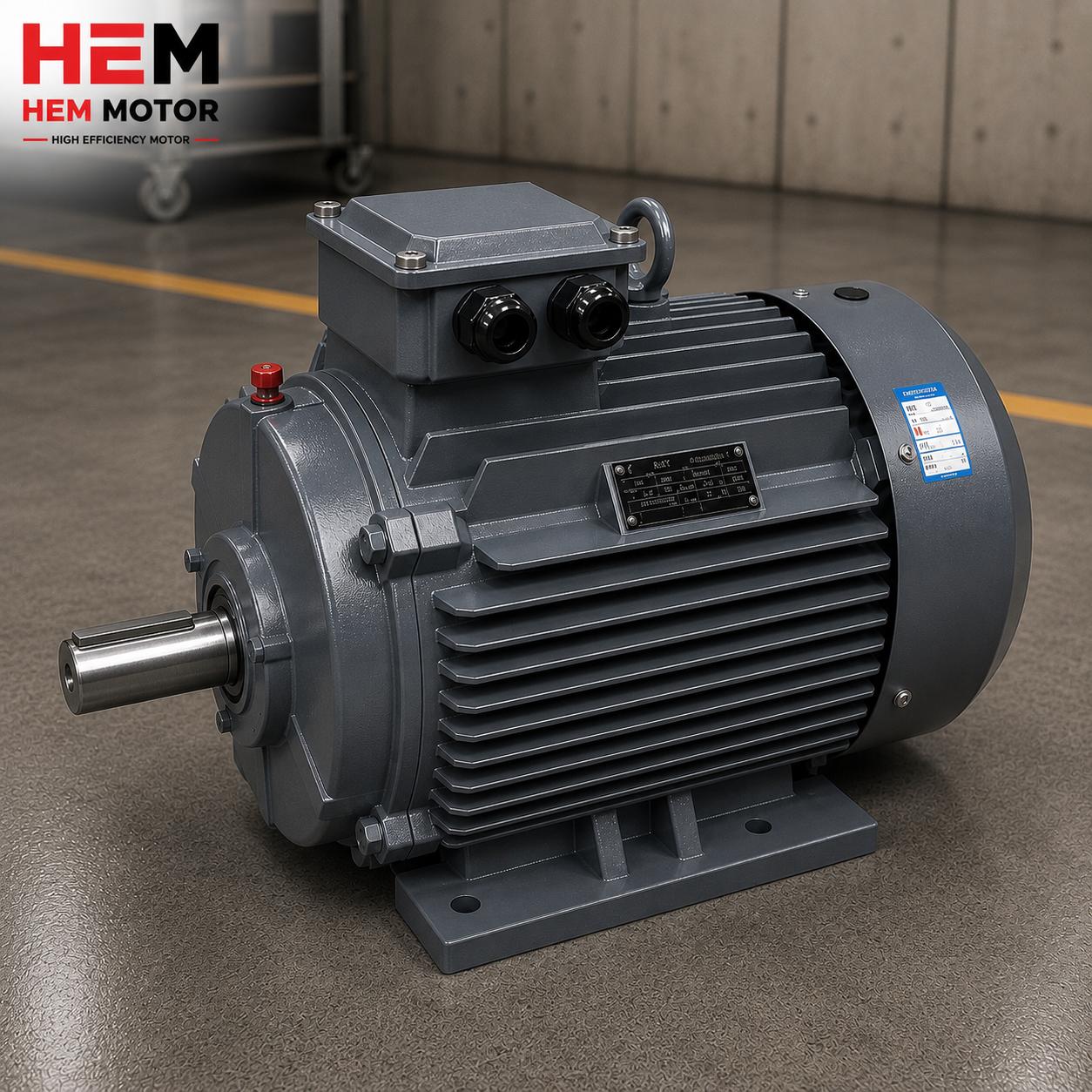
At the 200-250 kW level, direct on line (DOL) starting causes problems on most grids because the starting current reaches 6-8 times the rated current. For this reason soft starting methods are preferred:
- Soft starter: If only a soft start is needed with no speed control, an economical and compact solution.
- VFD: Both soft start and speed control; provides energy saving on pumps and fans.
- Star-delta: A classic and economical method on low starting-torque loads, but there is a transition surge.
- Reactor/autotransformer: Limits starting current on high-inertia loads.
We covered soft starter compatibility and correct sizing in our soft starter compatibility on an IE3 motor article. The method is chosen according to load inertia, grid strength and the need for speed control.
Cooling and Commissioning
On 200-250 kW motors, cooling determines the capacity to deliver continuous power. Although the standard method is surface cooling with a shaft-mounted fan (IC411), if continuous torque is produced at low speed with a VFD an external forced cooling fan may be needed. In dusty environments a closed circuit or additional IP protection is considered. At commissioning, insulation measurement, rotation direction check and vibration measurement must always be carried out.
- Cooling: At continuous full load and low speed an external fan comes into play.
- Protection: Winding temperature protection (PTC/PT100) should be standard at high power.
- Commissioning: Megger, rotation direction, vibration and temperature check under first load.
- Mounting: Coupling alignment and foundation are critical for vibration-free operation.
We covered high-power accessory options (forced fan, temperature protection, encoder) in our accessory options on an IE3 motor article.
Stock and Lead Time: The Correct Supply Plan
At high powers such as 200 and 250 kW, the most sought-after speed and frame combinations (especially 4-pole) can usually be supplied from stock or with a short lead time, while more special pole and mounting combinations are planned per project. A correct supply plan includes these steps:
- Technical clarification: Power, pole, frame, mounting, voltage and starting must be clear from the start.
- Stock check: Stock availability and fast delivery should be queried for the most sought combinations.
- Starting compatibility: The soft starter/VFD must be sized together with the motor.
- Transport and mounting: A crane and foundation suited to the motor weight must be prepared.
- Redundancy: A spare motor or fast-supply guarantee should be planned on a critical line.
You can find which powers and speeds in the IE3 stock range are quickly supplied in our IE3 electric motor stock guide article.
Typical Use Areas of 200 and 250 kW IE3 Motors
This power class is the backbone of continuously running heavy-industry applications. Knowing which speed is preferred in which sector makes the correct pole choice easier.
- Air compressors: Usually 2- or 4-pole in screw and centrifugal compressors; because efficiency at continuous load is critical, IE3 provides large savings here.
- Large pumps: Mostly 4-pole in water supply, irrigation and process pumps; used together with a VFD at variable flow.
- Fans and exhausters: 4- or 6-pole in flue-gas, cooling-tower and process fans; starting is chosen carefully due to high inertia.
- Mills and agitators: 6-pole and a suitable starter in applications needing low speed and high torque.
- Process lines: Continuous load in plastic extruders, paper and textile lines; IE3 efficiency directly lowers the annual energy cost.
The common feature of these applications is that the motor runs continuously for thousands of hours a year. For exactly this reason, in this power class the efficiency class (IE3) is not just a label but a factor that directly determines operating cost. The gain of an efficient motor at continuous load can be seen at lower powers too, but at the 200-250 kW level this gain becomes far more pronounced.
IE3 or IE4? The Decision at This Power
At the 200-250 kW level IE3 is the mandatory minimum; however, some plants may step further and prefer IE4 (Super Premium). The decision depends on running hours and energy cost. In a plant running very high hours a year with a high energy cost, the extra efficiency of IE4 can amortise its higher initial cost over time. By contrast, in applications running fewer hours or with budget priority, IE3 is sufficient and the right choice both legally and economically.
What matters is to make the decision based on the duty profile: how many hours a day and days a year the motor runs; how constant the load is; what the unit energy cost is. The answers to these questions clarify the choice between IE3 and IE4. As HEM Motor, we can supply this power range in both classes and recommend the right class according to your plant's duty profile.
Frequently Asked Questions
Is IE3 mandatory at 200 and 250 kW?
Yes. This power range falls within the range where the IE3 (Premium Efficiency) class is legally mandatory; at these capacities a new IE2 or lower-efficiency motor cannot be supplied. Moreover, because of continuous operation at this power, the IE3 efficiency difference saves significantly on the energy bill, so it is the right choice both legally and economically.
Which frame comes on a 200/250 kW motor?
Typically in the 315 to 355 frame range. The exact frame depends on pole count: the low-speed (6-pole) version usually moves up a frame. If you are replacing a motor, always confirm that the frame and mounting dimensions match the existing foundation exactly.
Does a motor at this power come from stock or need a lead time?
The most sought combinations (especially 4-pole, standard mounting) can usually be supplied from stock or with a short lead time. More special pole, mounting and option combinations are planned per project. Clarifying your combination from the start ensures the fastest delivery.
A 200 and 250 kW IE3 motor becomes a trouble-free investment when the right speed, the right frame, the right starting method and a solid stock-lead-time plan come together. As HEM Motor, we supply the most sought combinations in this power class quickly from stock and plan the entire process with you, from technical clarification to commissioning. Request a quote for your 200/250 kW and above high power needs; with manufacturer stock advantage and fast delivery, we are at your side.