English
 Türkçe

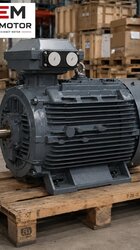
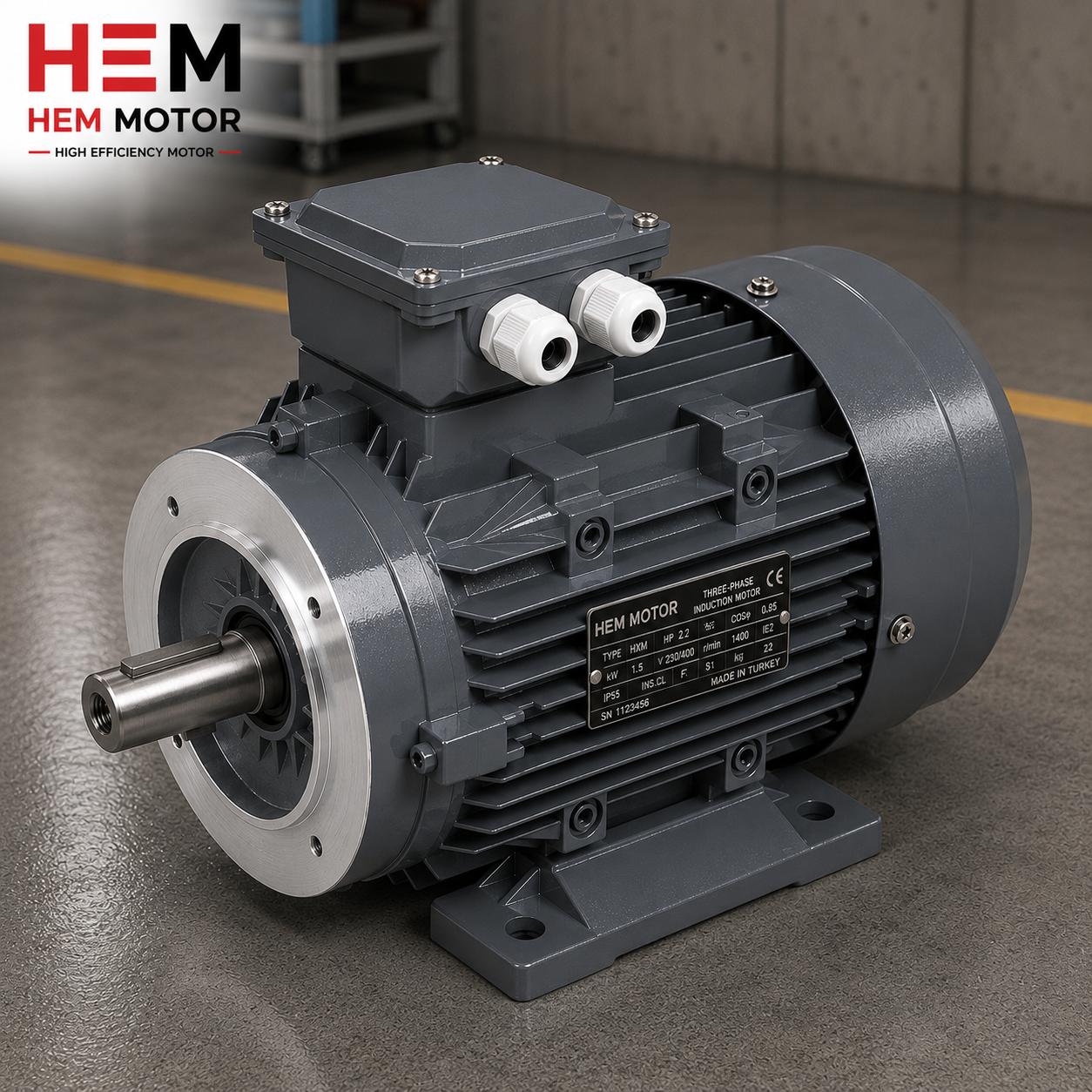

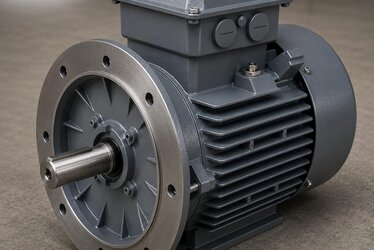
An IE3 motor to be used in ship, offshore platform and marine projects must withstand far harsher conditions than a motor in a land plant. On board, a motor must cope simultaneously with continuous humidity, salt air, vibration, the ship's rolling and pitching motions (inclination), limited ventilation and an aggressive marine environment. These conditions shorten the service life of a standard industrial motor; corrosion, insulation weakening and mechanical fatigue accelerate. This is why, in marine use, motors must have passed the type approval of a classification society (such as DNV, ABS, Lloyd's, BV). Type approval certifies that the motor is designed and tested to withstand marine conditions. Without it, a motor cannot legally be installed and used in a classed vessel, regardless of how capable it may be on paper.
This article covers what marine/ship-type type approval means for an IE3 motor: the humidity-salt-vibration-inclination conditions on ships and offshore, the importance of the type approval certificate, marine-suitable protection levels such as IP56/W, the marine supply process, and how to select the right motor with the right documentation. The goal is to help you supply, the first time, the right IE3 motor that will pass the classification society approval smoothly and run reliably in the field on a marine project.
Why Are Ship and Offshore Conditions So Demanding?
The marine environment differs from land industry in several fundamental ways. First is continuous humidity and salt: salt in the sea air, combined with condensation and splash, creates a strong corrosion environment. Second is vibration: vibration from the main engines, wave motion and propeller excitation places far higher mechanical load on the motor than in a land plant. Third is inclination: during the ship's rolling and trim motion the motor must operate safely in inclined positions and while moving. Fourth is limited ventilation and high ambient temperature; the engine room is hot and air circulation is restricted.
- Humidity and salt: Continuous condensation and salt air, a strong corrosion environment.
- Vibration: Main engine and wave motion, high mechanical load.
- Inclination: Rolling and trim; safe operation in inclined/moving positions.
- Hot engine room: High ambient temperature and limited ventilation.
What Is Type Approval and Why Is It Needed?
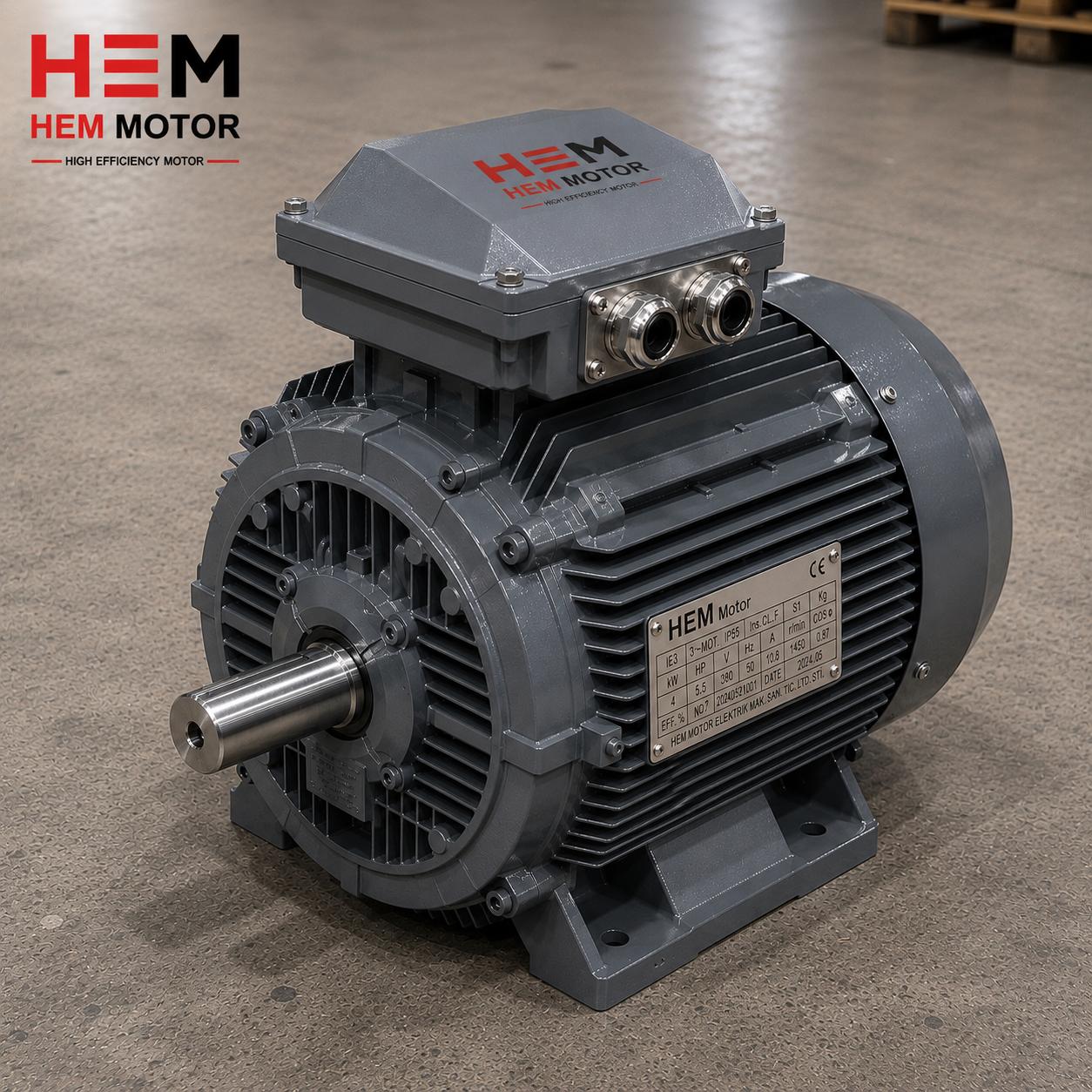
For a piece of equipment to be allowed for installation on a ship, it must carry the approval of the relevant classification society. Classification societies are independent bodies that verify the compliance of a ship and its equipment with international rules and safety standards. For motors this approval is usually given in the form of type approval: a specific motor family receives approval for that type after passing marine tests. This way every motor of the same type can be installed on a ship without being tested individually.
Type approval covers vibration tests, humidity and salt spray tests, operation under inclination, temperature endurance and insulation tests. The approval certificate proves that the motor meets these conditions and is presented during the ship's classification process. An undocumented or unsuitable motor can be rejected at the class inspection, meaning project delay and cost increase. For this reason, in marine projects it is critical to select a motor with the right classification society's type approval (DNV, ABS, Lloyd's, BV, etc. depending on the project) from the outset.
| Marine Requirement | Typical Target | Purpose |
|---|---|---|
| IP protection | IP56 / IP56/W and above | Against splash, waves and humidity ingress |
| Insulation class | Class F (with B rise) | Thermal margin in a hot engine room |
| Inclination endurance | Static ~22.5°, dynamic ~22.5° | Operation under rolling and trim |
| Vibration | Marine vibration profile | Wave- and machine-induced vibration |
| Corrosion | Tropicalization, C5(M) paint | Endurance in salty, humid environment |
| Anti-condensation | Heater (space heater) option | Prevent condensation at standstill |
IP56/W and Marine-Suitable Protection
In marine use the motor's protection against water and humidity is kept higher than in a land plant. On open decks, in the engine-room bilge and in splash-exposed areas, IP56 and above is required; the letter W (weather protected) additionally indicates resistance to weather conditions. The motor's terminal box, cable glands and shaft seal must be sealed against salt-water splash and humidity. In addition, because the humidity in the engine room condenses inside the motor during standstill, an anti-condensation heater (space heater) is a standard option on most marine motors; it gently warms the winding while the motor is stopped, preventing water from condensing inside and weakening the insulation.
Structural Differences of a Marine IE3 Motor
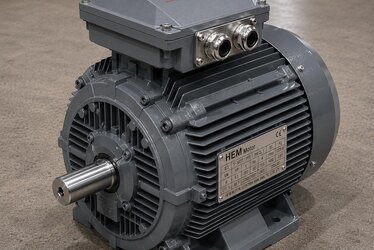
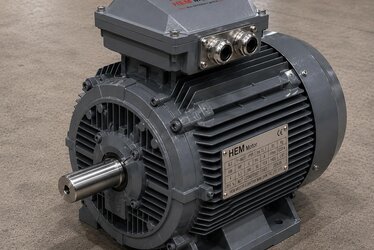
A marine type-approved IE3 motor differs from the land type in several structural details. The paint system is selected in a high corrosion category for the marine environment (C5-M or equivalent); the body and outer surfaces are treated to withstand salt air. The winding is tropicalized; that is, additional protective impregnation against humidity and fungal growth is applied. The bearings and lubrication are selected to suit vibration and continuous operation. Terminal box sealing is enhanced and cable entries are made with marine-standard glands. All these details ensure the motor runs reliably and with a long service life under marine conditions.
- Corrosion paint: C5-M or equivalent high corrosion category.
- Tropicalized winding: Additional protective impregnation against humidity and fungus.
- Marine bearing/lubrication: Selected to suit vibration and continuous operation.
- Anti-condensation heater: A heater that prevents condensation at standstill.
- Sealed terminal box: A box and glands resistant to salt splash.
Maintaining the IE3 efficiency class in a marine motor is also important. Ship energy systems have limited capacity; an efficient motor reduces generator load and fuel consumption. Therefore the IE3 (and higher where suitable) efficiency class is preferred in marine projects too; however, the efficiency class must be evaluated together with the type approval and protection requirements. High efficiency must not come at the expense of endurance to marine conditions; the right motor provides both.
Inclination Endurance and Lubrication
One of the most distinctive requirements that separates marine motors from land motors is inclination endurance. A ship is in continuous motion at sea; during roll and pitch the motor must operate in inclined positions. Class rules require the motor to run safely at certain static and dynamic inclination angles (typically about 22.5° in each direction). This concerns not only mechanical strength but also the lubrication arrangement: while the motor is inclined, bearing lubrication and oil distribution must not be disrupted. For this reason, in marine motors the bearing type, lubrication quantity and shaft-seal arrangement are selected with inclined operation in mind.
Inclination endurance is especially critical for vertically mounted (V-series) pumps and fans; in these motors axial load and oil distribution are more affected by inclination. In a vertically mounted marine motor, both the axial thrust load and the continuity of lubrication under inclined operation must be evaluated together. The right bearing and lubrication selection guarantees the motor's safe operation under all the ship's motion conditions.
- Static/dynamic inclination: Safe operation typically at ~22.5° in each direction.
- Lubrication continuity: Bearing lubrication must not be disrupted while inclined.
- Vertical mounting: Axial load and oil distribution are more affected by inclination.
- Bearing selection: Vibration and inclination are considered together.
Marine Supply Process and the Right Documentation
Motor supply in marine projects requires a different documentation discipline from land projects. First it must be clear which classification society (DNV, ABS, Lloyd's, BV, etc.) the project will be certified with, because the motor's type approval must suit that society. Then the motor's technical features (power, speed, IP protection, insulation, inclination endurance, anti-condensation heater) are set according to the project requirements. On delivery, the type approval certificate, test certificates and nameplate data must be provided in full; these documents are presented at the ship's classification inspection. Missing or mismatched paperwork can hold up the entire vessel certification, so document completeness is as important as the motor itself.
- Classification society: Which society is the project certified with? (DNV, ABS, Lloyd's, BV)
- Technical requirement: Power, speed, IP, insulation, inclination, heater.
- Documents: Type approval certificate and test certificates must be complete.
- Schedule: A delivery plan in line with the shipbuilding programme.
Common Mistakes in Marine Motor Selection
The most common mistake is taking a land-type IE3 motor and assuming it is marine merely by changing its paint; a motor without type approval cannot pass the class inspection. The second mistake is selecting a motor carrying the wrong classification society's approval; if the project's certification is DNV, an ABS approval alone may not be sufficient. The third mistake is skipping the anti-condensation heater and suitable IP protection; in that case the motor absorbs moisture during stops and its insulation weakens. The fourth is leaving documents incomplete at delivery and running into problems at inspection.
Selecting the right marine IE3 motor requires document compatibility as much as technical features. For corrosion and salt-environment protection, our salt-environment protection in coastal and marine facilities and IP protection class selection articles are a good start. For humidity and the heater, our tropicalization and space heater, for marine motor supply our marine and shipboard electric motors, and for insulation our winding and insulation class (F/H) content will be useful.
Frequently Asked Questions
Can I use a land-type IE3 motor on a ship?
Generally no. A motor to be installed on a ship is expected to carry the type approval of the classification society the project is certified with. A land-type motor can be rejected at the class inspection because it does not meet the marine requirements for corrosion protection, inclination endurance, vibration and documentation. The right solution is to select a marine type-approved motor from the outset, matched to the project's classification society.
Are DNV approval and ABS approval the same thing?
Both are recognised classification society approvals operating to broadly similar marine rules, but the right approval changes depending on which society the project is certified with. If your project is certified with DNV, the motor is expected to carry DNV type approval. So before ordering, it is necessary to clarify the project's classification society and select the motor accordingly.
Is an anti-condensation heater mandatory in a marine motor?
It is strongly recommended in most marine applications. The continuous humidity in the engine room condenses inside the motor while it is stopped and weakens the insulation. An anti-condensation heater (space heater) gently warms the winding while the motor is stopped, preventing condensation. Especially on standby motors that stand idle for long periods between uses, this option significantly extends service life and protects insulation resistance.
At HEM Motor we supply marine type-approved IE3 motors for marine and offshore projects, with high IP protection, tropicalized windings and anti-condensation heater options, together with the required documents and certificates, from stock and with fast delivery. Share your project's classification society, the motor power-speed requirement and the mounting conditions; we will identify the right motor and documentation to pass the class inspection smoothly and prepare a quotation for the most suitable solution.