English
 Türkçe

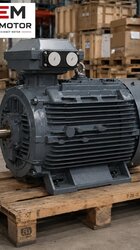
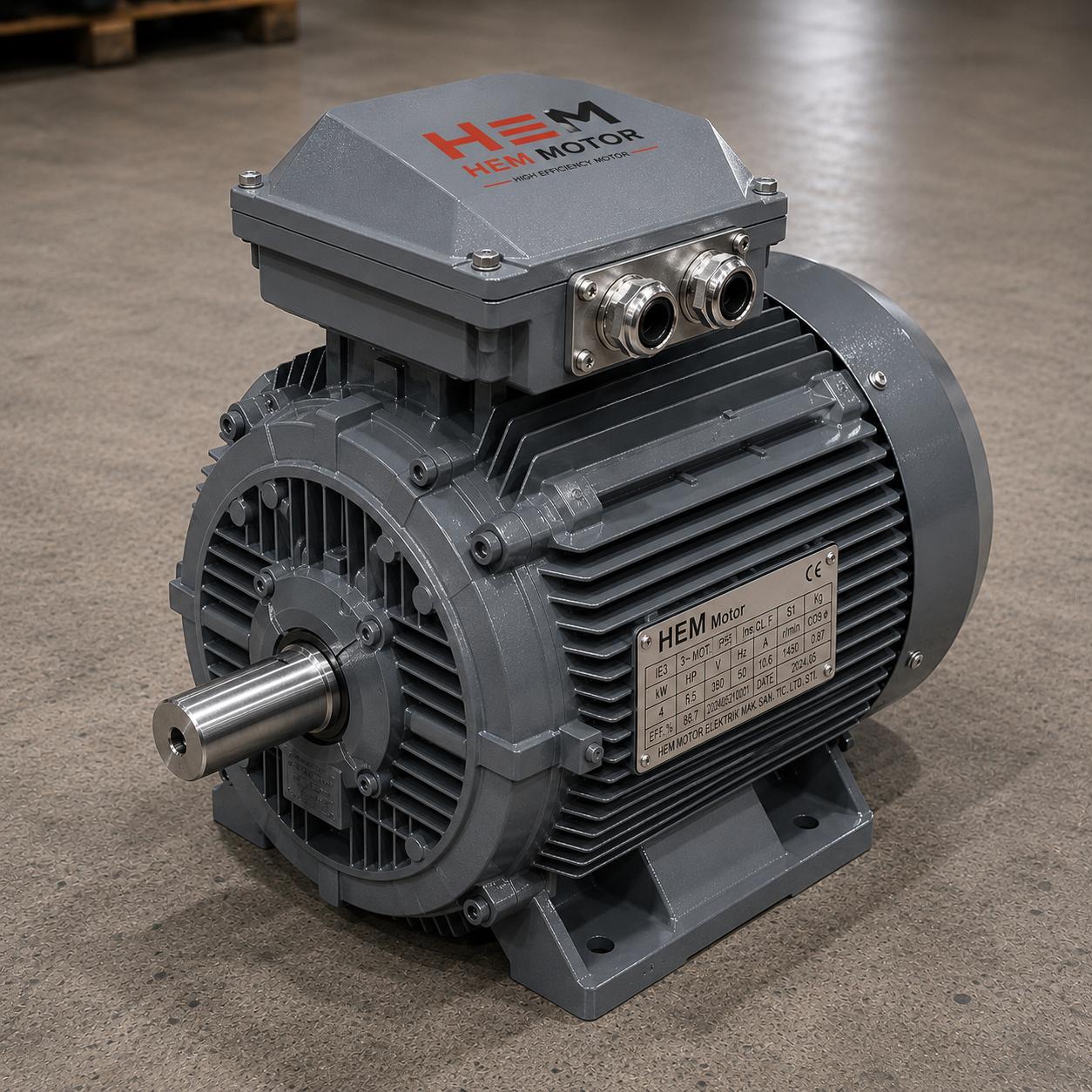

The rated values of IE3 electric motors (the nameplate kW power, current and temperature rise) are stated for a standard reference ambient temperature: under IEC 60034-1 this value is +40°C. In other words, the nameplate power is valid for conditions where the air around the motor does not exceed 40°C and the altitude does not exceed 1000 metres. Yet in the field many motors operate far from these conditions: next to furnaces and boiler rooms, in foundries, glass and ceramic plants, at outdoor pumps in hot climates, on rooftop fans under the sun and inside poorly ventilated panels, the ambient temperature can reach 50°C, 55°C or even 60°C. Using the nameplate power as is under these conditions causes the winding temperature to exceed the insulation limit and the service life to shorten rapidly.
In this article, HEM Motor explains the power-reduction (derating) factors that must be applied to IE3 motors above 40°C ambient, how the insulation class (F/H) provides a margin in this equation, how the real usable power at high temperature is found, and the correct motor sizing for hot environments. The goal is to make the right selection that lets the motor run at a safe winding temperature, with its full service life, even in a hot environment.
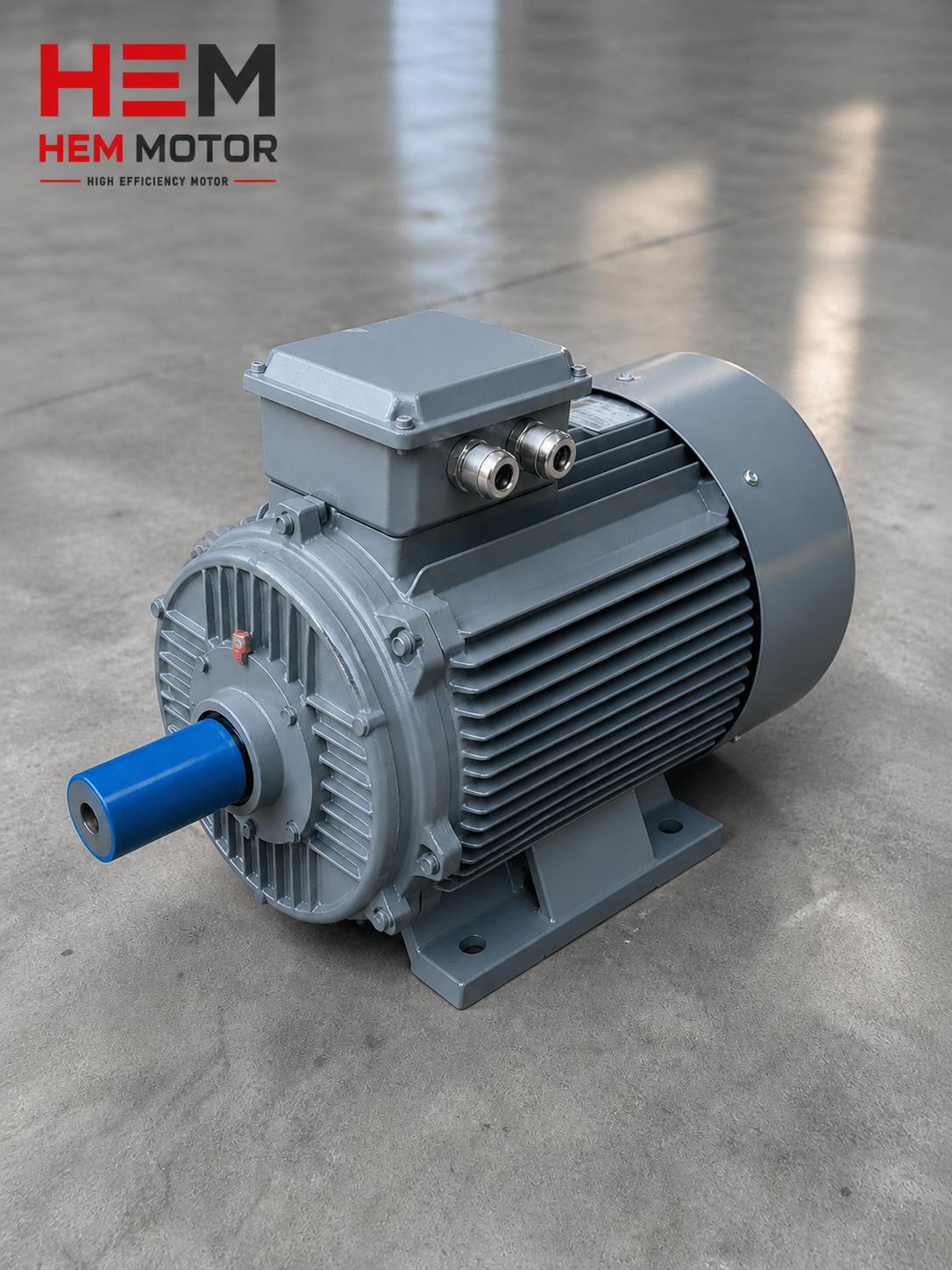
Why Does Ambient Temperature Limit Motor Power?
The fundamental reason for a motor's power limit is heat. While the motor runs, losses in the winding (copper losses), in the iron core and in mechanical friction turn into heat. This heat is rejected from the motor surface and, with the cooling fan, into the surrounding air. What determines how much load the motor can carry is that the winding temperature must not exceed the limit allowed by the insulation. The winding temperature is the sum of two things: the ambient (surrounding air) temperature + the temperature rise the motor produces under load.
Under standard conditions the calculation is set up as: 40°C ambient + the motor's allowable temperature rise = the maximum winding temperature allowed by the insulation class. When the ambient temperature rises above 40°C, the starting point of the equation rises; the winding of a motor running at the same load becomes hotter. The only way not to exceed the insulation limit is to reduce the temperature rise the motor produces, which means reducing the load (power) — that is, applying derating.
Insulation Class (F/H) and the Temperature-Rise Budget
The insulation class sets the maximum temperature the winding can withstand. The two most common classes are: class F (maximum 155°C) and class H (maximum 180°C). The vast majority of IE3 motors have class F insulation, yet are often designed to a class B temperature rise (80 K). This gives the motor a very valuable thermal reserve (temperature margin):
- Class F insulation (155°C limit), class B temperature rise (80 K): 40°C ambient + 80 K rise = 120°C winding. Since the insulation limit is 155°C, a thermal reserve of about 25 K (with a hot-spot safety allowance, roughly 35°C) remains. This reserve can be used as a "buffer" when the ambient temperature exceeds 40°C.
- Class H insulation (180°C limit): Thanks to the higher limit, it operates much more comfortably in hot environments; it is preferred in hot-climate and near-furnace applications.
It is thanks to this thermal reserve that an IE3 motor with F insulation / B rise can often run with no derating, or very little, when the ambient is 45°C or 50°C instead of 40°C; because the increased ambient temperature is absorbed by the unused thermal margin of the winding. Once the limit is exceeded, derating becomes unavoidable.
Power-Reduction (Derating) Factors by Ambient Temperature
The table below summarizes the widely accepted power-reduction factors for standard induction motors, based on IEC 60034-1. The factor is multiplied by the nameplate power to give the usable power at that ambient temperature. These values are a general reference; the exact factors may vary according to the derating curve provided by the motor manufacturer and the motor's insulation/temperature-rise design.
| Ambient Temperature | Derating Factor (approx.) | Usable Power (10 kW motor example) | Note |
|---|---|---|---|
| 30°C | 1.07 | 10.7 kW | Below standard, slight power increase possible |
| 40°C (standard) | 1.00 | 10.0 kW | Nameplate reference |
| 45°C | 0.95 | 9.5 kW | Slight reduction |
| 50°C | 0.90 | 9.0 kW | Noticeable reduction |
| 55°C | 0.85 | 8.5 kW | Hot environment, careful selection |
| 60°C | 0.80 | 8.0 kW | Very hot; class H recommended |
As the table shows, in a 55°C ambient a 10 kW nameplate IE3 motor can safely carry only about 8.5 kW; at 60°C this drops to about 8.0 kW. Reading it the other way: if you want to drive a 10 kW load in a 55°C ambient, you must choose a motor with a nameplate power of about 12 kW (10 / 0.85), i.e. step up one frame size.
Altitude Matters Too: Temperature and Height Together
Derating is not only about temperature. The standard is given for 1000 metres of altitude; at higher altitudes the air density decreases, the cooling fan's air becomes thinner and the motor cools less efficiently. For this reason a power reduction is also applied above 1000 metres. If a site is both hot and at high altitude (for example, irrigation pumps running on high plateaus in summer), the two factors must be considered together. When the two effects compound, the total power reduction is greater than what temperature alone would indicate; in this case the motor may need to be selected one or two frame sizes larger.
Recommendations for Correct Selection in Hot Environments
- Measure the real maximum temperature of the operating environment; inside panels, near furnaces and in rooftop applications this can be far higher than the outdoor air temperature.
- Prefer a motor with class H insulation where possible; it provides a wider thermal margin in hot environments.
- Apply the derating factor to find the usable power; keep the load below this value.
- Select a motor one frame size larger if needed; this provides both temperature margin and reserve torque.
- Consider the forced (external) cooling fan option; it guarantees cooling especially at continuous torque at low speed.
- Add winding temperature protection (PTC/PT100); it provides early warning and protection in a hot environment.
- Improve ventilation for panel-mounted motors; lowering the ambient temperature can be more economical than upsizing the motor.
In Which Applications Is High Ambient Temperature Expected?
When high ambient temperature is mentioned, furnaces, boilers and heat-treatment plants come to mind first; these motors usually run near radiant heat sources. Foundries, glass and ceramic kilns, asphalt plants and cement plants are similarly exposed to high temperatures. Besides these, there is a less obvious but common group: motors placed inside poorly ventilated panels, rooftop and facade fans under the sun, and shadeless outdoor pumps and aspirators in hot-climate regions. In tropical and desert climates the outdoor air temperature itself can reach 45-50°C; on these sites the standard 40°C assumption is invalid from the start.
As HEM Motor, we supply IE3 (and higher-efficiency IE4) motors with F and H class insulation from stock, together with a correct derating calculation, for hot-climate and high-ambient applications. We determine the right power and frame together according to the real ambient temperature of your application.
Temperature Rise, Service Life and the "10-Degree Rule"
There is a widely accepted rule of thumb for insulation materials: for every continuous 10°C that the winding temperature rises above the value allowed by the insulation class, the life of the insulation roughly halves. So running a class F insulation designed for 155°C continuously at 165°C cuts the expected life roughly in half; at 175°C, to a quarter. This rule clearly shows why not applying derating in a hot environment is so costly: even if the motor does not burn out immediately, the winding insulation ages silently and reveals itself within a few years through an unexpected failure.
For this reason, derating in a hot environment is not a "cautious preference" but a mandatory engineering step that protects the motor's nameplate life. A correctly calculated power reduction keeps the winding temperature below the design limit, so the insulation completes its expected tens of thousands of hours of life. Conversely, pushing the nameplate power in a hot environment may cause no problem in the short term, but in the medium term produces a much higher cost in the form of unplanned downtime and early motor replacement.
The Role of Cooling Method and Frame Selection
In a hot environment, not only the power reduction but also the motor's cooling method is decisive. In standard IC411-type motors, cooling is provided by a shaft-mounted fan; when the motor slows down, the fan slows too and cooling weakens. For this reason, in motors that run at continuous high torque at low speed with a VFD, cooling becomes doubly critical when combined with a hot environment. In this case a forced (external) cooling fan offers a major advantage by providing constant airflow independent of motor speed.
Frame material and size also affect heat dissipation. A larger frame means a larger cooling surface; therefore choosing one frame size larger provides both thermal margin and mechanical strength. Cast-iron frames, thanks to their mass, tolerate temperature fluctuations better. In a hot environment, the bearing grease must also be selected to suit the temperature — high-temperature grease — and C3 bearing clearance for hot ambients should be considered; otherwise the bearing may fail before the winding does.
Signs of Incorrect Sizing
- If the motor frame is too hot to touch and the thermal protection trips frequently, derating for the ambient temperature may not have been done.
- A burnt smell or discoloration in the winding insulation is a sign of continuous overheating.
- Bearings failing much sooner than expected indicate wrong grease/bearing selection for the hot environment.
- Frequent thermal protection trips show that the real ambient temperature was not taken into account.
Frequently Asked Questions
Can I use the nameplate kW value as is in a hot environment?
No. The nameplate power is for a 40°C ambient. If the ambient exceeds 40°C, you must apply the derating factor. For example, at 55°C with a factor of about 0.85, the motor safely carries about 85% of its nameplate power. In motors with F insulation / B temperature rise, small exceedances can be absorbed by the thermal margin, but at large exceedances the power must be reduced or a larger motor selected.
Why is class H insulation advantageous in a hot environment?
The maximum winding temperature allowed by class H insulation (180°C) is higher than that of class F (155°C). This provides a wider thermal margin when the ambient temperature rises; the motor can run in the same environment either with no derating at all or with less. In hot-climate and near-furnace applications, class H is preferred.
Which motor should I choose for a 10 kW load in a 55°C ambient?
The derating factor for 55°C is about 0.85. To safely carry a 10 kW load, a nameplate power of 10 / 0.85 ≈ 11.8 kW is needed, so in practice an 11 kW (tight margin) or a step-up 15 kW frame is sensible. For torque reserve and future temperature fluctuations, choosing one frame size larger is generally safer.
Correct motor selection in a hot environment is based not on the nameplate power but on the usable power calculated for the ambient temperature. To get a quote with fast delivery from the HEM Motor stock range, with the right insulation class and frame for near-furnace, hot-climate and poorly ventilated applications, get in touch with us.
Related content: F/H insulation class in IE3 motors, in-panel ambient temperature and derating, C3 bearing clearance in hot environments and temperature monitoring with PT100 and thermistor.