English
 Türkçe


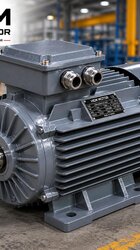
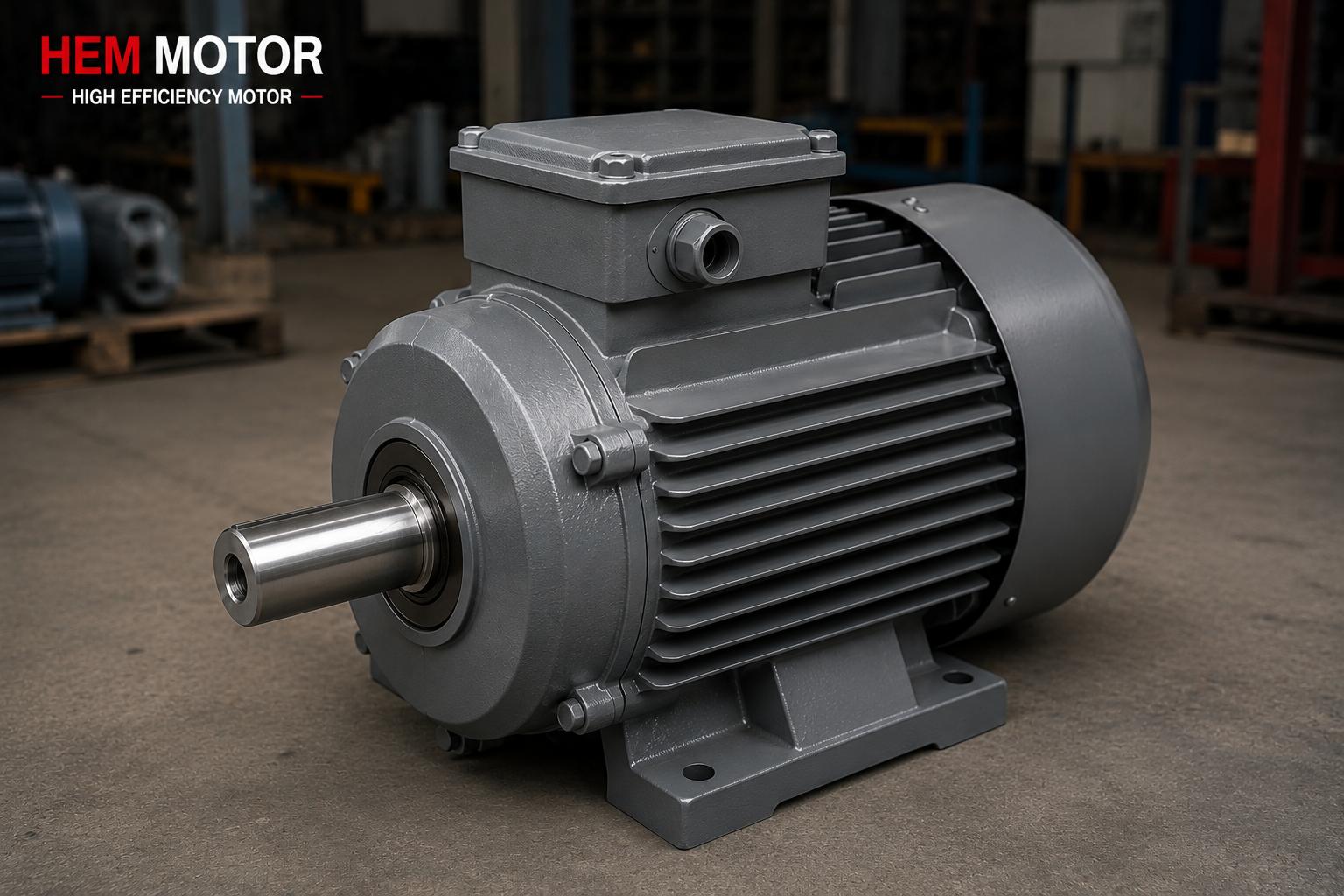

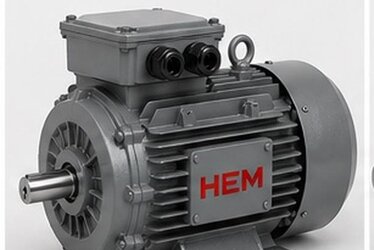
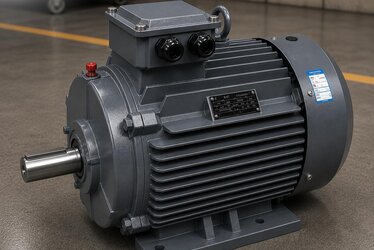
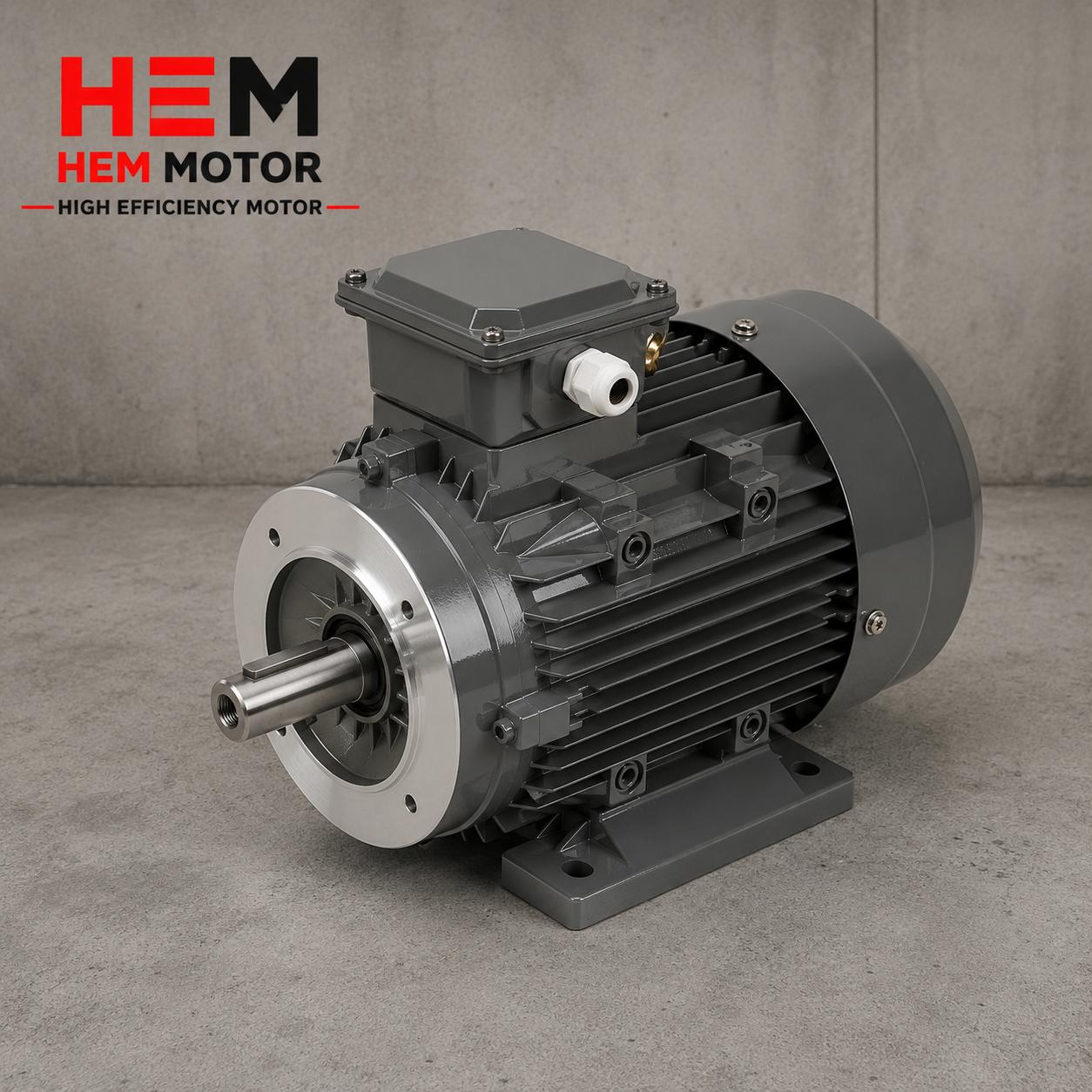
Replacing an old standard-efficiency (IE1/IE2) motor that has run in your plant for years with an IE4 motor is a deferred but high-return investment for most operations. As energy costs rise, the extra energy an old motor burns every running hour quickly pays back the investment in a new IE4 Super Premium motor. As both a manufacturer and supplier, HEM Motor provides IE4-class three-phase motors and asynchronous motors from 0.25 kW to 355 kW, offering replacement solutions that match your old motor in the correct frame and speed. This guide looks at what the payback period depends on, the efficiency incentives and support mechanisms that accelerate the investment, and what to watch for during the swap, all from a buyer's perspective.
Why Does Replacing an Old Motor with IE4 Make Sense?
Most of an electric motor's lifetime cost is not the purchase price but energy consumption. On a continuously running motor, the electricity cost exceeds the initial purchase price many times over within the first years. The efficiency difference between an old IE1 or IE2 motor and an IE4 Super Premium motor may look small as a percentage, but on a motor running thousands of hours per year it adds up to serious cumulative energy savings. That gap determines the payback period of the swap.
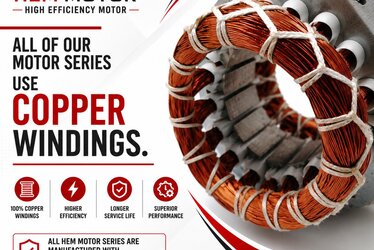
The second advantage of moving to IE4 is the longer bearing and winding life thanks to lower heating and fewer losses, which reduces maintenance and downtime costs. The HEM Motor IE4 range is built with a cast iron body, IP55 protection, Class F insulation and 100% copper winding, suitable for continuous (S1) operation. If you want to see the investment logic numerically, our real consumption calculation for replacing your old motor with IE4 article offers a step-by-step example; here our focus is payback dynamics and incentives.
Factors That Determine the Payback Period
Even for two motors of the same power, the payback period varies from plant to plant. We recommend evaluating these five factors before requesting a quote:
Annual Running Hours
This is the variable that affects payback most. On a three-shift motor approaching 8000 hours a year, the move to IE4 pays back very fast, while on a motor running a few hours a day the period lengthens. To prioritize your continuously running critical motors, our motor fleet management in three-shift facilities article offers guidance.
Motor Load Ratio
Efficiency depends on the load point at which the motor runs. The efficiency gain of IE4 is highest on a motor running continuously at 75-100% load. On an oversized motor running at very low load, you may first need to downsize to the correct power; our motor load ratio and correct sizing article explains this.
Old Motor's Efficiency Class and Condition
An old motor rewound many times runs below even its nameplate efficiency class, because each rewind adds efficiency loss. On such a motor the move to IE4 pays back faster than expected.
Efficiency Regulation: The Legal Framework Driving the Swap
Moving to IE4 is not only economical but increasingly a legal requirement. Under the European Ecodesign Regulation (2019/1781), from 1 July 2021 at least IE3 became mandatory for directly started (DOL) three-phase motors in the 0.75-1000 kW range; from 1 July 2023 the IE4 requirement came into force for certain motors in the 75-200 kW range. IE2-class motors can no longer be placed on the European market with a CE mark. This framework shows that continuing with old stock motors is unsustainable in the medium term.
To see in detail which power requires which efficiency class from which date, see our IE3 and IE4 efficiency mandate regulation article. Choosing IE4 from the outset when buying a new motor is the safest decision for both regulatory compliance and future energy savings. As HEM Motor, we offer our full IE4 electric motor range in line with this regulatory framework.
Efficiency Incentives and Support Mechanisms
For operations replacing an old motor with a high-efficiency one, various incentives and support mechanisms supporting energy-efficiency investments may apply. Equipment-renewal projects that increase industrial energy efficiency may be assessed under periodically opened efficiency-improvement project (VAP) supports and incentive programs tied to energy-efficiency audits. Because the scope, rate and application conditions of these programs are updated over time, the current situation should be confirmed with the relevant authorities and energy-efficiency consultants.
Incentive applications usually rest on an energy-efficiency audit and a motor inventory. Documenting the efficiency class, power and running hours of your plant's motors in advance therefore eases both the incentive application and the replacement prioritization. To prepare this inventory, our energy-efficiency audit preparation and motor inventory article offers a practical framework. As HEM Motor, we help you prepare the motor list needed for your replacement plan together with equivalent IE4 models.
Evaluating Correctly with Total Cost of Ownership (TCO)
Looking at the payback period alone can be misleading; for the right decision you should look at total cost of ownership (TCO). TCO is the sum of the purchase price, the energy the motor consumes over its life and maintenance/downtime costs. On a continuously running motor the energy item makes up the large majority of TCO, so a slightly higher-priced IE4 motor gives the lowest lifetime TCO. If you want to run this calculation for your own plant, our TCO calculation for high-efficiency motors article explains the method.
Another positive contribution of moving to IE4 on the TCO side is on power factor and reactive consumption; more efficient motors use the grid more efficiently. We cover this in our power factor and reactive penalty on high-efficiency motors article. If you want to clarify whether IE3 or IE4 is the right investment for you, our IE3 vs IE4 investment comparison offers a decision table.
Mechanical Compatibility in the Swap: Does the New IE4 Fit the Old One?
Buyers' biggest concern is whether the new motor will fit the existing machine exactly. The good news: because IE4 motors are produced in IEC standard frame sizes, in most cases the same frame size, foot dimensions and shaft diameter as the old motor are retained. Still, in some cases an IE4 motor of the same power may be one frame size larger, so frame, foot and shaft dimensions should be checked before the swap. Our mechanical compatibility in the IE4 transition article details this check.
The safest method for a correct replacement is to share the old motor's nameplate data with us: power (kW), speed (rpm), frame size, mounting type (B3/B5/B35) and shaft diameter. If you are unsure about the mounting type, our electric motor mounting types page helps. If you are switching to a motor of a different brand, our direct replacement of an old-brand motor guide shows the equivalent-selection steps.
Which Motors to Replace First? A Prioritization Strategy
Renewing every motor in a plant at once is usually unnecessary; the smart approach is to prioritize the motors that will deliver the highest return. When setting replacement priority, evaluate three criteria together: annual running hours, motor power and the old motor's efficiency class. The motors that run the most, have the highest power and the oldest efficiency class come to the top of the list, because the energy loss in these motors holds the largest share of the total bill.
A practical priority order might be: first the continuously running high-power fan, pump and compressor motors; then the three-shift conveyor and process motors; and last the auxiliary motors running a few hours a day. With this approach you get the fastest payback in the shortest time on a limited budget. Our IE4 threshold in pumps, fans and compressors article explains why the IE4 threshold is a priority in continuously running applications. As HEM Motor, we support you in drawing up a priority list from your plant inventory and identifying the IE4 equivalent for each motor.
Moving to IE4 from a Carbon Footprint and Sustainability View
Beyond the economic return, moving to IE4 now also has a strategic carbon and sustainability dimension for many operations. A motor that consumes less energy indirectly means lower carbon emissions, which matters for corporate sustainability goals, customer audits and environmental expectations in export markets. For operations that report environmental performance in the supply chain, the efficiency class of the motor fleet is a measurable improvement item.
We cover how to reduce your plant's carbon footprint through motor renewal in our reducing the carbon footprint with high-efficiency motors article. From this angle, the IE4 swap is a dual investment that both lowers the energy bill and provides a visible gain in corporate reporting. The HEM Motor IE4 range makes this efficiency gain durable in field conditions with 100% copper winding and an optimized cooling design.
Logistics and Commissioning in the Replacement Process
When planning a motor swap you should consider not only the product but the whole process. On high-power motors, shipping, crane lifting and commissioning planning matter; to swap without stopping production, having the spare motor ready on site can be critical. We explain lead-time and shipping planning for motors above 90 kW in our high-power motor supply article. For continuously running critical lines, keeping the IE4 spare in stock before the old motor fails both reduces downtime risk and enables a planned swap; our critical spare motor list helps with this planning.
When commissioning the new IE4 motor, the direction of rotation, terminal connection and protection settings should be checked. As HEM Motor, we supply the motors needed for the swap in the correct frame and speed together with stock and lead-time information, and on large projects we plan bulk purchasing and shipping together.
Frequently Asked Questions
What is the payback period for replacing an old motor with IE4?
The payback period varies by plant; the most decisive factor is annual running hours and the motor's load ratio. On a continuously (three-shift) running motor close to full load, the move to IE4 pays back much faster. If you share your plant's running hours and power data, we can offer a realistic payback estimate together with an equivalent IE4 model.
Are there incentives or support for moving to IE4?
Industrial energy-efficiency investments may be assessed under periodically opened efficiency-improvement project supports and programs tied to energy-efficiency audits. Because scope and conditions are updated, confirmation with the relevant authorities before application is important. We help you prepare the motor list needed for your replacement plan with equivalent IE4 models.
Will the new IE4 motor fit in the same place as the old one?
In most cases yes; IE4 motors are produced in IEC standard frame sizes. However, because a same-power unit may need one frame size larger, frame, foot and shaft dimensions should be checked before the swap. If you share the old motor's nameplate data, we verify mechanical compatibility for you.
Get a Quote
To replace your old standard motors with an IE4 Super Premium motor, share your requirements and we will offer the correct replacement in an equivalent frame and speed, together with a payback estimate and stock/lead-time information. Reach us now via our contact page or call us at +90 (532) 345 49 86. As both manufacturer and supplier, HEM Motor delivers the right energy-saving motor at the right price with fast shipment.