English
 Türkçe



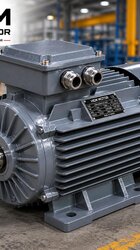
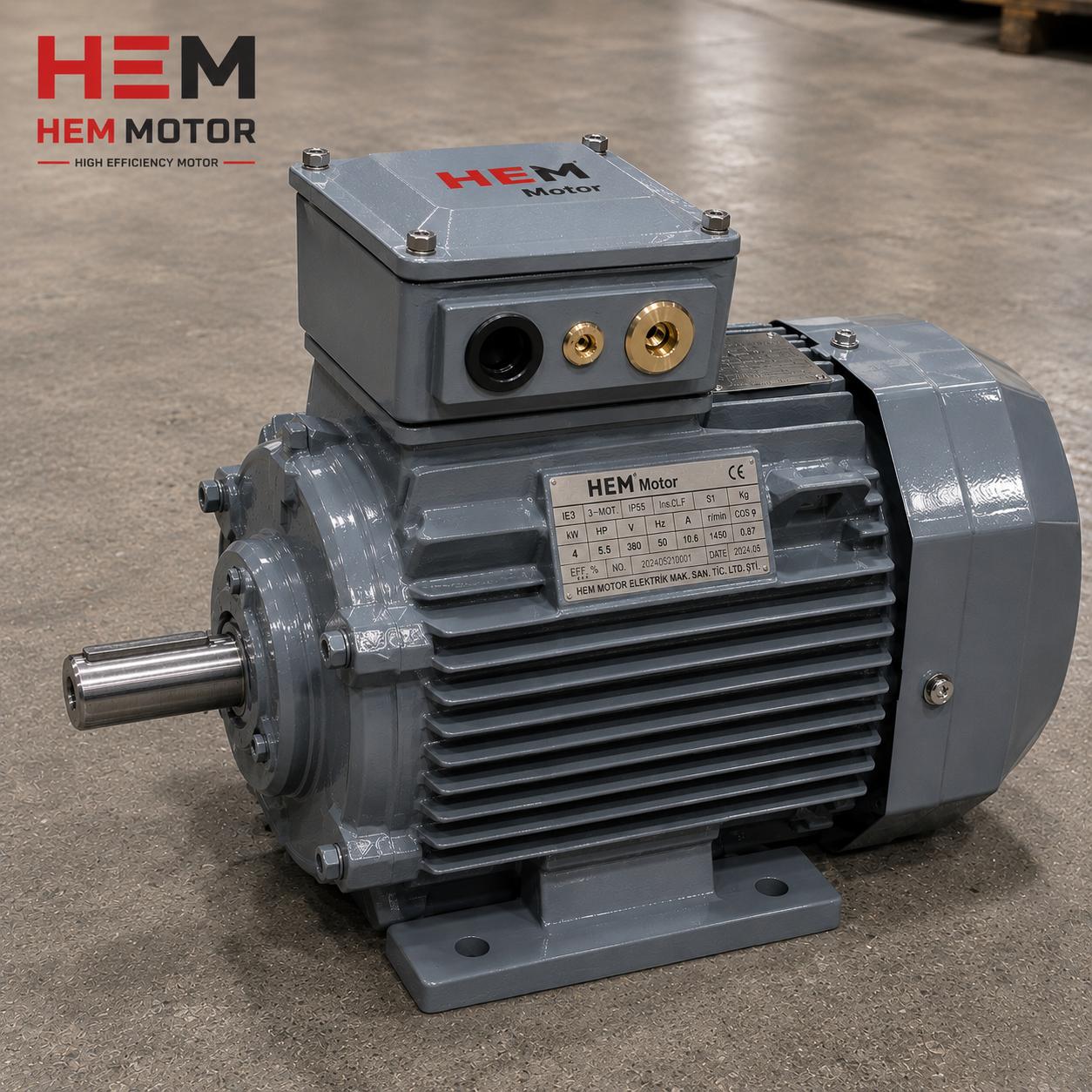

The vast majority of the electricity consumed in industrial facilities is drawn, often unnoticed, by spinning electric motors. Pumps, fans, compressors, conveyors and mixers all have an asynchronous motor at their heart, and these motors frequently account for more than sixty percent of a plant's total energy bill on their own. Therefore, if you want to reduce your facility's carbon footprint, the most accurate and measurable place to start is not lighting or office equipment, but the invisible workhorses of your production line.
Replacing old, low-efficiency motors with IE3 and IE4 class high-efficiency motors is one of the most direct and reliable ways to cut energy-related greenhouse gas emissions. In this article we examine the link between motor efficiency and carbon emissions concretely; we explain step by step where you should start your investment, how you can prove the gain with your own facility data, and how this contributes to your sustainability reporting.
Our point is clear: behind every kilowatt-hour consumed there is a quantity of carbon emission, and lifting motor efficiency by a few points translates into an enormous cumulative saving over the years a piece of equipment keeps running. This is a winning equation for both your environment and your operating budget.
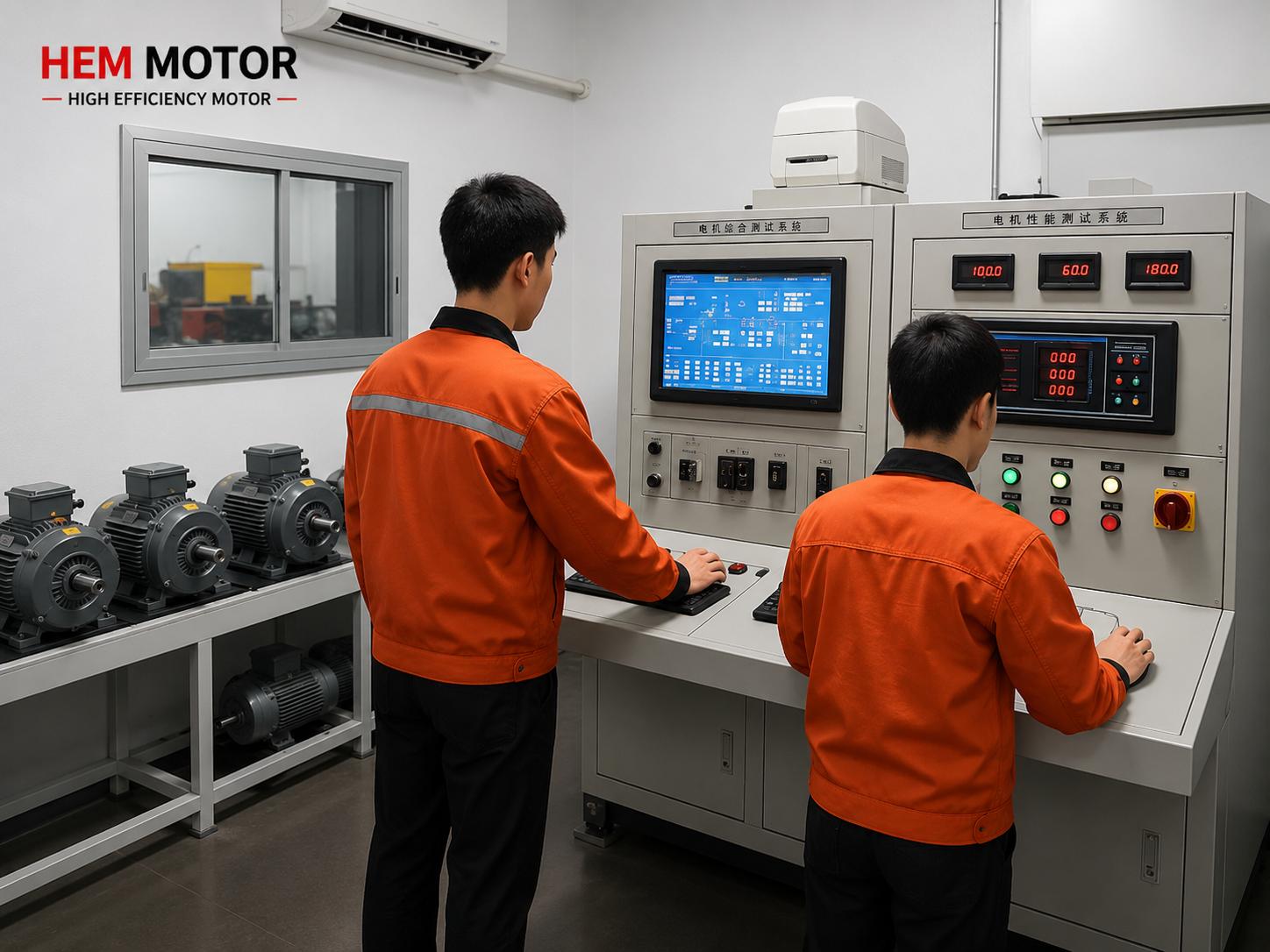
Why Does Most Industrial Electricity Go to Motors?
When you map out a production facility's energy profile, the picture that emerges is almost always the same: while lighting, heating and office loads make up a small slice of the total, the electric motors driving rotating machinery take the lion's share. From water pumps to cooling fans, from hydraulic units to belt conveyors, every moving system runs on a motor, and most of these motors spin without interruption eight, sixteen or even twenty-four hours a day.
A motor's efficiency shows how much of the electrical energy supplied to it is converted into useful mechanical work. The remainder is lost as heat, vibration and noise. While an old motor runs at 88 percent efficiency, a modern IE3 motor can reach 93-95 percent, and an IE4 super premium motor can exceed 96 percent. Although this few-point difference seems small, for a motor running thousands of hours a year it means tonnes of carbon emissions.
Efficiency Classes and Their Meaning
The international IEC 60034-30-1 standard divides motors into efficiency classes. Understanding these classes correctly forms the basis of your investment decision:
- IE1 (Standard Efficiency): Old-generation motors whose sale is now banned in most power ranges. If you still have these in your plant, the biggest saving potential is here.
- IE2 (High Efficiency): The previous generation; still found in many applications but no longer the minimum standard.
- IE3 (Premium Efficiency): The industry's standard choice, now mandatory by regulation in many power ranges.
- IE4 (Super Premium Efficiency): The class offering the lowest losses, ideal for critical, high-running-hour applications.
The Direct Link Between Motor Efficiency and Carbon Emissions
Discussions about reducing the carbon footprint often stay abstract; yet in electric motors this relationship is extremely concrete and calculable. Behind every kilowatt-hour of electricity you draw from the grid there is an emission factor tied to the source from which that electricity was generated. For the Turkish grid this factor is roughly half a kilogram per kilowatt-hour. In other words, every kilowatt-hour your motor wastes means additional carbon dioxide released into the atmosphere.
Consider an example: when you replace a low-efficiency motor running seven thousand five hundred hours a year with an IE3 motor, the efficiency difference can save you several thousand kilowatt-hours of electricity per year. Multiplied by that emission factor, this saving turns into tonnes of avoided carbon dioxide. Moreover, this gain is not one-off; it returns again and again for every year the motor stays in service.
Where Do the Losses Come From?
Understanding the losses in a motor shows why high-efficiency design makes such a difference:
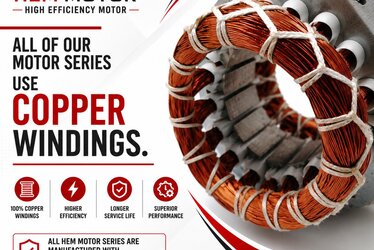
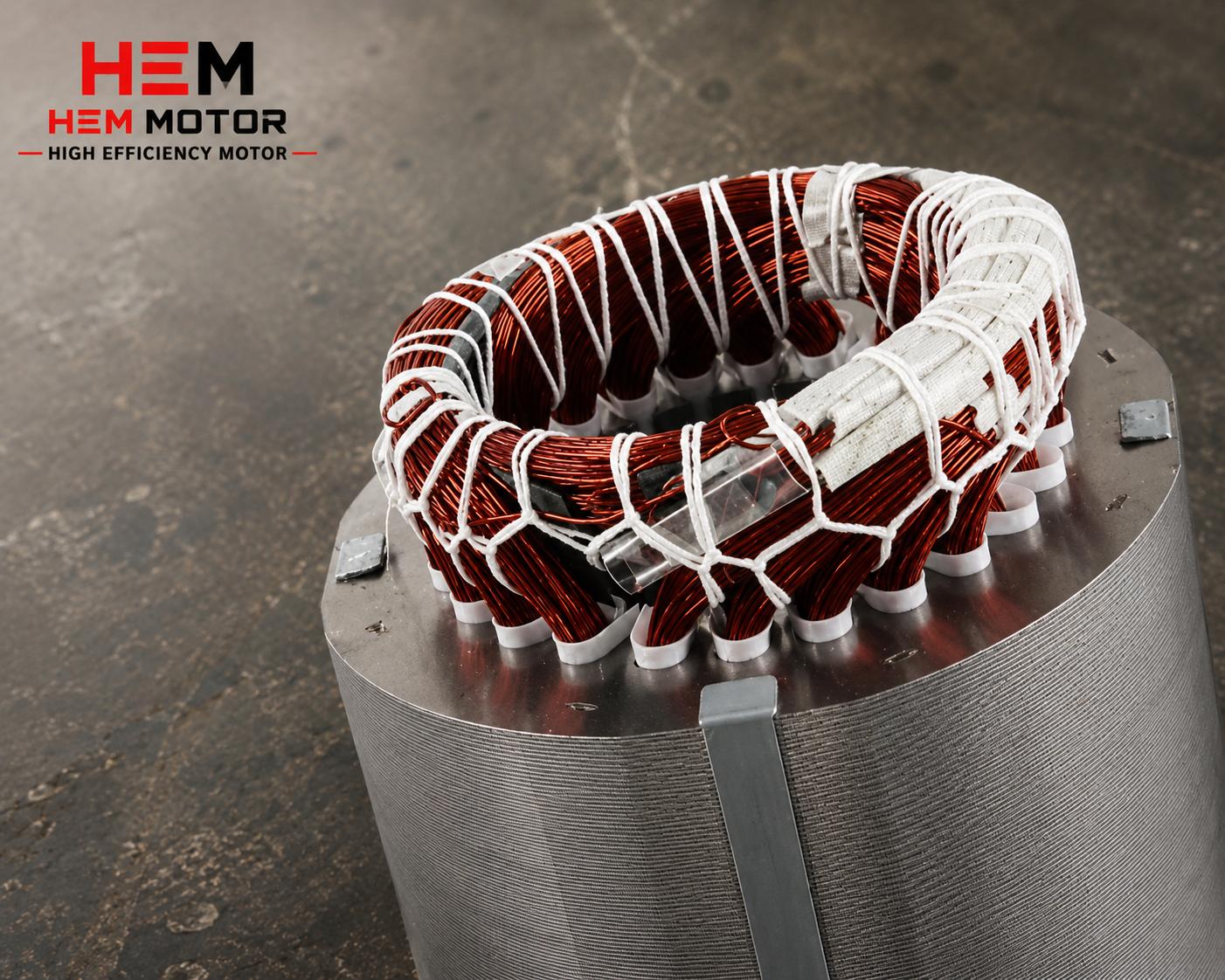
- Copper losses: Heat produced as current flows through the windings. High-efficiency motors reduce this by using more and higher-quality copper.
- Iron losses: Hysteresis and eddy-current losses in the magnetic core. Thin, high-grade silicon steel lowers them.
- Mechanical losses: Bearing friction and fan losses. Optimized cooling design improves this item.
- Stray load losses: Additional losses under load, minimized through advanced rotor design.
As the efficiency class rises, each of these losses is systematically reduced, and the net result is both a lower bill and lower emissions. To help with the right product selection, our article on where IE3 motors are used helps you understand which power is sought in which sector.
Where Should You Start the Renewal Investment?
Replacing all motors at once is neither necessary nor economical. The smart approach is to start the investment with the motors that will deliver the highest return. A motor's annual energy consumption depends on two things: its power and how many hours a year it runs. Therefore, at the top of your prioritization list should be motors that are both high-powered and run almost continuously.
Scan the motors in your plant and rank them by these criteria:
- Those with the highest annual running hours (such as main-line motors on three shifts).
- Those with a continuously high load profile (constant-pressure pumps, continuously loaded conveyors).
- Those still in IE1 or old IE2 class.
- Frequently failing motors whose windings have been rewound several times and whose efficiency has therefore dropped further.
Remember that a repeatedly rewound motor's efficiency drops a little with each rewind; such motors should be at the front of the renewal list. To clarify the payback period of the investment, we recommend using the total cost of ownership approach; the purchase price is only the visible tip of the iceberg.
Proving the Gain with Your Own Data
General averages provide guidance, but the real decision is made with your own facility data. Fit simple energy meters to the motors you have prioritized and record actual consumption for a few weeks. From this measurement you obtain the motor's real load profile and running hours. Then, comparing against the new motor's efficiency value, you can present the annual saving and avoided emissions in concrete figures. This approach grounds both the investment case for management and your claims in the sustainability report.
Contribution to ESG and Sustainability Reporting
One of the strongest aspects of switching to high-efficiency motors is that the benefit it produces is measurable and provable. The weak point of many corporate sustainability initiatives is that claims cannot be backed by concrete data. Motor renewal offers exactly the opposite: for each replaced motor there is a recorded prior consumption, a new efficiency value and a calculated emission reduction.
These concrete inputs can be used directly in corporate reporting:
- Scope 2 emissions: Documents the reduction of emissions arising from purchased electricity.
- Energy intensity indicators: Proves that energy consumption per unit produced has improved.
- Investment traceability: Each motor's inventory, efficiency class and replacement date are kept in an auditable manner.
This way your sustainability report ceases to be a "statement of good intent" and becomes measurable engineering data. To keep up regular energy tracking, building a periodic maintenance schedule both preserves efficiency and ensures a continuous data stream for reporting.
Preserving Efficiency: What to Do After the Switch
Buying a high-efficiency motor is only the beginning of the job. To capture the efficiency printed on the nameplate out in the field as well, correct installation and maintenance are essential. Alignment errors, poor voltage quality, excessive temperature or bad lubrication will lower even the best motor's real efficiency. For this reason the switch project must be treated as a whole.
- Carefully adjust the coupling alignment between motor and machine; misalignment both lowers efficiency and shortens bearing life.
- In variable-load applications, use a frequency drive to run the motor always at the required speed; this avoids wasting energy through throttling or by-pass.
- Correct the power factor; a low cosφ causes unnecessary reactive current to be drawn from the grid, along with losses.
- Carry out regular temperature and vibration monitoring to keep the motor at its highest efficiency point.
Frequently Asked Questions
Does replacing my old motor with an IE3 really reduce my carbon footprint?
Yes, and you can measure it. Because an IE3 motor does the same work with less electricity, the kilowatt-hours you draw from the grid fall. Multiplied by the grid's emission factor, this means directly avoided carbon dioxide. On a motor running thousands of hours a year, the gain grows hugely on a cumulative basis because it returns again and again throughout the year.
Should I replace all motors at the same time?
No. The most efficient approach is prioritization. Start the investment with the motors that have the highest annual running hours and load profile. Continuously running, high-powered motors still in IE1 class give the fastest payback. You can leave smaller, less-used motors to the natural replacement schedule.
How do I reflect the gain in my sustainability report?
For each replaced motor, record the prior consumption, the new efficiency class and the calculated emission reduction. This data can be used directly in Scope 2 emission reporting and energy intensity indicators, so your claims rest on auditable engineering data. For more information and the right product selection, visit our homepage.