English
 Türkçe


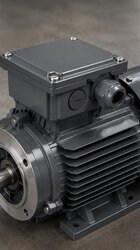
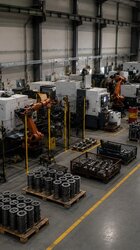

Paint and varnish production is one of the most sensitive areas of the chemical industry in terms of electric motor selection. Solvent vapors, flammable resins and volatile organic compounds turn the production area into a potentially explosive atmosphere. In these plants, from the dissolver agitator to the bead mill, from the transfer pump to the filling line, motors must be selected not only for high torque and continuous duty but also as explosion-protected (exproof / ATEX). In this guide we address electric motor selection in paint, varnish and coating chemical factories on an equipment basis, clarifying the purchasing decision from dissolver and bead mill drives to Ex d / Ex de protection, from IP65 sealing to correct power calculation.
Main Equipment Requiring Motors in Paint and Varnish Production
The paint production process consists of pre-mixing (premix), grinding (dispersion), let-down, filtration and filling stages. Each stage requires a different motor type and protection class. For correct selection, first define the equipment's load profile, then the explosion hazard classification (ATEX zone) of the area in which it is located.
Dissolver (High-Speed Agitator)
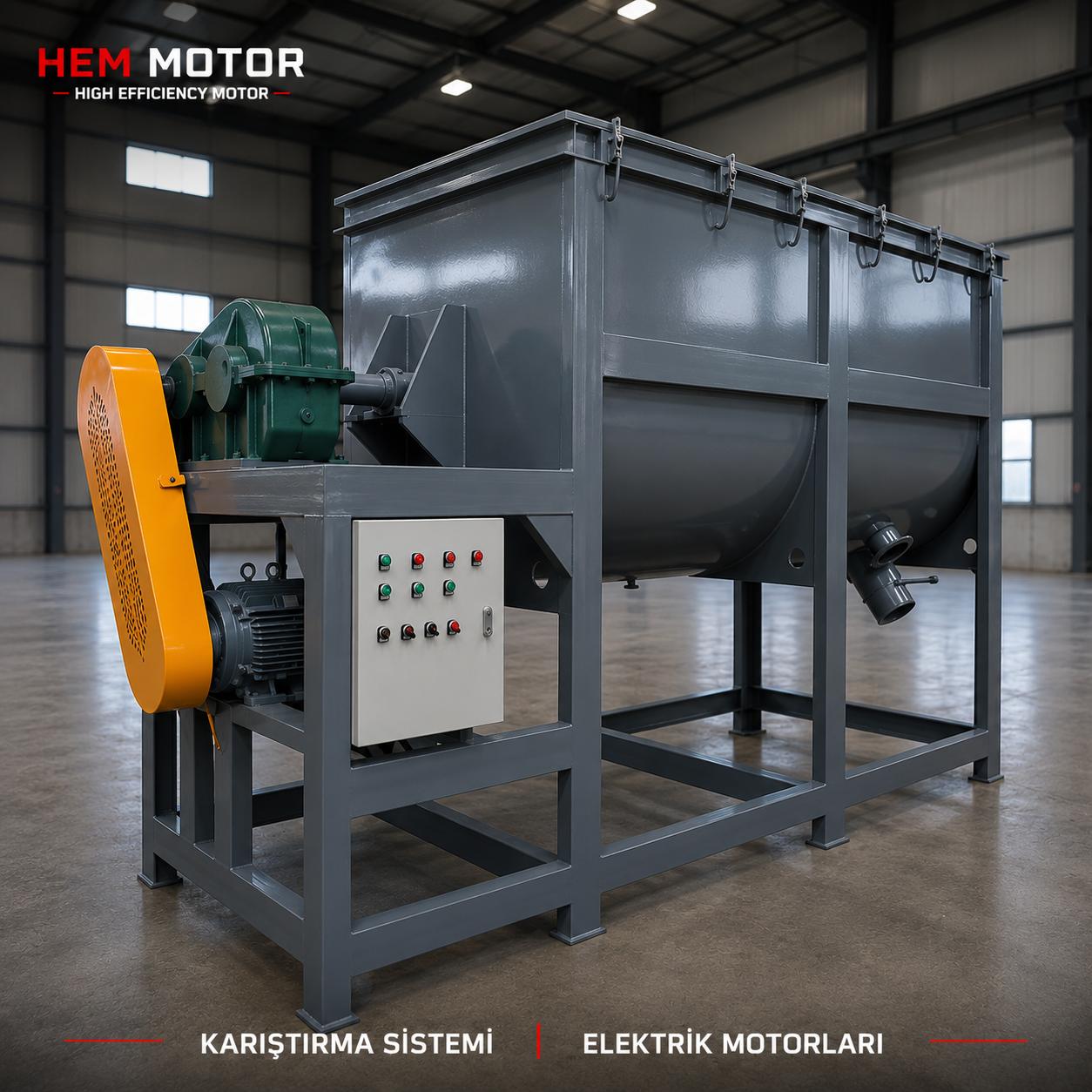
The dissolver is a high-speed agitator that disperses pigments and fillers within the resin. The disc-type agitator blade rotates at high peripheral speed and generates strong shear force. Because the mixture viscosity is high, the dissolver motor demands high power and variable torque; as the mixture thins, the load changes. This application typically uses 2- or 4-pole, cast iron body motors suitable for continuous duty. Because the grinding/mixing hall where the dissolver is located is exposed to solvent vapor, the motor must be exproof. Since high starting torque is critical in high-viscosity mixtures, the principles of motor selection under impact and variable load are also taken into account.
Bead Mill
In fine-grained, high-quality paints, pigment is ground to sub-micron sizes in the bead mill. The bead mill is a continuous, high-torque application with a constant load profile; S1 continuous duty is essential. The motor is usually cast iron body and in a high efficiency class. Because heat is generated during grinding, motor cooling and ambient temperature must be considered. For cooling in motors running continuously at full load, IE4 motor cooling and fan design is important. For the grinding drive logic, high torque and heavy-duty supply in mill motors also provides direction.
Transfer and Dosing Pumps
The transfer of resin, solvent and additives between tanks is done with gear or centrifugal pumps. These pump motors have a constant torque load profile and must be exproof because they operate in a solvent-vapor environment. For correct power, matching flow and head in centrifugal pump motor selection is the basis. For similar chemical process motor selection principles, the motor selection in chemical, pharma and detergent factories guide is complementary.
Filtration, Filling and Conveyor
Finished paint is passed through filter presses, then filled into cans on the filling line and conveyed to packaging/storage. Because filling and packaging areas may also be exposed to solvent vapor, exproof motors may be required according to zone classification. For conveyor drives, the belt motors in the efficient electric motors category and packaging machinery motors come to the fore.
ATEX and Exproof Motors: Mandatory Protection in Explosive Atmospheres
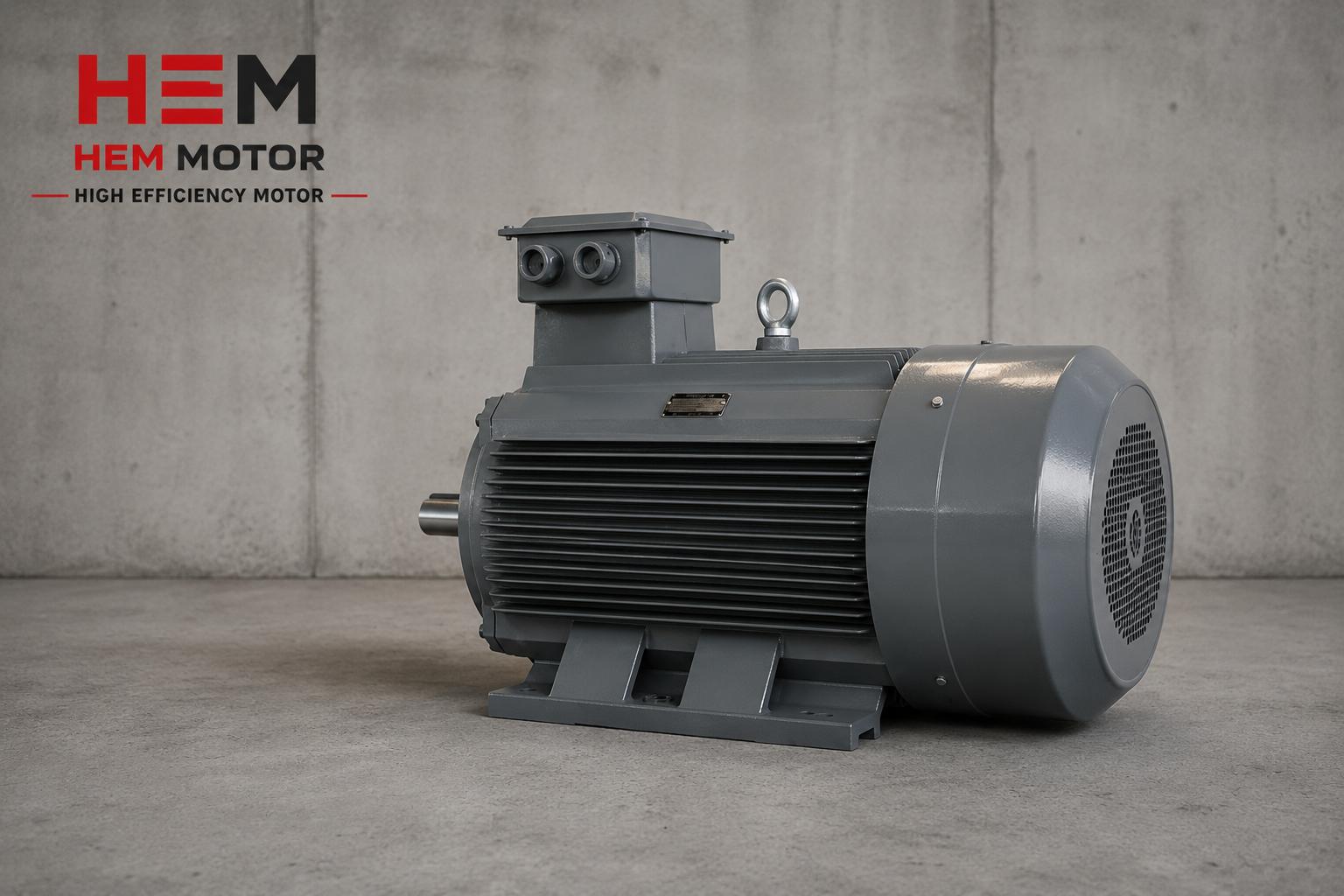
The most distinctive requirement of paint and varnish factories is the use of explosion-protected motors. When solvent vapors mix with air, they form an explosive atmosphere at certain concentrations; the spark or hot surface of a standard motor can ignite this atmosphere. Therefore an exproof motor compliant with the ATEX directive and of the correct protection type is mandatory.
ATEX Zone Classification
Explosive gas atmospheres are classified as zone 0, zone 1 and zone 2. Zone 1 is the area where an explosive atmosphere may occasionally occur during normal operation; in paint factories the dissolver and grinding hall are usually zone 1 or zone 2. The motor's protection type must be selected to suit the zone in which it is located. To broadly understand when ATEX and exproof requirements become mandatory, the motor protection devices perspective helps; for details, refer to electric motor protection devices purchase.
Ex d and Ex de Protection Types
The most common protection type in exproof motors is the flameproof enclosure (Ex d) method: a possible explosion inside the motor is contained within the body and does not spread to the outside atmosphere. When the terminal box is increased-safety (Ex e), the combination is called Ex de. In paint/varnish factories, Ex d or Ex de protected motors with a suitable T temperature class (for example T3/T4) are preferred. These motors are cast iron body and usually in IP65 protection class.
IP65 Sealing and Cleaning
In paint factories, paint splashes, dust and solvent contact on the motor surface are common. Therefore IP65 protection class provides both dust-tightness and protection against water jets, protecting the motor from the environment and enabling surface cleaning (washdown). For the distinction between IP protection classes, the classification logic in dust sealing and IP65/IP66 protection also applies to chemical plants.
Selecting Power, Speed and Efficiency Class
When sizing a motor in a paint and varnish factory, in addition to the exproof requirement, duty type, load profile and efficiency class must be evaluated together.
Duty Type and Load Profile
Bead mills, transfer pumps and continuous agitators require S1 continuous duty. The dissolver, working on a batch basis, may show an intermittent profile. Running the motor at the correct load ratio is critical for efficiency and lifetime; the motor load ratio, efficiency and correct sizing guide provides direction. For managing the motor fleet in three-shift plants, the three-shift facilities motor fleet management content is useful.
Efficiency Class: IE3 and IE4
Energy cost is high in continuously running dissolver and mill motors. By regulation, IE3 is mandatory for three-phase motors of 0.75 kW and above, and IE4 in certain power ranges. Exproof motors are also produced in these efficiency classes. To clarify the investment decision, IE3 vs IE4 electric motor investment and TCO calculation in high-efficiency motors should be reviewed. For the mandate timeline, refer to the IE3/IE4 efficiency mandate regulation.
Starting: Star-Delta and Soft Starter
Loads with high inertia such as dissolvers and mills draw high starting current on direct-on-line starting. To limit this current, star-delta or soft starter is used. To compare starting methods, the star-delta and soft starter in asynchronous motors content provides direction. When variable speed is required, using a VFD frequency drive with an asynchronous motor allows the dissolver speed to be adjusted to process needs; however, drive and motor compatibility in an exproof environment must be specially verified.
Mounting Type, Shaft and Replacement Compatibility
In paint factory equipment, the motor is connected via direct coupling, belt-pulley or reducer. In applications where the dissolver shaft is directly coupled to the motor, shaft diameter and key dimensions are critical. For correct ordering, use the motor shaft diameter, key dimensions and coupling-pulley compatibility guide. For flange type selection, B5 vs B14 mounting type selection is a reference resource. When a reducer is needed for agitator drive, the worm gear reducers category and the IEC frame matching to reducer guide are used. When replacing an existing exproof motor, an exact match with nameplate details is essential; the avoid wrong motor delivery and old brand motor direct replacement contents provide direction in this process.
Commissioning, Maintenance and Supply Planning
The explosion protection feature of an exproof motor is preserved only with correct installation, commissioning and maintenance. The flameproof joint surfaces of the flameproof enclosure (Ex d) must not be damaged, the terminal box must be closed with the correct tightening torque, and cable glands must be of a certified type. Insulation resistance must be measured before first start; for the steps, the commissioning and first startup checklist should be followed. In high-speed agitators such as dissolvers, rotation direction and balance are important; the wrong rotation direction reduces mixing efficiency.
In periodic maintenance, the exproof motor's body integrity, gaskets and seals, terminal box sealing and T temperature class compliance are checked. Due to paint and solvent contact, the body surface must be cleaned regularly and the cooling fan fins must not be clogged. For warranty coverage, the electric motor warranty coverage content helps you understand interventions excluded from coverage in exproof motors. To plan protection devices (motor protection relay, thermistor) together, the motor temperature monitoring with PT100 and thermistor content provides direction.
Energy Efficiency and TCO
In paint factories, dissolver, mill and pump motors run for long hours; energy cost constitutes a large portion of total operating cost. To compile the plant motor inventory and prioritize by efficiency class, an energy efficiency audit and motor inventory study is recommended. To see the payback of replacing old standard motors with high-efficiency ones, the replacing the old motor with IE4 and payback content can be reviewed. For the IE4 threshold in pump and fan applications, the IE4 threshold in pump, fan and compressor resource is helpful.
Supply, Stock and Certification
Because exproof motors may require a longer lead time than standard motors, spare planning is essential for critical equipment. The failure of a dissolver or mill motor stops the entire batch production. To speed up the supply process, the information required when requesting a quote and from stock delivery vs production order contents provide direction. If series supply is involved for OEM paint machine manufacturers, the OEM motor supply agreements model is suitable. You can reach our entire product range via our homepage.
Frequently Asked Questions
Does every motor in a paint factory have to be exproof?
No; only motors located in zones where an explosive atmosphere may form (usually dissolver, grinding and filling halls) must be exproof. Compressor or condenser motors standing in a separate technical space isolated from solvent vapor may be in standard protection class. Zone classification determines which motor needs to be exproof.
What is the difference between Ex d and Ex de?
Ex d is the protection of the entire motor with a flameproof enclosure. Ex de is the combination where the body is Ex d flameproof and the terminal box is increased-safety (Ex e). Ex de provides more practical installation at the terminal connection. Both are widely used in paint/varnish factories; selection is made according to zone and T temperature class.
How many poles and how many kW should a dissolver motor be?
Because the dissolver demands high peripheral speed, it usually runs with a 2- or 4-pole motor, raised to high speed via pulley ratio when needed. Power depends on mixture volume, viscosity and disc diameter. Since the load changes as the mixture thins, high starting torque and the correct starting method are important. To determine exact power, simply share your mixture parameters.
Get a Quote
For your paint, varnish and coating chemical factory, let us jointly determine the correct power, speed and ATEX protection type for dissolver, bead mill, transfer pump and filling line motors. For fast supply of Ex d / Ex de protected, IP65 cast iron body exproof motors, contact us: +90 (532) 345 49 86. Share your zone classification and equipment list and reach us via our contact page; we will prepare a quote the same day.
Purchasing and Selection Checklist
- Has the ATEX zone classification (zone 1 / zone 2) of the area been determined for each motor?
- Has the Ex d / Ex de protection type and T temperature class been defined for motors requiring exproof?
- Has IP65 protection class been requested for paint splash and solvent contact?
- Has S1 duty type and IE3/IE4 efficiency class been verified for continuous equipment?
- Has starting (star-delta / soft starter) been planned for high-inertia loads such as dissolvers and mills?
- Have shaft diameter, key and flange dimensions been matched to the machine?
- Have nameplate and certificate details been checked one-to-one when replacing the existing exproof motor?
- Has spare exproof motor stock been planned for critical equipment?