English
 Türkçe


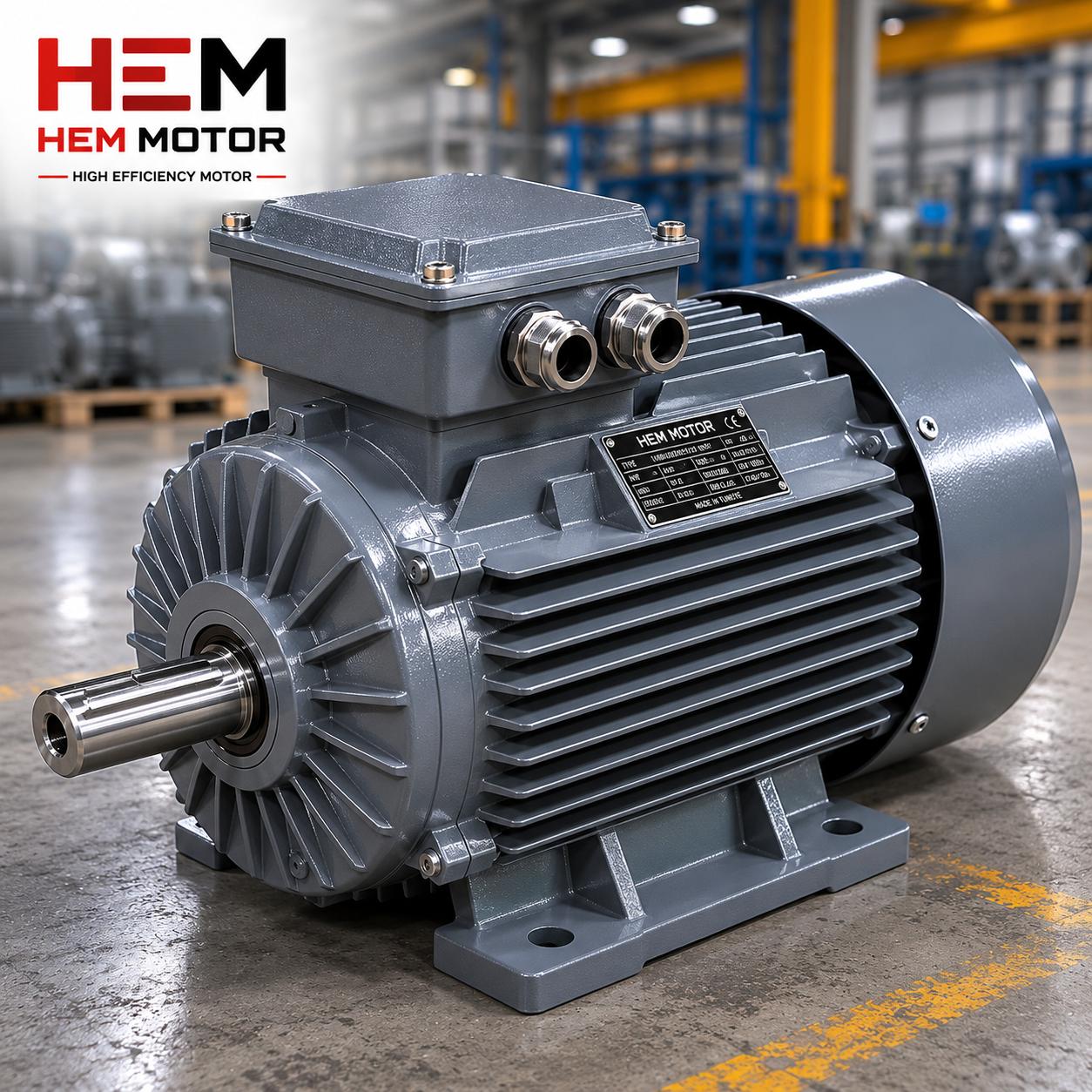

In industry the lion's share of electricity goes to three applications: pumps, fans and compressors. This trio makes up the largest slice of most facilities' motor fleet and, on its own, writes a major part of the energy bill. That is exactly why the efficiency-class choice in these applications is not a small technical preference but a decision that directly affects the operating budget. So in which case is an IE4 motor essential, and in which does IE3 remain the balanced and sufficient choice? This guide explains the IE4 threshold in pumps, fans and compressors with a concrete framework.
Here is what matters: the IE4 decision is made on the application's character, not the price tag. Two facilities may have the same pump at the same power, but if one runs two hours a day and the other runs 24/7, the right efficiency-class decision comes out completely differently. The most decisive criterion is, almost always, annual running hours. As running hours rise, the monetary value of the efficiency difference grows and the IE4 investment quickly pays for itself.
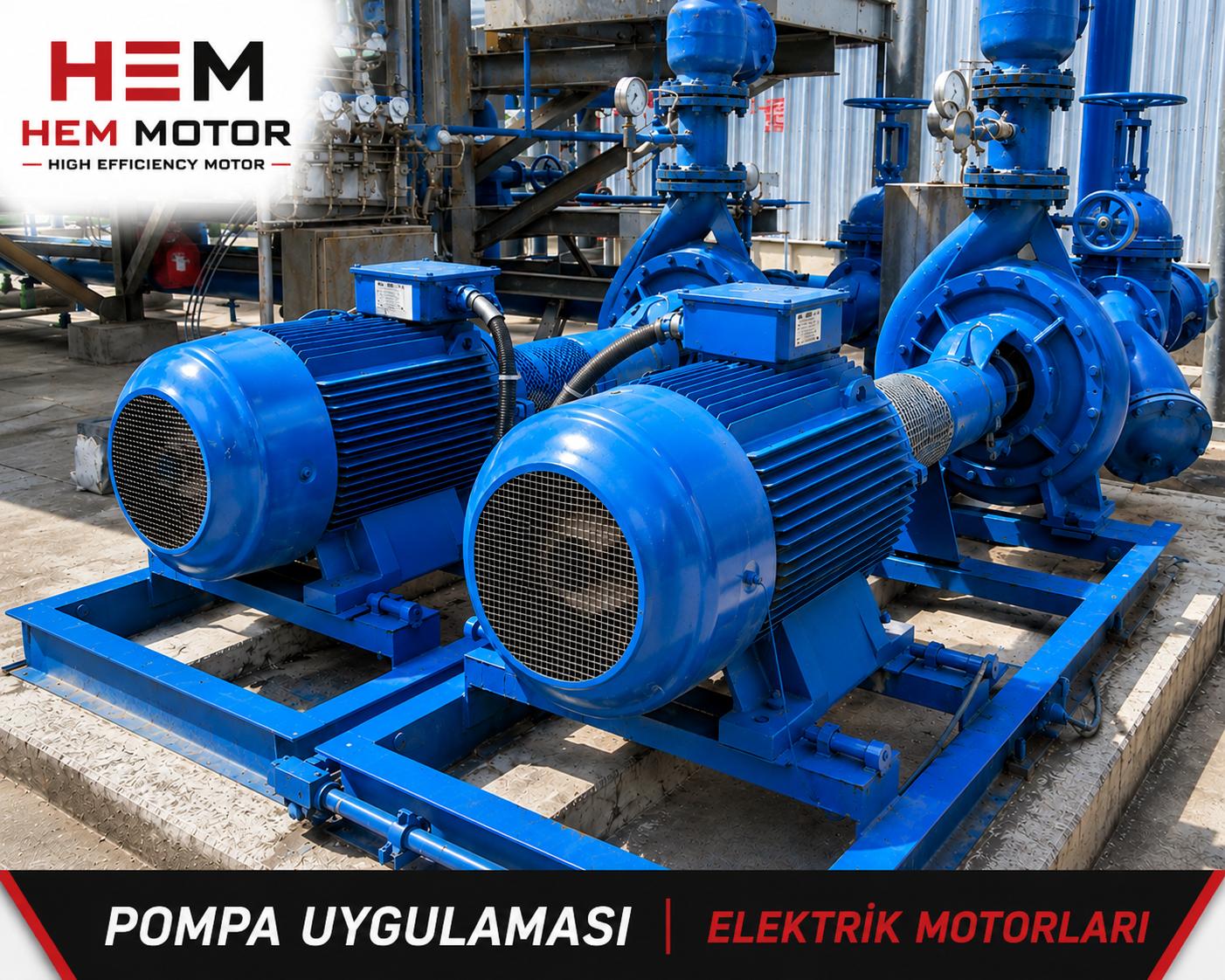
Why Pumps, Fans and Compressors? The Lion's Share of Energy
In an industrial facility most of the turning motors do one of three jobs: pressurise a liquid (pump), move a gas/air (fan) or compress air (compressor). What these applications have in common is that they mostly run continuously or for long periods. A continuously running motor consumes far more kilowatt-hours per year than a short-duration motor; therefore every efficiency point gained on these motors feeds straight into the bill.
- Pumps: Water supply, cooling, circulation, wastewater and process liquids; mostly on continuous duty.
- Fans: Ventilation, flue gas, cooling towers, process air; typically long running hours.
- Compressors: Compressed air production; one of the plant's most expensive energy items.
This trio's weight in the motor fleet makes efficiency improvement one of the fastest-returning investments. To choose the right motor family and efficiency class holistically, the electric motor types and buying map guide is a good reference.
The IE4 Threshold: Running Hours Is the Most Decisive Criterion
At the centre of the decision whether to move to IE4 lies a single question: how many hours a year does this motor run? As running hours increase, the efficiency difference grows and the payback period shortens. A practical threshold framework can be set up as follows:
High Running Hours: IE4 a Strong Candidate
In pumps, fans and compressors running very long hours, even 24/7, IE4 clearly stands out. In this profile, because the motor continuously draws electricity, the efficiency difference turns into thousands of kilowatt-hours saved per year, and the IE4 investment amortises within a reasonable period.
Medium Running Hours: Run the Numbers
In shift-based or moderately running applications the decision is not clear-cut; here power, load factor and electricity tariff must be evaluated together. At high power and high tariff, IE4 may still make sense.
Low Running Hours: IE3 Stays Balanced
In pumps and fans running only a few hours a day, on intermittent duty or in standby, the efficiency difference may not be enough to pay back. In these scenarios IE3 remains the balanced choice, with both sufficient efficiency and fast availability.
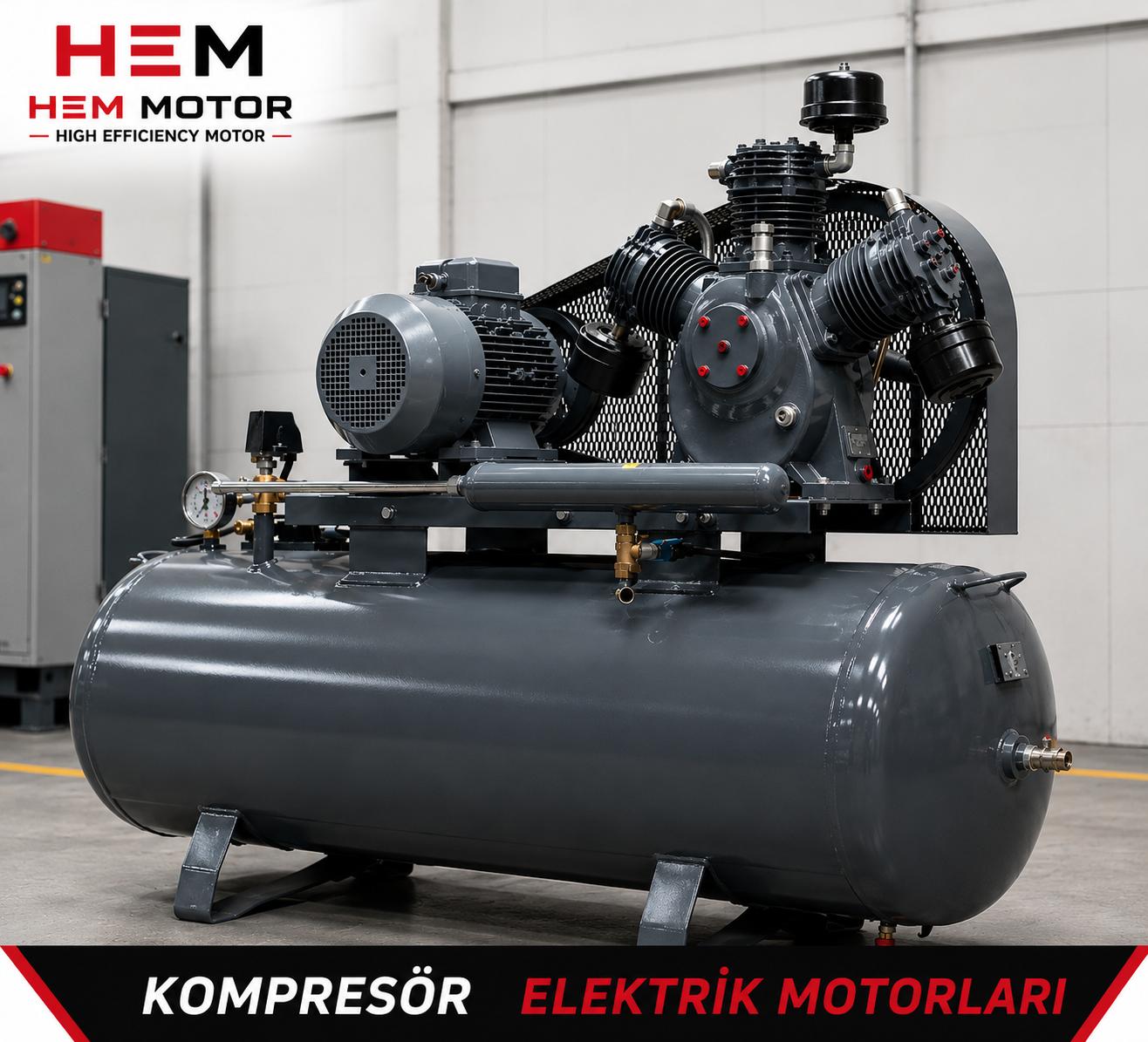
IE4 Scenarios by Application
The IE4 Threshold in Pumps
In continuously running pumps such as water supply, cooling cycles and wastewater lift stations, IE4 is often the right decision. Especially in variable-flow systems, pairing an IE4 motor with a variable frequency drive adds system savings on top of motor efficiency. In fixed-flow, short-duration or standby pumps, IE3 stays balanced.
The IE4 Threshold in Fans
In continuously running ventilation, flue gas and cooling tower fans, IE4 amortises quickly thanks to high running hours. In fan applications, when flow control is done by speed adjustment rather than a damper, extra savings are gained; this makes the IE4 + drive combination attractive. In intermittently running exhaust fans, IE3 is sufficient.
The IE4 Threshold in Compressors
Compressed air is one of the plant's most expensive energy items, and the compressor motor is often loaded for long hours. On a continuously loaded compressor, the IE4 investment is among the fastest-returning scenarios. On rarely engaged standby compressors, IE3 may stay economically sufficient.
A Checklist for the IE4 Decision
When deciding whether to move to IE4 for a pump, fan or compressor, follow these steps:
- Determine the application's annual running hours; this is the most decisive criterion.
- Measure the motor's typical load factor; steady load near nominal supports IE4.
- Multiply the regional electricity tariff by the motor power; a high value shortens payback.
- If the application has variable-flow potential, evaluate the IE4 + variable frequency drive combination.
- If payback is within a reasonable band, move to IE4; otherwise IE3 is the balanced choice.
At the most extreme operating profiles, going beyond even IE4 may make sense; to see where the ultra premium class comes in, you can review the IE5 ultra premium motor transition guide. In low-running-hour applications, to determine the right baseline the IE3 electric motor stock guide is a useful pointer.
The Right Efficiency Class, the Right Application
Pumps, fans and compressors are the most energy-critical slice of the motor fleet; so the efficiency-class decision here gains or loses the most. The decision should be made on the triangle of running hours, load factor and tariff, not on the price tag. To pick the IE3 or IE4 motor that fits your application from our wide stock, you can visit our homepage. Once you know the right threshold, so too is the decision of in which application IE4 is essential and in which IE3 is sufficient.
Why Are Running Hours So Decisive?
The reason running hours stand out so much in the efficiency-class decision is simple arithmetic: a motor's annual energy consumption is the product of its power and its running hours. And since the efficiency difference is calculated on this consumption, as running hours rise the saving grows linearly. The annual consumption difference between a motor running two hours a day and a same-power motor running twenty-four hours a day is twelvefold; therefore the monetary value of the efficiency difference grows in the same proportion.
So when deciding on IE4 for a pump, fan or compressor, the first thing to do is to establish the motor's real operating profile. Instead of a vague statement like "this motor generally runs", you need to know with real values how many hours a year it turns. Often this information can be derived from the machine's work shift and downtime records. Once the running hours are clear, the decision of whether IE4 or IE3 is right is largely made.
Steps to Determine the Operating Profile
- Determine the motor's daily average running time from real shift data.
- Take into account the annual number of working days (excluding maintenance/downtime).
- Consider seasonal variation (for example, increased cooling load in summer).
- Measure the load factor, whether the motor runs near nominal or at low load.
System Efficiency: The Motor Alone Is Not Enough
The IE4 decision should not be limited to the motor's efficiency class alone. Especially in pump and fan applications, system efficiency carries a far greater saving potential than motor efficiency. When a pump or fan throttles flow with a valve/damper, energy is wasted; but if the same flow is achieved by adjusting the motor's speed with a variable frequency drive, energy consumption drops markedly.
So in variable-flow applications, evaluating the IE4 motor together with a variable frequency drive provides an extra saving that cannot be explained by motor efficiency alone. In a fixed-flow application running continuously at full load, the drive contribution stays limited; here a direct-on-line IE4 motor may be sufficient. When deciding, asking whether the application is variable or fixed is the key to choosing the right package.
- Variable flow: Speed control with a variable frequency drive provides large system savings.
- Fixed flow, continuous full load: Direct-on-line operation may be sufficient.
- Throttling with a valve/damper: The most common source of energy waste; eliminated by speed control.
Common Mistakes in the IE4 vs IE3 Decision
Operations that do not know the right threshold can err in both directions; both cost money:
- Putting IE4 everywhere: Putting IE4 on a low-running or standby pump is an extra cost that will not return.
- Insisting on IE3 on a continuously running motor: Staying with IE3 on a 24/7 compressor means saving missed over years.
- Guessing without measuring running hours: When the decision is made on assumption rather than data, the wrong class is chosen.
- Ignoring system efficiency: Looking only at the motor and skipping the drive and speed-control potential misses a large saving.
The common solution to these mistakes is to make the decision on the triangle of running hours, load factor and tariff, with real data. When the right threshold is known, the choice between IE4 and IE3 seats correctly both technically and economically.
FAQ
Is an IE4 motor essential for my pump?
The decisive criterion is annual running hours. In pumps running 24/7 such as water supply, cooling or wastewater, IE4 is often the right decision and amortises quickly. In pumps running only a few hours a day, on intermittent duty or in standby, IE3 remains the balanced choice, with both sufficient efficiency and fast availability. The decision should be made on the operating profile, not the price tag.
Do I decide on IE4 by looking only at running hours?
Running hours is the most decisive criterion, but not the only one. Load factor (whether the motor runs near nominal) and electricity tariff must also be taken into account. If all three are high, IE4 amortises quickly. Also, in variable-flow applications, pairing IE4 with a variable frequency drive provides extra system savings.
Why is IE4 especially important in compressors?
Because compressed air production is one of the plant's most expensive energy items, and the compressor motor often runs for long hours at high load. On a continuously loaded compressor, the IE4 investment is among the fastest-returning scenarios. Only on rarely engaged standby compressors may IE3 stay economically sufficient.