At a plant working three shifts, an electric motor runs more than 8,000 hours a year; it consumes in a single year the running hours that a single-shift operation accumulates in four years. Managing motors at this pace as "parts replaced when they fail" makes unplanned downtime the natural fate of the operation. Yet it is possible to manage the motor fleet like a vehicle fleet - with its inventory, age data, replacement schedule and standard pool. In this article we present a four-step motor fleet management model for plants running 24/7: inventory, a proactive replacement schedule, standardisation, and a phased renewal budget. HEM Motor, a manufacturer since 1979, takes on the stock and supply leg for plants applying this model.

Step 1: Know the Fleet - There Is No Management Without an Inventory
At most plants, even the maintenance team answers the question of how many motors there are with a round number. The zero point of fleet management is touring the site and recording every motor. For each position, collect at minimum the following fields: position name and line information, nameplate values (kW, speed, voltage, frame, mounting type), estimated commissioning year, shift load (does it run 24/7 or single shift) and last fault/maintenance history. On old motors whose nameplate is unreadable, identification can be made from the frame dimensions; mark these motors as "unidentified" on the list, because these are the positions that keep you waiting longest in the event of a breakdown.
When the inventory is drawn up, you have two critical distributions in hand: the power-speed distribution (in which combinations your fleet is concentrated) and the age distribution (how much of the fleet is at the end of its economic life). These two charts feed all of the next three steps. We recommend running the inventory work with your own maintenance team rather than outsourcing it; the technician touring the site with the motor gets to know the fleet while keeping records, and this knowledge pays for itself at the first breakdown on the night shift.
Step 2: A Proactive Replacement Schedule Based on Running Hours
Count Running Hours, Not the Calendar Year
At a three-shift plant, measuring motor age by the calendar is misleading; the correct measure is accumulated running hours. Bearing life, grease life and the thermal ageing of the winding insulation advance with the hour. A position running 24/7 accumulates approximately 8,400 hours a year; bearing and grease maintenance cycles should be planned according to this pace. Practical rule: if running hours can be obtained from the motor drive panel or the line automation, use them; if not, enter the theoretical hours calculated from the shift pattern on the position card.
The Three-Threshold Schedule Model
Maintenance threshold: On motors with regreasable bearings, the regreasing intervals specified by the manufacturer drop to one third in calendar terms under three shifts. On small motors with sealed (lifetime-greased) bearings, this threshold is skipped.
Overhaul threshold: At a certain hour accumulation (in typical practice the 20,000-30,000 hour band) the motor is dismantled in a planned stop, its bearings renewed, the insulation resistance measured and recorded. Match the overhaul to the maintenance windows in which the line will already be stopped.
Replacement threshold: Motors reaching a second overhaul, trending towards a falling insulation value, or whose frame/technology is ageing are taken to the replacement list instead of overhaul. Overhauling an old motor again and again becomes more expensive than a new motor beyond a certain point; especially for old efficiency-class motors, we calculated in detail the energy-side equivalent of the replacement decision in our article on the payback of replacing an old motor with IE4; we do not repeat that calculation here, and in the fleet decision use only this principle: positions running 24/7 are the positions where the efficiency difference turns into money fastest, and they are always prioritised during replacement.

Match the Replacement Window with the Production Plan
The scarcest resource at a three-shift plant is the downtime window; because the line already turns 24/7, replacements left for "a suitable gap" never get done. For this reason the replacement schedule must be set up together with production planning at the start of the year: holiday stops, planned line maintenance, and mould or product changeover days are the motor-replacement windows. For each window, the list of motors to be replaced, the check-out of spares from the warehouse, and the necessary equipment (chain hoist, puller, alignment device) are prepared in advance. Do not accumulate more work than fits a window; small but regular replacement waves of two motors are both safer and more manageable than a single annual operation of ten motors. Always put a buffer day in the window plan: the window should not be closed until the load test of the new motor fitted in place of the removed one is complete.
Step 3: Fleet Standardisation - Same Frame, Same Speed, Fewer Variants
No company managing a vehicle fleet buys twenty different models of vehicle from twenty different brands; the same logic applies in a motor fleet. Motors arriving over the years from different suppliers, with different projects, drown the fleet in variety: three different frame structures at the same 15 kW power, two different mounting types, three separate brands... This variety inflates spare stock, makes part tracking difficult for the maintenance team, and leads in an emergency replacement to the "we have a motor in hand but it does not fit" crisis.
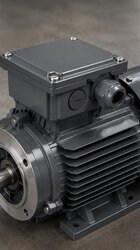
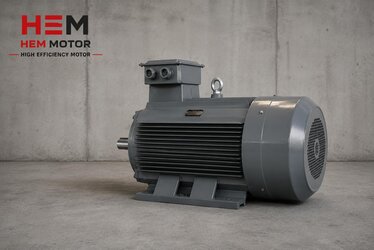
The path to standardisation is this: look at the power-speed distribution in the inventory and determine a single standard motor definition for each combination (frame, mounting type, efficiency class). From then on, at every replacement - whatever brand the motor comes out of - this standard definition goes in its place. Within a few years the fleet simplifies on its own. Selecting the standard definition from a series the manufacturer produces continuously guarantees continuity; the standard electric motors series is produced for exactly this purpose, in a way that can be supplied with the same nameplate values for years. As standardisation progresses, your spare-stock need drops too: instead of five types of 15 kW motor you keep a single type. We explained in detail the matrix method for which combinations should be kept on the shelf in our article on the critical spare-motor list; fleet standardisation directly reduces the number of items on that list.
How Is a Standard Definition Written?
The standard motor definition is a single-line template, written once for each power-speed combination in the fleet: power, pole count, frame code, mounting type, efficiency class, voltage/connection and, if any, a special requirement (for example additional protection for a humid area). Example: "11 kW, 4-pole, 160M frame, B3, IE3, 400V delta". Enter these definitions into the purchasing system as a material code; this way every motor request coming from the field is automatically directed to the standard definition, and the "I had asked for that brand's that model" debate disappears. The definition list is the common language shared between maintenance, purchasing and the supplier: the order on the phone comes down to the sentence "two units of standard definition number three," and the probability of the wrong motor arriving is in practice reduced to zero.
Step 4: Phased Renewal Budget - Renew the Fleet in Waves, Not in One Go
The age-distribution chart shows you how much of the fleet is at the replacement threshold. Replacing all of these motors in a single budget year both strains the cash flow and creates a new fleet that all ages at the same time twenty years later. The right approach is phased renewal:
Year 1: A-critical positions running 24/7 that have passed the replacement threshold (highest hour accumulation + highest downtime risk). Year 2: The remaining 24/7 positions and B-critical motors for which overhaul has ceased to be economical. Year 3 and beyond: Low-shift-load positions, planned simultaneously with line modernisations.
When making the wave plan, also decide the fate of the removed motors: those in good condition can be tested and put on the spare shelf, so the renewal budget also feeds the spare stock free of charge; those in poor condition are set aside for the scrap process and not kept in corners "in case they are needed." The old motor rusting in the corner is the illusion that occupies the most expensive square metre of the warehouse.
This wave plan has two side benefits. First, because a similar number of motors are bought each year, you can set up an annual framework agreement with your supplier and schedule shipments according to your maintenance windows. Second, the fleet age becomes homogeneous: because a slice of the fleet is renewed each year, no "mass ageing" crisis is experienced in any period. When planning the renewal waves, you can review all the power and speed options you will need on our products page and request a stock commitment for your multi-year purchasing plan.
Data Infrastructure: From the Position Card to Maintenance Software
Fleet management lives on data; but you do not have to start with expensive software for the data infrastructure. There are three maturity levels. Level 1 - position card: a physical card hung next to each motor carrying the nameplate information, commissioning date and maintenance/measurement records; it costs nothing and is incomparably better than nothing. Level 2 - central table: gathering all position cards into a single spreadsheet; the age distribution and replacement projection are now visible at a glance. Level 3 - maintenance management software: running hours fed from the automation, thresholds automatically generating work orders. The important principle is this: do not wait to jump a level; start keeping records from wherever you are today, because at a three-shift plant every passing month is a loss of 700 hours of data.
Cross-Shift Discipline: The Fleet's Eyes and Ears Are the Three Teams on Site
At a three-shift plant the motor fleet is observed not by the day staff but by three separate teams, and the most valuable early-warning signals (increasing noise, smell, vibration, hot frame) are most often noticed on the night shift. So that these signals are not lost, set up two simple mechanisms: add a "motor observation" line to the shift handover form and record every report on the position card. Second, do not turn the anomaly report into a tool of blame; the operator who reports "the motor is running noisily" should receive thanks, not interrogation. The thresholds in the replacement schedule are the mathematical skeleton; the observations coming from the shifts add flesh to that skeleton: a motor that has not reached the threshold but has received a noise report on three consecutive shifts should be brought forward in the schedule.
The Fleet's Scorecard: Which Indicators Should You Track?
Three indicators tell you whether fleet management is working. Unplanned downtime rate: the ratio of motor-related downtime hours to total running hours; in a healthy fleet this rate should fall from year to year. Planned/unplanned replacement ratio: of the motors replaced during the year, how many were replaced by schedule and how many by breakdown; the target is to continually grow the share of planned replacements. Standardisation rate: what percentage of the motors in the fleet conform to standard definitions; as this rate rises, the number of spare items and the emergency-supply risk fall together. Report these three figures to management twice a year; the defence of the budget allocated to fleet management is these trend charts themselves.
What Fleet Management Means in Daily Life
When these four steps are set up, the following changes at the plant: a motor breakdown on the night shift is no longer a crisis but a procedure - the technician takes the standard spare from the shelf, verifies the nameplate match from the card, makes the replacement, and a new one is ordered in its place in the morning. In budget discussions, the maintenance manager presents the projection "the following positions are coming to the replacement threshold next year" instead of the defence "there were this many breakdowns last year." Purchasing works with planned waves instead of panic orders during the year. Motor fleet management is, in essence, the discipline of turning uncertainty into a schedule.
Setting up the model does not require a large starting project either. In the first week draw up the inventory of a single line, in the second week write the standard definitions of that line, and at the end of the month plan the first replacement window. The model working on a single line within three months produces concrete results presentable to management: unplanned downtime on that line falls, the spare shelf simplifies, and the first planned replacement is completed without issue. The spread of the model across the plant is the natural result of this first line's success; fleet management begins not with a big decision but with a small and visible gain.
Frequently Asked Questions
On old motors where we cannot measure running hours, how do we determine replacement priority?
Calculate theoretical hours from the shift pattern: take approximately 8,400 hours a year for a 24/7 position, 4,000-4,500 hours for two shifts, and multiply by the estimated commissioning year. Add two field data points to this: the breakdown frequency over the last two years and the insulation-resistance measurement. Motors with high theoretical hours, a heavy breakdown history and a falling insulation trend enter the first wave. Do not wait for perfect data; in fleet management a roughly correct ordering is better than a precise ordering that is never made. If the commissioning year is also unknown, a rough age estimate can be made from the motor's nameplate type, frame design or paint layers; putting motors that cannot be confirmed in the "planned replacement at first opportunity" class is the most practical way to turn a surprise breakdown into a schedule.
For standardisation, do we have to dismantle and discard working motors?
No; standardisation is a forward-looking rule. Working and trouble-free motors are not touched; the rule comes into play only at the moment of replacement: whichever motor is replaced, the standard definition goes in its place. This way, without additional investment, simplification is achieved within a few years at the fleet's natural renewal pace. The only exception is unidentified critical positions for which no spare can be found; pulling these to the standard without waiting closes the risk early.
What does an annual framework agreement provide in fleet management?
When your multi-year renewal plan is clear, you can agree with the manufacturer on the annual quantity and shipment schedule. The fleet-side equivalent of this is threefold: motors being ready before your maintenance window for your replacement waves, your standard definition being continually in the production programme, and stock priority in urgent needs. This way supply ceases to be a source of uncertainty in the fleet schedule.
Get a Quote
Share your three-shift plant's motor inventory and renewal plan with us; let us create your standard motor definitions together and give a stock and shipment commitment for your multi-year replacement waves. You can reach HEM Motor by telephone at +90 (532) 345 49 86 or through our contact us page.