English
 Türkçe


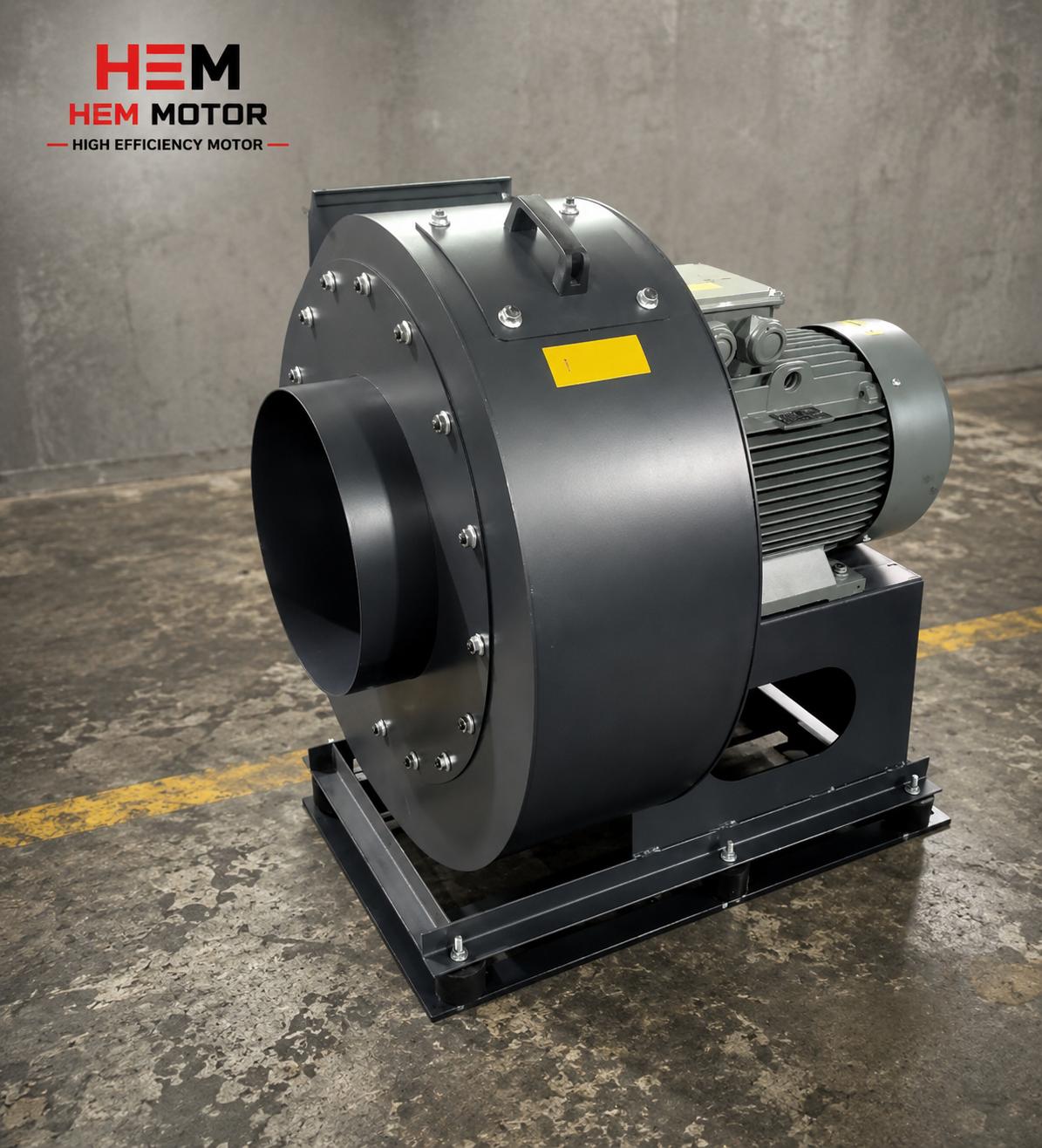

Pulp and cellulose production relies on large, continuously running electric motors operating in a humid environment, from grinding the wood and fiber raw material to preparing the stock, from pumping the stock to screening and mixing. The refiner (grinder/disc mill) draws large power; the stock centrifugal pump provides continuous flow; the pulper and agitator demand high torque. This article maps the motor requirements of a pulp and cellulose mill, IP55 protection logic in a humid environment, the supply plan for large kW motors and correct power-speed selection for continuous (S1) duty.
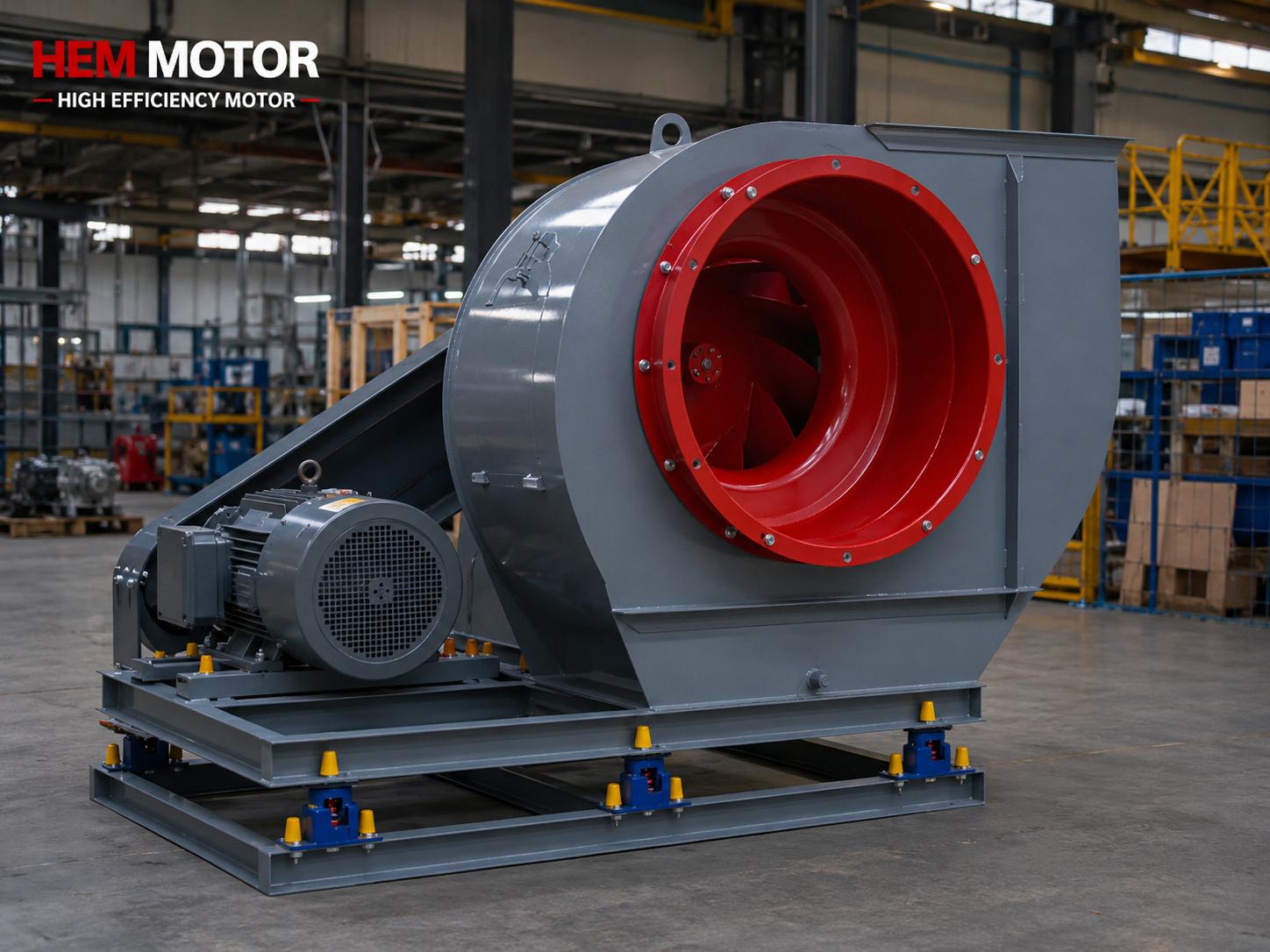
Motor Map in a Cellulose Mill
In a pulp/cellulose mill motors fall into three main groups: stock preparation and grinding (pulper, refiner, agitator), stock transport (stock pumps, mixer pump) and auxiliary systems (screening, aspiration, vacuum). The most distinctive features of this plant are large kW power and a humid environment; for correct supply each machine is treated as a separate load item.
Refiner (Grinder/Disc Mill): Large Power
The refiner is the disc mill that brings cellulose fibers to the desired fineness and is one of the largest power-drawing machines in the plant. It can range from 90 kW to 355 kW, and even higher on series refiners. It runs continuously (S1) at full load; therefore high efficiency, balanced cooling and robust bearings are critical. In large power motors the supply, lead time and shipping plan become important. Our articles on high power motor supply above 90 kW and 250 kW high power motor supply explain this planning. For continuous full-load cooling see the cooling and overheating principles.
Stock Centrifugal Pumps
Paper pulp is transported throughout the plant by centrifugal stock pumps. These pumps provide continuous flow and operate in a humid environment; sealing and correct power matching are important. The power range varies from 5.5 kW to 90 kW. Our article on centrifugal pump motor selection: flow and head explains correct power matching. For continuous operation and sealing see the continuous operation and sealing principles.
Pulper and Agitator: High Torque
The pulper is a high-torque agitator that turns raw material (wood pulp, recycled paper) into a fiber suspension with water. Because it mixes a dense and heavy mass, it demands high starting and running torque. The power range is between 15 kW and 160 kW. For high torque and continuous load, the principles of our article on paper and packaging factory motor selection apply here too. For starting see our star-delta and soft starter guide.
Humid Environment: IP55 and Cast Iron
A pulp and cellulose mill is a humid environment dense with water and steam. This moisture can enter the motor and shorten winding and bearing life. Correct supply depends on protection class and frame material selection.
Why IP55, When IP65?
In a humid and splashing environment IP55 protection is sufficient for most applications; it resists dust and water splash. At points directly exposed to water jets or washing, IP65 is preferred. Our articles on hygiene and IP protection and the IP65/IP66 protection strategy explain humid/washed environment logic. Against corrosion, cast iron motor corrosion protection is also valuable.
Cast Iron Frame and Continuous S1 Duty
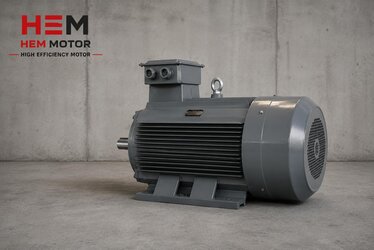
A cast iron frame provides high mechanical strength and good heat dissipation in a humid and vibrating environment. Cast iron is standard in large refiner and pulper motors. In the cast iron vs aluminum frame decision, the humid-continuous environment favors cast iron. For bearing life under continuous load see our bearing life article.
Power, Speed and Efficiency Class
Cellulose mill motors range widely, from small dosing pumps to 355 kW refiners. Refiners commonly use 1500 rpm, pumps 1500/3000 rpm, agitators and conveyors low speed with a reducer. In a plant running continuously at large power, the efficiency class directly determines energy cost.
IE3 and IE4 Efficiency
Per regulation, IE3 is mandatory for 0.75-1000 kW and IE4 for 75-200 kW. In large refiner and pump motors, high efficiency provides large energy savings under continuous operation. Our articles on IE3 vs IE4 investment and TCO calculation clarify the decision. For regulation see our IE3-IE4 efficiency mandate article. For additional savings with a VFD on pumps and fans see our high efficiency motor + VFD savings article.
Large Power and Correct Sizing
For large power motors such as refiners, the 160-200 kW and above supply plan is important; our articles on 160 and 200 kW high power motor supply and 315 kW motor selection and project supply explain this planning. For correct sizing see our motor load ratio and correct sizing article.
Mounting, Reducer and Mechanical Fit
Refiners and pumps are usually foot-mounted (B3) or combined (B35) with a coupling; agitator and conveyor drives are connected with a flange (B5/B14) reducer. For low-speed agitators a bevel helical reducer or worm gear reducer matching is used. When replacing an old motor, the mounting type and shaft-key dimensions must match exactly. For the product range see our high efficiency electric motors and worm gear reducers pages.
Stock and Emergency Replacement
A refiner or stock pump motor failure stops the continuous production line and causes a large loss. Because the lead time of large kW motors can be long, spares of critical motors should be planned in stock. Our articles on the critical spare motor list and emergency replacement help with the stock plan. For three-shift plants see our motor fleet management guide.
Screening, Vacuum and Auxiliary System Motors
On the stock line, alongside the main machines, screening, cleaner and vacuum systems are also motor-driven. Vacuum pumps run continuously to remove water in the paper machine and require sealing. Screening and agitator drives use reducer-driven motors for low speed-high torque. Our articles on vacuum pump and blower motors and conveyor drive motors explain the correct power-speed selection for these auxiliary systems. For air supply see our centrifugal and axial fan motor selection guide.
Starting Method and Inrush Current
Because large refiner and pulper motors rotate a load with high inertia, inrush current management is critical. At large powers, direct-on-line starting stresses the grid, so a soft starter or star-delta is preferred. A soft starter also reduces shock in the mechanical drivetrain. Our star-delta and soft starter article helps you choose the starting method at large power. In generator-fed plants, generator kVA - motor kW matching accounts for the inrush current.
Energy Efficiency and Savings at Large Power
A cellulose mill is a high energy-consuming plant with its large-power refiners and continuously running pumps. In these motors even a small efficiency difference turns into large annual savings due to the high operating hours. On stock pumps and fans, flow adjustment with a variable frequency drive eliminates throttling losses. Our articles on high efficiency motor + VFD savings and nameplate vs field efficiency explain how to correctly calculate savings at large power. An energy efficiency audit and motor inventory across the plant makes prioritization easier.
Maintenance, Temperature Monitoring and Bearings
In large motors running humid and continuously, the bearing and sealing are the most critical wear items. Moisture increases the risk of water mixing into the bearing grease, so suitable lubrication and sealing are important. On large refiner motors, monitoring winding and bearing temperature (PT100/thermistor) prevents unexpected stoppages. Our articles on bearing life, motor protection devices and periodic maintenance schedule explain the maintenance plan.
Information Gathering and the Quote Process
In a plant with large-power refiner, pump and agitator motors such as a cellulose mill, the technical data of each motor must be gathered for an accurate quote. The power (kW), speed, voltage, frame size, mounting type, shaft diameter, protection class (IP) and duty type (S1) on the old motor nameplate are the key to selecting an equivalent. Our articles on information to provide when requesting a quote and nameplate matching explain what to clarify before ordering. For a motor with an unreadable nameplate, the catalog data table guides you.
Lead Time, Shipping and Commissioning
Because the lead time of large kW refiner motors can be long, the supply plan must be made in advance and shipping and commissioning organized. Our articles on from-stock delivery vs production order and the commissioning checklist make this planning easier. To spot damage early when a large-power motor is delivered, see our shipping damage checklist guide. A wrong phase sequence makes the motor rotate in reverse; see motor rotation direction and phase sequence.
Frequently Asked Questions
What should I watch for in a large-power refiner motor?
The refiner runs continuously (S1) at full load and is one of the largest power-drawing machines in the plant. Therefore high efficiency (IE3/IE4), balanced cooling and robust-bearing cast iron framed motors are preferred. Because the lead time of large kW motors can be long, the supply plan, shipping and commissioning should be organized in advance. For starting, a soft starter or star-delta suited to the motor power should be selected.
Should I buy an IP55 or IP65 motor in a pulp mill?
In a humid and splashing general environment, IP55 protection is sufficient for most applications; it resists dust and water splash. However, at points directly exposed to water jets, dense steam or washing, IP65 is preferred. The decision is made according to the moisture and water exposure of the area where the motor is located; a higher protection class is safe at critical and wet points.
What should I watch for in a stock pump motor?
The stock pump provides continuous (S1) flow and operates in a humid environment. Therefore it should be selected for continuous duty, balanced and with correct power margin; power is matched by flow and head calculation. Due to the humid environment, at least IP55 protection is recommended. For direct coupled connection to the pump, foot (B3) or combined (B35) mounting is suitable; the shaft and key dimensions must match the pump shaft.
Get a Quote
We supply electric motors in the correct power, speed and protection class for the refiner (grinder), stock centrifugal pumps, pulpers and agitators of your pulp and cellulose mill, from stock and with fast delivery. For IP55/IP65-protected, cast iron framed, IE3/IE4 efficient large kW motors in continuous S1 duty suited to humid environments, contact us: +90 (532) 345 49 86. For a fast quote and lead time reach us via our contact page.
Purchasing and Selection Checklist
- Machine and duty: Refiner, stock pump, pulper, agitator listed separately.
- Power and speed: kW and rpm; large power continuous load for refiners, flow-head for pumps.
- Protection class: IP55 in humid environments, IP65 at wet/washed points.
- Frame material: Cast iron in humid/continuous environments.
- Duty type: Continuous S1; balanced cooling and robust bearings.
- Efficiency class: IE3/IE4 per regulation; TCO advantage under continuous large load.
- Starting: Soft starter or star-delta at large power.
- Lead time/stock: Lead-time plan and critical spare stock for large kW motors.