English
 Türkçe


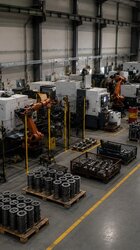
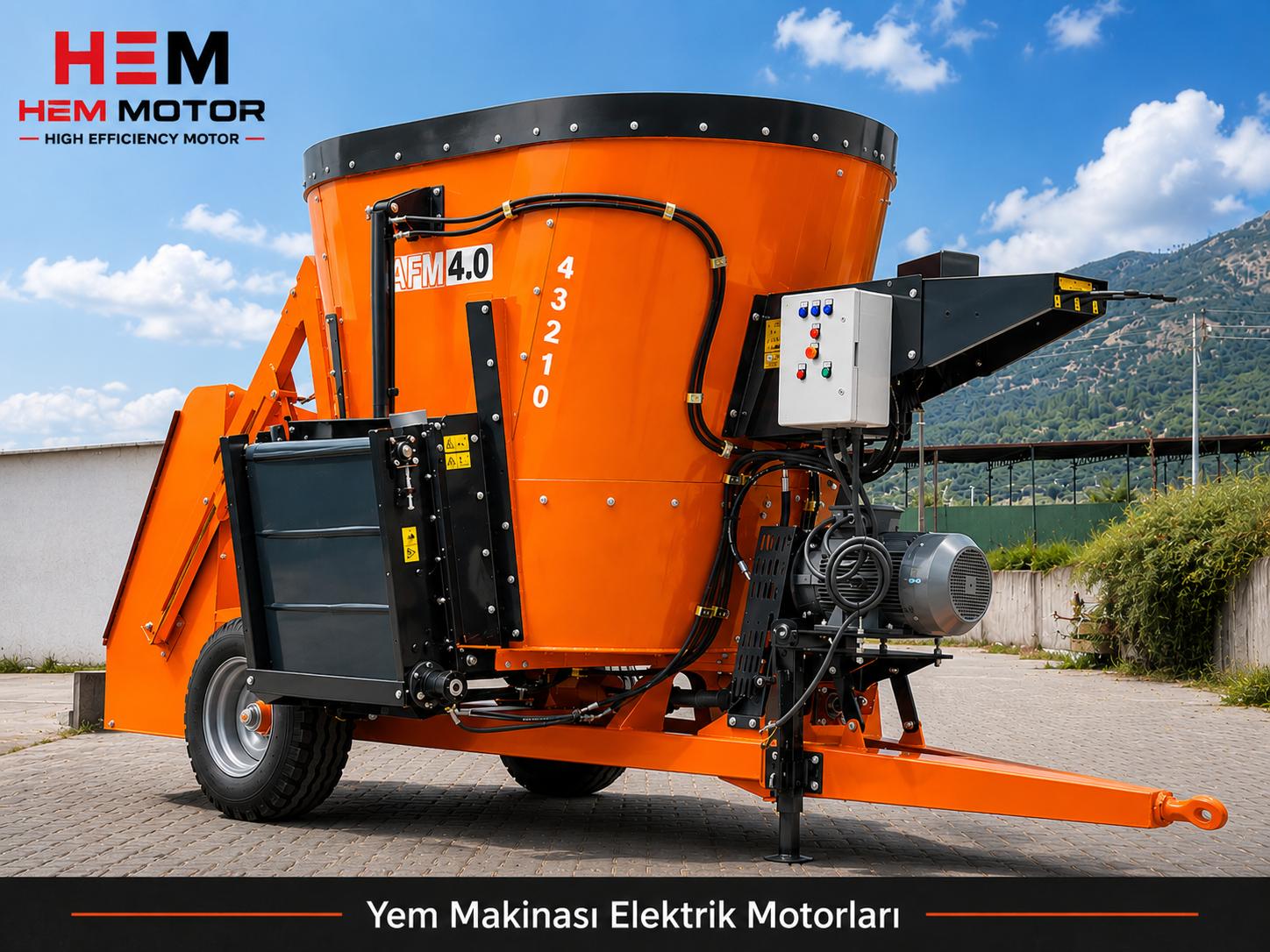

Food factories are among the production sites where hygiene and operational continuity matter most. Dozens of drive points such as conveyors, packaging machines, mills, mixers and fans run all day without stopping, and a failure in any one of them can halt the entire production line. Yet there is one critical point to keep in mind when selecting motors for a food plant: not every zone of the facility shares the same hygiene and protection requirement. At HEM Motor we supply motors from stock for the general drive applications of food factories in the IE3/IE4 efficiency class, with IP55 (and IP65 on request) protection, in cast iron and aluminium frames. In this article we explain which motor suits which zone, how to choose the right IP protection, and we share an honest warning about washdown areas.
Where Motors Work in a Food Factory
In a food processing plant, motors operate at many points: moving raw material (conveyors), grinding it (mills), mixing it (mixers), ventilation and aspiration (fans), and packaging the finished product (packaging machines). Most of these applications are general drive points that do not come into direct contact with food, such as a conveyor drive, a fan motor or a packaging machine motor. HEM motors are designed precisely for these general drive applications.
The dusty zones of a food plant (flour, sugar, spices) and the humid zones (washing, cooling) call for different protection. This distinction must be observed during motor selection; rather than fitting the same motor everywhere, each point should receive a motor suited to its conditions. To clarify the difference between food processing hygiene and adjacent sectors such as flour and feed processing, you can also read our article on feed factory and mill motors; in this article we focus on food processing hygiene.
For the technical and procurement teams buying motors for a food factory, the most important principle is correct zone-based matching. Equipping an entire food plant with a single protection class is neither economical nor technically sound, because the needs of a dry packaging zone differ from those of a humid processing zone. The right approach is to evaluate each drive point individually and choose the protection and frame material that fits that zone. Throughout this article we state clearly both which motor suits which zone and which zone falls outside the scope of our product range, because an honest supply relationship begins with preventing false expectations.
Conveyor and Packaging Drive Motors
Conveyors and packaging machines are the backbone of the food line. These applications typically demand low vibration, quiet operation and continuous duty. Conveyors mostly run at low output speed together with a gearbox, while packaging machines may require precise speed control. HEM Motor offers motors for these applications in the IE3/IE4 efficiency class, with cast iron and aluminium frame options.
You can review our content detailing motor selection for packaging and wrapping machines along with our flour mill electric motors product group. If an urgent replacement need arises on a conveyor drive, the feeder and belt drive approach applies here too. At these points, low-vibration operation matters both so the product advances without being jolted along the line and for the lifespan of the mechanical parts; motors with 100% copper windings and balanced rotors meet this expectation.
Mill, Mixer and Fan Motors
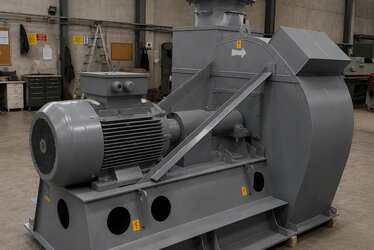
Mill motors are used to grind products such as flour, spices and sugar; mixer motors prepare doughs, sauces and blends; and fan motors handle ventilation and dust aspiration. Because grinding applications create dust-laden environments, IP55 protection extends service life by preventing dust from entering the motor. HEM Motor offers options suited to these applications in its electric motors for feed and food machinery and flour mill motor groups.
For fan and exhaust selection in dusty grinding environments, our article on aspirator and dust collection fan motor selection is useful. When mixers require low speed and high torque, they run with a gearbox; in that case the motor and gearbox pairing is important. In environments with fine dusts such as flour, sugar and starch, special zones where the dust could form a combustible or explosive dust cloud may require additional measures; if such a zone is involved, please be sure to state it at the quotation stage, because a standard industrial motor may not be suitable for every special zone. In dusty but standard zones, however, our IP55-protected motors safely meet grinding and aspiration needs.
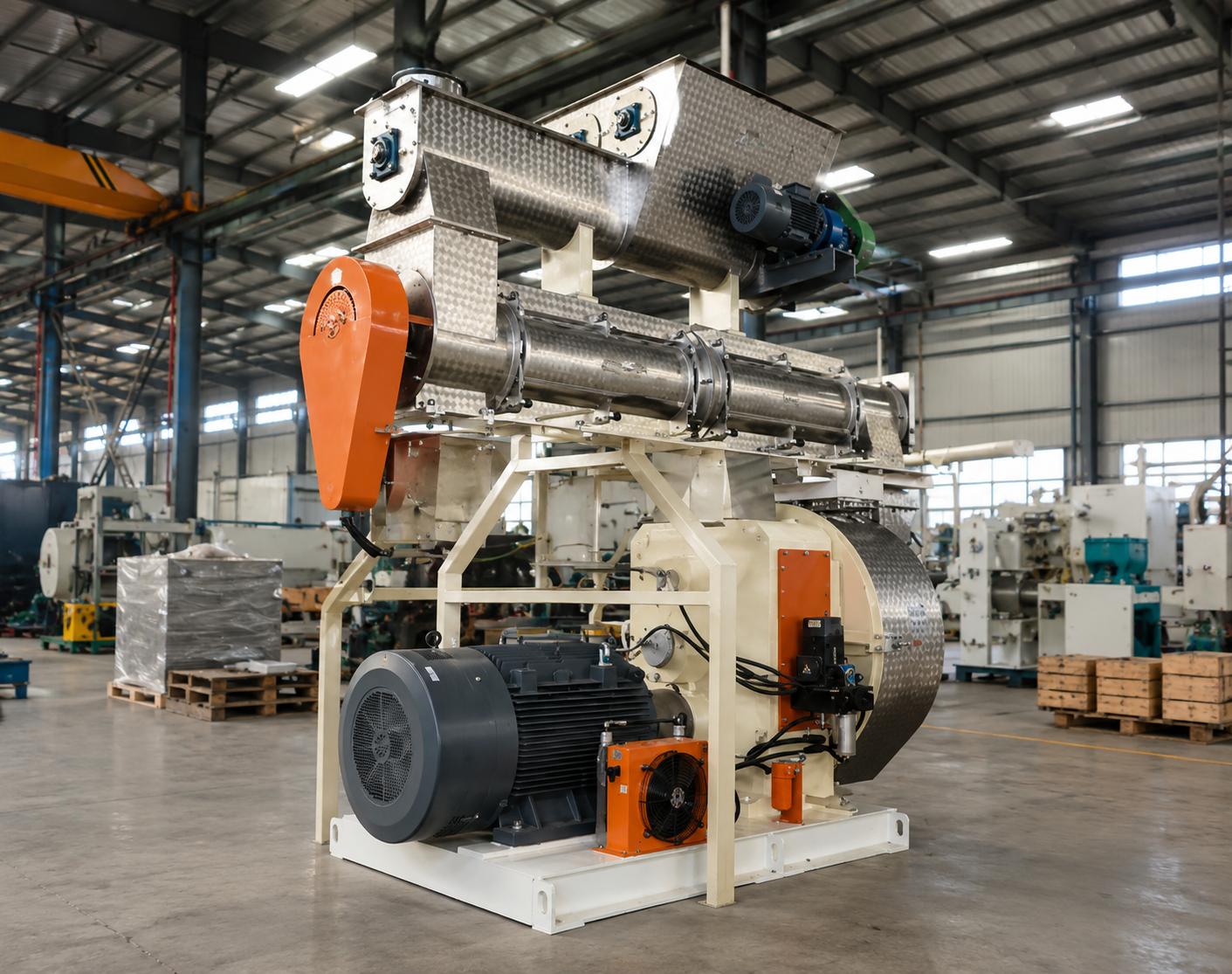
Choosing IP Protection and Washdown Zones: An Honest Warning
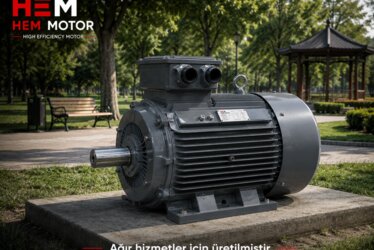
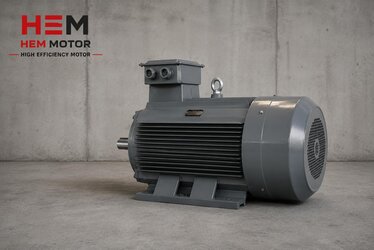
The choice of IP protection in a food plant must be based on the conditions of the zone where the motor will be installed. For dry, dusty zones (flour, sugar, packaging), standard IP55 protection is generally sufficient. In more humid zones, IP65 protection can be considered on request. Here one point must be stated openly and honestly: HEM motors are industrial motors with cast iron/aluminium frames and IP55 (IP65 on request) protection.
Important warning: Areas that come into direct contact with food, or that are washed daily with high-pressure water and chemicals (washdown), usually require special features such as IP69K protection and stainless steel frames. These washdown / food-contact zones need specially designed motors, and HEM motors are not designed for this special category. HEM motors are suitable for the non-washdown general drive applications of a food factory (conveyor, fan, mixer, packaging, mill). Clarifying this distinction from the outset prevents the wrong motor choice and the disappointment that follows.
This honest distinction actually protects you too: if a standard industrial motor is mistakenly installed in a washdown zone, it will fail quickly under the effect of water and chemicals, creating both cost and a hygiene risk. The right approach is to source washdown and food-contact points from a specialist motor supplier, and to equip the remaining majority of general drive points, which make up the bulk of the plant, with IP55/IP65 industrial motors. In practice, a significant share of the drive points in a food factory fall into this general category; in other words, HEM motors can cover most of your food plant's motor needs, while the washdown zone is evaluated separately.
To clarify frame and protection selection according to ambient conditions, our articles on cast iron versus aluminium frame and corrosion and outdoor use of cast iron motors offer guidance. For your facility's drive needs you can browse our high-efficiency electric motors and cast iron frame motors categories.
Power and Speed Selection: The Rhythm of the Food Line
In a food factory, every drive point demands a different speed and torque, so power and speed are selected according to the application. Conveyors generally run at low output speed and are used with a gearbox; the motor's 1500 rpm speed is reduced through the gearbox to the belt speed required. In mill and grinding applications, 1500 or 3000 rpm motors are preferred depending on the fineness of the product. Mixers require low speed and high torque depending on the consistency of the dough, sauce or blend, which usually means a geared solution. For fan and exhaust motors, the speed is chosen according to the air flow rate.
The right speed and power also affect product quality: a mixer turning too fast can spoil the product, while an underpowered conveyor slows the line. For this reason, motor selection on a food line should be made together with the machine manufacturer's recommendation. If you are replacing an existing motor, preserving the power, speed and mounting details on the nameplate is the safest route, so the rhythm of the line is not disrupted.
Efficiency and Continuity on a Hygienic Line
Food factories often run in shifts, even around the clock. For this reason motors must be designed for continuous duty (S1), low in vibration and highly efficient. A high-efficiency motor lowers energy cost while also running with less heat for stable operation in a hygienic environment. For planning the motor fleet in a continuously running plant, our articles on motor fleet management in three-shift facilities and on stock planning according to the season/production plan are useful.
If you want to quantify the efficiency-class decision, our article on the IE3 versus IE4 investment decision is a good guide. For food processing and general industrial drive content you can follow our industrial / general purpose motors blog category.
A Motor Purchasing Checklist for Food Factories
To choose the right motor in a food plant, clarify the following information for each drive point before purchasing. Zone condition: Is it dry and dusty, humid, or washdown? Washdown and food-contact zones require special motors; at other points our IP55/IP65 industrial motors are suitable. Application: Conveyor, packaging, mill, mixer, fan; each has a different duty profile. Power and speed: Taken from the existing motor's nameplate or from the machine manufacturer's recommendation. Mounting type: Foot-mounted (B3), flange-mounted (B5/B14) or combined (B35). Duty type: S1 for shift/continuous lines. Efficiency: Over long operating hours, IE4 pays for itself quickly.
While gathering this information, you can make use of the checklist in our article on exact matching by nameplate data. To clarify the difference between mounting types, see our article on choosing the B5 or B14 connection type, and to replace an existing brand, see our guide on directly replacing an old-brand motor.
Variable Frequency Drives and Precise Speed Control
On food lines, packaging, dosing and some mixing applications require speed adjustment according to the characteristics of the product. At these points the asynchronous motor works together with a variable frequency drive (VFD); the drive steplessly adjusts the speed of the industrial electric motor according to the production rate. When selecting a motor to run with a VFD, it is important that the motor has drive-compatible insulation and cooling characteristics. The Class F insulation and robust cooling structure of HEM motors provide a suitable basis for drive-fed applications.
In drive-fed applications, cooling becomes important for motors that run for long periods at low speed; for this reason, sharing the application details at the quotation stage allows us to select the right motor. Beyond the energy savings of an efficient motor, use with a drive also increases line efficiency. You can review our high-efficiency range in the high-efficiency electric motors category and evaluate the IE4 investment decision with our article on the IE4 threshold.
On food lines, efficiency is not only about the energy bill; a motor that runs cooler and more stably also contributes to the stability of the line. On a continuously running packaging or conveyor line, an unexpected motor stoppage can lead to product loss and a hygiene risk. For this reason, motor selection in a food plant is a holistic decision that covers not only the initial cost but also reliability, thermal endurance and service continuity. Motors with Class F insulation and a robust bearing structure safely carry the thermal load that shift operation brings.
Supply, Lead Time and Bulk Purchasing
Food factories often need not a single motor but dozens of motors along the line. In new line installations or comprehensive renewals, bulk purchasing offers an advantage in both price and supply continuity. At HEM Motor we offer fast dispatch in the common power ratings and speeds in our stock, and for project-based bulk needs we provide single-source quotation and planning. We described this approach with the example of fan motors in our article on project-based bulk purchasing and equivalent selection.
On continuously running lines, keeping spares of critical motors reduces the risk of downtime; the motor fleet management approach to deciding which power ratings to keep in stock can also be applied to food plants. When you share your requirement list with us, we can prepare a single quotation for all non-washdown drive points at once.
Since production continuity is as critical as production hygiene in food factories, when choosing a motor supplier you should evaluate not only price but also stock depth, the ability to find an equivalent motor and delivery speed. When a conveyor or packaging motor fails, the ability to supply an exactly compatible replacement the same day or within a very short time speeds the recommissioning of the line and limits product loss. At HEM Motor, with our stock depth in common power ratings and speeds, we meet this need for rapid replacement and quickly identify the correct equivalent from the existing motor's nameplate data. This way your food line can keep producing without long stoppages even during an unplanned failure.
Frequently Asked Questions
Can HEM motors be used in a food factory?
Yes; HEM motors are suitable for the non-washdown general drive applications of a food factory. At points such as conveyor, fan, mixer, packaging and mill drives, our IP55 (IP65 on request) protected motors can be used. However, washdown zones that come into direct contact with food or are exposed to daily high-pressure washing require special (IP69K/stainless) motors; this special category is outside our product range.
What protection class is needed for a dusty grinding zone?
In dry, dusty environments such as flour, sugar and spices, IP55 protection is generally sufficient; this class protects the windings and bearings by preventing dust from entering the motor. In zones where humidity is also present, IP65 protection can be considered on request. Sharing the conditions of the installation point allows us to give the right recommendation.
What should I watch for in a packaging machine motor?
On packaging machines, low vibration, quiet operation and, where needed, precise speed control are important. These applications can run together with a variable frequency drive (VFD); the right power and speed are chosen according to the machine manufacturer's recommendation. If you share the existing motor's nameplate data, we can quickly find the exact equivalent motor.
Get a Quote
Are you looking for a motor for the conveyor, packaging, mill, mixer or fan drive needs of your food factory? Share the application, power, speed, mounting type and the zone condition (dusty/humid) with us, and let us quote a motor suited to your facility from our IP55/IP65 stock with an honest assessment. Call +90 (532) 345 49 86 now or reach us through our contact us page.