English
 Türkçe




Ice cream production plants present one of the food industry's most demanding mechanical environments: continuous low temperature, high humidity, washdown water and hygiene pressure all operate together. On these lines, electric motor selection is not merely a matter of power and speed; from the continuous freezer dasher to the homogenizer pump, from the mix tank agitator to the packaging conveyor, every motor must withstand a cold and humid environment, be washable when required and comply with hygiene rules. In this guide we address ice cream plant electric motors application by application, clarifying the purchasing decision from the freezer dasher motor to stainless solutions, from IP65 protection to correct torque calculation.
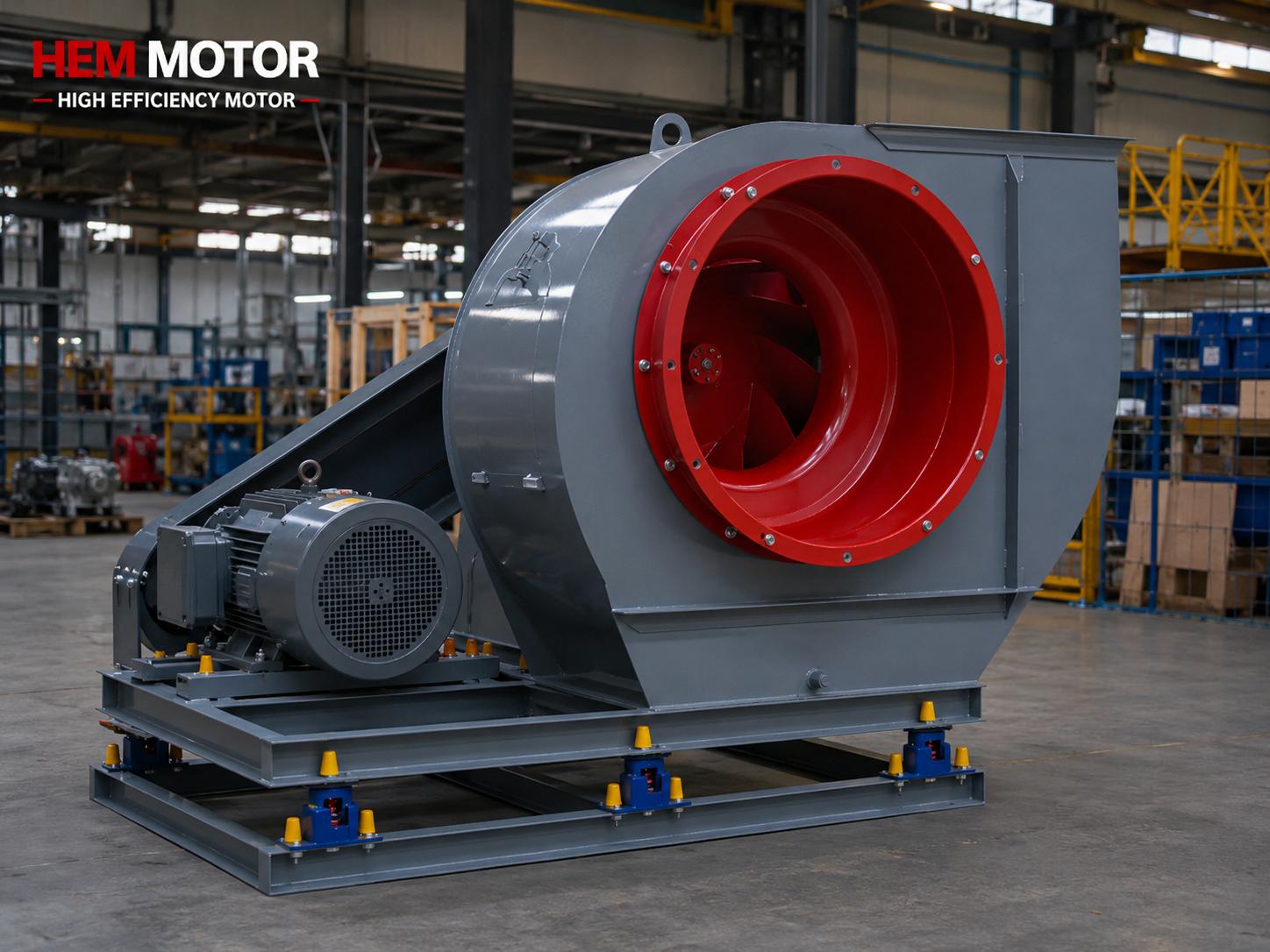
Main Equipment Requiring Motors on the Ice Cream Line
When planning an ice cream plant from a motor requirement perspective, separating the line into independent equipment groups is the soundest approach. Each group demands a different load profile, speed range and protection class. To select the right motor, first define what the equipment does, then the environment in which it operates.
Continuous Freezer and Dasher Agitator
The continuous freezer is the heart of ice cream production. Here the mix is frozen at -5 to -6 °C inside a cylindrical barrel while the dasher shaft rotates continuously; the scraped surface provides heat transfer and incorporates air (overrun) into the product. As the product consistency increases (viscosity rises), the dasher motor faces increasing resistance; in other words, it has a torque profile that varies under load rather than being constant. For this reason, high starting torque and motors that hold torque even at low speed are preferred for freezer dasher drives. Typically 4- or 6-pole motors at 1500 or 1000 rpm are reduced to a low output speed via a reducer or belt-pulley system. When low-speed direct drive is required, direct drive with low-speed high-pole motors can be considered.
Homogenizer and Mix Pump
The ice cream mix consists of milk, cream, sugar and emulsifiers and is broken into fine fat globules under high pressure in the homogenizer. The homogenizer is usually a piston pump and demands high, continuous power with a constant torque load profile. This application uses cast iron body motors in IE3 or IE4 efficiency class suitable for S1 continuous duty. For mix transfer pumps and pre-filling feed pumps, matching flow and head in centrifugal pump motor selection forms the basis of correct power calculation.
Mix Tank and Aging Agitator
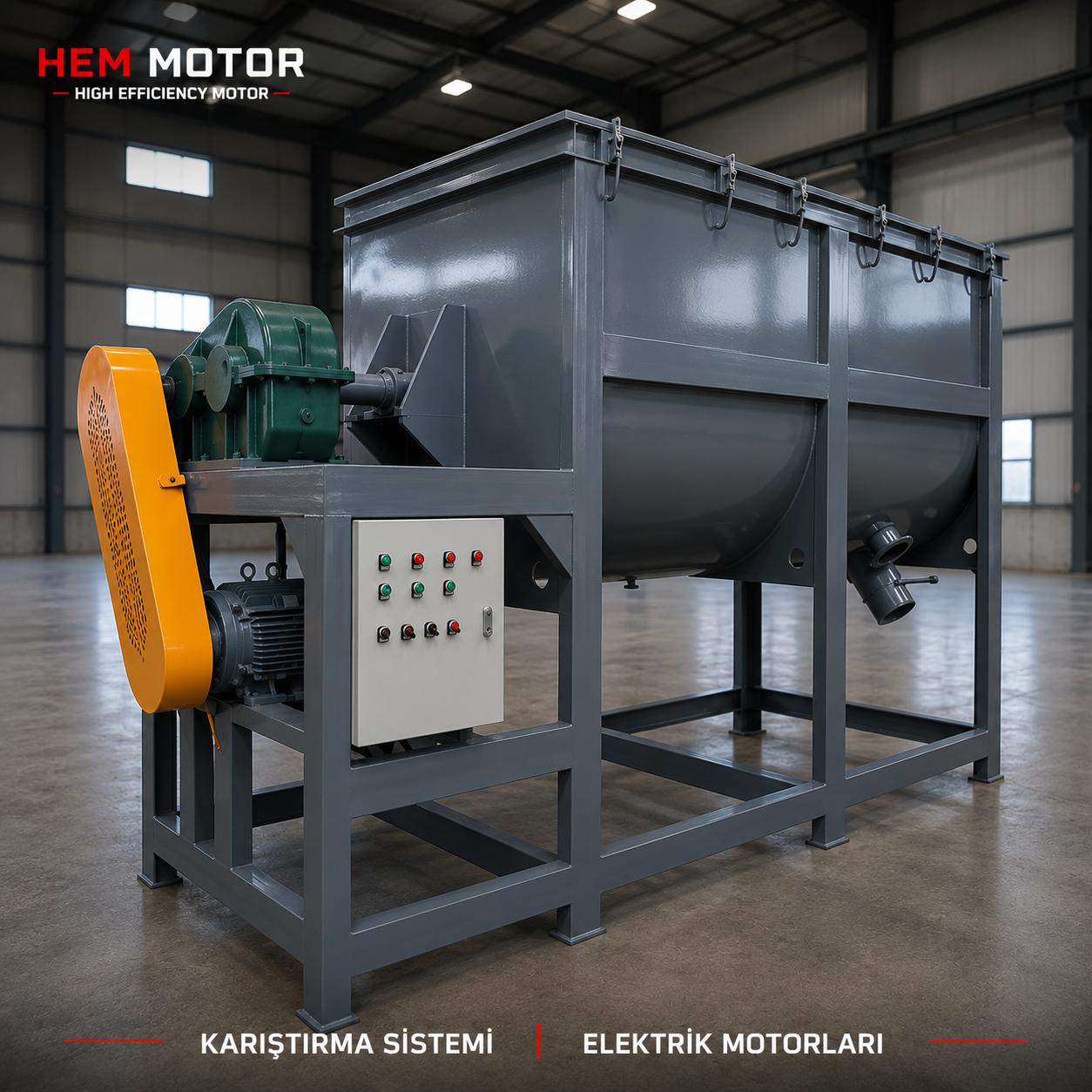
After pasteurization and homogenization, the mix is held in aging tanks at around 4 °C and slowly agitated. These agitators are low-speed, high-torque applications, mostly driven by worm gear or bevel helical reducers. When matching the agitator motor with a reducer, IEC frame and flange matching for worm gear reducers is critical; it must be a perfect fit with the B5 or B14 flange-type reducer input.
Refrigeration Compressors and Condenser Fans
The entire ice cream plant relies on an ammonia or freon based refrigeration system. Compressor drive motors are high-power, continuously running cast iron body motors. Condenser and evaporator fan motors operate outdoors or inside cold cells; therefore the principles of reliable supply of cold storage fan and compressor motors at low temperatures apply here too. To match the existing motor during compressor replacement, the compressor motor replacement and matching guide provides direction.
Packaging, Filling and Conveyor Drives
Cone, cup and stick ice cream packaging machines and conveyors transporting to cold storage run on small and medium power motors. On these lines, motor selection for packaging machinery and the conveyor belt motors in the efficient electric motors category come to the fore. To avoid stopping the line in case of a sudden conveyor motor failure, a conveyor belt motor emergency replacement list should be kept ready.
Motors in Cold and Humid Environments: Protection Class and Material
The greatest threat motors face in an ice cream plant is not temperature but condensation and washdown water. Moisture accumulating on cold surfaces can penetrate the motor and damage winding insulation and bearings. Therefore protection class and material selection must be done carefully.
IP Protection Class: IP55 or IP65?
Standard industrial motors are produced in IP55 protection class and withstand full protection against dust and water jets from any direction. However, in ice cream plants, IP65 or higher protection is demanded in areas where pressurized washing is performed and at points exposed to continuous condensation. IP65 provides complete dust-tightness and protection against low-pressure water jets; it is the right choice for hygienic washdown areas. To clarify the difference between IP protection classes, the classification logic in dust sealing and IP65/IP66 protection in motors also applies to ice cream plants.
Measures Against Condensation
For motors standing in a cold environment, an anti-condensation heater, drain plugs and proper terminal box sealing manage condensation. When a motor stops and the body temperature falls below ambient, water condenses inside; therefore an anti-condensation heater is recommended for motors that will stand idle for long periods. For correct sealing of the terminal box and cable glands, attention should be paid to cast iron motor terminal box and cable connection.
Hygiene and Stainless Solutions
In areas with potential direct product contact (filling, mix contact surfaces), stainless steel bodies or hygienically coated, smooth-surfaced motor designs that do not trap residue are preferred. For motor selection principles from a food hygiene perspective, hygiene and IP protection in food factory electric motors and hygienic environment and washdown in dairy, meat and beverage plant motors are complementary resources.
Selecting the Right Power, Speed and Efficiency Class
When sizing a motor in an ice cream plant, duty type, load profile and the efficiency class mandated by regulation must be evaluated together.
Duty Type and Load Profile
Equipment running 24 hours such as homogenizers, compressors and continuous freezers require motors suitable for S1 continuous duty. Intermittent lines such as packaging and filling have a start-stop profile. Running the motor continuously at full load and the correct load ratio is important for both efficiency and lifetime; the motor load ratio, efficiency and correct sizing guide provides direction.
Efficiency Class: IE3 and IE4
In continuously running ice cream plant motors, energy cost constitutes a significant portion of the total annual cost. By regulation, IE3 is mandatory for three-phase motors of 0.75 kW and above, and IE4 in certain power ranges. To see the impact of efficiency class on investment, we recommend reviewing IE3 vs IE4 electric motor investment and total cost of ownership (TCO) in high-efficiency motors. To clarify the mandate timeline, refer to the IE3/IE4 efficiency mandate regulation.
Pole and Speed Selection
Pump and compressor applications mostly run on 2- or 4-pole motors, while agitator and conveyor drives use 4- or 6-pole motors. The number of poles determines output speed; for correct selection, 2/4/6 pole selection in asynchronous motors is a reference resource. When variable speed is needed with a frequency drive, VFD frequency drive with asynchronous motor provides flexibility in overrun and product consistency control.
Mounting Type and Mechanical Compatibility
In ice cream plant machinery, the motor is usually connected to the equipment via a reducer, belt-pulley or direct coupling. In mounting type selection, the flange and foot configuration must perfectly match the machine.
For flange connection use B5 vs B14 motor mounting type selection; for shaft and key compatibility use the motor shaft diameter, key dimensions and coupling-pulley compatibility guides. When replacing an old motor one-to-one, follow the nameplate matching steps to avoid wrong delivery. For mix tank and aging agitators, the worm gear reducers category provides the correct output speed and torque.
Commissioning, Maintenance and Energy Management
Just as much as selecting the right motor, correct commissioning and regular maintenance determine its lifetime in an ice cream plant. A motor operating in a cold and humid environment must not be energized on first start without measuring insulation resistance; in motors that have been in stock for a long time, the winding may have absorbed moisture. For first-start steps, the electric motor commissioning and first startup checklist should be followed. Because rotation direction is critical in freezer dashers and pumps, the phase sequence must be checked; similar principles apply as in the circulation applications of treatment and process plant motors.
In periodic maintenance, bearing noise, vibration, body temperature and terminal box moisture status are monitored. Ice or dirt accumulation on the cooling fan fins can impair cooling; therefore a cleaning schedule must be established. For maintenance planning, the electric motor warranty coverage content helps you distinguish faults within and outside warranty. To evaluate the plant's entire motor inventory by efficiency class, an energy efficiency audit and motor inventory study is recommended; this reveals the highest savings potential in continuously running freezer and compressor motors.
Overrun and Capacity Control with a Frequency Drive
One of the most important parameters of ice cream quality is overrun, that is, the proportion of air added to the product. Freezer dasher speed and mix feed rate directly affect overrun. The use of a frequency drive allows the dasher and pump speed to be precisely adjusted to the product recipe and provides flexibility on the same line for different product types (hard ice cream, soft serve, sorbet). For the heating and cooling balance in a drive-operated motor, the high-efficiency motor and frequency drive savings content provides direction. To evaluate the IE4 threshold in pump and fan applications, the IE4 threshold in pump, fan and compressor resource can be reviewed.
Supply, Stock and Fast Delivery
Ice cream production is seasonal; during the summer peak, the failure of a freezer or compressor motor causes serious production loss. Therefore spares for critical motors must be planned before the season. For stock and delivery strategy, the from stock delivery vs production order and information required when requesting a quote contents speed up the process. For plants in the Aegean and Izmir region, same-day delivery options can be found in the same-day delivery in Izmir and the Aegean content. You can reach our entire product range via our homepage.
Frequently Asked Questions
How many poles and which protection class should an ice cream freezer motor have?
Since the freezer dasher drive demands low output speed and high torque, 4- or 6-pole motors are matched with a reducer. If the motor operates in a washable hygienic zone, IP65 is preferred; in a drier zone, IP55. Because viscosity increases under load, high starting torque is important.
How do I prevent condensation in motors in a cold environment?
An anti-condensation heater, proper drain plugs, correct terminal box sealing and IP65 protection when needed manage condensation. For motors that will stand idle for long periods, an anti-condensation heater prevents water from condensing inside.
For a mix agitator should I buy a geared motor or a separate motor + reducer?
Both solutions are valid. A monoblock geared motor is compact and easy to install; a separate motor + reducer offers service and replacement flexibility. We recommend reviewing the geared motor vs separate motor comparison for the decision criteria; IEC frame and flange compatibility must be verified in both cases.
Get a Quote
For your ice cream production plant, let us jointly determine the correct power, speed and protection class for freezer dasher, homogenizer, mix agitator, compressor and packaging line motors. For fast supply of IP65 protected, cast iron body or hygienic solutions suitable for cold and humid environments, contact us: +90 (532) 345 49 86. Share your equipment list and reach us via our contact page; we will prepare a quote the same day.
Purchasing and Selection Checklist
- Has power (kW), pole/speed and duty type (S1) been determined for each piece of equipment?
- Has IP65 protection class been requested for washable hygienic zones?
- Has IE3/IE4 efficiency class been verified for continuously running equipment?
- Have anti-condensation heaters and drain plugs been planned against condensation in cold environments?
- Have flange (B5/B14/B35), shaft diameter and key dimensions been matched to the machine?
- Has IEC frame compatibility with the reducer input been verified?
- Has spare/replacement motor stock been planned for critical equipment?
- Have nameplate details been checked one-to-one when replacing the existing motor?