English
 Türkçe




When an electric motor fails on a production line in Izmir, the first question that arises is usually not a technical one. "Who can deliver this motor today?" is the single sentence on the mind of both the maintenance engineer and the plant manager. Because in the industrial basins of the Aegean, the hourly cost of a stopped line quickly multiplies past the price of a new motor. In this article we look at electric motor supply in Izmir and the Aegean region from a logistics standpoint: which industrial basin can be reached in what time, how the emergency replacement process works, and which power-speed combinations wait ready in stock.
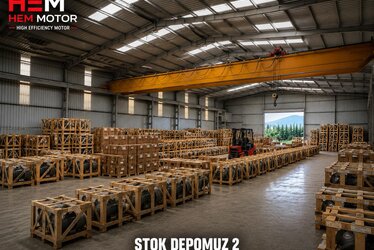
The decisive factor is not the breadth of the catalogue. A supplier having hundreds of motors in its catalogue means nothing on its own to your stopped line; what matters is that the motor reaches your warehouse in Izmir within a few hours today. So when choosing the right supplier in the Aegean, the question to ask is not "which model do you manufacture" but "which power, at which speed, can you ship from stock today." Same-day delivery is not a slogan but the result of a planned stock and dispatch system.
The Aegean region hosts very different sectors such as food, textiles, marble, mining, white goods and machine building. This diversity means motor demand across many powers and speeds. Fast supply is only possible by reading that demand in advance and keeping the right stock mix. A supplier's strength is measured not by the breadth of its product catalogue but by how deeply it stocks the critical items.
Why Is Downtime Cost in Izmir Greater Than the Motor Price?
A motor's price is fixed and known. But the loss that arises when the line it drives stops is made up of far larger, often invisible items. In dense production basins like Kemalpaşa, Çiğli and the Atatürk Organized Industrial Zone, the hourly production value of a line is many times the price of a mid-power motor.
- Lost production: Every hour the line is down means unsold product and unmet orders.
- Labor cost: While the line is stopped, shift personnel wait idle; a cost paid but not turned into output.
- Delivery risk: A missed deadline on export or chain-store orders means penalties and customer loss.
- Cascading stoppage: A single conveyor motor can halt every process downstream of it.
- Cooling and restart: On food and process lines, downtime also brings product waste and recommissioning cost.
This picture explains why a stock structure providing fast electric motor supply in the Aegean is critical. Instead of questioning the new motor's price, asking "in how many hours can I restart the line" earns the business far more. The truth most operations overlook is this: the price of the new motor that replaces the faulty one is usually the smallest item in the total loss. The real large figure is the downtime cost that piles up while waiting for the motor to arrive.
Delivery Times to Aegean Industrial Basins
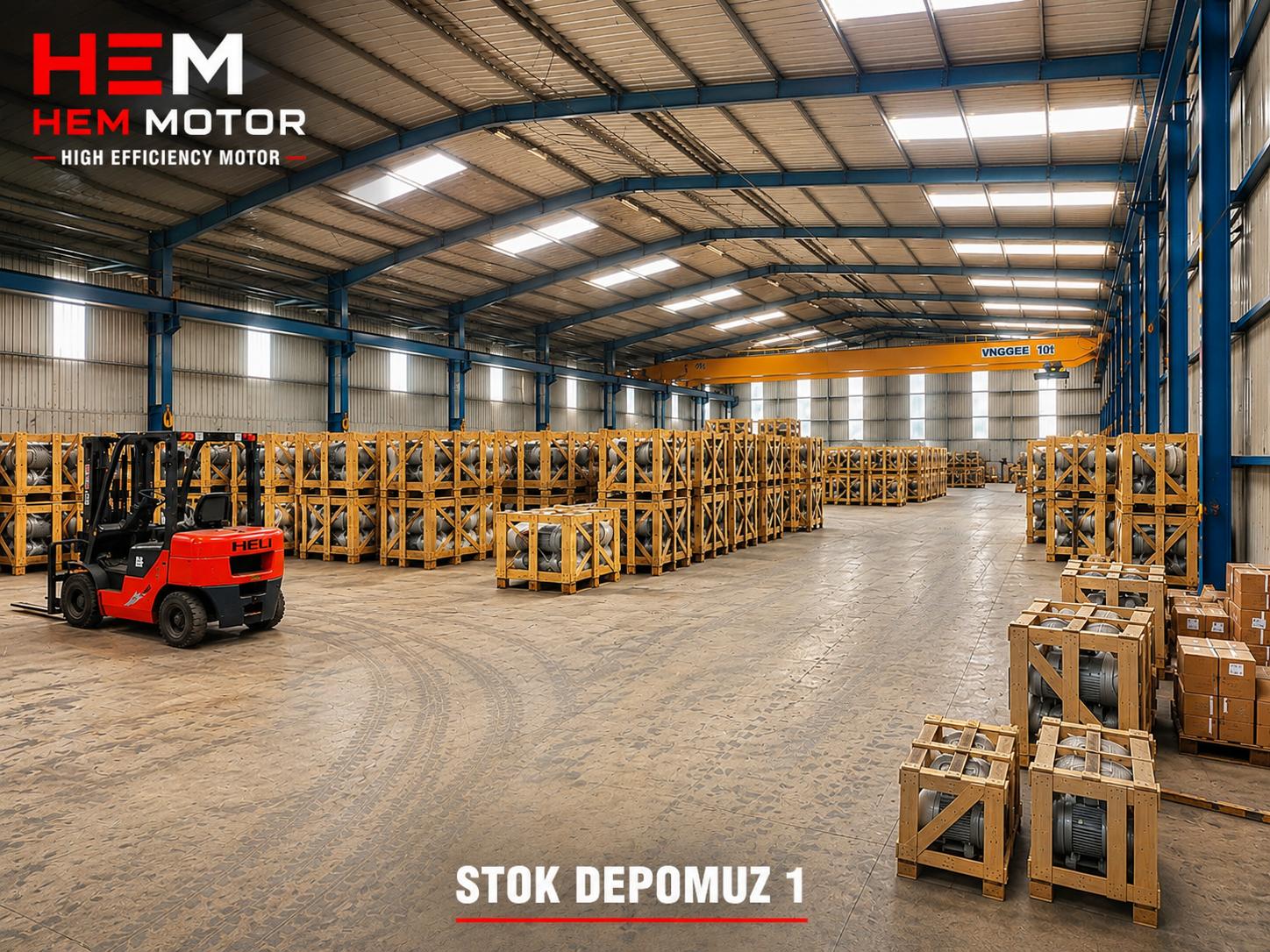
An Izmir-based stock structure is positioned to ship to all of the Aegean's major industrial basins in reasonable times. What matters is not only where the motor comes from but how quickly it reaches a given basin.
Within Izmir and Nearby Basins
- Kemalpaşa, Çiğli, Pınarbaşı, Bornova: For emergency replacement within Izmir, a motor in stock can usually reach the plant the same day.
- Aliağa, Menemen, Torbalı: Same-day delivery can also be planned to these basins close to the city center.
- Buca, Gaziemir, Pancar OIZ: Thanks to their in-city locations, they have the shortest delivery times.
Other Provinces of the Aegean
- Manisa and its OIZ: Motor demand is high due to white goods and food density; same-day or next-morning delivery is typical.
- Denizli: A fast shipping route is in place for textile and marble operations; a 24-hour window is typical.
- Aydın, Muğla, Uşak: Motors for irrigation, food and mining applications are delivered with planned shipping.
- Turgutlu, Salihli, Akhisar: On the Manisa corridor; delivered same-day or within 24 hours depending on distance.
Fast motor shipping to these basins is made possible by stock held in advance. All of these times apply to standard motors held in stock; for an out-of-stock combination requiring a special order, the time naturally extends. For detailed basin-based planning you can review the Aegean industry motor supply guide.
The Emergency Replacement Process Step by Step
When a motor fails, a single phone call made with the right information shortens the shipping time by hours. For the emergency replacement process to run smoothly, the following information should be on hand.
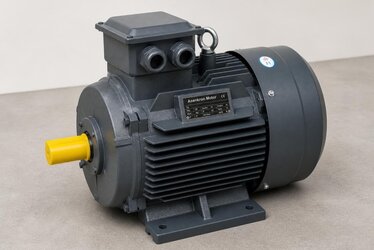
- Power (kW) and speed (rpm): Read from the motor nameplate, these two values are the basis of the replacement choice.
- Frame size and mounting type: Foot (B3), flange (B5/B14) or combined mounting determines mechanical fit.
- Voltage and frequency: Connection values such as 230/400 V or 400/690 V must be checked.
- Shaft diameter and length: Critical for coupling or pulley compatibility.
- Efficiency class: The need for IE3 or IE4 matters for both regulation and energy cost.
With this information the right motor is identified from stock instantly, a quote is prepared quickly and shipping begins. Experience shows that the most time is lost not while the motor is on the road but in identifying the right motor. If the exact same motor is not in stock at that moment, an equivalent motor matched in power, speed and frame size can be suggested; this motor runs the line at least temporarily and stops the production loss. For businesses struggling to read the nameplate, the motor nameplate reading guide is a practical reference.
Power and Speed Combinations Waiting Ready in Stock
The motors most needed in emergency replacement are kept ready in a planned stock structure. Generally the following ranges and speeds are held for fast delivery.
- Power range: A broad band from 0.25 kW up to 355 kW.
- Speeds: 3000 rpm (2-pole), 1500 rpm (4-pole), 1000 rpm (6-pole) and 750 rpm (8-pole).
- Efficiency classes: IE3 Premium and IE4 Super Premium options.
- Frame material: Cast iron frame for outdoor and heavy industry, aluminum for lighter applications.
- Protection class: Standard IP55 protection provides adequate safety for the dusty and humid industrial environments of the Aegean.
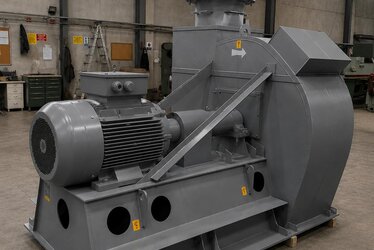
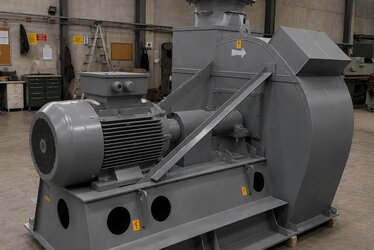
The most-requested 4-pole (1500 rpm) motors are common in pump, fan, conveyor and gearbox applications and are kept as a priority in stock. The 2-pole high-speed motors frequently seen in textile and plastics processes are also among the priority stock items. For pump-specific information, our pump motor selection page will help. For current electric motor prices and stock status you can contact the supply team.
How to Choose the Right Supplier in the Aegean?
When choosing a motor supplier in Izmir and the Aegean, looking only at price can lead to far more expensive stoppages later. For a sound choice, the following criteria should be evaluated:
- Real stock depth: Does the supplier actually hold motors in the warehouse, or bring them in to order?
- Shipping infrastructure: Is there a vehicle and logistics plan for same-day delivery?
- Technical support: Is engineering support offered in choosing the right replacement?
- Warranty and continuity: Is the motor supplied under warranty, with continuity of spare parts?
Thanks to a strong stock structure, the motor of the right power and speed reaches the plant without keeping the line waiting. Holding a spare motor in stock in advance for critical lines is the safest strategy of all, removing delivery time entirely at the moment of failure.
The Aegean's Sectoral Structure and Motor Demand
To understand delivery times and stock strategy correctly in the Aegean, one must know the region's sectoral structure. Each sector creates its own demands for power, speed and protection class; the right stock mix is shaped by reading this demand map.
- Textiles (Denizli, Izmir): Mostly medium-power, 2- and 4-pole motors; downtime tolerance is very low for the continuity of yarn.
- Food and agriculture (Aydin, Manisa): Pump and fan applications are dense; IP55 and above protection matters due to hygienic environments and humidity.
- Marble and mining (Mugla, Denizli): High-power, heavy-duty motors; dust and vibration resistance stand out.
- White goods and machine building (Manisa, Izmir): A broad power range and high efficiency-class demand are typical.
This sectoral diversity explains why stocking a single motor type is not enough. The right supply is possible with a stock approach that takes the region's pulse and prepares the most-requested combinations in advance. Taking seasonal demand swings into account, stock depth is increased in periods when harvest or production intensity rises.
A Quick Check List for the Right Decision in an Emergency
At the moment of failure, a systematic approach instead of panic greatly speeds up the delivery process. The following quick check list guides you in moments where seconds matter on site:
- Take a photo of the nameplate: A clear photo of the motor's rating plate conveys all the technical data at once.
- Determine the line's criticality: Does this motor's stopping halt production entirely, or partly? This sets the urgency level.
- Verify the mounting type: Foot or flange, and what shaft diameter? If these details are wrong, the motor cannot be fitted.
- State your basin: Specifying the industrial basin you are in lets the right delivery window be calculated.
- Be open to the equivalent option: If the exact motor is not in stock, running the line temporarily with a suitable equivalent is the fastest solution.
These steps remove the uncertainty at the moment of failure and let the right motor be identified within seconds. A well-prepared business turns an unexpected stoppage into a quickly resolved hiccup rather than a crisis.
Frequently Asked Questions
Is same-day motor delivery possible in Izmir for every power?
For standard powers and speeds held ready in stock, same-day delivery is usually possible within Izmir and nearby basins. For very special frames, special shafts or high power, the time may vary depending on the motor's stock status. So contacting quickly with the nameplate information is the way to learn the most accurate delivery time.
What information should I keep ready for an emergency replacement?
Power (kW), speed (rpm), frame size, mounting type (foot/flange), voltage, shaft diameter and efficiency class are the most critical. These values are written on the motor nameplate. If possible, sharing a photo of the faulty motor's nameplate lets the right replacement motor be identified within seconds.
What is the delivery time for a motor not in stock?
For out-of-stock or custom-made motors the time is longer; however, in most cases the nearest equivalent from stock can be suggested to run the line temporarily. This lets the business keep producing until the actual motor is supplied. The supply team builds the best plan together, between a permanent solution and a temporary replacement.