English
 Türkçe




İzmir's Torbalı, Menemen and Çiğli districts have, in recent years, joined the fastest-growing manufacturing centres of Aegean industry. In these areas, where the plastics, food, machinery manufacturing and furniture sectors are concentrated, thousands of businesses depend on reliable electric motor supply to keep their production lines running without interruption. In this article we address what producers in the Torbalı Organized Industrial Zone, the Menemen Plastics Specialized OIZ and the Çiğli Atatürk Organized Industrial Zone should pay attention to when sourcing motors, and why fast delivery matters as much as price.
In these industrial districts, a motor failure often means a production stoppage lasting hours, even days. It is precisely at this point that it becomes decisive not only that the motor is fairly priced, but that it is delivered quickly and has exactly equivalent specifications to the failed motor.
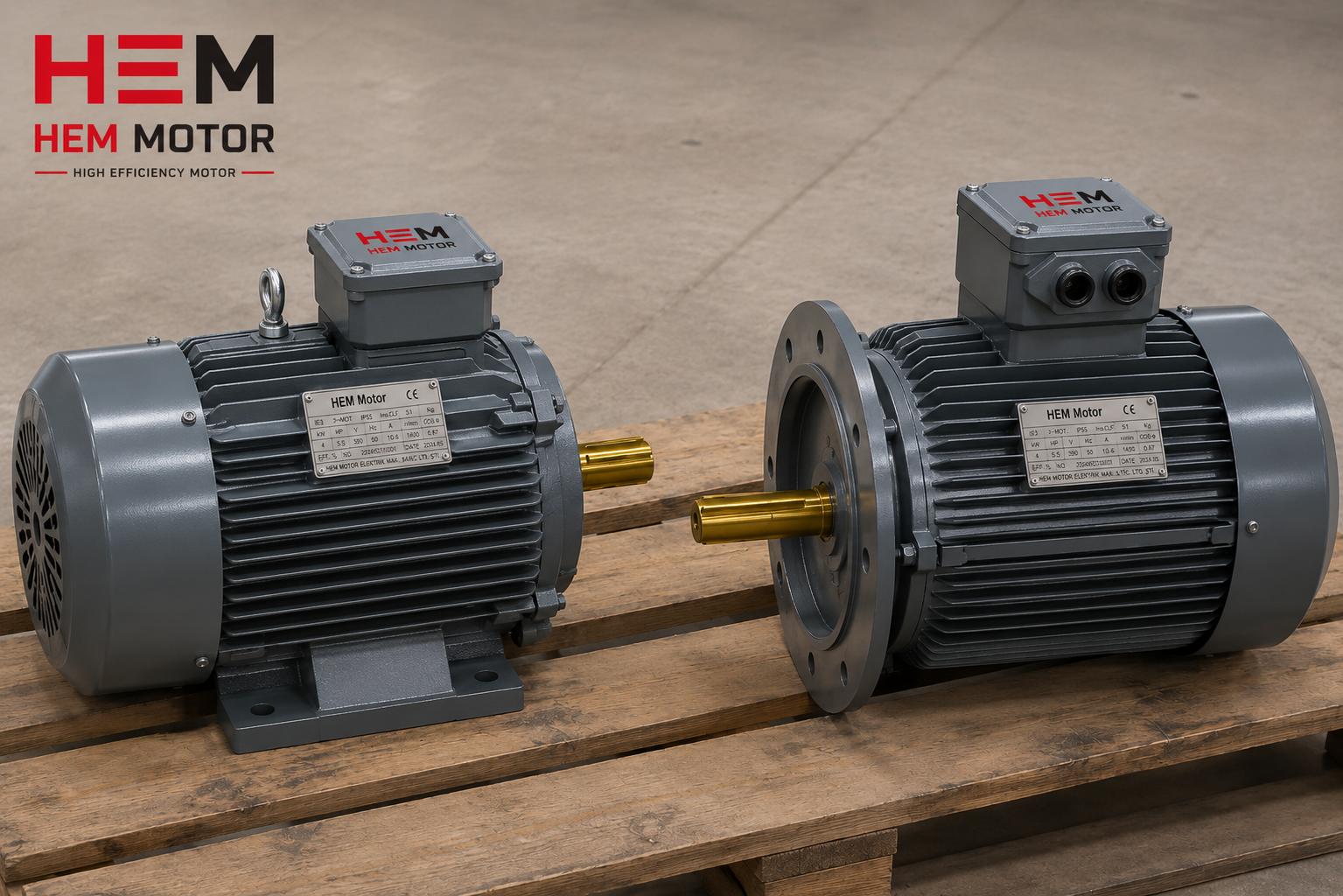
The Motor Needs of Torbalı, Menemen and Çiğli Industry
Every industrial zone has its own production profile and a corresponding motor requirement. These three districts, with their different sectors, create demand across a wide range of motors.
Torbalı OIZ: Machinery- and Food-Heavy Production
The Torbalı Organized Industrial Zone is a region intensive in machinery manufacturing, food processing and metalworking. In these plants, conveyor drive motors, pump motors, fan and exhaust motors, and geared motors are frequently used. Since hygiene and continuous operation are critical on food lines, fast replacement at the moment of failure is of great importance.
Menemen Plastics Specialized OIZ: Plastic Injection and Extrusion
Menemen is one of Türkiye's important plastic production centres. Plastic injection and extrusion machines are driven by high-power, continuously running electric motors. In these machines, a motor failure can lead to additional problems such as molten plastic cooling and clogging the mould, so fast intervention is vital.
Çiğli Atatürk OIZ: Multi-Sector Broad Industry
The Çiğli Atatürk OIZ is a versatile region hosting the machinery, automotive sub-industry, chemical and metal sectors. This diversity creates demand for a wide product range, from low-power single-phase motors to high-power three-phase motors.
Why Is Fast Delivery as Important as Price?
When a motor fails on a production line, the real cost is not the price of the motor but the production loss caused by the line standing still. Even one hour of downtime can cause many businesses a loss many times the value of the motor. For this reason, three elements must be evaluated together in motor supply:
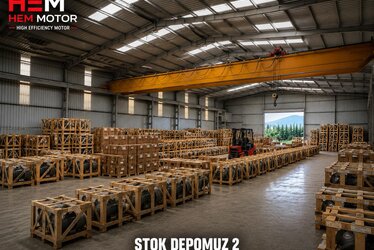
- Fast delivery from stock: Having the needed motor ready in stock eliminates waiting time.
- Exact-equivalent product: A product with the same power, speed, mounting type (foot/flange) and connection dimensions as the failed motor causes no fit problem on the line.
- Technical verification: Confirming the motor nameplate information to ensure the right product is sent.
In an urgent need, communicating the motor's technical specifications clearly ensures the right product arrives the first time and prevents a second waiting cycle.
Information Needed for Correct Replacement Motor Selection
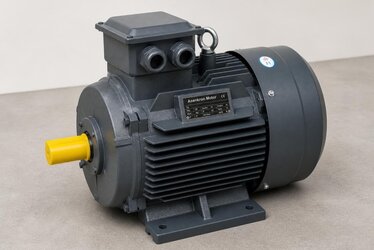
To determine the correct replacement for a failed motor, the information on the motor nameplate is essential. The basic data you should convey to your supplier are:
- Power (kW/HP): The motor's rated power.
- Speed (rpm): Such as 2-pole (~2900), 4-pole (~1450), 6-pole (~960).
- Voltage and phase: Single-phase (220V) or three-phase (380V).
- Mounting type: Foot-mounted (B3), flange-mounted (B5/B14) or combined.
- Frame size: Standard frame size such as 80, 90, 100, 112.
- Efficiency class: Such as IE2, IE3.
A request prepared with this information greatly speeds up the supply process.
Stock Management and Planning for Critical Motors
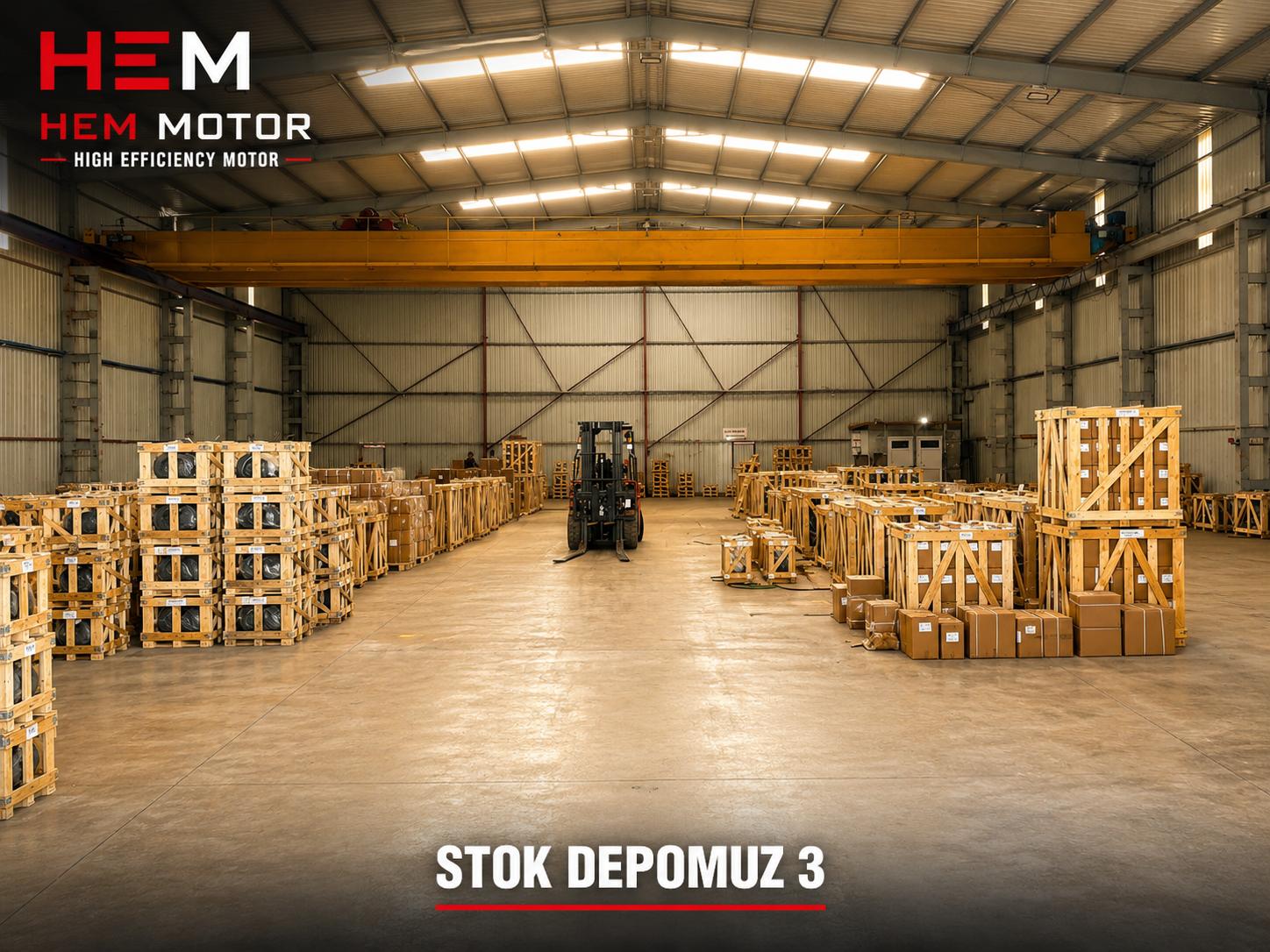
One of the biggest difficulties industrial businesses face is the line standing idle for days in an unexpected failure. The most effective way to reduce this risk is to plan ahead for motors on critical lines. Businesses may choose to keep a spare of motors vital to their production, or to work with a supplier whose lead time is short. This way, production can be restarted quickly at the moment of a failure.
For businesses in Torbalı, Menemen and Çiğli, planning motor needs in advance and getting quotes with the right technical specifications is the way both to control cost and to minimise downtime risk. For up-to-date electric motor prices and stock availability, the healthiest approach is to clarify the technical specifications of the motor you need and request a quote. For different applications you may also evaluate the three-phase electric motor and geared motor options.
The Importance of Logistic Location and Lead Time
A shared feature of Torbalı, Menemen and Çiğli is their location near İzmir's main transport arteries. This geographic advantage, when planned correctly, significantly shortens motor delivery times. However, the real factor determining lead time is not distance but whether the needed motor is ready in stock. A motor in stock can set off the same day, whereas a special-order motor may require days or even weeks of waiting.
For this reason, the smartest approach for businesses with critical production lines is to identify the motor types they use frequently in advance and clarify the supply status of these products. Instead of frantically searching for the right product at the moment of failure, acting with a pre-prepared list and technical specification can reduce downtime from hours to minutes. Correct planning is one of the most valuable insurances an industrial business can have.
Motor Types Frequently Used by Sector
The motor demands of businesses in Torbalı, Menemen and Çiğli differ markedly by their sector. Knowing these differences makes it easier both to identify the right product quickly and to plan stock.
- Food processing plants: Geared motors for conveyor drive, agitator and mixer motors, pump and fan motors are common. Protected-body motors resistant to cleaning and washdown are preferred.
- Plastic production: Injection and extrusion lines turn on high-power, continuously running three-phase motors. Cooling towers and hydraulic unit pumps also create motor demand.
- Machinery manufacturing: Machine-tool drive motors, compressor motors and foot/flange motors of various powers are used. Demand for a wide variety of frame sizes is intense in this sector.
- Furniture production: Dust-extraction (exhaust) fan motors and motors for sanding and cutting machines stand out. Because of the dusty environment, well-cooled motors are important.
This diversity clearly shows why a wide stock range is critical. Having the right type ready at the moment of need is the foundation of production continuity.
Reducing Downtime Risk by Cutting Failures
Another matter as important as fast supply is reducing the frequency of failures in the first place. In heavily used industrial motors, simple preventive measures significantly reduce unexpected shutdowns:
- Regular lubrication and bearing maintenance: The most common cause of failure in industrial motors is bearing wear; regular greasing largely prevents this.
- Phase protection and overload relays: In three-phase motors, phase loss leads to winding burnout; protection relays eliminate this risk.
- Keeping cooling paths clean: Especially in dusty environments, regular cleaning of the fan cover prevents overheating.
- Vibration and temperature tracking: Monitoring gradual deterioration in the values allows a failure to be caught before it occurs.
These measures both extend motor life and reduce the need for emergency supply. Still, when a failure does occur, having the right supply planning for a fast and correct replacement is indispensable.
Efficiency Class and Energy Cost: A Strategic Decision for Regional Industry
Most production plants in Torbalı, Menemen and Çiğli run their motors for long hours, often across three shifts. This operating profile directly raises the importance of the efficiency class in motor selection. In a continuously running motor, energy cost makes up the bulk of the total lifetime cost; therefore an IE3 or higher efficiency-class motor delivers significant annual savings beyond a small upfront difference.
In high-load applications such as plastic injection, extrusion and food processing, a high-efficiency three-phase electric motor both consumes less energy and runs at a lower operating temperature, extending insulation and bearing life. This is a gain that lowers both the energy bill and the failure frequency at the same time. For a business in the region, choosing the right efficiency class is not merely a technical preference but a cost decision spread over years.
Extra Savings with a Frequency Converter
On pumps, fans and conveyors operating under variable load, using a frequency converter (drive) lets the motor draw only as much energy as needed at any moment. Compared with a motor running at fixed speed, variable-speed drive produces serious energy savings in these applications. In the region's modern plants, choosing a drive-compatible motor is increasingly becoming standard for both energy efficiency and process control.
Frequently Asked Questions
My failed motor is a different brand — will an equivalent motor fit?
Yes, in most cases it will. What matters is not the brand so much as the exact match of technical specifications (power, speed, voltage, mounting type and frame size). Motors with standard IEC frame sizes can generally be used interchangeably between different brands. Conveying the nameplate information is enough for a correct match.
How can I get the fastest delivery in an urgent need?
For the fastest delivery, it is critical to convey the failed motor's nameplate information completely. Correct and complete information allows the suitable product in stock to be identified instantly and sent without a second waiting cycle. Vague information, on the other hand, increases the risk of the wrong product and delay.
Which motor specifications matter for my plastic injection machine?
Plastic injection and extrusion machines generally require high-power, continuous-duty, well-cooled motors. In these continuously running applications, a high efficiency class (IE3) provides both energy savings and a lower operating temperature. The most accurate way is to determine the replacement based on the specifications on your existing machine's motor nameplate.