English
 Türkçe





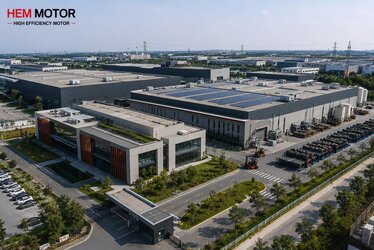
İzmir is home to one of Turkey's most intensive manufacturing basins, and at the heart of this basin lie organized industrial zones such as Kemalpaşa OSB, Aliağa OSB, Ulucak and Torbalı OSB. In these zones, hundreds of facilities — from food to chemicals, from metalworking to plastics, from textiles to packaging — run production around the clock. The component that keeps this production uninterrupted is the electric motor spinning at the heart of nearly every machine. When the motor driving a conveyor belt, a pump, a fan or a compressor stops, it is usually not a single machine that halts, but the entire line connected to it.
This is exactly where in-zone electric motor supply becomes a critical logistics and engineering matter. In this article we examine how facilities operating in Kemalpaşa, Aliağa and the surrounding organized industrial zones can source the right motor, at the right time, from the shortest possible delivery distance. Our goal is to show concretely what to plan and how, so that a motor failure does not keep your production waiting for hours.
The Real Cost of a Stopped Line in an OSB
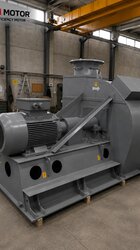
When a facility experiences a motor failure, the first cost that comes to mind is the price of the new motor. Yet in İzmir's organized industrial zones, the real cost of a stopped line usually exceeds the price of the motor within the very first hours. Downtime cost is far more than a spare part; it accumulates lost production, idle labor, missed delivery promises that trigger penalties, and even spoiled raw material.
Especially in facilities running continuous production — for example a food filling line or a pump group feeding a chemical reactor — even a few hours of downtime reaches significant figures. For this reason, the critical question for businesses operating inside an OSB should not be "which motor is cheapest?" but "how do I restart the stopped line in the shortest time?"
- Lost production: The line's hourly output value, multiplied by downtime, becomes a direct loss.
- Labor cost: Even if production stops, operators and the maintenance team keep drawing wages.
- Delivery delay: Missing the promised delivery date creates penalties and reputational loss.
- Raw material spoilage: In processes where cooling, mixing or transport stops, semi-finished product becomes unusable.
The Decisive Criterion: Not a Wide Catalog, but Stock Depth and Delivery Distance
Many businesses focus on catalog breadth when choosing a supplier. Yet in in-zone supply, the truly decisive factor is not how wide a product range is listed, but whether the needed motor is genuinely ready in stock and how close it can be delivered. A supplier with hundreds of models in its catalog but none in stock means weeks of waiting at the moment of failure.
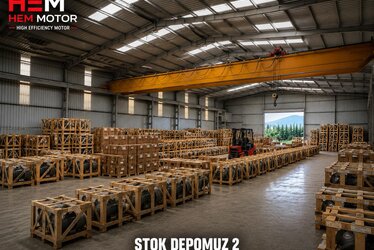
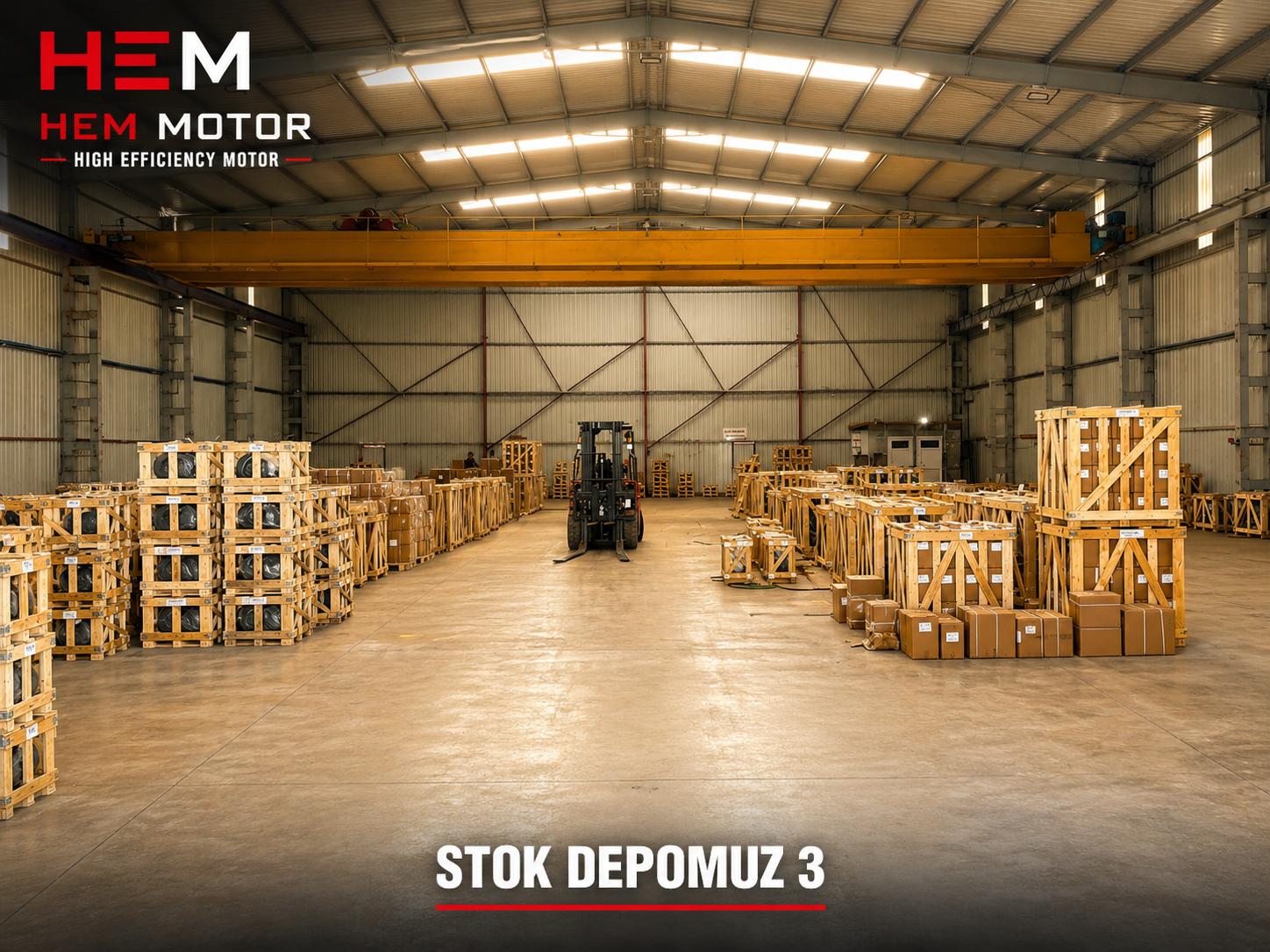
Stock depth means that the most demanded power and speed combinations are sitting ready on the shelf. HEM Motor, with its stock structure in İzmir, can often deliver same-day to Kemalpaşa, Aliağa and surrounding zones. The shortness of delivery distance is the single most important factor determining whether a failure is resolved within hours or within days.
The Practical Meaning of Stock Depth
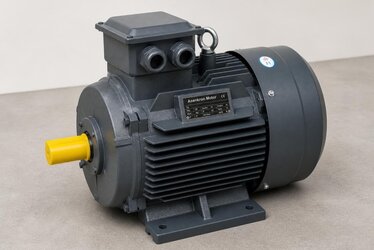
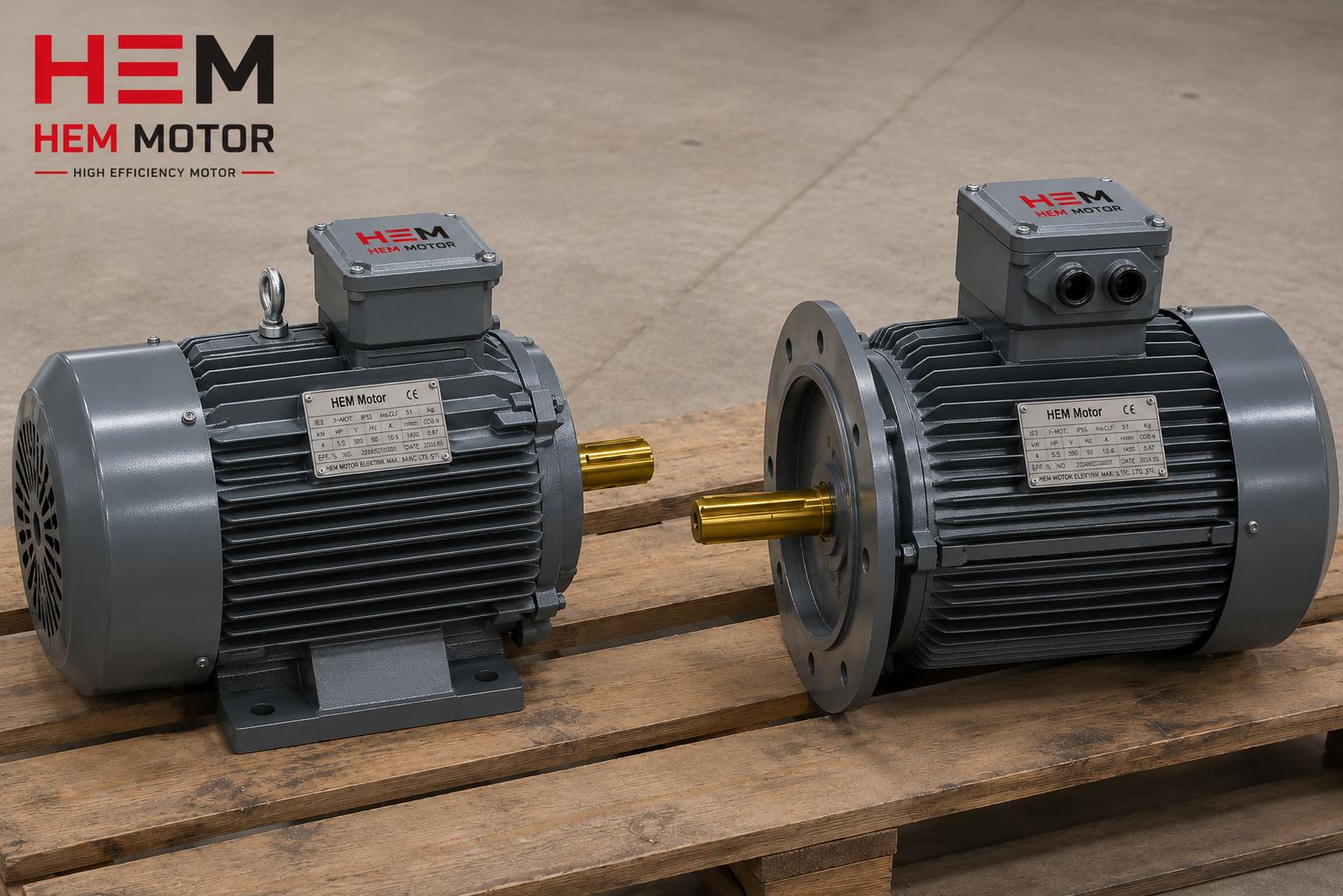
Having motors ready across a wide range from 0.25 kW to 355 kW, in 2-4-6 pole configurations, in IE3 and IE4 efficiency classes, in foot-mounted (B3) and flange-mounted (B5/B14) types, is the foundation of an exact replacement. Whatever frame size, mounting type and speed your failed motor has, pulling a motor with identical specifications from stock saves hours. To choose the right replacement, it also helps to understand pole selection in asynchronous motors in advance.
Which Need Stands Out in Which OSB?
İzmir's different organized industrial zones have different sector concentrations, and this shapes their motor needs.
- Kemalpaşa OSB: Weighted toward food, packaging, plastics and metalworking. High demand for conveyor, pump, fan and compressor motors.
- Aliağa OSB: Dense in iron-steel, petrochemical and heavy metal industry. High-power, heavy-duty motors dominate.
- Ulucak and surroundings: A mixed industrial structure creating diverse motor needs in the medium power range.
- Torbalı OSB: With ceramics, building materials and food processing facilities, it generates demand for both standard and heavy-duty motors.
This diversity requires the supplier to have not just a single motor type, but a broad stock depth answering the needs of different sectors. To avoid common mistakes when selecting the right product, it helps to review the mistakes made when buying an electric motor guide.
What Should You Provide to Speed Up the Order?
When a motor fails, the most important factor determining replacement speed is conveying the correct information from the start. Saying "my motor broke down" on the phone is not enough; the following information allows an exact replacement to be completed within hours.
Nameplate Information
All the information on the motor's nameplate is critically important. Sending it as a legible photo is the fastest route:
- Power (kW): The motor's rated power is the foundation of a correct replacement.
- Speed (rpm) / Pole count: 2-pole ~3000, 4-pole ~1500, 6-pole ~1000 rpm.
- Voltage and frequency: Supply values such as 230/400 V, 50 Hz.
- Mounting type: Foot-mounted (B3), flange-mounted (B5/B14) or combined.
- Frame size: IEC frame size such as 80, 90, 112, 132, 160.
- Efficiency class: IE2, IE3 or IE4.
- Protection class (IP): For example IP55.
Shaft and Connection Dimensions
If the nameplate is unreadable or confirmation is needed, mechanical dimensions such as shaft diameter, shaft length, key size and flange hole pattern ensure the replacement seats perfectly. These dimensions guarantee that the new motor fits the existing coupling, pulley or reducer exactly.
OSB Location
Conveying in advance which OSB, street and parcel your facility is located in clarifies the delivery distance and shipping plan. With correct address information, the time for a motor leaving İzmir stock to reach Kemalpaşa or Aliağa shrinks dramatically.
Redundancy Strategy for Critical Motors
For motors running at the vital points of your production line, the safest strategy is not to wait for the moment of failure. Keeping a spare of the critical motors that could stop the line on-site, or making sure your supplier has it ready in stock, minimizes unplanned downtime.
- Identify and list the motors that could stop the line on their own.
- Collect the nameplate data of these motors in a maintenance file.
- For the most critical ones, plan to keep a spare on-site or confirm supplier stock.
- Establish contact in advance with an İzmir supplier offering same-day delivery.
You can find a detailed account of how same-day delivery is planned in the Aegean region in the İzmir and Aegean same-day delivery guide. You can reach all our motor types and services from our homepage.
In-Zone Supply Combines Speed and Engineering
In conclusion, electric motor supply in dense organized industrial zones such as Kemalpaşa, Aliağa, Ulucak and Torbalı is not merely a purchasing transaction but a matter of production continuity. Not catalog breadth, but stock depth and delivery distance are decisive. Conveying the failed motor's nameplate data and OSB location in advance directly affects the speed of the exact replacement. Facilities that make this preparation reach a solution in minutes rather than hours when a failure occurs.
FAQ
How quickly can an electric motor be delivered to İzmir OSBs?
If the needed motor is ready in stock and the nameplate data and OSB location have been conveyed in advance, HEM Motor can often deliver same-day from İzmir stock to Kemalpaşa, Aliağa and surrounding zones. The most important factors determining delivery time are stock depth and an accurate flow of information.
How do I find the correct replacement for a failed motor?
For an exact replacement, it is enough to convey the power (kW), speed/pole count, voltage, mounting type, frame size and efficiency class from the motor's nameplate. If the nameplate is unreadable, the right motor can also be determined from shaft diameter, shaft length and flange dimensions. This way the new motor seats perfectly into the existing coupling or reducer.
Is it necessary to keep a spare for critical motors?
For critical motors that could stop the line on their own, redundancy is the safest strategy to minimize unplanned downtime cost. Keeping a physical spare on-site or confirming that these motors are ready in supplier stock saves your line from waiting for hours at the moment of failure.