English
 Türkçe

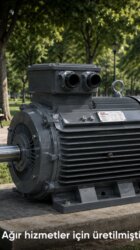
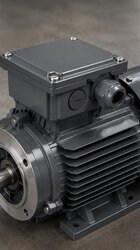

Choosing an electric motor for a food plant is far more than a mechanical procurement line item. In dairy, meat and beverage production a motor does not merely drive a pump, mixer, conveyor or fan; it must also withstand pressure washdown and chemical cleaning at the end of every shift, constant condensation and ambient humidity. So the real determinant for a food-line motor is not power or speed but how many years it will run safely in this harsh hygienic environment.
A standard industrial motor is designed for a dry, dust-free workshop. Put that same motor on a milk filling line that is washed two or three times a day with foaming detergent and hot water, and the moisture seeping through the terminal box and shaft seal soon fatigues the winding, rusts the bearings and stops the motor at an unexpected moment. In a food-safety audit, a rusted motor housing, flaking paint or a mouldy surface translates directly into a non-conformity.
In this article we examine motor selection for dairy, meat and beverage plants within the triangle of hygiene requirement, washdown intensity and ambient humidity; we explain why each production zone needs a different IP protection class and how to source the right motor from stock, from the buyer's point of view.
The Three Core Challenges a Motor Faces in a Food Plant
A motor in a food production facility meets conditions a normal factory motor never encounters. Understanding these conditions correctly is the first step to selecting the right protection class.
1. Pressure Washdown
Hygiene rules require production areas to be cleaned many times a day. This cleaning is often done with a high-pressure water jet and aggressive chemicals. Water tries to enter through the motor's weakest points: the terminal box gasket, the shaft-exit seal and the fan cover gaps. An ordinary IP55 motor is protected against dust but cannot withstand a direct pressure jet for long.
2. Constant Humidity and Condensation
In chilled stores, filling lines and steam-producing cooking sections, the air humidity is very high. When the motor stops, its body cools and condensation forms inside. Over time these water droplets weaken the winding insulation and lower the insulation resistance. The insidious part of moisture is that it settles inside the motor without any visible damage.
3. Corrosive Chemicals
Milk acids, salt and blood in meat plants, sugar and acidic content on beverage lines, together with chlorine and caustic-based cleaning chemicals, attack the motor housing, bolts and paint. Once corrosion begins, the motor is not just unsightly; the rust layer disrupts heat dissipation and creates audit problems.
Not Every Zone Needs the Same Protection Class
A common mistake in food plants is buying a single "maximum protection" motor for the whole site, or the opposite, putting a standard motor everywhere. Neither is correct. The right approach is to divide the plant into production zones and select motors according to each zone's washdown and humidity intensity.
- Wet process zone (high washdown): Filling, coagulation, cutting and direct product-contact areas. Pressure washdown happens several times a day here and the highest protection class is needed, preferably stainless steel or smooth aluminium housing motors at IP66/IP67 level.
- Medium humidity zone: Packaging, labelling and lines where the product is enclosed. Direct washdown is lower here; IP55/IP56 class is often sufficient, but precautions against condensation should be taken.
- Dry / utility zone: Compressor room, refrigeration unit, store fans. A standard industrial IP55 motor is usually enough here, and budget is not wasted on unnecessarily high protection.
Making this zonal distinction optimises both safety and budget. Putting the right motor in the right place lowers procurement cost while raising line reliability. To map your plant and identify the correct product for each point, you can request a quote from our expert supply team.
Reading the IP Protection Class Correctly
The IP (Ingress Protection) code consists of two digits. The first digit indicates protection against solid objects and dust, the second against water. For food plants the second digit is critical.
- IP55: Limited dust protection, withstands water spray from all directions. For general industrial use; insufficient for heavy-washdown food zones.
- IP56: Withstands powerful water spray (waves); a step up for medium washdown zones.
- IP65 / IP66: Full dust sealing and resistance to strong/heavy water jets. The preferred level for wet process zones.
- IP67: Resistance to temporary immersion. Chosen for the toughest washdown conditions and points with water-pooling risk.
Beyond the number there is the housing material. A cast-iron housing is durable, but rusts if its paint flakes. Stainless steel or smooth, crevice-free aluminium housing motors are far more suited to food standards because they leave no gaps for bacteria to harbour and resist chemicals.
Typical Motor Applications in Dairy, Meat and Beverage Plants
Dairy and Dairy Products
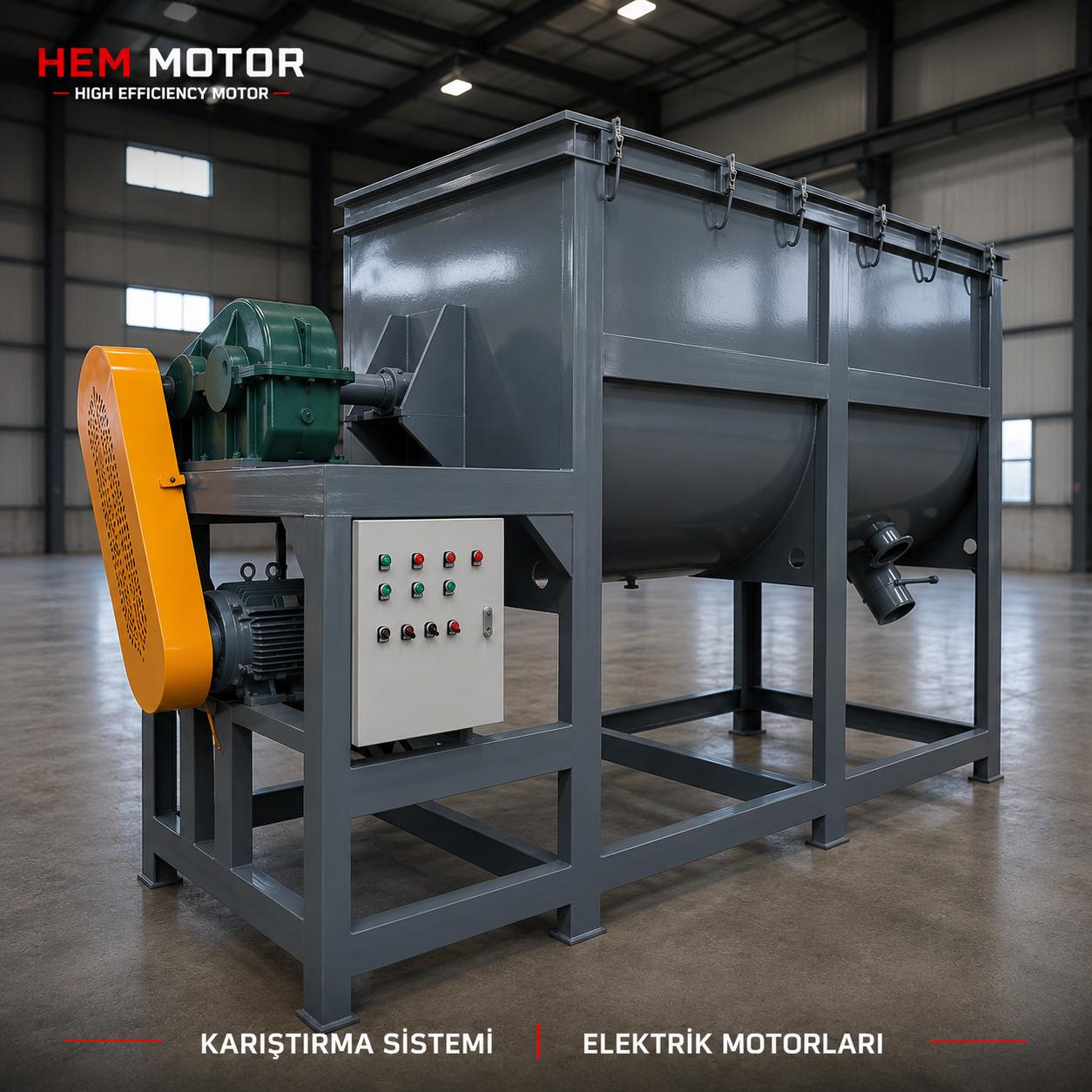
Dairy plants house motors in homogenisation pumps, ayran-yoghurt mixers, filling-line conveyors and cooling fans. Pasteurisation and CIP (clean-in-place) processes continuously generate hot water and steam. On these lines, high IP class, stainless-surface motors are preferred.
Meat and Meat Products
In meat plants, mincers, cutters, cutting lines and cold-store fans run under heavy load. The corrosive effect of salt and blood is high; also, correct bearing greasing is important for motors operating at low temperatures. Here a motor suited both to washdown and low temperature is needed.
Beverage and Soft Drinks
Beverage lines have high-speed fillers, cappers and labellers along with CO2 and syrup pumps. Leakage of sugar and acidic content creates a sticky, corrosive environment. On these continuously running, regularly washed lines, S1 continuous-duty, highly protected motors are ideal.
The Advantage of Sourcing the Right Motor from Stock
In food production a line stoppage costs much more because of perishable product. A motor failure on a filling line can put tonnes of product at risk within hours. So one of the most critical issues for food plants is how quickly a motor of the correct specification can be supplied.
- Stock assurance: Fast dispatch of high-IP-class motors in standard power and mounting type from stock minimises unplanned downtime.
- Correct equivalent selection: By reading the nameplate of the existing failed motor, an exactly compatible IEC-dimension equivalent is identified so it fits the machine seamlessly.
- Manufacturer assurance: When the motor's efficiency class, protection class and winding quality are documented, presenting documents in food audits becomes easy.
Drawing up a spare list of the critical motors in your plant saves time in an emergency. To know in advance which motors can be supplied quickly from stock and which require a production order, review our guide on stock and lead-time processes. For current electric motor prices and the right protection class you can request a quote directly.
Questions to Ask When Selecting
- In which zone will the motor run and how many times a day is that zone washed?
- Is washing done with a high-pressure jet or a low-pressure rinse?
- Is the environment constantly humid, with high condensation risk?
- Is there corrosive chemical (chlorine, caustic, acid) exposure?
- Is stainless steel or painted cast iron suitable as the housing material?
- Will the motor run continuously (S1) or in intermittent duty?
The answers to these questions clarify the right IP class, housing material and duty type. A wrongly chosen motor may look suitable on paper but rusts within a few months in the field; a correctly chosen motor runs safely for years. Review our hygienic food motor solutions to identify the right product for your plant.
Frequently Asked Questions
Is a standard IP55 motor enough in a food plant?
Only in dry, non-washdown utility zones, such as a compressor room, may IP55 be sufficient. But in wet process zones with direct pressure washdown, IP55 is inadequate; these points need at least IP66 and preferably stainless-surface motors. Otherwise the motor soon absorbs moisture and creates audit problems.
What is the basic difference between a stainless-steel housing motor and a painted cast-iron one?
A stainless-steel housing is far more resistant to hygienic cleaning and corrosive chemicals because it has no gaps to harbour bacteria and no paint to flake. A painted cast-iron housing is economical and robust; but once the paint flakes, the surface beneath rusts and its life shortens in a heavy-washdown food environment. Stainless or smooth aluminium housings are recommended for wet zones.
How can I replace a failed food-line motor fastest?
The fastest way is to read the nameplate values (power, speed, frame, mounting type, IP class) of the existing motor and source an exactly compatible equivalent from stock. Highly protected motors in standard specification are usually dispatched quickly from stock. Preparing a spare list of your critical motors in advance significantly shortens lead time in an emergency.