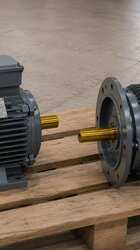
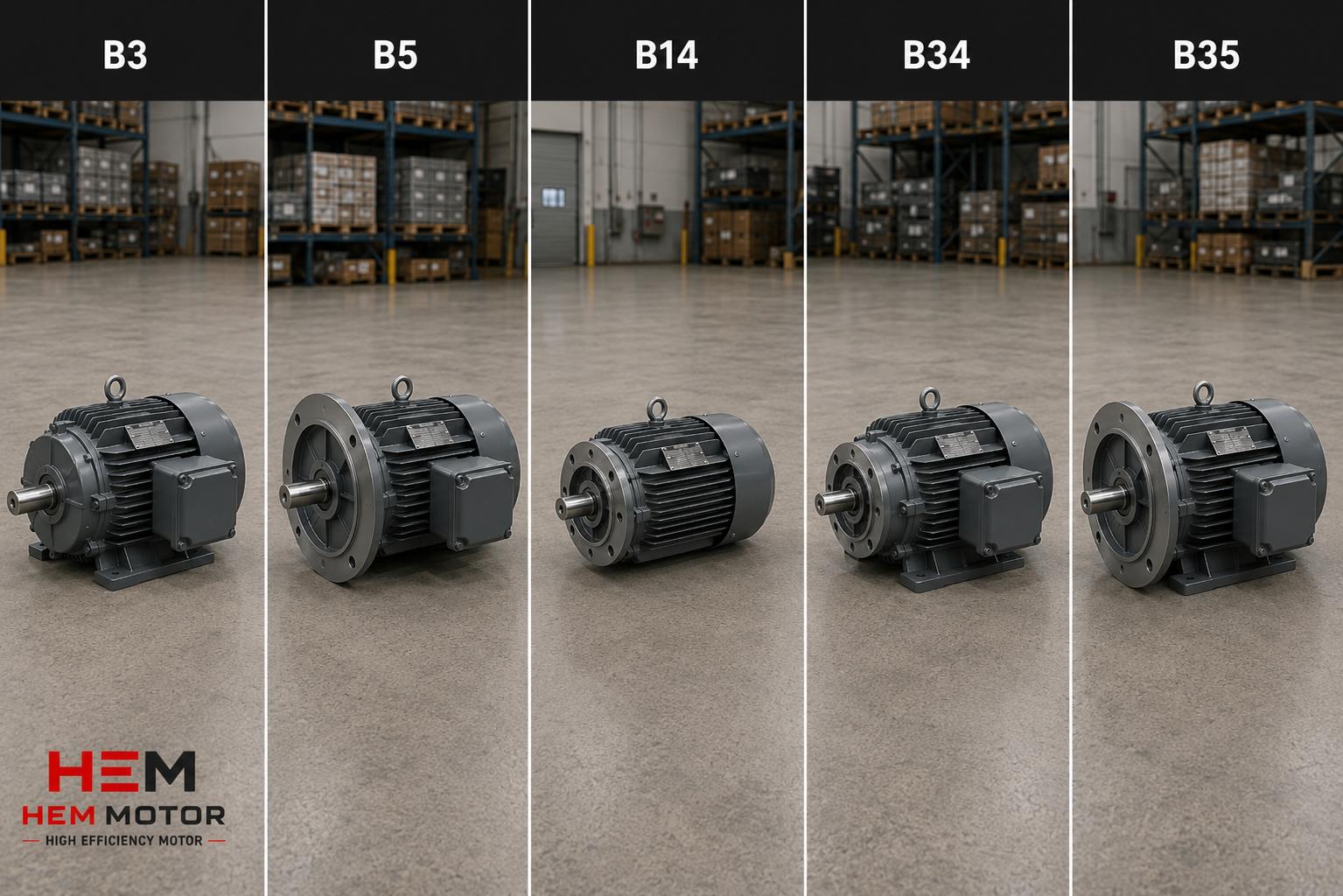
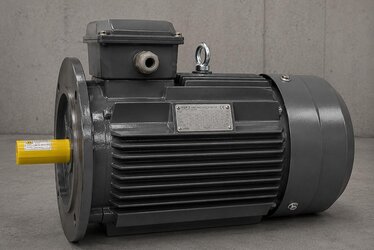
When ordering a motor for machine manufacturing, the power and speed are usually chosen correctly; the mistakes start when it comes to the mounting type. A motor that arrives with the wrong flange type stops your assembly line: either you return the motor and wait weeks for a new one, or you are forced into costly and engineering-wise questionable temporary fixes such as an intermediate flange or an adapter plate. Yet the difference between B5 and B14 can be clarified at the ordering stage with a few measurements and a few questions. As HEM Motor, we have been manufacturing electric motors in Turkey since 1979, and every day we ship motors in B3, B5, B14, B34 and B35 mounting types to manufacturers of pumps, reducers, fans, compressors and machine tools. In this guide we explain, from a manufacturer's point of view, the difference between the two flange types, which type is used on which machine, the combined types, and the pre-order measurement checklist.

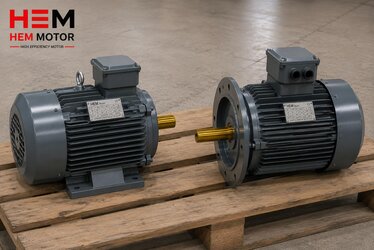
B5 ve B14 flanşlı elektrik motoru karşılaştırması

This guide speaks especially to these profiles: manufacturers who build machines in series and procure motors regularly every month, maintenance teams looking for an exact equivalent to a failed motor in their existing machine, and design offices that have not yet decided on a mounting type while designing a new machine. In all three cases the method is the same: first clarify the connection geometry the machine accepts, then verify the measurements, and only at the end compare prices. Buyers who reverse the order and look at price first learn the most expensive lessons with cheap but wrong-flanged motors. If you add the six-item measurement checklist at the end of the article to your order form, you can permanently eliminate flange-related returns and delays in your supply process.

What Is a Mounting Type, and Why Is It So Critical?

The mechanical mounting arrangements of electric motors are defined by "IM" codes in the IEC 60034-7 standard; the industry uses their shortened forms. The three most common basic types are: B3 (foot-mounted motor — bolted onto a frame), B5 (large-flange motor — connected to the machine body via the flange) and B14 (small-flange motor — also connected via the flange but with a different geometry). The mounting type determines how the motor is fixed to the machine, how the load is transferred to the body and how axial alignment is achieved. Even if the power and speed are correct, the motor physically cannot be fitted to the machine if the mounting type is wrong. That is why, in a purchase order, the mounting type is the third mandatory piece of information that must sit on the same line as power and speed.

B5 Flange: Large Flange, Clearance Holes

B5 is also known as the "large flange." Its distinguishing features are:

Flange diameter: The outer diameter of the B5 flange is significantly larger than the B14 flange of the same body size. For example, on a frame-90 motor the B5 flange outer diameter is 200 mm, while the B14 flange is 140 mm. The large diameter means the connecting bolts sit on a wider circle and the moment is spread over a wider surface.

Hole structure: In a B5 flange the holes are clearance (plain) holes, and the motor is bolted to threaded holes on the opposite side or to studs tightened with nuts. In other words, the bolt passes freely through the motor flange and is fastened on the machine side.

Typical use: Medium and high-power pumps (especially monobloc and norm pumps), large reducer inputs, crane mechanisms, compressors and heavy-duty fan applications. As load and vibration increase, the wide bearing surface of B5 turns into an advantage. HEM Motor-built B5 flange electric motors are offered from stock up to powers greater than 0.55 kW.

B14 Flange: Small Flange, Threaded Holes

B14 is called the "small flange" and is virtually the mirror image of B5:

Flange diameter: At the same body size, the B14 flange is much more compact than B5. This means the machine's motor compartment shrinks and the overall machine size becomes more compact.

Hole structure: In a B14 flange the holes are threaded; the bolt comes from the machine side and is tightened into the thread in the motor flange. In other words, the fastener is screwed into the motor's flange. This difference is frequently confused in the field: B5 has plain holes plus nuts/threads on the far side, while B14 has the thread in the flange itself.

Typical use: Small centrifugal pumps, booster pumps, small-body worm gear reducers, fans, door automation systems and compact machine designs. At small powers (generally bodies up to 7.5 kW), B14 provides both adequate strength and a space and cost advantage. You can review the product options on our B14 flange electric motors page.

Summary of the Differences Between B5 and B14

Keep these five points in mind when deciding:

1. Diameter: B5 is the large flange, B14 the small flange; at the same body the outer diameters differ and they are not interchangeable.

2. Hole/thread: B5 has clearance (plain) holes and the bolt fastens on the far side; in B14 the flange holes are threaded and the bolt is screwed into the motor.

3. Load capacity: Thanks to its wide bolt circle, B5 carries higher moment and vibration; it is the first choice for heavy duty.

4. Space requirement: B14 is ideal for compact designs; on small machines an unnecessarily large B5 flange wastes both space and cost.

5. Industry convention: Norm pumps and large reducers are mostly B5, while small pumps and small reducers mostly have a B14 input; if you are buying a motor for an existing machine, verify by measurement the type the machine accepts.

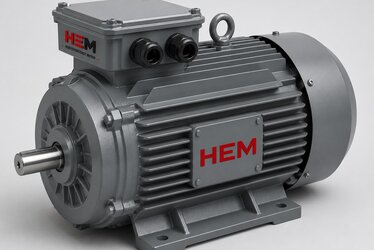
B5 flanş ve B14 flanş ölçü farkları

Which Mounting Type for Which Machine? An Application-Based Selection Table

The pairings below are practical generalisations distilled from the motors we have shipped to machine manufacturers for years; the final decision must always be verified with your machine's design dimensions:

Monobloc centrifugal pumps: Because the pump body connects directly to the motor flange, B14 is standard at small powers and B5 at medium and large powers. Booster-set manufacturers mostly start with B14 and move to B5 as power grows.

Norm (end-suction) pumps: The motor and pump are connected by a coupling on a common baseplate; here a B3 foot-mounted motor is generally used instead of a flange. On a baseplate set, alignment is done by laser through the coupling.

Worm gear reducers: The reducer input flange is decisive; small bodies (for example frames 30–63) accept a B14 input, while large bodies (75 and above) accept a B5 input.

Fans and exhausters: B3 is used in belt-and-pulley systems, and B5 or B14 in directly coupled compact fans; if the fan hub mounts directly on the shaft, the shaft dimension also becomes critical.

Machine tools and special machines: This varies with the designer's space plan; B14 is common for motors recessed into the body for compactness, and B5 for externally mounted units.

Crane and lifting equipment: Because of high moment and shock load, B5 or B35 is preferred; B14 is not recommended in this class.

This table gives you a starting point; however, even for the same machine type, different preferences are seen from manufacturer to manufacturer. That is why a pre-order measurement check should never be skipped.

B34 and B35: Combined Types That Unite Foot and Flange

Many machine manufacturers want both the alignment convenience of a flange connection and the load-carrying strength of a foot connection in the same motor. Combined mounting types meet this need:

B35 = B3 + B5

A foot-mounted and large-flange motor. While the motor is bolted to the frame by its feet, the flange takes on the alignment with the pump or reducer. It is the most preferred combination in horizontal monobloc pump sets, large fans and heavy reducer applications; the flange aligns while the feet carry the load and vibration. For options, see our B35 flange electric motors page.

B34 = B3 + B14

A foot-mounted and small-flange motor. It is used in compact machines when both a frame connection and a flange alignment are required. It is common in small pump sets and series-production machines; for products you can review our B34 flange electric motors page.

The purchasing advantage of combined types is flexibility: a motor you connect by flange today can be used by its feet tomorrow on a machine you revise. For manufacturers in series production, it is a smart choice that reduces stock variety.

Flange Selection for a Reducer Connection

The motor input flanges of worm gear reducers are produced to accept either B5 or B14 depending on the reducer body size; small-body reducers generally require a B14 input and large-body ones a B5 input. The critical point here is not only the flange type but the PAM dimension: the combination of shaft diameter and flange size that the reducer input accepts (for example 71B14, 80B5) must match the motor exactly. Because shaft-diameter and flange combinations can differ even within the same body size, write the input description from the reducer nameplate exactly into your motor order. If you are wondering what determines total cost in reducer drive systems, we also recommend reading our factors affecting worm gear reducer prices article.

Technical Specification in Flange Motors: Do Not Look at the Flange Alone

Once the mounting type is chosen correctly, the other technical features of a flange motor also directly affect your machine's life. A cast iron body provides long-term form stability in a flange connection; its vibration damping and impact resistance are noticeably better than an aluminium body. IP55 protection class prevents the ingress of dust and water from the flange surface and the shaft seal; protection against dripping water is especially critical in vertically mounted flange motors (shaft-down pump applications). F-class insulation leaves a safe temperature reserve for the thermal stresses of machine applications that switch on and off frequently. On the efficiency side, IE3 is now the legal floor, while IE4 is the economical standard in heavily used machines; if your machine runs more than 8 hours a day, the IE4 difference quickly pays for itself. Throughout the HEM Motor flange motor range this specification is standard, and both efficiency classes are manufactured in the 0.55–355 kW range. Requests specific to your machine — such as a special shaft end, a double shaft, a different voltage or encoder preparation — are also resolved within the standard order process thanks to our being a manufacturer.

The Real Cost of the Wrong Flange Choice

The bill for a motor ordered with the wrong mounting type is not limited to the price of the motor. In a typical scenario, the manufacturer pays for these items: the return and re-shipment freight of the motor, the assembly line standing idle throughout the lead time for the correct motor, the late-delivery penalty for the date committed to the customer, and the price premium paid for an urgent supply. If you work with imported motors, the arrival of the correctly flanged model can take 6–10 weeks; during that time the machine cannot be shipped. Temporary fixes such as an intermediate flange or adapter plate bring with them the risk of axial misalignment, vibration and shortened bearing life, and they undermine the warranty terms of many machine manufacturers. The concrete value of working with HEM Motor, which manufactures in Turkey, is seen exactly here: when the error is noticed, the motor in the correct mounting type is usually shipped from stock the same day; if a non-standard combination is needed, it is produced quickly on our own production line.

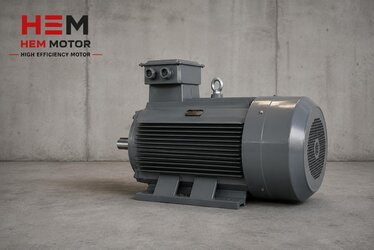
B35 ve B34 kombine bağlantılı elektrik motorları

Pre-Order Measurement Checklist

When buying a motor for an existing machine or reducer, check these measurements with a caliper and write them on your order form:

1. Flange outer diameter: The measurement from the outermost edge of the flange to the opposite edge; the first indicator of the B5/B14 distinction.

2. Bolt circle diameter (pitch circle diameter of the holes): The centre-to-centre distance of the axes of two opposite holes.

3. Centering (spigot) diameter: The diameter of the centering register where the flange seats onto the machine; this surface provides the alignment.

4. Hole type and count: Are the holes plain (B5) or threaded (B14)? What is the thread size (for example M8, M10)? How many holes are there (usually 4)?

5. Shaft diameter and shaft length: The shaft dimension and keyway where the coupling or hub will seat.

6. Body size: The shaft-axis height (for example 71, 80, 90, 100, 112) and, if available, the nameplate data of the old motor.

When you provide these six measurements, receiving the correct motor on the first try is guaranteed. You can find all mounting types and dimension tables in our electric motor mounting types category. If you also want to review the efficiency class while renewing your motor, our IE3 vs IE4 electric motor investment article will help your decision process.

Frequently Asked Questions

How do I tell whether my motor is B5 or B14?

Look at the flange holes: if the bolt passes loosely through the flange and fastens on the far side, it is B5; if the holes are threaded and the bolt is screwed into the flange, it is B14. If you are not sure, measure the flange outer diameter, the bolt circle diameter and the shaft diameter and send them to us; we will confirm the body size and mounting type within minutes.

Can I connect a B14 motor where B5 is required, using an adapter?

Although intermediate flange solutions exist on the market, we do not recommend this as a permanent solution. Every additional connection surface adds the risk of axial misalignment and vibration, shortens bearing life and can make your machine warranty questionable. Because HEM Motor is a manufacturer, it can ship a motor in the correct mounting type from stock the same day at most powers; the correctly flanged motor is worth the wait.

Which mounting type should I keep in stock for series production?

If your product range requires both flange and foot connections, B35 or B34 combined motors reduce your stock variety: with a single motor you meet two connection needs. If you share your annual usage quantities with us, we can lower your stock cost together through consignment or call-off shipment models tailored to your production schedule.

Get a Quote

If you want to receive the motor in the correct mounting type on the first try — from stock and with manufacturer assurance — HEM Motor is by your side. We have manufactured in Turkey since 1979 and back the 0.55–355 kW range in B3, B5, B14, B34 and B35 mounting types with strong stock. Send us your flange measurements, your reducer input description or the nameplate of your old motor; we will give you a clear quote the same day. You can reach us right away by phone at +90 (532) 345 49 86 or send your quote request through our contact us page.

HEM Motor flanşlı elektrik motoru üretimi ve stok