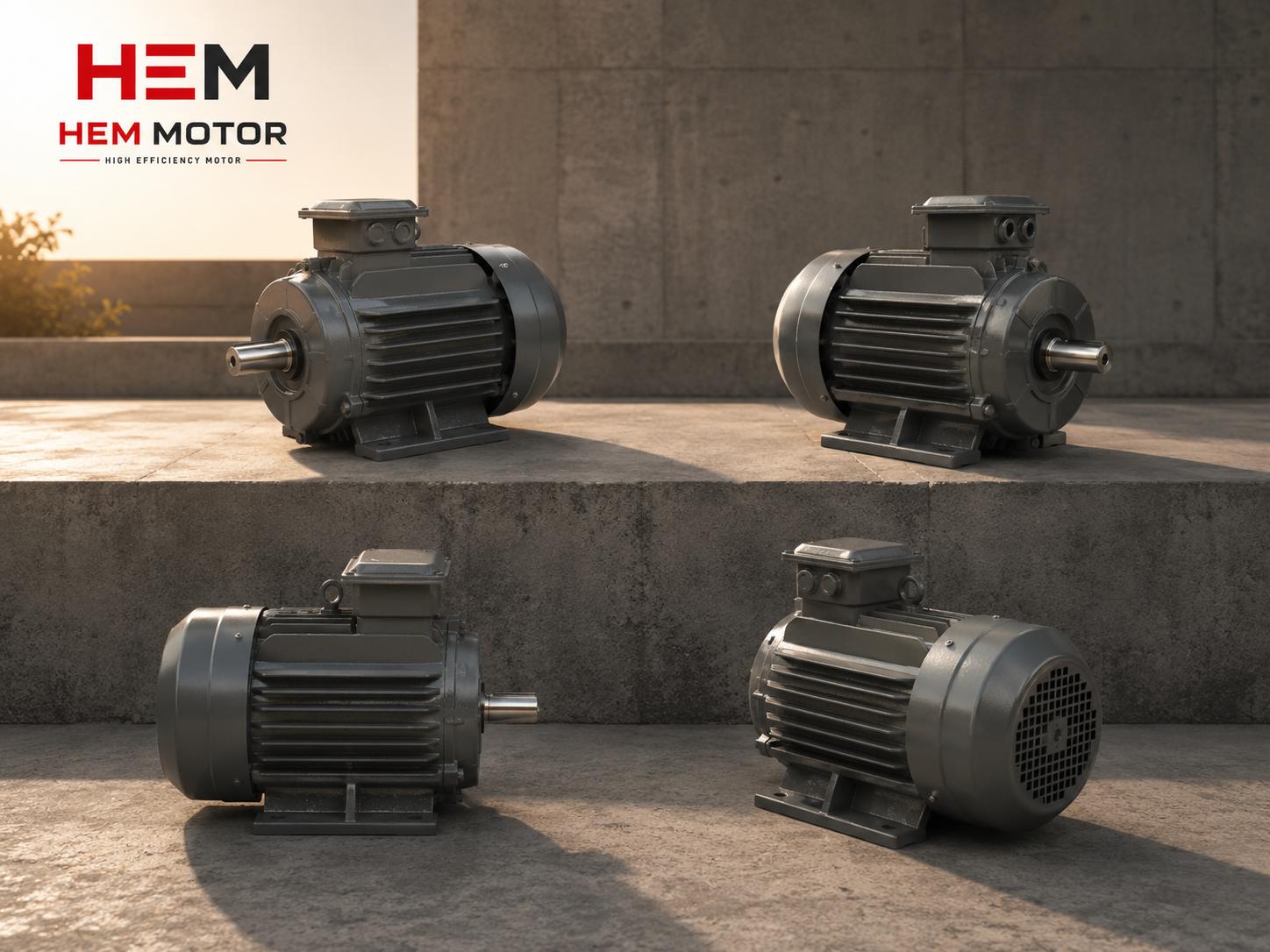
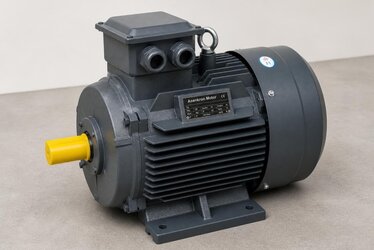
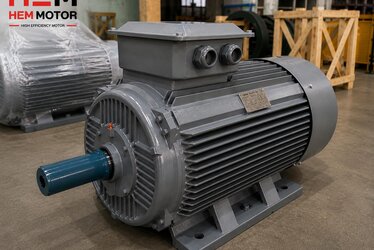
In the electric motor purchasing process, the step that wastes the most time is usually not the price negotiation but the lack of information at the quotation stage. A request that arrives as "how much is a 3 kW motor?" triggers a chain of at least three or four follow-up questions on the seller's side: How many revolutions? Foot-mounted or flanged? Which efficiency class? How many units? Each question-and-answer round means half a day, sometimes a full day, for a business under time pressure. Yet a single, properly prepared quote request can be answered within minutes with a firm price and a firm lead time. As HEM Motor, manufacturing electric motors since 1979 and holding a wide stock across Turkiye, we receive dozens of quote requests every day; in this article, we share the 8 critical pieces of information that procurement departments and technical teams should provide when requesting a quote, together with examples from the field and a copy-and-paste request template. The goal is simple: the right price, the right product, and where possible same-day shipment from stock, in a single exchange.
What Does a Quote Requested with Incomplete Information Cost a Business?
Two kinds of cost arise in quote processes that proceed with incomplete information. The first is the cost of time: for a stopped line, a waiting project, or a machine build with a looming delivery date, every exchange round means delay. The second, and more dangerous, is the risk of the wrong product. A motor purchased without the speed being specified runs at the wrong speed in the field; a foot-mounted motor sent without the mounting type being asked cannot be mounted on a chassis expecting a flange; a price given without the efficiency class being discussed gets caught on the IE3 requirement in the tender specification. In these situations, return, exchange, and reshipment processes come into play; transport charges and the wasted labor of the installation team are added to the bill. When you provide the following 8 pieces of information in one go, the seller matches the request directly with the stock list, presents alternative suggestions in the first reply, and finalizes the shipment plan the same day.

1. Motor Power (kW or HP)
The backbone of the quote is the power value. Always write the power together with its unit: 5.5 kW is not the same motor as 5.5 HP (5.5 HP corresponds to roughly 4 kW), and this confusion is among the most common errors in the field. If you are replacing an old motor, transfer the kW value on the nameplate exactly; if you are buying for a new application, state the power recommended by the machine manufacturer or the power requirement of the equipment to be driven. Because the HEM Motor product range extends from 0.55 kW to 355 kW, stock matching takes seconds once the power value is clear. In applications where the power is borderline (for example, heavy-starting loads), note this as well; the sales engineer will price the next frame size up or a different speed option as an alternative in the same quote.
2. Speed or Number of Poles
The 3000 rpm (2-pole), 1500 rpm (4-pole), 1000 rpm (6-pole), and 750 rpm (8-pole) versions of a motor at the same power are produced in different frames and are priced differently. A request stating "a 7.5 kW motor" therefore cannot be priced on its own. Always write the rpm value or the number of poles from the nameplate. If you see a value such as 1450 rpm on the nameplate, this is a 4-pole motor; 2890 rpm means 2-pole, and 960 rpm means 6-pole. If you are buying a motor for a geared system, also stating the compatibility between the reducer input speed and the motor speed prevents operating with the wrong gear ratio from the start. In pump and fan applications, since speed directly affects the flow rate, an error here mis-sizes not only the motor but the entire system.
3. Voltage, Frequency, and Phase Information
Although the standard value for the Turkiye grid is 380-400 V / 50 Hz three-phase, single-phase 220 V needs, 60 Hz requests for machines headed for export, or special-voltage in-plant grids arrive with no negligible frequency. State the grid to which the motor will be connected (single-phase or three-phase, how many volts, how many hertz) in a single line. If star-delta starting or use with a drive (frequency inverter) is planned, add this as well; if the winding connection type and drive compatibility are clarified at the quotation stage, no surprise is experienced during commissioning. For manufacturers building machines for export, winding options suitable for different voltage and frequency combinations can be planned thanks to our manufacturer identity; for such special requests, ask for the lead time to be stated separately on the quote.
4. Mounting Type: B3 Foot-Mounted, B5 / B14 Flanged, or Combined
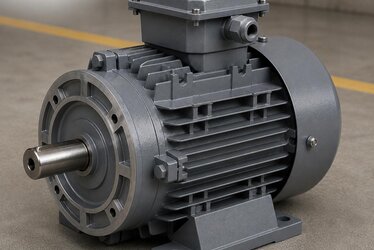
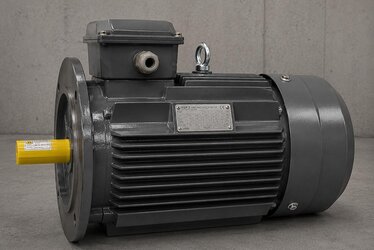
How the motor will be mounted to the machine determines deliverability as much as price. Foot-mounted (B3), large-flange (B5), small-flange (B14), and foot-and-flange combined (B35, B34) types are different stock items at the same power and speed. Rather than describing the mounting type of the existing motor over the phone, adding a photo of the nameplate and a photo of the surface where the motor is mounted to the request is the soundest way. For motors that will work vertically (positions such as V1, V5), state this separately; in some applications the oil seal and bearing arrangement are planned according to the mounting position. For requests where the mounting type arrives clearly, the correct variant in the warehouse is set aside and shipment is organized the same day.
5. Efficiency Class: IE3 or IE4?
Stating the efficiency class in the quote is important in two respects. The first is regulatory and specification compliance: many public tenders and corporate procurement specifications require a minimum of IE3, and some projects mandate IE4. The second is the soundness of the price comparison: placing the price of an IE3 motor side by side with an IE4 motor is comparing apples to oranges. Write the term "IE3" or "IE4" clearly in your request; if you are undecided, ask for a separate price for each class. If you would like to evaluate which class is more suitable for your business according to your operating hours, our sales team provides guidance at the quotation stage. Because both IE3 and IE4 series are kept in stock at HEM Motor across the common power range, the class choice generally does not affect the lead time.
6. Protection Class and Operating Environment
Our standard industrial motors are in IP55 protection class and F insulation class; this structure meets the large majority of dusty industrial environments open to water splash. However, describing the environment in which the motor will work in a single sentence is still critical: will it work in the open field or in an enclosed facility, is there heavy dust, humidity, chemical vapor, or high temperature in the environment, is it a corrosive zone such as the seaside? This information shapes the content of the quote, from the frame material recommendation (aluminum or cast iron) to additional protection needs. For demanding environments such as cold storage, foundry, or mine site, if the correct configuration is determined from the first quote, the field life and warranty process of the motor are also secured.
7. Quantity and Lead-Time Expectation
The pricing of a single motor and of a batch purchase of 40 motors is naturally different. Write the quantity information and your delivery expectation ("needed this week," "project delivery in 6 weeks") clearly in your request. For urgent needs, the sales team first checks the stock status and highlights the same-day-from-stock option; for planned projects, a batch-delivery schedule can be set up. For machine manufacturers and dealers making regular purchases, beyond quantity-based pricing, periodic agreement models are also available; on this subject you can find concrete headings aimed at procurement departments in our article on methods to reduce cost in wholesale electric motor purchasing. When quantity and lead time are clear from the start, the quote contains not just a price but a binding delivery commitment.
8. Application Information: What Will the Motor Drive?
This is the piece of information most buyers skip but is the most valuable on the seller's side. A one-word application note such as "crusher belt," "centrifugal pump," "crane hoisting group," or "fan" allows the sales engineer to understand the load characteristic. Factors such as starting torque in heavy-starting loads, thermal endurance in applications with frequent start-stop, and winding compatibility in drive-equipped systems are evaluated according to the application, and if necessary an alternative configuration is suggested in the quote. This way, the motor you buy becomes the right product not only on paper but also in the field. For common applications such as general manufacturing, pump, and fan, the series on our general-purpose industrial motors page is held in stock across the entire power range.

A Quote Request Template You Can Copy and Use
It is enough to paste the following template into your email or WhatsApp message and fill it in:
- Power: … kW (or HP)
- Speed / poles: … rpm or … poles
- Voltage / frequency / phase: e.g. 380-400 V, 50 Hz, three-phase (will it be used with a drive?)
- Mounting type: B3 / B5 / B14 / B35 (nameplate and mounting photo if possible)
- Efficiency class: IE3 / IE4 (state if there is a specification)
- Operating environment: enclosed / open area, dust-humidity-chemical condition
- Quantity and lead time: … units, desired delivery date
- Application: the equipment the motor will drive
If you are replacing an existing motor, a single nameplate photo covers most of this list; take care that the photo is legible and that the frame type code (e.g. 132M, 160L) is visible. For motors with worn-off nameplates, matching can also be done via the shaft diameter, shaft height, and bolt hole dimensions; in that case, it is enough to take a few basic measurements with a tape measure and share them. When comparing quotes, we recommend examining the warranty terms alongside the price with the same diligence; we covered in detail what to watch out for in our article on the scope of electric motor warranty and the questions to ask before purchasing.
The Right Quote Is Completed with the Right Supplier
Providing the eight pieces of information completely is the buyer's half of the process; the other half is a supplier who can quickly convert this information into price and delivery. A non-manufacturing intermediary asks its own supplier for every item not in its stock and adds another link to the waiting chain you experience. As a stock-delivery electric motor supplier manufacturing since 1979, HEM Motor eliminates this chain: your request is matched directly with production and warehouse data, and the price and lead time are committed from a single source. For common power and speed combinations, cargo or freight-depot delivery on the order day is possible; for special configurations, a definite date is given by taking it into the production plan. You can examine our current electric motor product range for all series and send your quote request with the information in the template.
After Receiving the Quote: Steps to Convert It into an Order
When the quote requested with the right information reaches you, most of the work is done; however, a few small checks at the order-conversion stage reduce possible hiccups to zero. First, compare the technical line on the quote with your own request: are the power, speed, mounting type, efficiency class, and quantity information exactly the same? Especially in quotes with alternatives (for example, if both IE3 and IE4 were priced), clearly state which line you are approving in the order document. The second step is the delivery detail: inform whether the shipment will be by cargo or freight depot, the delivery address, and any unloading facilities you have (forklift, crane); since 160-frame and larger motors are shipped on pallets, unloading equipment is needed at the delivery point. The third step is the invoicing information: providing details such as the tax office, e-invoice obligation, and order number from the start prevents the shipment from being held at accounting approval. Finally, make a habit of inspecting the motor you receive by eye while it is still on the vehicle; if there is packaging damage, have a report drawn up. These four steps ensure that the speed you gained at the quotation stage is preserved at the delivery stage and turn your purchasing file into a complete, audit-ready record. We also recommend the following to businesses making regular purchases: record the technical line of every quote you approve in a supply log. Referencing the same line on your next purchase reduces the quote process to a few minutes and prevents person-dependent loss of information within the business.
Frequently Asked Questions
Can I get a quote if the motor nameplate is worn off or unreadable?
Yes. If the nameplate is unreadable, it is enough to share the shaft diameter, the shaft height (the distance from the ground on which the motor foot rests to the center of the shaft axis), the frame length, and the mounting hole dimensions. Since these measurements point to standard frame types, our sales team will most likely match the motor exactly. The type of machine the motor is connected to and its estimated power also speed up the matching. In doubtful cases, a preliminary check is made over photos and, if necessary, a dimension confirmation is taken before shipment.
In which situations is same-day shipment possible?
If the combination of power, speed, mounting type, and efficiency class you request is available in warehouse stock, orders approved within business hours are delivered to cargo or freight depot the same day. Common combinations in the 0.55–355 kW range are kept continuously in stock. For non-stock special configurations (special voltage, special shaft, combined mounting, etc.), the production lead time is clearly written in the quote; this way, you make your plan based on a commitment, not a guess.
What should I pay attention to when getting quotes from more than one supplier?
Make sure the quotes rest on the same technical basis: the efficiency class (IE3/IE4), protection class (IP55), insulation class (F), and mounting type must be the same in all quotes. Alongside the price, add stock status, delivery commitment, warranty period, and after-sales service network to the table. If the lowest-priced quote is a product whose delivery takes weeks or whose warranty terms are unclear, the cost of your stopped line exceeds the difference many times over.
Get a Quote
Prepare the 8 pieces of information above for your electric motor need and leave the rest to the HEM Motor sales team. Send your nameplate photo or technical list; let the stock status, firm price, and delivery date be returned to you the same day. You can reach us at +90 (532) 345 49 86 or through our contact us page. Shipment to every point in Turkiye, same-day dispatch for stocked products.