English
 Français
 Türkçe
 Español
 Русский

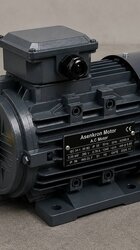


Three quotes for 40 motors land on the buyer's desk. Supplier A has the lowest unit price, supplier B is slightly higher but includes freight, and supplier C looks the most expensive yet offers 90-day payment terms. The spreadsheet highlights the lowest unit price in green, but the three offers are not pricing the same thing. When buying electric motors in bulk, most of the money is won or lost outside the unit price column.
This guide looks at where a company buying many motors at once can actually lower its costs: comparing quotes on equal terms, trimming the motor list, putting a number on efficiency, and catching the extra costs that only appear after the order.
Normalise the quotes before you compare them
Before two quotes can be compared, both must describe the same motor and the same delivery terms. The classic mistake in bulk purchasing is treating an IE3 foot-mounted motor and an IE4 flange-mounted motor as the same line item. Add at least these columns to your comparison sheet:
- Technical equivalence: efficiency class (IE3, IE4, IE5), number of poles, voltage (230/400 V or 400/690 V), mounting arrangement, protection class and frame material.
- Delivery point: ex works or delivered to site, and who covers packing and insurance.
- Payment terms: cash, deferred or staged. A 90-day term can outweigh a small unit price difference depending on your cost of capital.
- Validity and currency: how long the price holds and in which currency.
- Split shipments: whether all 40 motors arrive together or in several lots depending on stock.
Once these columns are filled in, the ranking often changes. For the details a supplier needs to quote accurately, see our article on what to include in a motor quote request.
A shorter motor list beats a harder negotiation
When a plant takes stock of its installed motors, the result is often something like 60 motors spread across 25 different codes. The same rating appears once as B3 and once as B35, once at 230/400 V and once at 400/690 V, once IP55 and once IP56. Some of these differences are genuinely required by the machine; many are simply the legacy of buying from different suppliers over the years.
Cutting the number of variants pays off in three ways. Ordering twelve units of one code gets a better price and a better chance of finding stock than ordering two units each of six codes. The spare motor count drops, since ten standard codes need ten spares rather than twenty-five. And the maintenance team carries fewer types of couplings, bearings and seals.
One caution: if the frame size or shaft diameter changes, the base, coupling or flange on the machine has to change too. That is why standardisation is usually applied to new purchases and planned replacements, not forced on machines that are running fine. On 400 V lines using star-delta starting, choosing 400/690 V motors as the common standard also avoids panel changes later. Our mounting types overview is a useful reference when grouping motors.
Put a number on the efficiency difference
In a bulk order, the price gap between IE3 and IE4 multiplied by the quantity looks large, and the upgrade is often postponed. Before deciding, convert the difference into kilowatt-hours.
Take a 4-pole 22 kW motor. Its rated efficiency is about 93.0% at IE3 and 94.5% at IE4. If the motor runs at around 80% load, delivering roughly 17.6 kW at the shaft, it draws about 18.9 kW from the supply as IE3 and about 18.6 kW as IE4. That 0.3 kW gap, over 6,000 operating hours a year, adds up to around 1,800 kWh per motor. Across 15 such motors it is roughly 27,000 kWh a year. Multiply by your own electricity tariff and the payback period becomes obvious.
The answer is not the same for every motor. A fire pump or standby fan that runs a few hundred hours a year may never pay back a higher efficiency class, while three-shift pump, fan and compressor drives usually do so quickly. Splitting the list by operating hours is the simplest way to spend the budget where it returns. Series details are on the IE4 high-efficiency motors page.
An oversized motor is paid for twice
Bulk lists often step up one size "just to be safe". Driving an 11 kW load with a 15 kW motor means a higher purchase price and then years of operation at a low load factor. An induction motor running well below its rated load loses power factor and efficiency, so reactive power compensation needs grow. Starters and cables are also sized for the larger motor, and the extra cost cascades.
The opposite mistake is just as costly. Sizing a high-starting-torque conveyor or crusher drive right at the limit leads to nuisance trips and early insulation ageing. The reliable approach is to log the current drawn by existing motors for a few days and understand the load profile before finalising the list.