English
 Français
 Türkçe
 Español
 Русский

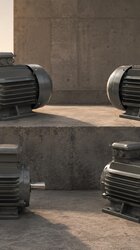

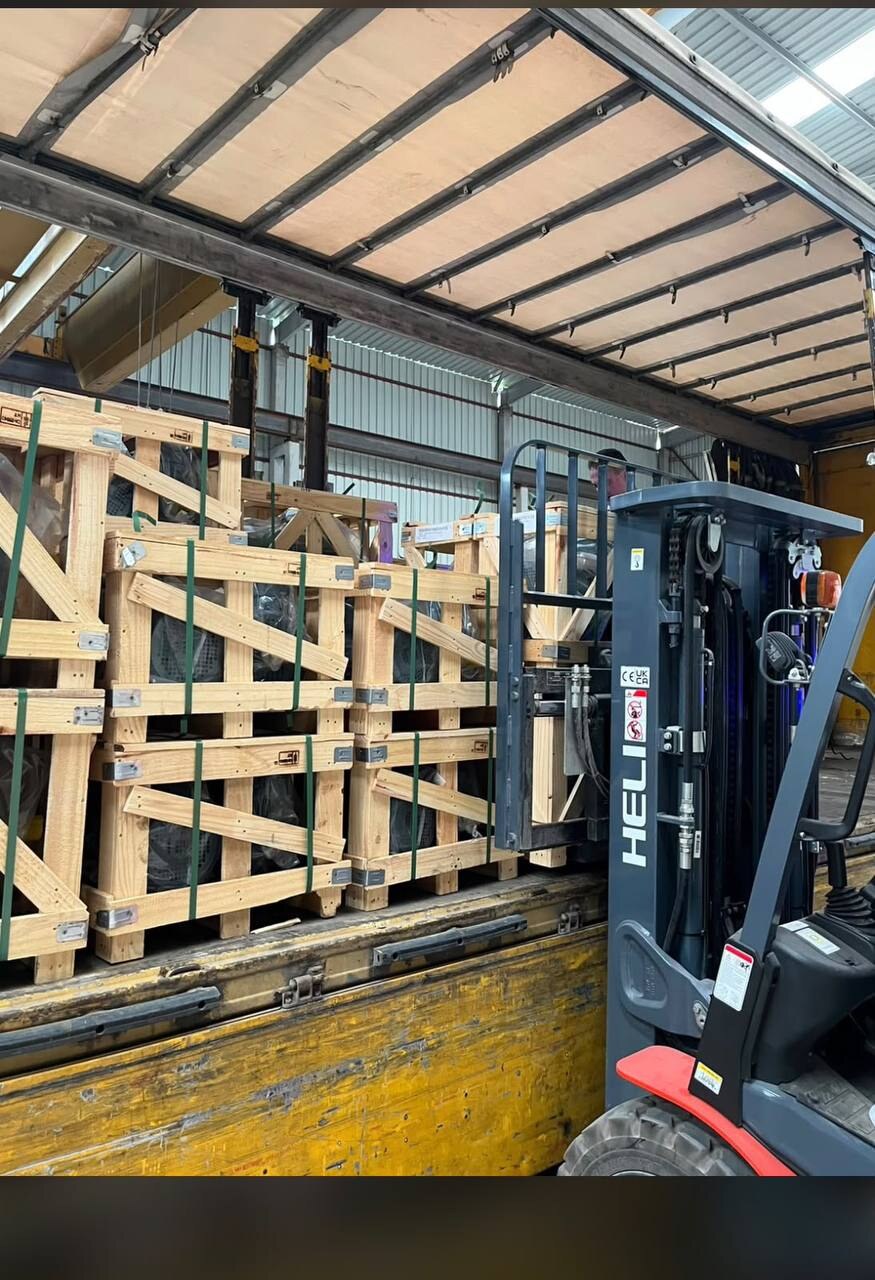

Ordering a 315 kW motor differs from buying a motor of smaller power in two respects. First, the motor's electrical and mechanical details depend on other decisions, from the plant's transformer to its base; a wrong assumption turns into a problem that is hard to fix once it is noticed after the motor arrives. Second, getting the motor to site and into position calls for separate planning. In this article, based on HEM Motor's 315 kW models, we have gathered the technical and logistical details to be settled before ordering into a checklist.
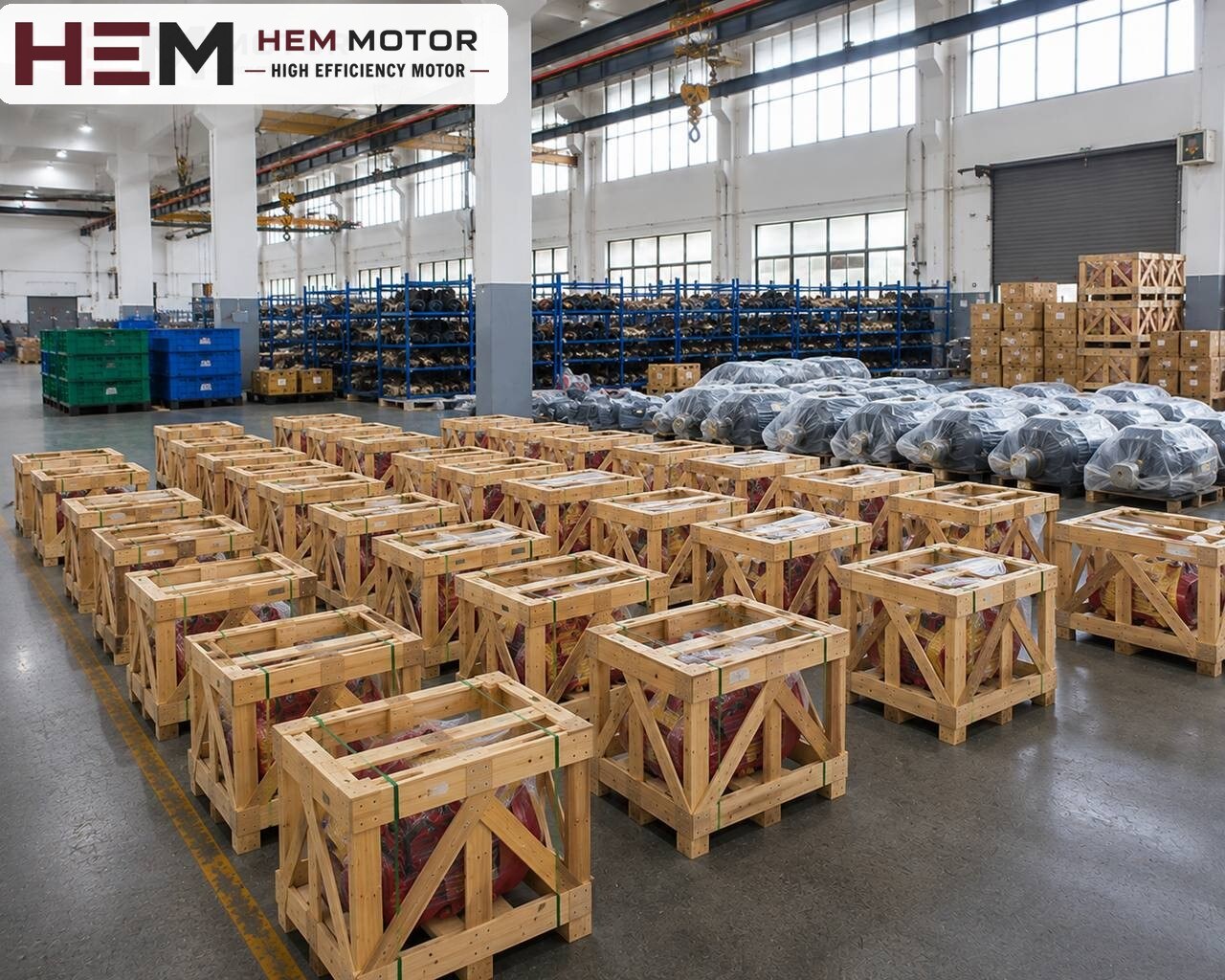
The 315 kW models and a notable detail in their codes
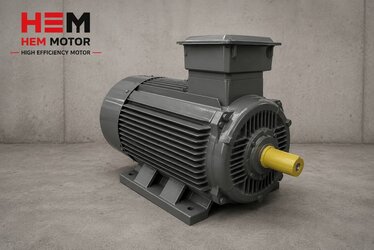
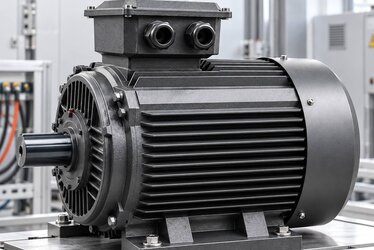
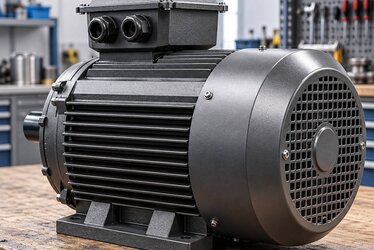
HEM Motor's three-phase product range is 0.25–355 kW; 315 kW is one of the top steps of this range. At 315 kW the options have cast iron frames and there are three of them: 1,000, 1,500 and 3,000 rpm. Protection IP55, insulation class F, supply 400/690 V (Δ/Y), 50 Hz; service factor 1.15.
| Code | Speed: synchronous / on nameplate | Frame | Current (at 400 V) | Torque (rated) |
|---|---|---|---|---|
| 355L-6 | 1,000 rpm / confirm from catalogue | 355L | confirm from catalogue | confirm from catalogue |
| 355L-4 | 1,500 / 1,490 rpm | 355L | 526 A | 2,019 Nm |
| 355L-2 | 3,000 / 2,982 rpm | 355L | 522 A | 1,009 Nm |
All three models are in the 355L frame. There is an important detail here: the code 355L-4 is used not only at 315 kW but also for the 355 kW, 1,500 rpm model. Similarly, the code 355L-2 appears on both the 315 kW and the 355 kW 3,000 rpm models, and 355L-6 on both the 250 kW and the 315 kW 1,000 rpm models. For this reason, writing only the model code in an order is not enough; power, speed and code should be written together, and the quotation should be checked to show all three correctly. Since the rated speed, current and torque of the 1,000 rpm model are not in the site's records, confirm them from the 2026 catalogue or during quotation.
What to settle on the electrical side
Supply voltage and connection
A motor rated 400/690 V (Δ/Y) is connected in delta on a 400 V network and in star on a 690 V network. At 315 kW on a 400 V supply, the rated current is above 500 A; this current directly determines the cable cross-section, the number of parallel cables and the switchgear. Some plants prefer 690 V distribution at this power. State clearly in the order which voltage will supply the motor and the connection; although the same motor suits both networks, cabling and protection decisions change accordingly.
Starting and transformer
At this size, direct-on-line starting strains the limits allowed by the transformer and the network in most plants. Star-delta, soft starters and frequency inverters are common options; which is suitable is assessed together with the starting load of the driven machine and the transformer rating. If a frequency inverter is preferred: our three-phase series are suitable for speed control with a drive. If full torque is to be drawn at low speed for long periods, an additional (external) fan may be needed; when the cable between the drive and the motor is long, a dv/dt or sine filter is considered. For details, see the question on use with an inverter.
Protection and order options
- Winding temperature sensors: PTC or PT100 winding sensors are options chosen at the order stage. State whether your panel has a relay or input to read them.
- Anti-condensation heater: If the motor will stand idle for long periods or wait in a humid environment, an anti-condensation heater can also be requested with the order.
- Terminal box and cable entry: The number of cables, their cross-section and the direction they come from should be stated; whether large parallel cables will enter the box comfortably is discussed in advance.
What to settle on the mechanical side
- Mounting arrangement: Arrangements such as foot-mounted (B3) or foot-and-flange are offered according to the frame; the flange size is confirmed with the order. Which arrangements are possible is summarised in the question on mounting arrangements.
- Base and alignment: Shaft height, foot hole spacing and shaft end dimensions are in the 2D technical drawings. If the motor replaces an existing one, the old motor's frame size and the values measured on site should be compared.
- Transmission: Coupling, belt or gearbox? The rated torque is 2,019 Nm for the 1,500 rpm model and 1,009 Nm for the 3,000 rpm model; transmission elements are selected for this torque. In a belt drive, the radial load should be stated separately.
- Cooling air: There must be enough clearance on the motor's fan side, and hot air must not be drawn back in. In an enclosed motor room, the ventilation capacity is also checked.