English
 Français
 Türkçe
 Español
 Русский


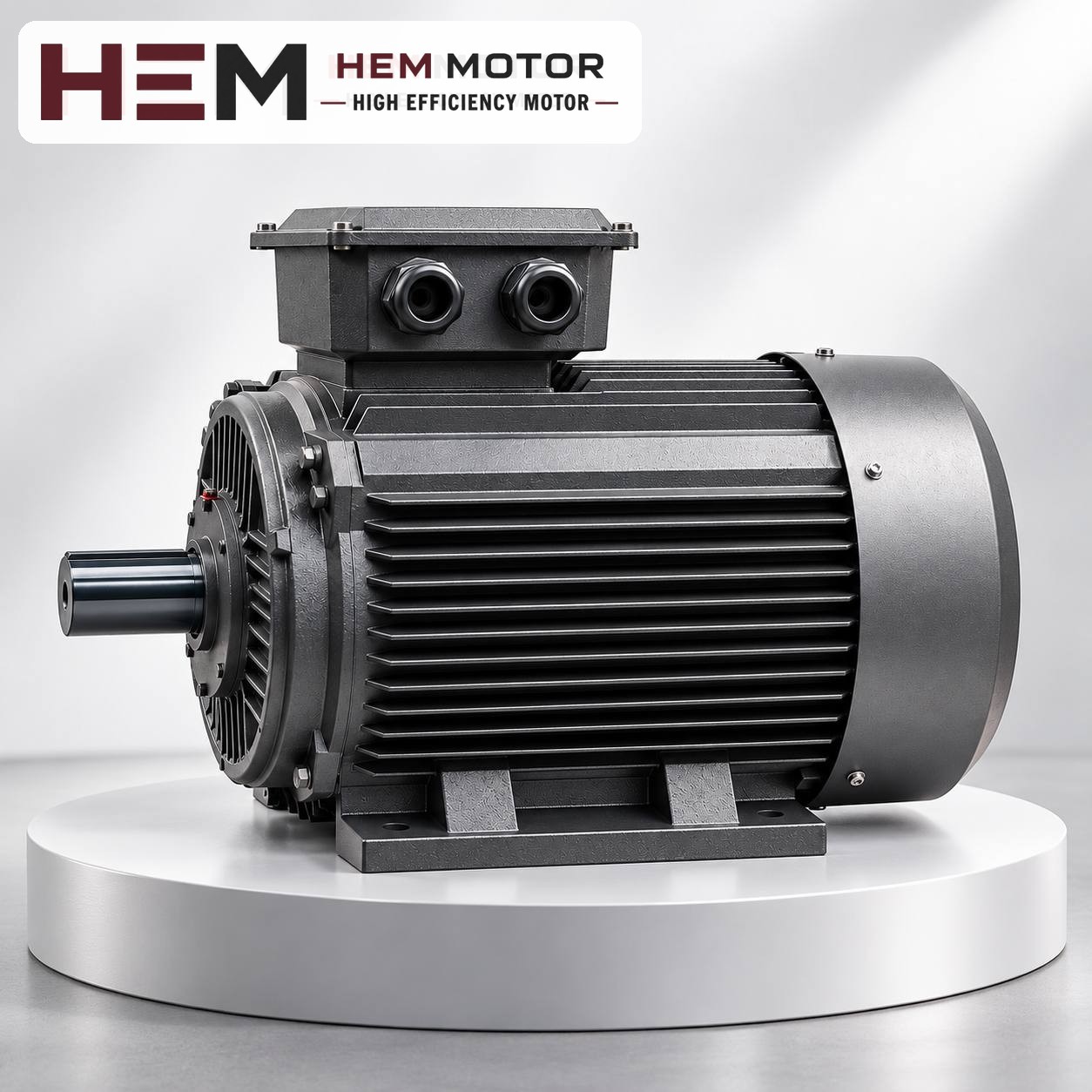

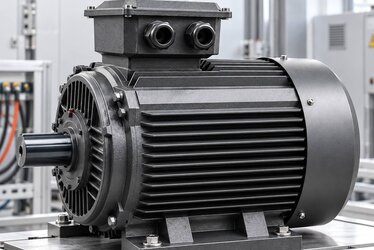
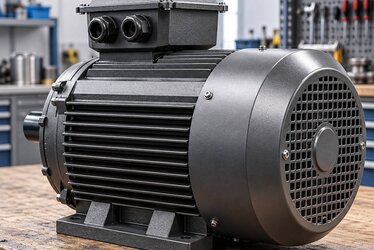
When a 15 kW (20 HP) motor fails, most plants ask for a new motor of the same power and assume the problem ends there. Yet on replacement day, what costs the most time on site is not the power but the mechanical fit: if the new motor's shaft does not go into the coupling or pulley hub, if the foot holes do not line up with the holes in the base frame, or if the shaft axis sits higher than the machine's axis, the motor cannot be installed no matter how well it was chosen. This article explains what to check on the shaft and feet, and in what order, before ordering a 15 kW replacement.
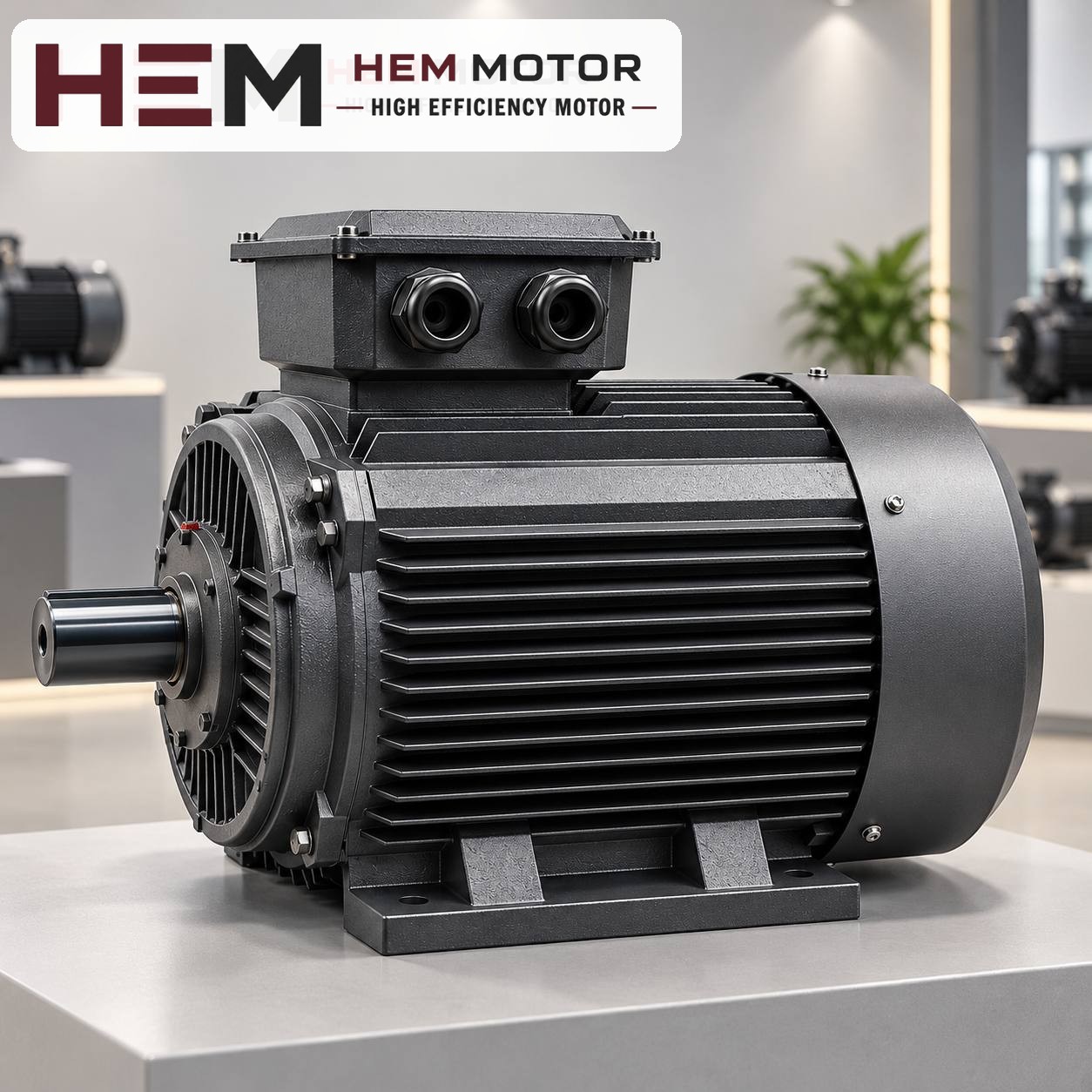
Three models and three different frames at 15 kW
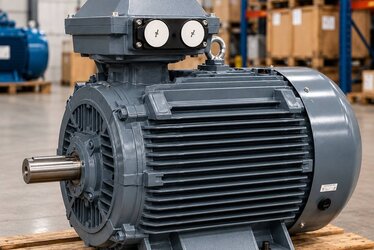
At HEM Motor, 15 kW is offered with a cast iron frame only; the aluminium series ends at 11 kW. Each of the three speed options sits in a different IEC frame. This means that even at the same power, changing the speed changes the mechanical dimensions completely.
| Model code | Synchronous / rated speed | IEC frame | Rated current (400 V) | Rated torque | Product page |
|---|---|---|---|---|---|
| 180L-6 | 1,000 / 978 rpm | 180L | 29.3 A | 146.5 Nm | 180L-6 cast iron |
| 160L-4 | 1,500 / 1,465 rpm | 160L | 27.3 A | 97.8 Nm | 160L-4 cast iron |
| 160M2-2 | 3,000 / 2,945 rpm | 160M | 26.5 A | 48.6 Nm | 160M2-2 cast iron |
All three models have IP55 protection, class F insulation and a 400/690 V (Δ/Y), 50 Hz supply. The frame sizes in the table are the starting point for the mechanical check during replacement.
Why compare the frame size first?
The IEC standard defines the shaft height, foot mounting distances and shaft end dimensions for a given frame size. So if the old motor's nameplate says 160L and it is a standard IEC motor, the shaft height and foot holes of a new 160L motor will most likely land in the same place. Comparing the code is the quickest check to do before measuring on site with a tape measure.
There are two points in this table that are easy to miss:
- The M and L difference: 160M and 160L have the same shaft height, but the front-to-rear distance between the foot holes is different. If you want to replace a 3,000 rpm 15 kW motor (160M) with a 1,500 rpm 15 kW motor (160L), the rear foot bolts will not line up with the holes in the base even though the shaft stays at the same height.
- Same power, different height: the 180L frame of the 1,000 rpm model is taller than the 160 frames. Moving from a 1,500 rpm old motor to a 1,000 rpm motor changes the coupling alignment and the base height from scratch.
Where the nameplate is unreadable, the motor was built to an older standard, or the machine builder used a special frame, comparing codes is not enough; you then have to work from on-site measurements.
Shaft checklist
The shaft is the part that transmits power to the machine, and even the smallest mismatch stops the installation. Before or after removing the old motor, check the following:
- Shaft diameter: it must match the bore of the coupling, pulley or gear hub. Measure with a caliper and compare it with the hub bore.
- Shaft length: the length of shaft protruding from the front end shield determines whether the hub will sit fully. A short shaft only half-holds the hub; a long shaft may touch the mating part.
- Keyway and key: the key width and height must fit the keyway in the hub. Simply moving the key from the old motor to the new one is not appropriate; check its size.
- Shaft end hole: some pulleys and couplings are secured with a bolt in the threaded hole at the shaft end. If this arrangement exists, confirm that the hole is present and check its thread.
- Effect of the number of poles: in some frame sizes, the shaft end of the 2-pole model may differ from the 4- or 6-pole model in the same frame. Read the row for your own number of poles in the technical drawing.
If the shaft end is outside standard IEC dimensions (stepped shaft, special length, double-ended shaft, tapered end and so on), it cannot be matched by a standard motor. Such a shaft requires a special motor; ask us with a nameplate photo and the shaft dimensions.