Finding an Equivalent Model from an Electric Motor Nameplate Photo: Which Details Are Read?

Finding an Equivalent Model from an Electric Motor Nameplate Photo: Which Details Are Read?

The quickest way to find a replacement for a failed motor is to read the old motor's nameplate. The nameplate gathers power, speed, supply and frame on a single plate. However, not every line on the nameplate carries the same weight: some values directly determine the choice of equivalent, others are only for verification. In this article we explain step by step which fields are read from a motor nameplate photo, what each one tells you and how to complete information that cannot be read.
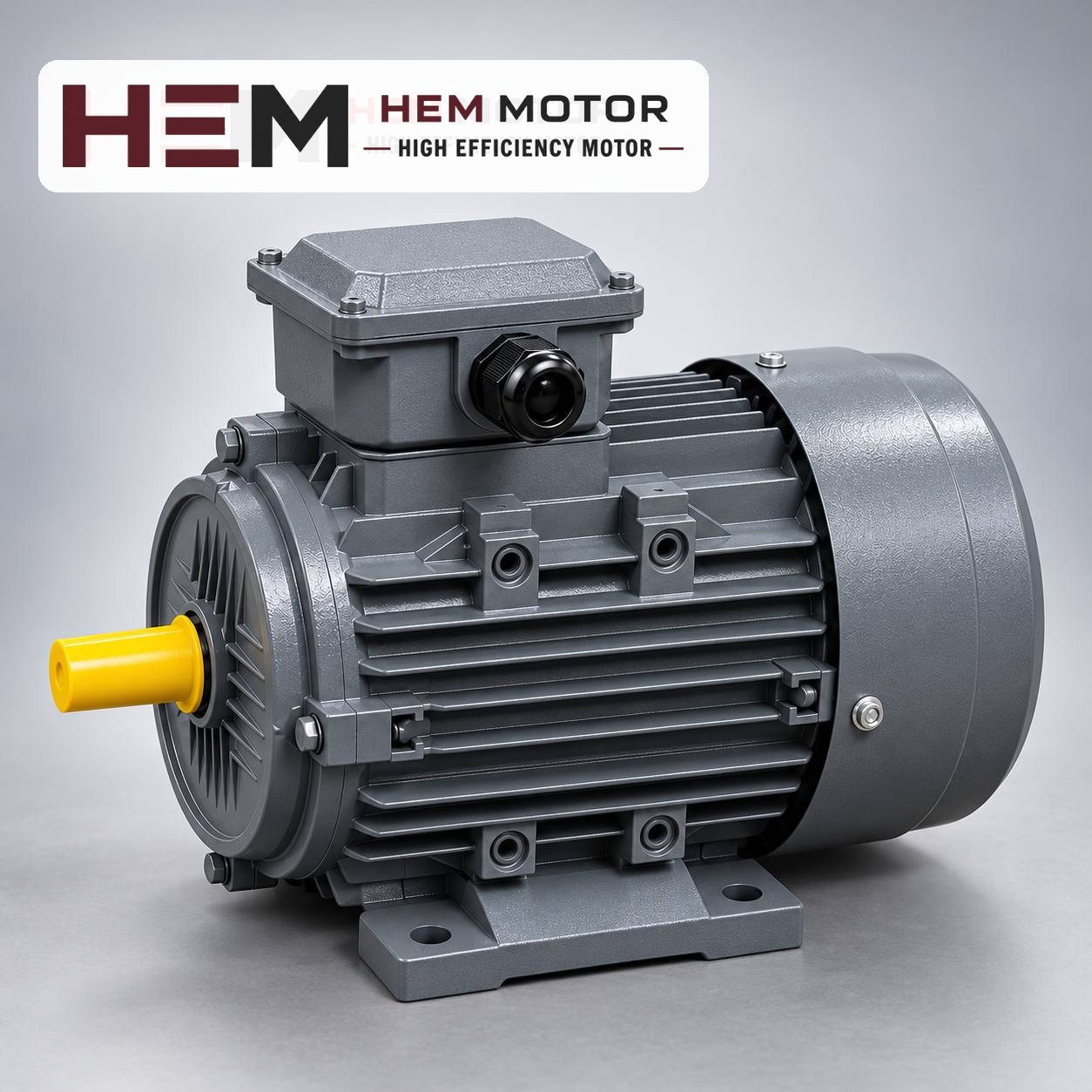
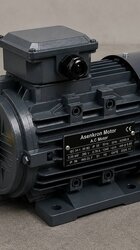
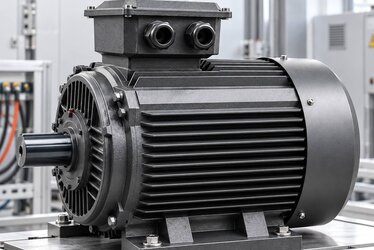
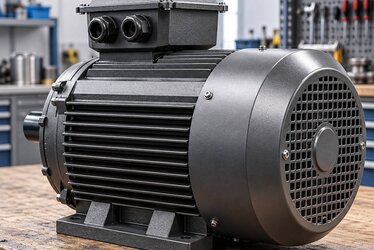
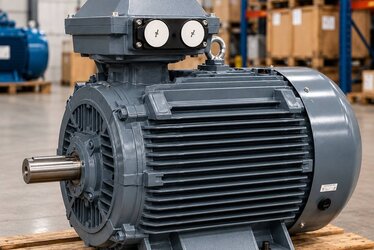
Side view of a three-phase electric motor frame
The nameplate is usually on the side of the frame, close to the terminal box (representative image).

Taking the photo correctly: half the job is done here

The search for an equivalent often drags on because of a blurred or reflective photo. When photographing the nameplate, pay attention to the following:

  • Shoot the plate straight on, without shadow and without flash; glare makes the figures unreadable.
  • Wipe off oil and dust with a cloth; on engraved or painted-over plates, lighting from the side makes the embossing stand out.
  • Add another photo showing the whole motor next to the nameplate: the feet, flange, shaft end and terminal box should be visible.
  • If you can open the terminal box cover, also photograph the arrangement of the links; the connection is confirmed from this.

Fields that determine the equivalent

The values below directly determine which model the new motor will be. If one of them differs, the motor is not considered an "equivalent".

Nameplate fieldHow it appears on the nameplateWhat does it tell you?
PowerkW and/or HPRated power delivered at the shaft. 1 HP is about 0.75 kW; if both units are written, kW is taken as the basis.
Speedrpm, min⁻¹Rated speed under load. A motor reading 1,450 rpm is 4-pole (1,500 rpm synchronous), around 2,900 is 2-pole and around 960 is 6-pole.
Voltage and connection230/400 V Δ/Y or 400/690 V Δ/YWhich voltage the motor runs on and with which connection. On a 400 V supply a 230/400 V motor is connected in star and a 400/690 V motor in delta.
Frequency50 Hz / 60 HzSupply frequency. The speed and power of a motor labelled 60 Hz are different at 50 Hz; this case is assessed separately.
IEC framee.g. 100L, 112M, 132SShaft height and frame length class. The same code increases the chance of fitting the same base.
Mounting arrangementIM B3, IM B5, IM B35, IM V1…Whether the motor is fixed by its feet, its flange or both.

Small differences in the speed line are normal. A motor reading 1,420 rpm can be replaced by a model with a rated speed of 1,450 rpm; both belong to the 1,500 rpm synchronous class. A change in the number of poles, however, changes the machine's speed and is not acceptable.

Not misreading the Δ/Y marking

The voltage line is the most frequently confused field. "230/400 V Δ/Y" tells you that the motor is connected in delta at 230 V and in star at 400 V. "400/690 V Δ/Y", on the other hand, means delta at 400 V, and this is the one suitable for star-delta starting. If the old motor runs on a 400 V supply with a star-delta starter, the new motor must also be labelled 400/690 V. At HEM Motor, models of 3 kW and below are supplied at 230/400 V, and those of 4 kW and above at 400/690 V.

Fields read for verification

The values below do not determine the model choice on their own, but they help check whether the information read is consistent.

  • Current (A): Phase current at rated load. If two voltages are written, the two currents are also written side by side with a slash; the larger current corresponds to the lower voltage. Current is a good way to tell whether you have misread the power; power and current should be in proportion to each other. For comparison you can look at the current table.
  • cos φ: Power factor; shows how much of the current drawn from the supply is turned into work. It matters in power factor correction calculations and is secondary when choosing an equivalent.
  • IP class: Degree of protection against dust and water. A motor labelled IP55 should not be replaced by a motor with lower protection. All of HEM Motor's models on sale are IP55.
  • Insulation class (Ins. Cl.): Temperature class the winding insulation can withstand (B, F, H). Our models on sale are class F.
  • Duty type (S1, S3, S6…): S1 means continuous duty. If the nameplate says intermittent duty such as S3 or S6, the motor was designed for frequent start-stop; in that case a full description of the load is needed.
  • Serial number and year of manufacture: Not used in choosing the equivalent; only for the old motor's records.


Prices and technical data are on the product pages; choose a model and order online.

What if the nameplate cannot be read?

On rusted, painted or missing nameplates an equivalent can still be found, but by measurement, not guesswork:

  • If the power cannot be read: Look at the machine's own nameplate, the user manual or the electrical drawings. The setting of the thermal relay in the panel also gives a clue, but it is not enough on its own to determine the power.
  • If the speed cannot be read: If the machine is running, measure the shaft speed with a tachometer. If it is not running, it can be worked back from the machine's required output speed and the transmission ratio.
  • If the frame code cannot be read: Measure the foot hole spacing, shaft height, shaft diameter and, if there is a flange, the spigot diameter, and compare them with the 2D technical drawings.
  • If the voltage cannot be read: Look at the arrangement of the links in the terminal box and at the starting arrangement in the panel (direct, star-delta, drive).

If none of the values can be read, write to us with general photos of the motor and the measurements; we will complete the information together.

Cases with no standard equivalent

Some nameplates show that the motor is not a standard three-phase asynchronous motor. If you see any of the signs below, do not expect a one-to-one replacement with a standard model:

  • Two separate power and speed lines (e.g. 1,500/3,000 rpm): two-speed motor.
  • A brake voltage or braking torque line: brake motor.
  • A non-standard shaft end, a special flange or a special connection stated on the nameplate.
  • A single-phase nameplate (single voltage, capacitor value written).

For these motors, send the nameplate photo and technical information and ask about the special motor requirement.

Example: from a nameplate reading to an equivalent model

The nameplate below is a hypothetical example. Suppose the following lines are read on the plate of a pump motor: 4 kW / 5.5 HP, 400/690 V Δ/Y, 50 Hz, 1,440 rpm, IP55, Ins. Cl. F, S1, frame 112M, IM B3.

  • Power 4 kW, speed 1,440 rpm: 4-pole, 1,500 rpm synchronous class.
  • Voltage 400/690 V Δ/Y: connected in delta on a 400 V supply, suitable for star-delta starting.
  • Frame 112M and B3: a foot-mounted model with the same frame code is sought.
  • With this information the matching model is the 112M-4 with a rated speed of 1,450 rpm. If the environment is clean and enclosed, the aluminium frame 112M-4 is considered; on a dusty site with knocks, the cast iron frame 112M-4.

Had the same nameplate read 2.2 kW, 230/400 V Δ/Y and 100L, the match would be the 100L1-4 aluminium frame model (2.2 kW, 4-pole, 1,450 rpm, IEC 100L, 230/400 V, 4.52 A). On this model a star connection is used on a 400 V supply. To match nameplate values quickly by power and speed, you can use the equivalent motor table.

What to send with the nameplate photo

  • A clear photo of the nameplate taken straight on
  • A general photo of the motor (showing feet, flange and shaft end)
  • What the machine is and what the motor does (pump, fan, conveyor…)
  • Mains voltage and starting method
  • Any measurements you have taken if the nameplate cannot be read

Ask for the suitable model with your motor's nameplate details: you can send the photo via the send nameplate page or write to us from our contact page. You can find all models and current prices on the buy electric motors page.

HEM Motor Models Related to This Article

The cards show example models related to the topic. A suitable motor is not chosen by power alone: compare speed, voltage, mounting, shaft and connection dimensions on the product page; if unsure, send a photo of the existing motor’s nameplate on WhatsApp.

4 kW 1500 rpm Aluminium Frame Electric Motor 112M-4

112M-4

4 kW · 1500 rpm

  • Aluminium frame · IEC 112M
  • 1450 rpm · IP55
  • Mounting: B3 foot; flange (B5/B14/B35) depending on frame — confirmed with the order

US$241.27 (€215.32)

View product
4 kW 1500 rpm Cast Iron Frame Electric Motor 112M-4

112M-4

4 kW · 1500 rpm

  • Cast iron frame · IEC 112M
  • 1450 rpm · IP55
  • Mounting: B3 foot; flange (B5/B14/B35) depending on frame — confirmed with the order

US$252.76 (€225.57)

View product
2.2 kW 1500 rpm Aluminium Frame Electric Motor 100L1-4

100L1-4

2.2 kW · 1500 rpm

  • Aluminium frame · IEC 100L
  • 1450 rpm · IP55
  • Mounting: B3 foot; flange (B5/B14/B35) depending on frame — confirmed with the order

US$178.61 (€159.40)

View product

Similar Articles