English
 Türkçe


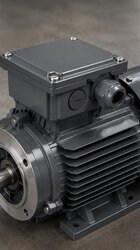
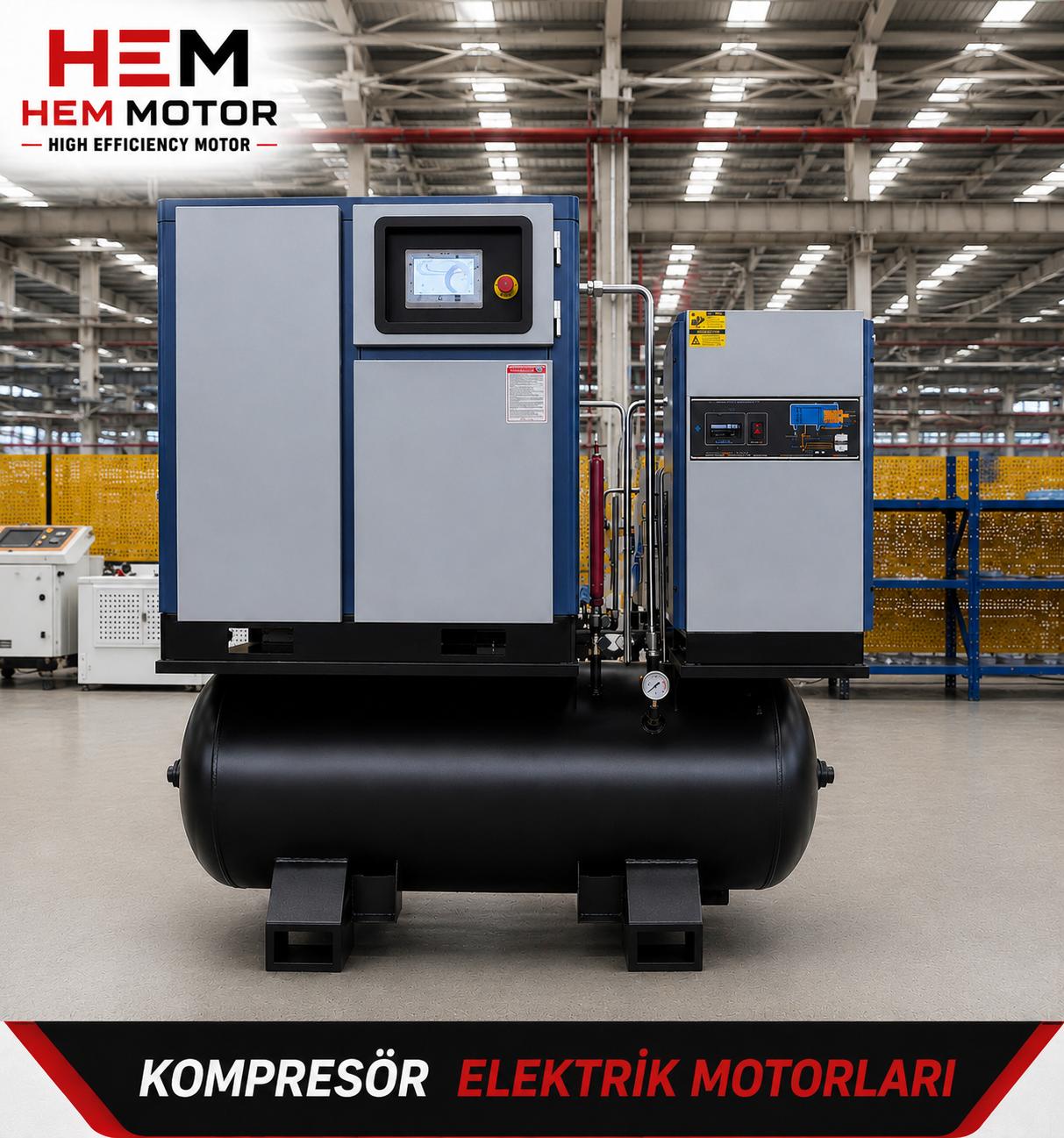

When an evaporator fan or compressor motor stops inside a cold storage room, the value of the product on the shelf begins to melt away within hours. The cold chain is a system that tolerates no break at all; a temperature rise of even a few hours means that tons of food, medicine, or sensitive product can spoil. This is precisely why cold storage motors cannot be selected like ordinary motors. Sub-zero temperatures, high humidity, and continuous condensation create an extremely demanding environment for a standard motor, and this calls for the right configuration. In this article we explain why cold storage fan and compressor motors must be special under these harsh conditions, the criteria by which they should be selected, and why fast supply from stock is vital.
Why Is a Cold Environment So Demanding for a Motor?
When considered from a motor's point of view, a cold storage room is not an ordinary environment. Three fundamental challenges coexist, and each one of them gradually wears down a standard motor over time. Understanding how these stresses combine is the first step toward choosing equipment that will survive years of operation rather than failing after a single season. A motor that performs flawlessly in a warm, dry workshop may behave very differently once it is sealed inside a freezer room where the air is saturated with moisture and the temperature regularly drops far below the point at which conventional materials were designed to operate.
Sub-Zero Temperature and Lubrication
At very low temperatures, the grease in the motor and especially in the bearings loses its consistency, thickens, and its ability to lubricate drops sharply. A standard grease can freeze at sub-zero temperatures and damage the bearing. In cold storage motors, a special grease suitable for low temperatures must be used. As the lubricant stiffens, the rolling elements of the bearing are no longer separated by a proper oil film, which leads to metal-to-metal contact, increased friction, higher operating temperatures at start-up, and accelerated wear. Over repeated cold starts this manifests as noise, vibration, and eventually premature bearing failure. Choosing a grease formulated to remain fluid and protective down to the lowest expected operating temperature is therefore not an optional refinement but a basic requirement for reliable service in a freezer environment.
Moisture and Condensation
Temperature changes and high humidity cause water to condense both inside and on the surface of the motor. This water can seep into the winding insulation, causing short circuits and corrosion. During defrost cycles, the rising and falling of the temperature increases this risk. A high protection class and suitable insulation are therefore essential. Each time a room transitions between its cold holding temperature and the warmer defrost phase, the air passes through the dew point, and moisture deposits on every cold surface it touches. Inside a motor this means droplets forming on the windings, in the terminal box, and on the bearing housings. Left unmanaged, repeated wetting and drying degrades the varnish on the windings, promotes rust on steel components, and creates leakage paths that can trip protective devices or, worse, cause an insulation breakdown under load. This is why the combination of a robust enclosure, moisture-resistant insulation, and proper sealing is so important in cold chain applications.
Continuous Operation
Cold storage motors, especially compressors, run for very long periods in order to maintain the temperature. This continuous load requires the motor to be durable and capable of being well cooled. Unlike machines that work in short bursts with long rest periods, a refrigeration compressor often operates for hours on end, sometimes around the clock during periods of heavy heat load or frequent door openings. A motor that is marginal on thermal capacity will run hotter and hotter under such duty, shortening insulation life and raising the probability of an unplanned stoppage. Designing for continuous duty means selecting adequate power reserve, ensuring the cooling path remains unobstructed, and confirming that the thermal class of the windings comfortably exceeds the temperatures the motor will actually reach during sustained operation.
The Correct Motor Configuration
The following criteria stand out when selecting a motor for a cold storage room:
- High protection class: At least IP55 against moisture and condensation, and higher where required.
- Grease suitable for low temperatures: Special lubrication that does not freeze at sub-zero temperatures.
- Appropriate insulation class: Insulation that withstands moisture and continuous operation.
- Condensation drainage: Drain holes so that water accumulating in the motor housing can be expelled.
- Correct power and speed: Values calculated separately for the fan and the compressor.
This configuration ensures that the motor operates reliably for many years in a cold and humid environment. For suitable protection class and power options, you can review the product range on our electric motor prices page. Getting each of these details right is far cheaper than dealing with the consequences of a wrong choice, because in a freezer room a single failed motor can put an entire room of stored goods at risk. The aim is always to match the motor's protective features to the real conditions it will face, leaving a comfortable margin rather than specifying the bare minimum.
The Difference Between the Evaporator Fan and the Compressor Motor
The two main motor groups perform different tasks. Evaporator fan motors are generally of smaller power and circulate the cold air inside the storage room; because they operate directly in the cold environment, protecting them against condensation is critical. Compressor motors, on the other hand, are the heart of the system; they compress the refrigerant and are usually of higher power. The stopping of either one breaks the cold chain, but a compressor failure leads to a faster and more widespread temperature rise. The evaporator fans keep the cooling effect distributed evenly across the stored goods, so when they fail the room can develop warm pockets and uneven temperatures even while the compressor continues to run. The compressor, by contrast, is what removes heat from the system in the first place; when it stops, no new cooling is produced at all, and the temperature throughout the room climbs steadily. Both motor types therefore deserve careful specification, but the consequences and the urgency differ depending on which one is affected.
The Vital Importance of Fast Supply From Stock
In a cold storage room, time is directly money. When a motor fails, if there is no spare or no possibility of rapid procurement, the value of the products in the storage room decreases with every passing hour. For this reason, one of the most critical issues for cold chain businesses is the ability to quickly procure a motor with the correct configuration. Both in the event of a breakdown and when increasing capacity, fast supply from stock secures the continuity of production and storage. Keeping a spare motor on hand for critical power ratings also prevents unplanned product loss. For fast supply and the right configuration, you can request a quote through our electric motor prices page. The economics are stark: the cost of holding a correctly specified spare motor, or of having a reliable supplier who can deliver one quickly, is almost always trivial compared with the value of a room full of perishable goods. Planning for replacement before a failure occurs, rather than scrambling for parts during an emergency, is what separates resilient cold chain operations from those that suffer repeated, expensive losses.
Frequently Asked Questions
Can a standard motor be used in cold storage?
It can work in the short term, but due to moisture, condensation, and lubrication problems at low temperatures, the life of a standard motor is shortened and the risk of failure increases. It is recommended to use a high protection class and special grease suitable for the cold environment. While the initial saving from fitting an ordinary motor may look attractive, the hidden costs of early bearing wear, insulation damage, and the eventual product loss caused by an unexpected stoppage usually far outweigh the difference in motor price.
Which protection class is required?
Due to moisture and condensation, at least IP55 is recommended. In points where there is intense humidity or water splashing, a higher protection class can be preferred. Condensation drain holes are also important. The exact rating should reflect the specific position of the motor: an evaporator fan motor mounted directly in the airflow of a freezer room faces far more aggressive conditions than a compressor motor housed in a relatively sheltered machine room, so it often warrants a higher level of ingress protection.
Why is speed so important in the event of a failure?
Because when the motor stops, the storage temperature begins to rise and the value of the product on the shelf falls within hours. Fast supply and spare stock prevent this expensive product loss, protecting the continuity of the cold chain. The faster a correctly configured replacement can be installed and brought back online, the smaller the temperature excursion the stored goods experience, and the lower the chance that an entire batch has to be written off. This is also why many operators treat the availability of spare motors and a responsive supplier as part of their core risk management, rather than as an afterthought, because in the cold chain the difference between a few hours of downtime and a full day can be the difference between a minor inconvenience and a catastrophic loss of an entire room of perishable inventory.