English
 Türkçe

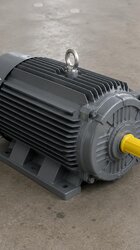
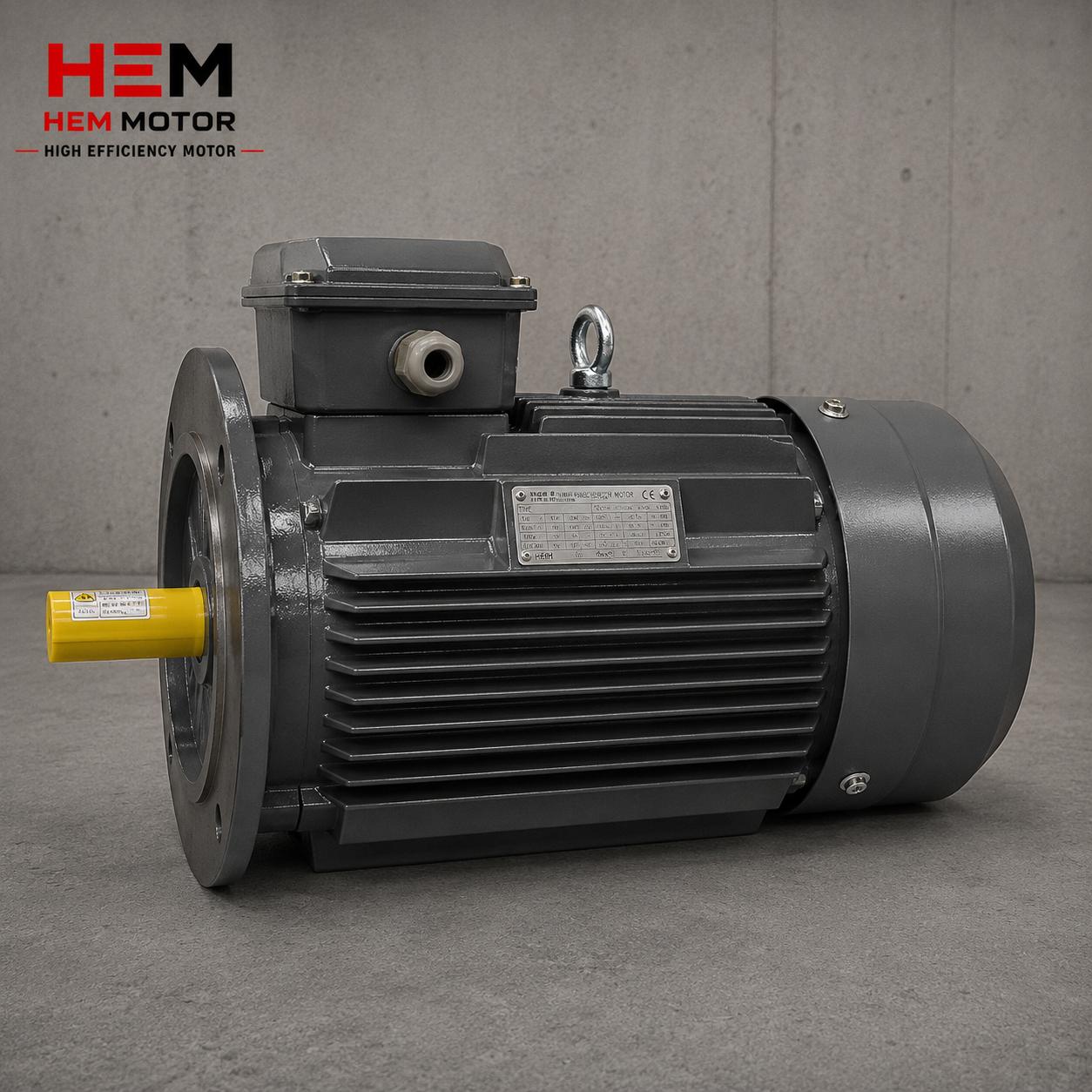

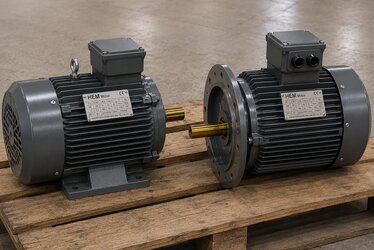
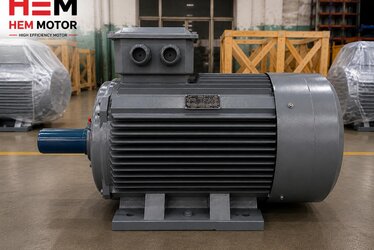
When looking for a motor for a mixer, crane, mill or a slowly rotating conveyor system, slowing a high-speed standard motor with a gearbox is the first solution that comes to mind. But in some applications a gearbox is not needed at all: a low-speed, that is, a high-pole motor can drive the load directly, without a reducer. This article addresses, from a commercial point of view, when a 6, 8, 10 or 12-pole motor makes more sense than a geared solution, its advantages and limits, and the right choice. At HEM Motor, we determine together the solution best suited to your low-speed, high-torque need among the IE3 and IE4 motors with different pole counts that we ship from stock. The goal is to help you make a decision that correctly manages both the initial investment and the long-term operating cost.
The Relationship Between Pole Count and Speed
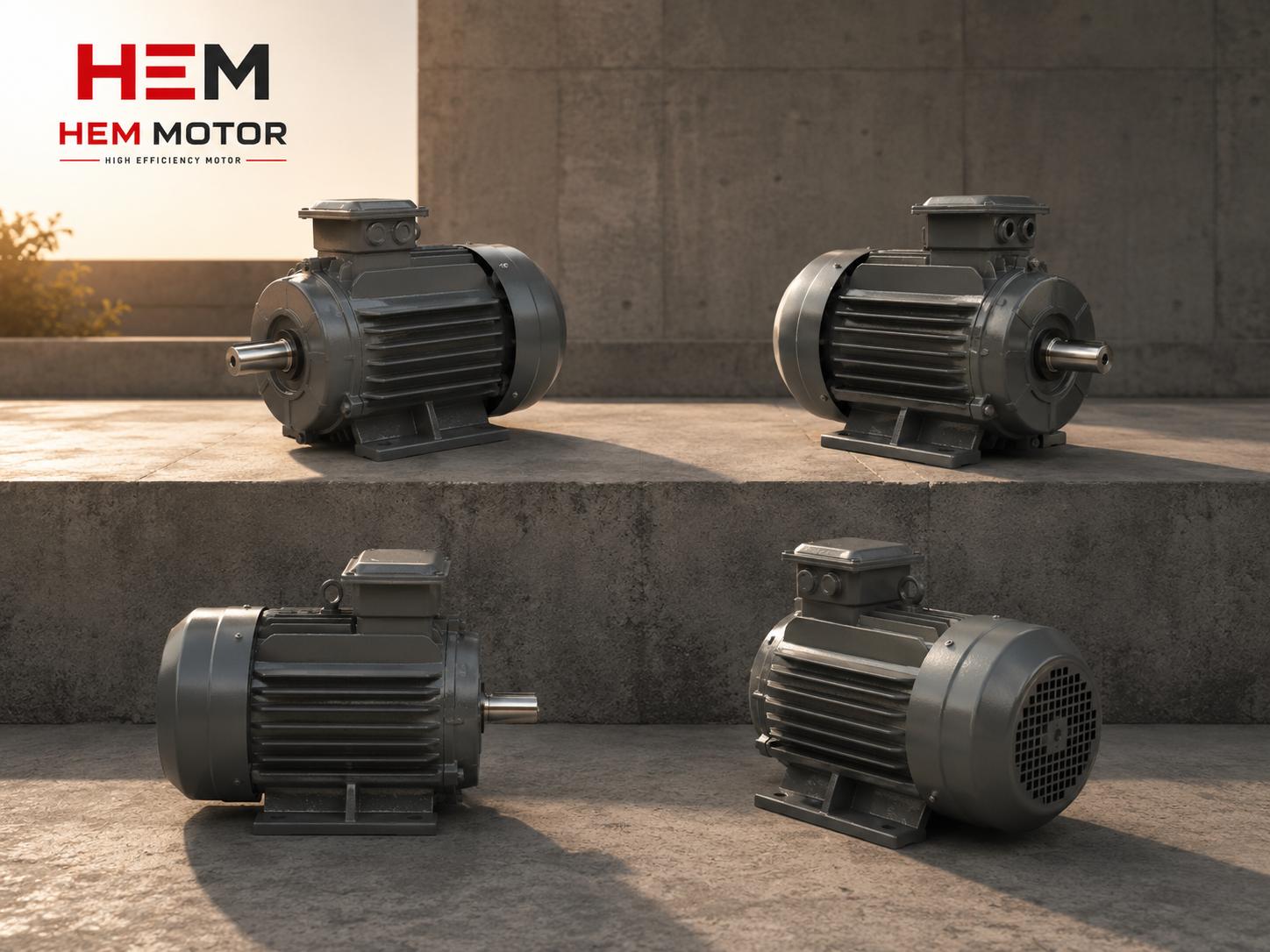
The speed of an asynchronous motor is determined by its pole count. When the grid frequency is fixed, the synchronous speed of the motor drops as the pole count rises. A 2-pole motor turns at about 3000 rpm, a 4-pole at about 1500 rpm, a 6-pole at about 1000 rpm, an 8-pole at about 750 rpm; 10 and 12-pole motors go to even lower speeds. The actual speed is slightly below these synchronous values because of slip. We explained the relationship between slip and actual speed in detail in our slip and actual speed in an asynchronous motor article.
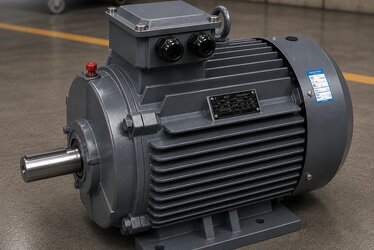
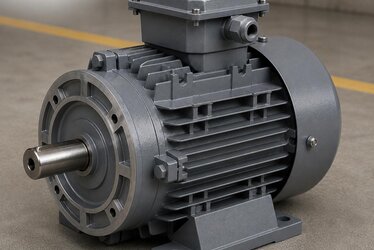
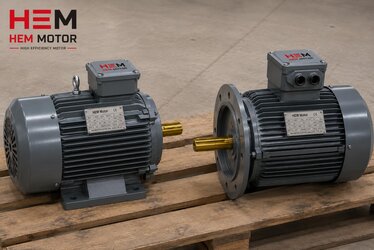
The critical point here is this: when motor power stays constant, output torque rises as speed drops. That is, a low-speed high-pole motor produces higher torque at the same power. This is a directly useful property for loads that must turn slowly and powerfully. We covered how pole selection is made by application in our which pole count for which job article. Besides the standard 1000 / 1500 / 3000 rpm speeds, our motors can also be offered with lower-speed high-pole options by application; they have a cast iron body, IP55 protection and class F insulation across a 0.55 kW to 355 kW power range.
Why Does Low Speed Mean High Torque?
Mechanical power depends on the product of torque and speed. If a motor of the same power turns more slowly, it must produce higher torque to maintain that power. For this reason an 8 or 10-pole motor provides a much higher turning moment than a 2-pole motor of the same kW value. On loads that must turn slowly and with high torque, such as a mixer, crane drum or mill, this property offers the possibility of direct drive without using a gearbox. To choose the right power and speed combination, our motor power calculation article offers a practical method.
The Advantages of Gearless Direct Drive
Connecting a low-speed motor directly to the load is more advantageous than adding a gearbox to the system in several ways. First, since the intermediate element is removed, there are fewer parts in the system; the gearbox's oil, seal, gears and maintenance drop out. Second, since there are no gear losses occurring in the gearbox, system efficiency rises. Third, fewer parts mean fewer failure points; downtime caused by gearbox failure is eliminated. Fourth, installation is simplified and usually takes up less space.
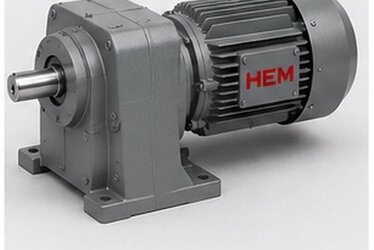
To compare geared and direct-drive solutions from a purchasing and maintenance standpoint, our geared motor or separate motor and reducer article is a directly relevant resource. Still, not every application suits direct drive; when very low output speeds or very high reduction ratios are needed, a gearbox becomes unavoidable. In that case, for the right gearbox choice, you can review our worm gear reducers and helical worm gear reducers product pages.
Efficiency and Maintenance Advantage
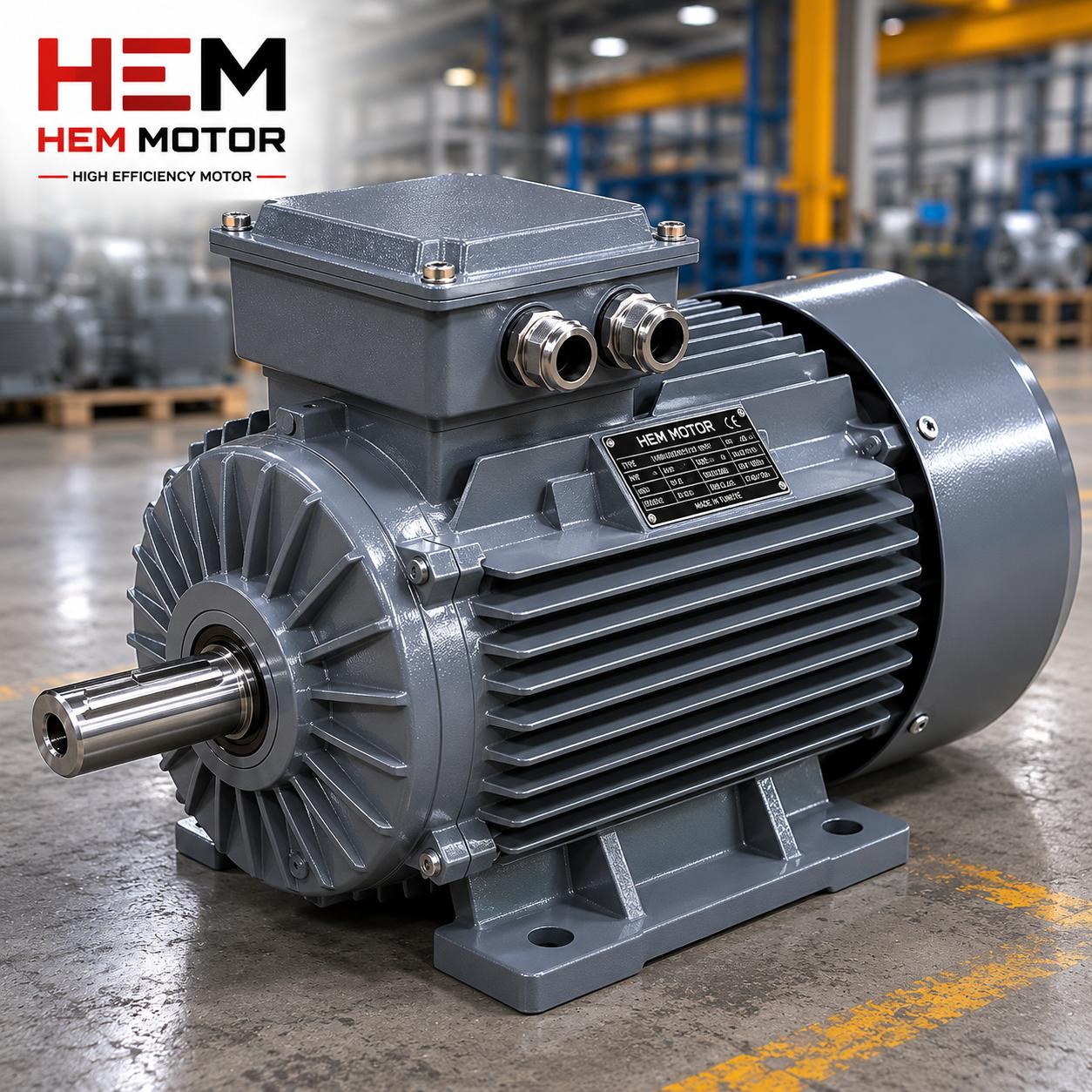
In direct drive, system efficiency is higher because there are no gearbox gear losses. In a continuously running application, this efficiency difference returns as energy savings across the year. On the maintenance side, items such as the gearbox's oil change, seal renewal and gear wear are eliminated; this reduces both maintenance cost and downtime. When direct drive combines with a high-efficiency motor, the gain multiplies; for efficient motor options, you can review our high efficiency electric motors category.
The Limits of Direct Drive
Knowing that low-speed high-pole motors are not suited to every solution is at least as important as their advantages. First, as the pole count rises, the physical size and weight of the motor grow; an 8-pole motor of the same power is larger and usually more expensive than its 2-pole counterpart. Second, very low output speeds (for example a few revolutions per minute) cannot be achieved by pole count alone; a gearbox is needed in that case. Third, in high-pole motors the power factor is usually lower, and this should be assessed in terms of reactive power.
Because of these limits, the right decision is made by assessing together the output speed, torque and continuity conditions the application requires. If the output speed is very low or a very high reduction is needed, a geared solution may be more economical. We compared which job suits a bevel-helical and which suits a worm gearbox in our bevel-helical or worm gear article. For matching a suitable motor to a gearbox, our matching a motor to a gearbox article explains IEC body and flange compatibility.
If Variable Speed Is Required
In some applications the load speed is not fixed but varies with the process. In that case, instead of choosing a fixed speed by pole count, it may be necessary to adjust the speed with a variable frequency drive (VFD). A low-speed motor combined with a VFD provides both high torque and adjustable speed. We covered whether constant torque or variable torque is needed for a variable speed requirement in our motor selection in a variable speed application article. For motor compatibility with a variable frequency drive, our variable frequency drive with asynchronous motor article guides you.
Starting Behavior and Soft Start
An important advantage of low-speed high-pole motors is also in their starting behavior. These motors, which produce high torque, move high-inertia loads more comfortably at startup. Still, the starting current can be high at large powers; in that case the start is softened with a soft starter or star-delta starting. The starting method protects the grid as well as the motor and the connected mechanical parts. We compared starting options in asynchronous motors in our star-delta or softstarter article.
On generator-powered sites and plants, the starting current is also important; the start of a large low-speed motor can strain the generator. For the right generator-motor matching on this subject, our how many kVA generator for how many kW motor article offers a practical calculation method. Managing the starting current protects both the motor's life and the stability of the supply system.
Power Factor and Reactive Assessment
In high-pole motors, the power factor (cos φ) is usually lower than in low-pole motors. This means the reactive power the motor draws from the grid can be higher, and it should be assessed in terms of reactive penalty in large plants. The right solution is to balance the reactive power with compensation if needed. We covered power factor and reactive in high-efficiency motors in our power factor and reactive penalty article. This assessment lets you see correctly the effect of a low-speed motor choice on operating cost.
Application Examples: Crane, Mixer and Mill
Low-speed high-pole motors are ideal for loads that must turn slowly and powerfully. In cranes and lifting systems, the load must move in a controlled, low-speed manner; a high-pole motor can provide this control directly. In mixers and agitators, a heavy mix must be turned slowly but with high torque; this is a very suitable application for direct drive. For the right motor choice in concrete plant mixer and screw applications, our motor supply for a concrete plant article guides you.
Low speed and high torque are also frequently sought in mill and grinding applications; the right speed of rollers and grinders affects product quality. For feed factory and mill motor selection, our feed factory and mill motors article is an application-specific resource. To choose the right pole, speed and power combination, you can review our IE4 electric motor and IE3 electric motor product pages.
Frequently Asked Questions
Should I prefer a low-speed motor or a motor plus gearbox?
The decision depends on the output speed you need. If your output speed is a value that can be achieved with a high-pole motor such as 750 or 1000 rpm, gearless direct drive offers fewer parts, higher efficiency and less maintenance. But if your output speed is much lower (for example a few tens of revolutions per minute or less), pole count alone is not enough and a gearbox is needed. We can determine the most suitable solution by assessing your need together.
Why is a high-pole motor larger and more expensive?
Because more poles require more winding in the stator and a larger magnetic structure. To produce the same power at a lower speed, the physical size of the motor grows. For this reason an 8 or 10-pole motor is larger, heavier and usually more costly than its 2-pole counterpart of the same kW value. In return, since gearbox cost and maintenance are eliminated, the total solution can still be advantageous.
Does a low-speed motor run directly from the grid?
Yes, high-pole asynchronous motors run directly at standard grid voltage; their speed is fixed by pole count. If a fixed low speed is enough, no variable frequency drive is needed. However, if the speed must change during the process, the motor is used together with a variable frequency drive to obtain an adjustable speed.
Get a Quote
Let us determine together the right pole count and power suited to your low-speed, high-torque need for your crane, mixer, mill or slowly rotating conveyor system, and clarify whether gearless direct drive is right for you. Reach us through our contact page or call now: +90 (532) 345 49 86. At HEM Motor, we are by your side with fast quotes and delivery from stock.