English
 Türkçe

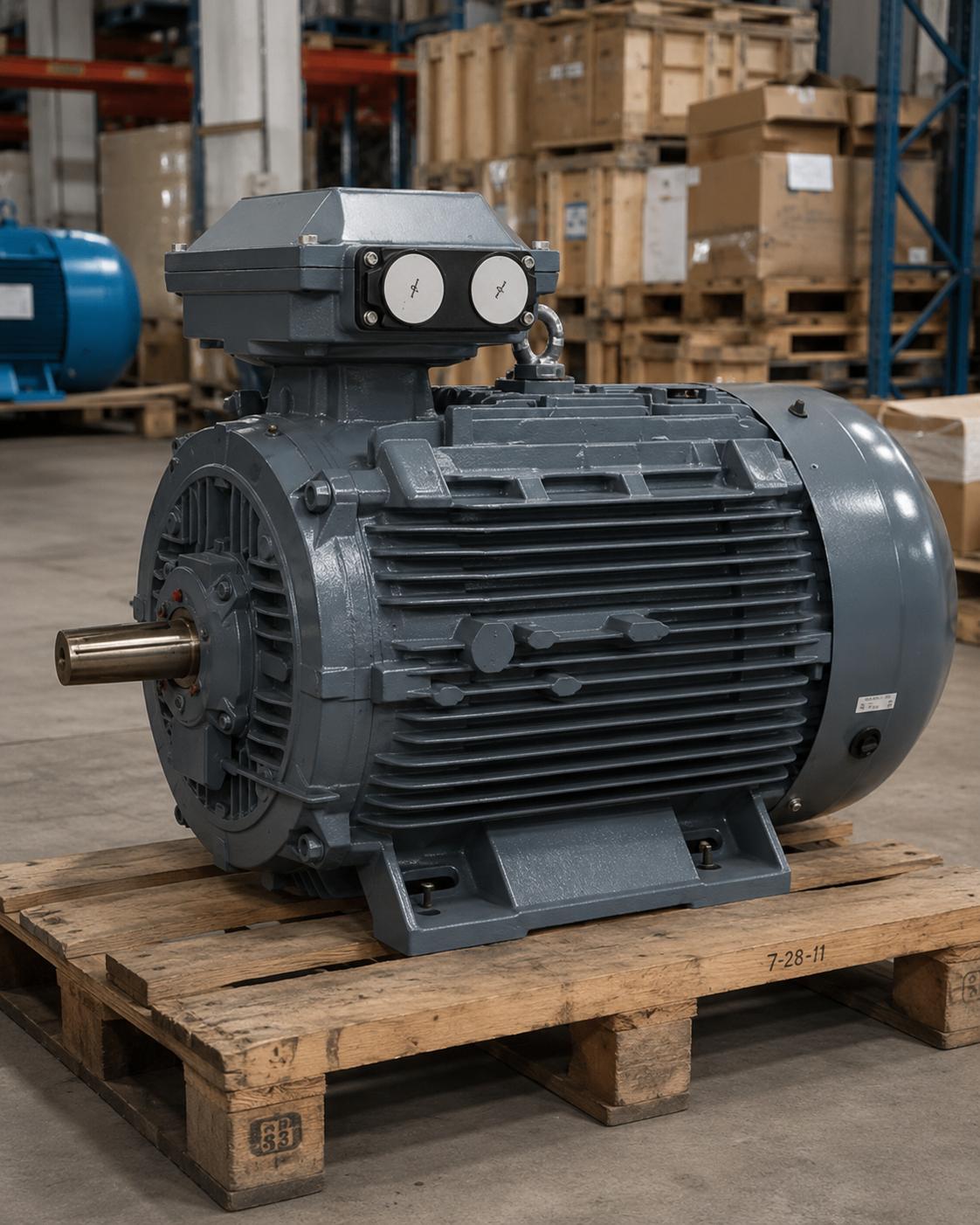

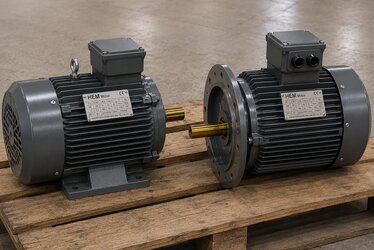
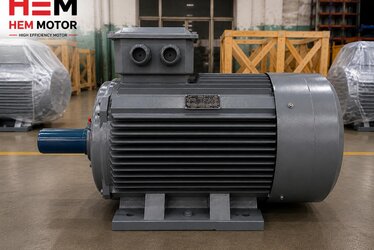
11 kW and 15 kW electric motors are the best-selling and most frequently requested ratings in the mid-power class that truly forms the backbone of industry. From conveyor lines to water pumps, from fans to compressors, from gearbox drive groups to mills, these two power ratings appear in countless applications and, when selected correctly, run for years without trouble. As both a manufacturer and a seller, HEM Motor keeps motors in this band permanently in stock; by reading the nameplate, we quickly supply an exact equivalent for your burned-out or aging motor. In this article we cover every critical topic in 11 and 15 kW selection — pole count, speed, frame size, mounting, efficiency class and stock availability — in engineering language designed to make your purchasing decision easier.
Why 11 and 15 kW Are the Workhorses of Mid-Power
Industrial motor ratings follow a standard ladder, and 11 kW and 15 kW sit right in the middle of it. These two ratings neither produce limited torque like small motors nor demand expensive grid infrastructure and special starting systems like large motors. This balance is exactly what makes them the industry''s "workhorses." The motors most often replaced after failure and most commonly kept as spares are usually in this band.
Typical applications where 11 and 15 kW motors are heavily used include:
- Conveyor and belt systems: Material handling lines that usually require high torque at low speed via 4-pole geared drives.
- Centrifugal and submersible pumps: Water supply, irrigation and process pumps, mostly with 2 or 4 pole selection.
- Industrial fans and exhausters: Ventilation, dust collection and stack exhaust systems.
- Screw and piston compressors: Air compressors that demand high speed, typically with 2-pole motors.
- Geared drive groups: Agitators, mixers and mills where 4 or 6 pole motors are matched to a gearbox.
- Mills and crushers: Heavy-duty applications requiring high starting torque and low speed.
This diversity explains why 11 and 15 kW motors must always be kept in stock. Because the cost of a production stoppage is high, fast supply in these ratings is critical.
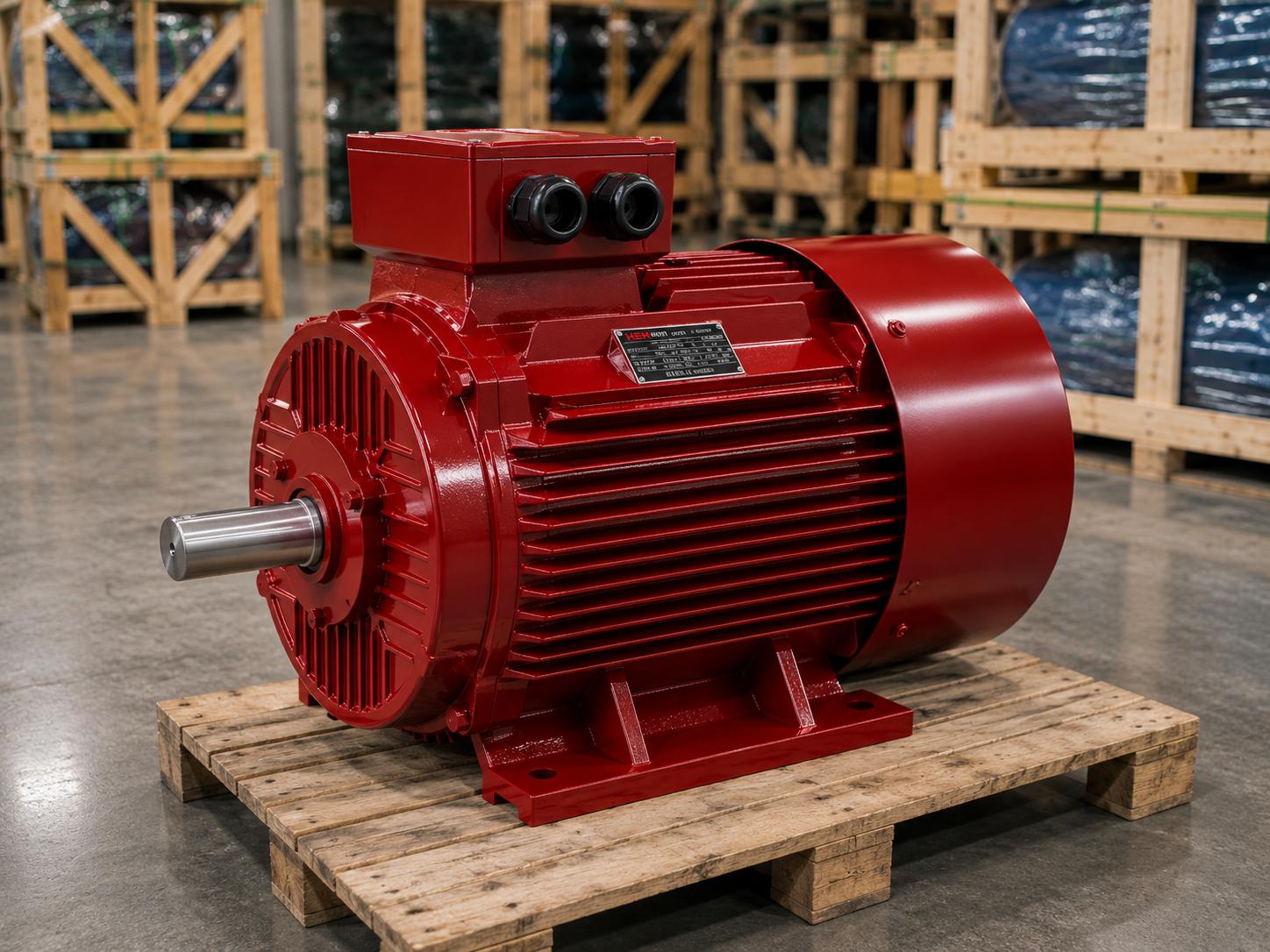
Pole Count, Speed and Torque: 2/4/6 Pole
The most fundamental parameter that defines the behavior of a motor at a given power is the pole count. The number of poles directly determines the synchronous speed, and therefore the output shaft speed and torque. For asynchronous motors on a 50 Hz grid, synchronous speed is calculated with n = 120 × f / p. Under load, actual speed stays slightly below this value due to slip.
- 2 pole (~2900 rpm): High speed, low torque. Ideal for high-speed applications such as pumps, fans and compressors. It produces the lowest torque at a given kW because power = torque × angular speed, and the speed is high.
- 4 pole (~1450 rpm): The most common choice. Standard for conveyors, general-purpose drives and gearbox inputs. It offers a balanced middle ground between speed and torque; most machine builders design around 4 poles by default.
- 6 pole (~960 rpm): Low speed, high torque. Preferred for mills, crushers and heavy-load geared systems. It produces the highest rated torque at a given kW.
The critical point here is this: even at the same 11 kW or 15 kW rating, shaft torque changes significantly as the pole count changes. For example, an 11 kW 2-pole motor has a rated torque of about 36 Nm, while the same-power 6-pole motor reaches around 109 Nm. That is why, when choosing a motor, you must evaluate not only the power but also the speed and torque required by the application. The wrong pole choice either prevents the machine from running at all or overloads it into early failure.
IEC Frame Sizes and Mounting Types for 11 and 15 kW
In motor selection, mechanical fit is as vital as electrical specifications. IEC frame sizes standardize the foot-hole distances, shaft height and shaft diameter of the motor. Thanks to this standardization, it becomes possible to replace a motor in an imported machine with a local equivalent. In 11 and 15 kW motors, the frame size varies not only with power but also with pole count.
- 11 kW 2/4 pole: Typically 160M or 160L frame, around 42 mm shaft diameter.
- 11 kW 6 pole: Usually 160L frame, may move up a frame due to the lower speed.
- 15 kW 2 pole: Mostly 160M/160L frame.
- 15 kW 4 pole: Typically 160L frame, 42 mm shaft.
- 15 kW 6 pole: Usually 180L frame, shaft diameter can rise to 48 mm.
Alongside the frame size, the mounting type must also match:
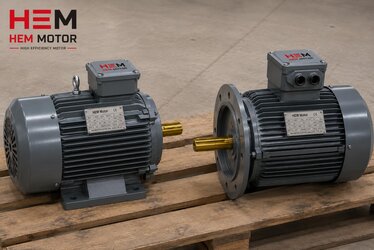
- B3 (foot-mounted): The most common mounting. The motor is fixed to the floor or chassis via its feet. Standard for conveyors and general drives. B3 mounted electric motors can be supplied quickly from stock.
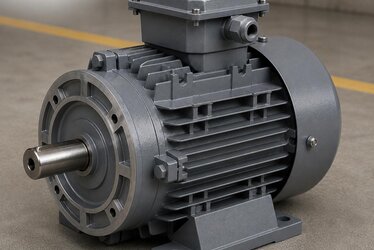
- B5 (flange-mounted): Connected directly to a pump or gearbox via the large flange on the drive-end shield.
- B35 (foot + flange): Has both feet and flange, allowing versatile mounting.
When replacing the motor of an imported machine, the frame size, shaft diameter and mounting type on the nameplate must match exactly. Otherwise coupling, pulley or flange incompatibility occurs. HEM Motor matches the correct frame and mounting combination by reading the nameplate.
IE3 Efficiency Class: Legal Requirement and the IE4 Option
The 11 and 15 kW power band falls squarely within the scope of efficiency regulations. According to Turkish and EU rules, direct-on-line (DOL) motors between 0.75 kW and 1000 kW must be at least IE3 efficiency class since July 2021. Therefore, new motors placed on the market in these ratings are legally required to be IE3.
The next tier of the regulation requires IE4 for 75–200 kW 2/4/6 pole motors since July 2023. Since 11 and 15 kW motors do not fall into this upper band, their minimum class remains IE3; however, IE4 (Super Premium) versions can be chosen optionally to save energy in continuously running facilities. For more detail, see our 11 and 15 kW IE3 motor stock guide.
IE3 class motors lose noticeably less energy than IE1/IE2 equivalents thanks to a thicker copper winding cross-section, an optimized magnetic core and a low-loss steel lamination pack. For our current product range, see the IE3 electric motors page.
Starting Methods: DOL, Star-Delta and Soft Starter
11 and 15 kW motors sit at a critical threshold in terms of starting. At these ratings, inrush (starting) current can reach 6–8 times the rated current. This can cause grid voltage dips and excessive mechanical shock. Therefore the starting method must be chosen carefully:
- DOL (direct-on-line): The simplest and most economical method. Used without issue at many sites up to 11 kW, provided the grid capacity is sufficient.
- Star-delta starting: Reduces starting current to about one third. Commonly preferred for 11 and 15 kW motors, especially on weak grids and in applications with frequent starts and stops. This requires a six-terminal motor whose winding is suitable for delta operation.
- Soft starter: Gradually increases current and torque, minimizing mechanical shock and grid impact. Ideal in pumps and conveyors to prevent water hammer or belt tension surges.
Depending on the starting method, cable cross-section, fuse (breaker) and contactor sizing must also be carried out. A 15 kW motor draws a higher rated current than an 11 kW one; so when replacing a motor, check whether the existing panel can handle this difference. Otherwise contactor overheating and fuse tripping will occur.
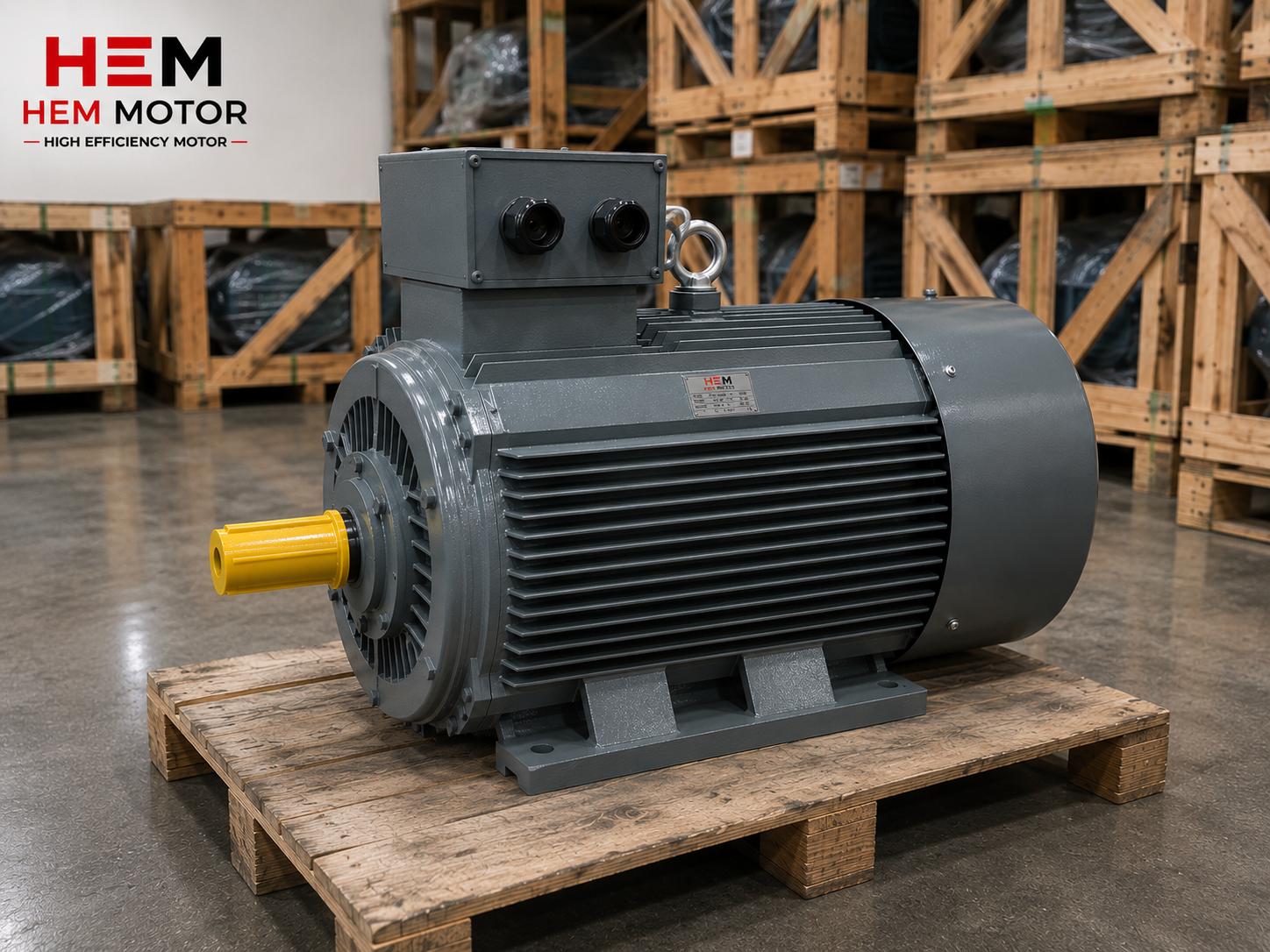
Manufacturer Quality: Cast Iron Body, IP55, Class F Insulation
In mid-power motors, long life is determined not by the power itself but by structural quality. HEM Motor''s 11 and 15 kW motors meet the following standards with manufacturer assurance:
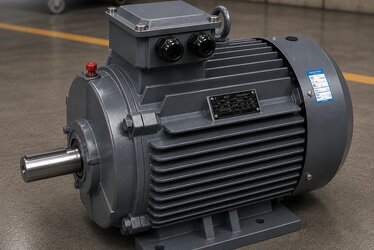
- Cast iron body: High mechanical strength and vibration damping. More durable than aluminium bodies in heavy industrial conditions.
- IP55 protection class: Full dust protection and resistance to water jets from any direction. Suitable for dusty and humid production environments.
- Class F insulation: Temperature endurance up to 155°C, operating with Class B temperature rise to extend insulation life.
- 100% copper winding: Lower resistance, less heating and longer life than aluminium windings.
- S1 (continuous) duty: Designed for uninterrupted full-load operation, an essential for industrial applications.
When these features come together, the expected service life and time between failures increase significantly. For conveyor-specific solutions, see our conveyor belt electric motors category.
Stock, Supply and Fast Delivery Advantage
The biggest purchasing advantage of 11 and 15 kW motors is that, being the most-demanded ratings, they are permanently in stock. When a motor on a production line burns out, every hour that passes is a direct loss. So fast supply can be more critical than price.
- Exact equivalent via nameplate reading: By reading the power, pole, frame, mounting and speed information on the burned motor''s nameplate, the matching motor is identified from stock instantly.
- Frame and mounting matching: On imported machines, the shaft diameter, flange size and mounting type are checked to select a compatible motor.
- Fast delivery: 11 and 15 kW motors held in stock can usually be dispatched the same day or the next business day.
- Quotation support: Once the pole, frame and efficiency class are clarified, a quote is prepared quickly.
For a broader view on power- and speed-based stock selection, you can benefit from our IE3 electric motor stock guide. For all current models and electric motor prices, visit our homepage.
IE3 or IE4? Payback Logic Under Continuous Load
For 11 and 15 kW motors, IE3 is the legal minimum, but in continuously (S1) running facilities the IE4 version is worth considering for energy savings. The logic is simple: the longer a motor runs, the greater the savings from the efficiency difference. For a motor running a few hundred hours a year, the payback of switching to IE4 takes longer; in contrast, for a conveyor or pump motor running 16–24 hours a day, the efficiency gain of IE4 amortizes its additional cost proportionally much faster. When deciding, annual operating hours and load profile are decisive; in continuous, high-load applications IE4 can be a sensible investment.
Frequently Asked Questions
How many HP is 11 kW?
1 kW corresponds to roughly 1.341 HP. Accordingly, 11 kW is about 15 HP and 15 kW is about 20 HP. In industry these motors are mostly referred to in kW, but the HP equivalent is also often seen on imported machine nameplates. For correct matching, it is safest to rely on the kW value on the motor nameplate.
Which pole count should I choose for a conveyor?
Since conveyor and belt systems usually work with a gearbox, 4-pole (~1450 rpm) motors are the standard choice. For heavy handling lines requiring very low speed and high torque, a 6-pole motor may be selected. For the right choice, conveyor speed, load and gear ratio must be evaluated together.
Can I replace an 11 kW motor with a 15 kW one?
Technically it is possible to fit a higher-power motor, but there are points to watch: the frame size and shaft diameter may change (180L instead of 160L), the rated current increases, and the existing cable, fuse and contactor must handle this new current. The shaft compatibility of the gearbox or coupling must also be checked. Rather than fitting 15 kW just as a power margin, it is more correct to select according to the real need of the application.
Is star-delta starting required for 11 and 15 kW motors?
If the grid capacity is strong and there are no frequent starts and stops, DOL can be used up to 11 kW. However, on weak grids, in applications with frequent starts or sensitive to mechanical shock, star-delta or a soft starter is recommended. This requires a six-terminal motor (suitable for delta operation); this detail should be clarified at the time of ordering.