English
 Türkçe

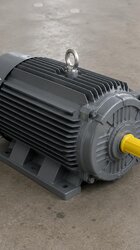
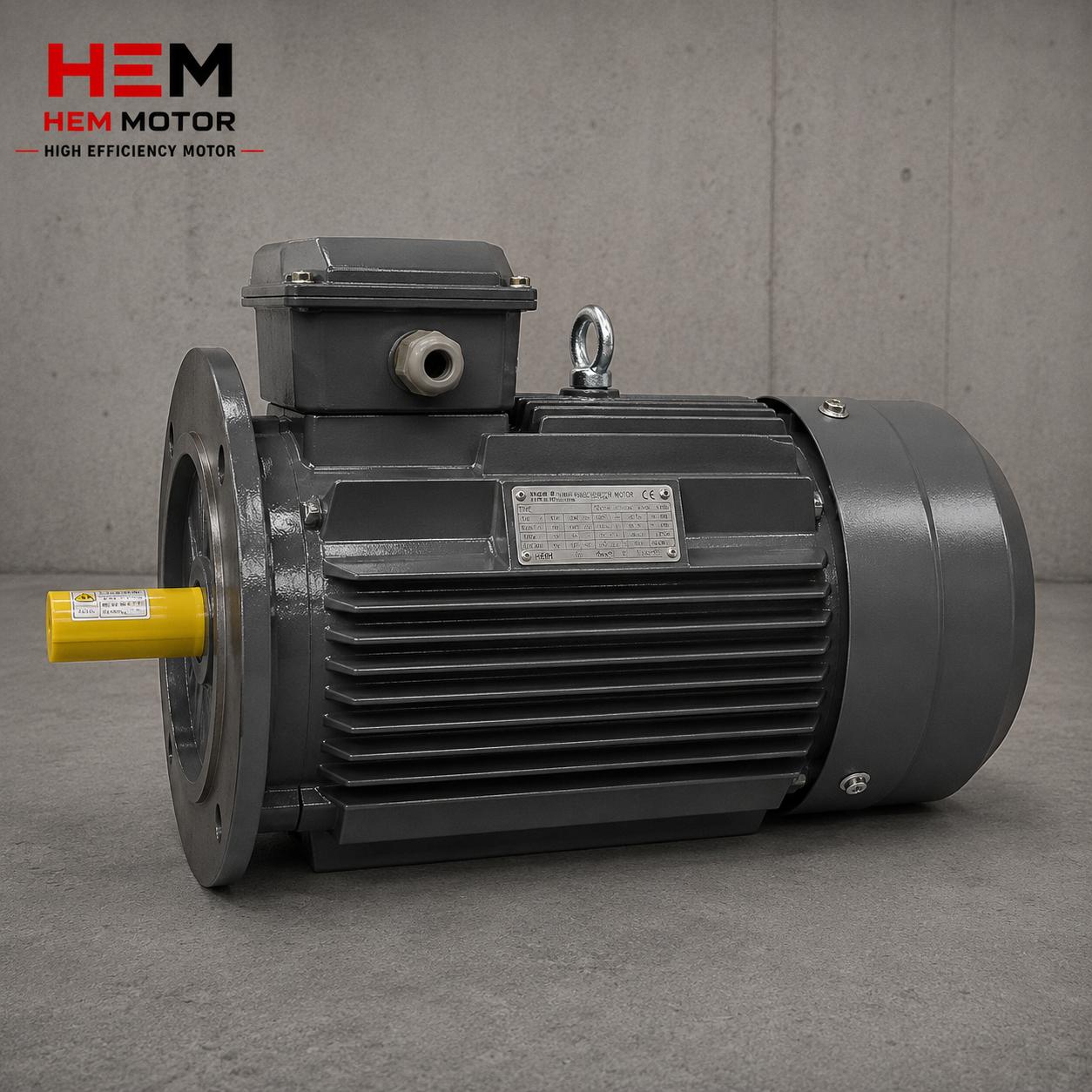

A 250 kW electric motor is no longer a spare part; it is a heavy investment item weighing tonnes, planned together with the project and managed through lead time, shipping and commissioning steps. When buying a 250 kW motor for a large crushing plant, a main pump station, a high-capacity fan, a compressor or a rolling mill drive line, you must consider, alongside the power, the frame size, the starting method, the starting current, the lifting and shipping plan and the on-site commissioning steps together. A supply mistake at this power can lead both to a costly delay and to a line that cannot be commissioned. This article is written for businesses making large facility investments, project and site engineers and panel and machine builders. It summarises the frame 355 structure of a 250 kW motor, soft starter and auto-transformer starting, the lead time and shipping plan, lifting eye handling and the commissioning steps, all within a framework of from-stock delivery and fast quoting that clarifies the purchasing decision.
Frame 355 Structure and Weight in a 250 kW Motor
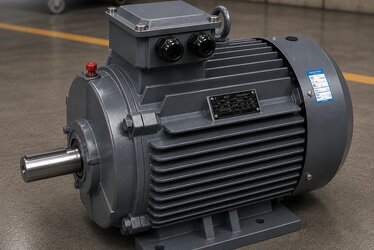
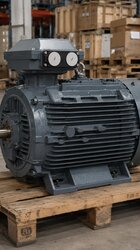
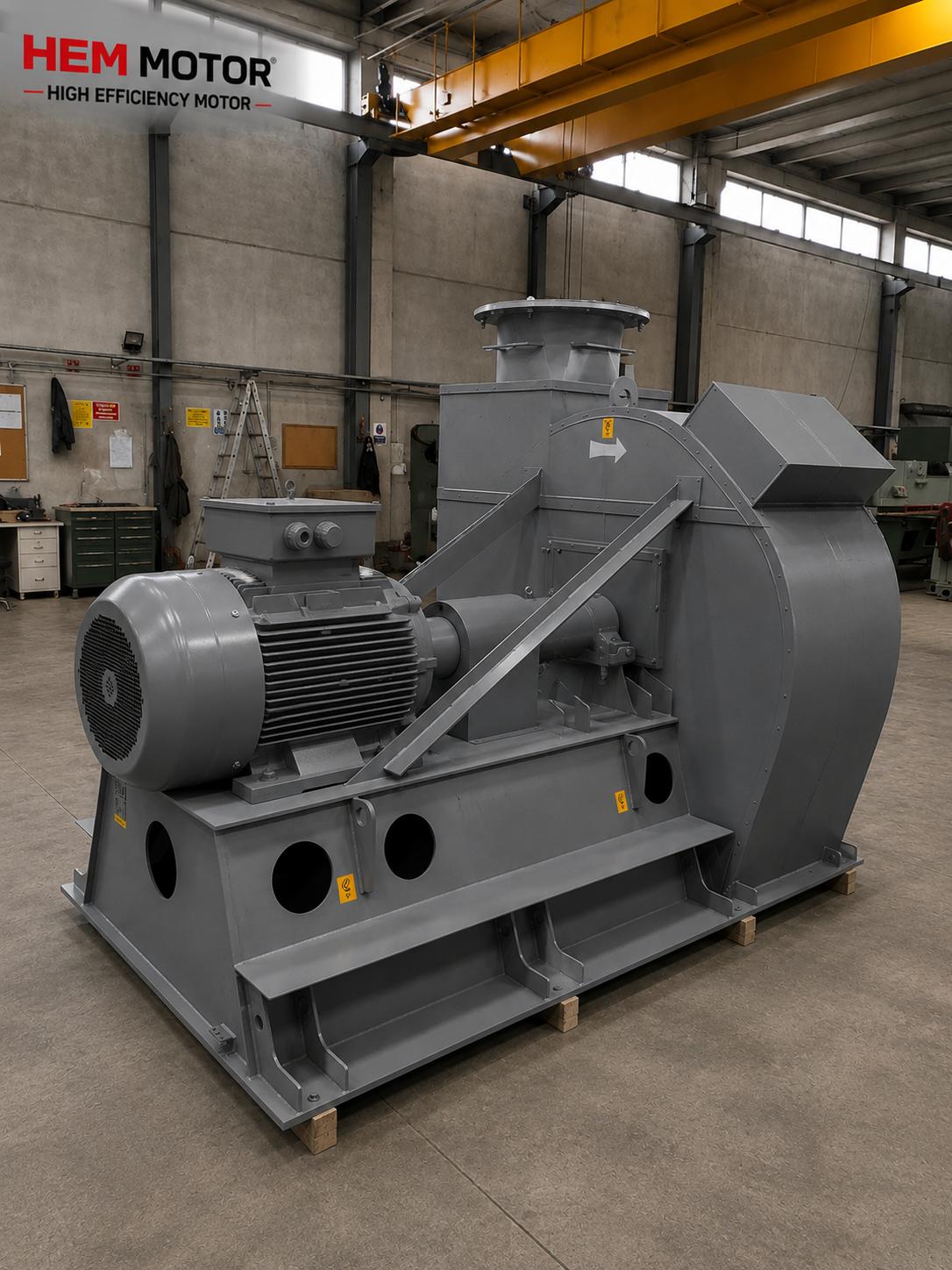
250 kW motors are produced as standard in IEC 355 frame size; this is one of the highest building blocks of the heavy-power class. The frame size determines the motor's foot dimensions, shaft diameter, mounting holes and total weight. A 355-frame motor can reach a weight of 1500-2200 kg, which makes it mandatory to design the base, installation and handling plan from the start. If you are replacing an existing motor, the exact match of the frame size and foot holes is critical; otherwise a matching problem on the base and a costly modification occur. Our cast iron motor frame sizes (IEC 56-355) article, which covers frame size, weight and handling in high-power motors, is a basic resource for planning the field installation of a 355-frame motor.
In a 355-frame 250 kW motor, because the shaft diameter and key size are also large, mechanical matching with the driven machine requires care. Making the coupling or pulley connection at the correct torque and alignment both reduces vibration and extends bearing life. Our shaft diameter, key and coupling in cast iron motors article, which details shaft, key and coupling matching, offers a practical checklist to ensure the mechanical match of a 250 kW motor.
Speed and Pole Selection: 2/4/6 Pole
Speed selection in a 250 kW motor is determined by the need of the driven machine. 2-pole (3000 rpm) 250 kW motors are preferred in high-pressure pumps and large compressors; 4-pole (1500 rpm) motors in general industrial drive lines; and 6-pole (1000 rpm) low-speed motors in crushers, mills and heavy applications requiring high torque. At the same power, lower speed means higher torque. To clarify the effect of pole count on the application, our asynchronous motor pole selection (2, 4, 6 pole) guide and our low-speed (high-pole) motors article, which covers the advantage of low-speed high-pole motors in direct drive, are basic resources for the 250 kW speed decision.
Starting: Soft Starter and Auto-Transformer
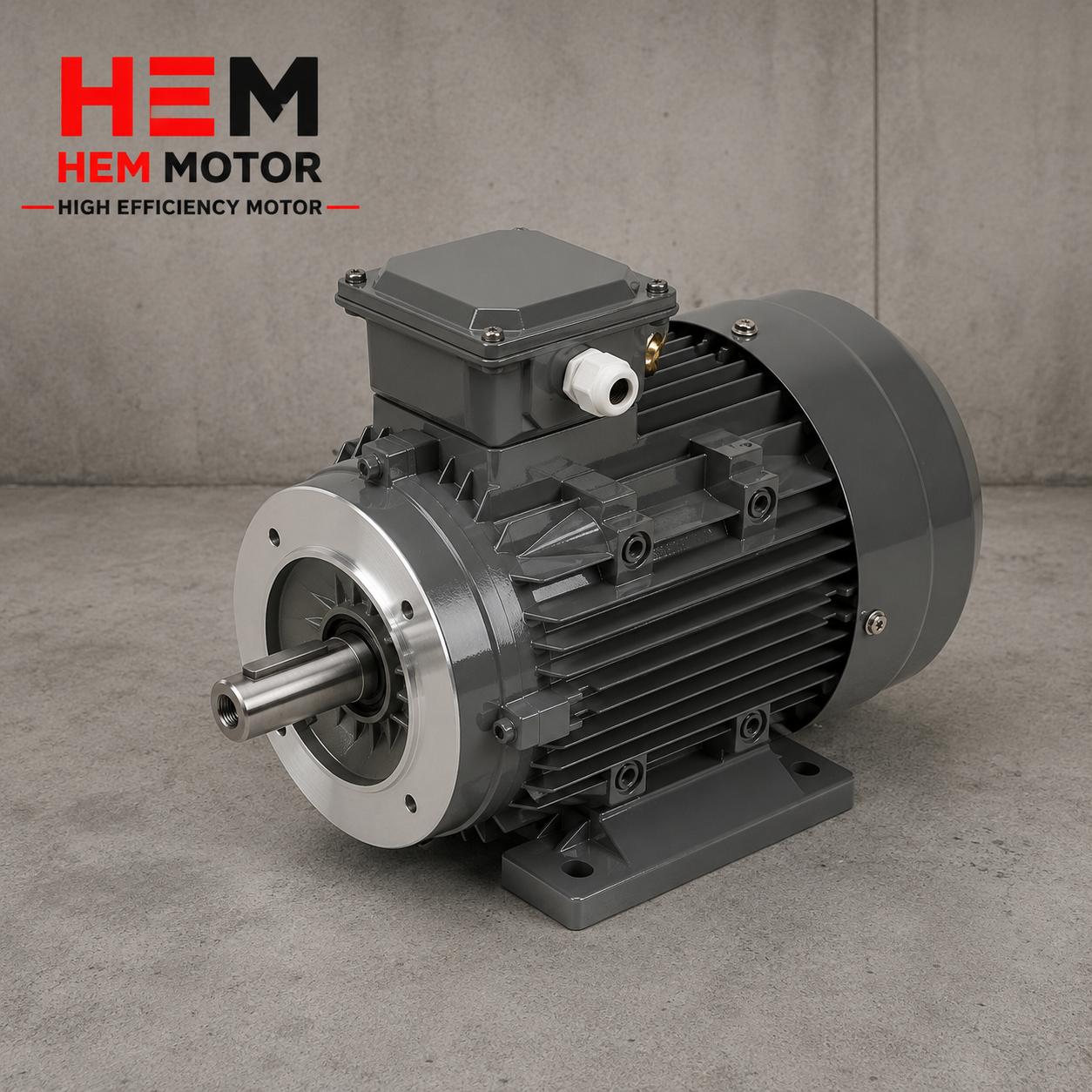
When a 250 kW motor is started directly (DOL), it draws a starting current of 6-8 times the rated current; at this power DOL is almost never used in practice, because it seriously collapses the grid. That is why a soft starting method is always needed at heavy powers such as 250 kW. Two common solutions stand out: soft starter and auto-transformer starting. The soft starter provides a very controlled start by gradually increasing the starting current electronically; in applications such as pumps and fans it reduces the mechanical load and water hammer. Auto-transformer starting lowers the starting current by gradually raising the voltage and provides a strong starting torque especially in loads with high inertia (large flywheel effect).
Our star-delta or soft starter article, which explains in detail how to choose the starting method, is a basic resource for determining the right starting solution for a 250 kW motor. If the application requires variable speed, a variable frequency drive (VFD) both softens the start and saves energy through speed control; our asynchronous motor with a variable frequency drive (VFD) article is also important for operating cost at heavy powers such as 250 kW.
Generator and Starting Current Match
If a 250 kW motor is fed by a generator, the starting current match becomes much more critical, because the generator must be selected with enough capacity to meet the very high current at the moment of starting. An insufficient generator collapses the voltage during starting and the motor cannot start, which means the line cannot be commissioned at all. That is why in heavy-power motors the generator capacity must be planned together with a soft starter or auto-transformer. Our how many kVA generator handles how many kW motor article is a basic calculation guide for facilities that will run a 250 kW motor on a generator. Our motor selection on generator-powered sites article also complements this point.
Lead Time and Shipping: 250 kW Is a Project
Because a 250 kW motor is in the heavy-power class, its supply must definitely be managed like a project. When from-stock delivery is possible the process is shorter; but when a special speed, special mounting type, special protection or special paint is required, the lead time must be clarified in advance and tied to the project schedule. At this power, lead time management must be synchronised with the site's other work items (base, panel, cabling); if the motor arrives early, storage is a problem, and if it arrives late, line downtime is. Our 90 kW and above high-power motor supply article, which details lead time, shipping and commissioning in high-power motors, is a directly usable resource for planning the supply process in a 250 kW purchase.
Lifting Eye Handling and Safe Transport
Because the weight of a 355-frame 250 kW motor is measured in tonnes, loading, unloading and installation must always be done with a crane or a forklift of suitable capacity. The lifting eye on the motor is designed only to lift the motor's own weight; it should not be used to lift the motor together with an attached gearbox or base. The lifting points, sling angle and ground load capacity must be planned from the start. Before commissioning, aligning the motor correctly to the base and bolting it firmly prevents early failure due to vibration and misalignment. Our grounding and electrical safety in cast iron motors article is a useful resource in the safe installation of a high-power motor.
Commissioning Steps and First Start
Commissioning a 250 kW motor is a checklist to be done in order. First the winding moisture and insulation health are checked with an insulation resistance (megger) test; this test must not be skipped in a motor that has stood for a long time or absorbed moisture in transit. Then the direction of rotation and phase sequence are verified; the wrong direction can damage the driven machine. Finally bearing noise, vibration and winding temperature are monitored at the first start. Our insulation resistance and megger test in asynchronous motors article and our motor direction of rotation and phase sequence article are basic resources for avoiding mistakes in the 250 kW commissioning process.
Efficiency, Cooling and Continuous Duty
At heavy powers such as 250 kW, the efficiency class is decisive both for legislation and for operating cost; at this power a high-efficiency class motor creates a very large energy difference when multiplied by the annual operating hours. In a continuously running 250 kW motor, efficiency is at the centre of the purchasing decision. Our IE3 and IE4 efficiency requirement article, which covers which power requires which efficiency class from which date, clarifies the efficiency class decision when buying a 250 kW motor.
On the cooling side, a 250 kW motor produces large heat under continuous load; for this heat to be dissipated properly, the cooling fins must be kept clean and the fan design must work correctly. If the fin roots are clogged with dust, the winding temperature rises and the insulation life shortens. In continuously running heavy-power motors, monitoring the winding temperature with a PT100 or thermistor is a common protection method. Our cooling fins and dirt build-up in cast iron motors article is useful when creating the maintenance plan of a 250 kW motor.
Comparison With Powers Around 250 kW
250 kW is at the upper step of the heavy-power family; depending on the need, a lower (160-200 kW) or higher power may also be considered. In some applications 200 kW is sufficient instead of 250 kW, while a higher power may be preferred for a safety margin or future capacity increase. Our 160 and 200 kW high-power motor selection article, which covers 2/4 pole and supply plan in 160 and 200 kW motors, is useful for comparison when making the right power decision. To calculate the real power need of the driven machine, you can review our motor power calculation article. Because heavy powers such as 250 kW are common in crushing and stone-breaking applications, the motor supply specific to this sector should also be considered. When selecting the right mounting type, you can review our electric motor mounting types page, and for high efficiency at high power you can evaluate our efficient electric motors product group.
Frequently Asked Questions
Which starting method is needed for a 250 kW motor?
At heavy powers such as 250 kW, direct-on-line (DOL) starting is not used in practice, because the starting current rises to 6-8 times the rated current and collapses the grid. At this power, soft starter or auto-transformer starting is preferred; in applications such as pumps and fans the soft starter provides a smoother start, while in high-inertia loads the auto-transformer gives strong starting torque. If variable speed is needed, a variable frequency drive (VFD) both softens the start and provides speed control.
What should I pay attention to in shipping and installing a 250 kW motor?
Because a 355-frame 250 kW motor weighs tonnes, loading, unloading and installation must always be done with a crane or a forklift of suitable capacity. The motor's lifting eye is designed only to lift the motor's own weight; it should not be lifted together with a gearbox or base. The lifting points, sling angle and ground load capacity must be planned from the start, and the motor must be aligned correctly to the base and bolted firmly.
Can a 250 kW motor be delivered from stock, and what is the lead time?
The most preferred 250 kW standard motors can often be delivered from stock; but when a special speed, special mounting type, special protection or special paint is required, the lead time must be clarified in advance. Tying a heavy-power purchase such as 250 kW to your project schedule and synchronising it with the site's other work items is important to avoid delay or unnecessary storage. Sharing the power, speed, mounting type and required protection data is the best way to get a quote for both lead time and price.
Get a Quote
We supply 250 kW heavy-power electric motors, covering the correct frame size, starting solution, lead time, shipping, safe lifting-eye handling and commissioning plan, from stock and with fast delivery. Share your application, power-speed requirement and nameplate data and let us offer a price and lead time with the most suitable solution. Reach us now via our contact page or request a quote on +90 (532) 345 49 86.