English
 Türkçe

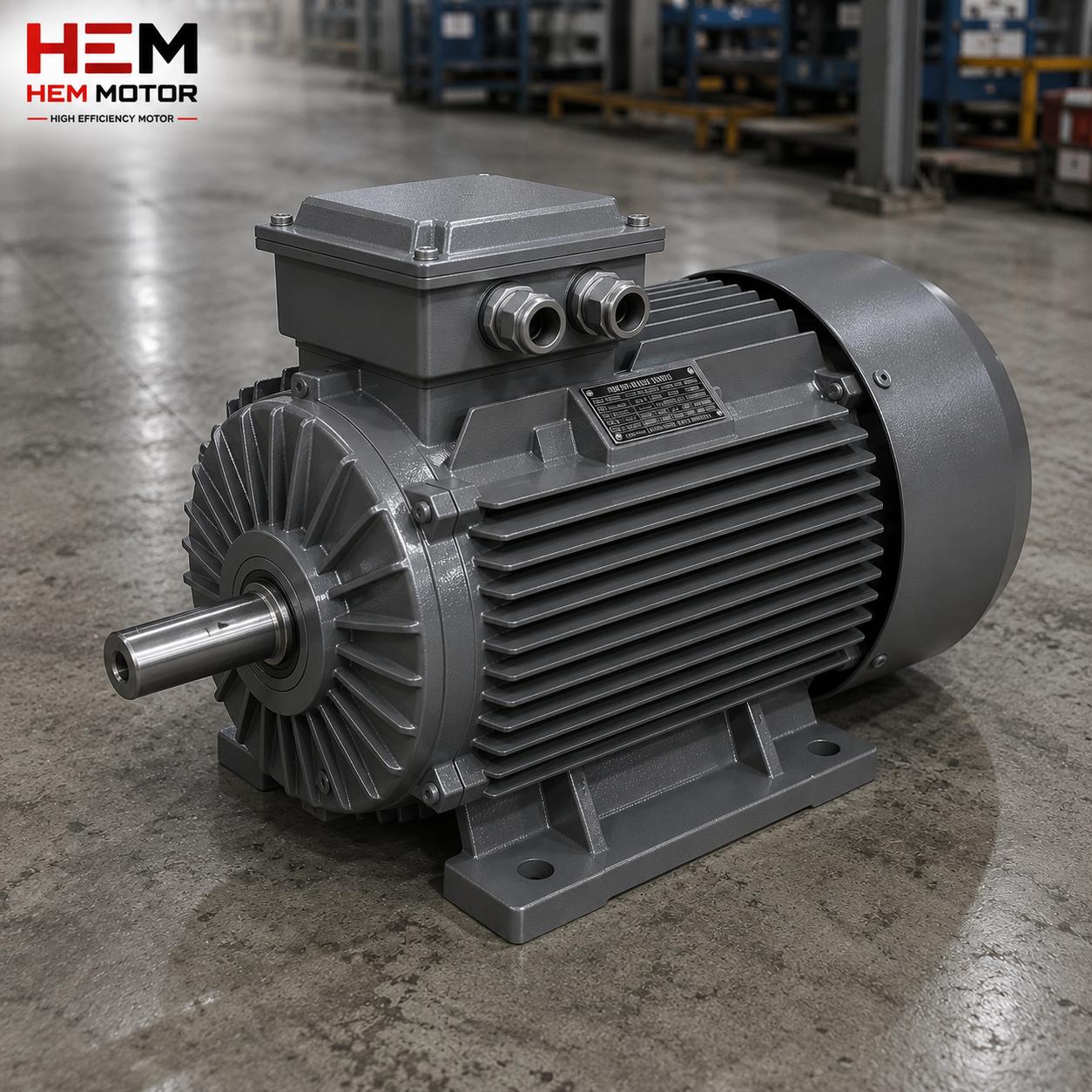

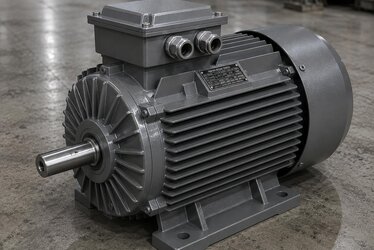
An electric motor catalog or data table is the key to ordering the right model; but if you cannot read rows of power, speed, efficiency and current correctly, your risk of buying the wrong motor rises. At HEM Motor, as manufacturer and supplier, we offer IE3 and IE4 efficiency-class three-phase and asynchronous motors with cast iron and aluminum frame options from a single source. In this article we explain, column by column and from a buyer perspective, the columns of a motor catalog table: power (kW/HP), speed (number of poles), efficiency class, rated current, power factor (cosφ), protection class (IP), insulation, frame size and mounting type. The goal is not theory but to help you find the model that exactly fits your need and request a fast, correct quote. For more buying guides, browse our Price Lists and Catalogs category.
What Do the Catalog Table Columns Tell You?
In a typical motor catalog table each row is a motor model, and the columns give that model's rated values. The most critical columns when ordering are:
- Power (kW and HP): the motor's rated shaft power. The Turkish market uses both kW and horsepower (HP); 1 HP equals roughly 0.75 kW. Pick the right kW column for your load power.
- Speed (rpm) and number of poles: 2 poles is about 3000 rpm, 4 poles 1500 rpm, 6 poles 1000 rpm. The table usually states synchronous speed (3000/1500/1000); actual speed is slightly lower due to slip.
- Efficiency class and efficiency (%): IE3 Premium or IE4 Super Premium. The same row also gives a percent efficiency value; higher efficiency means a lower electricity bill.
- Rated current (A): the current the motor draws at 400 V supply. Cable cross-section, fuse and thermal relay selection are based on this value.
- Power factor (cosφ): the motor's reactive load behavior. A low cosφ increases the risk of a reactive penalty.
- Protection class (IP): standard IP55; shows the level of protection against dust and water.
- Insulation class: standard class F; the temperature level the winding withstands.
- Frame size and mounting: a frame code such as 90L, 132M and a B3/B5/B35 mounting type.
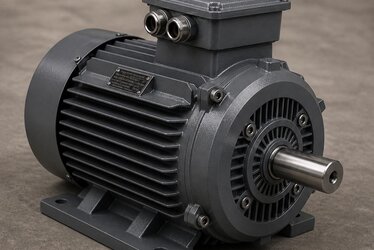
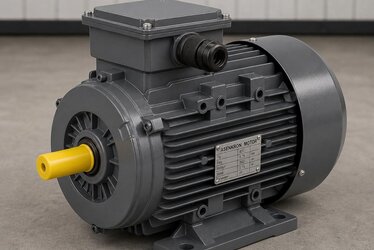
In HEM Motor's range the power span is 0.25 kW to 355 kW, speed 1000/1500/3000 rpm, protection IP55 and insulation class F. See models consistent with these values on our IE3 electric motor and IE4 electric motor product pages.
Read the Power and Speed Columns Together
The most common mistake is looking only at the kW value and skipping speed. A motor of the same kW power can be 2-pole (3000 rpm) or 4-pole (1500 rpm), and these two go to entirely different applications. Pumps and fans usually favor high speed, while conveyors and geared systems favor low speed. We detailed the effect of pole choice on the application in our article which pole count for which job. When converting between HP and kW, our guide HP or kW: understanding motor power correctly makes it easier.
Rated Current, cosφ and Efficiency: The Columns That Set the Bill
The electrical values in the table affect both the wiring selection and the operating cost directly. Cable cross-section, fuse and motor protection switch are sized to the rated current; skipping this value leads to wrong selections in the panel. If cosφ is low, more reactive power is drawn from the grid and a reactive penalty risk arises; high-efficiency motors usually have a better value here. The efficiency percentage shows how little electricity the motor uses for the same work. An IE4 motor reduces losses compared with an IE3 motor, and in continuously running plants the bill difference becomes clear. You can examine the effect of efficiency and power factor on the bill in our article power factor (cosφ) and reactive penalty.
A motor's nameplate values must match the catalog table exactly. If you are replacing an existing motor, you can find the right model by matching the kW, speed, current and cosφ on the old motor's nameplate to the catalog. On reading the nameplate, our article reading the IE3 motor nameplate: kW, speed, cosφ and efficiency guides you step by step.
Frame Size, Mounting Type and IP: The Columns That Set Mechanical Fit
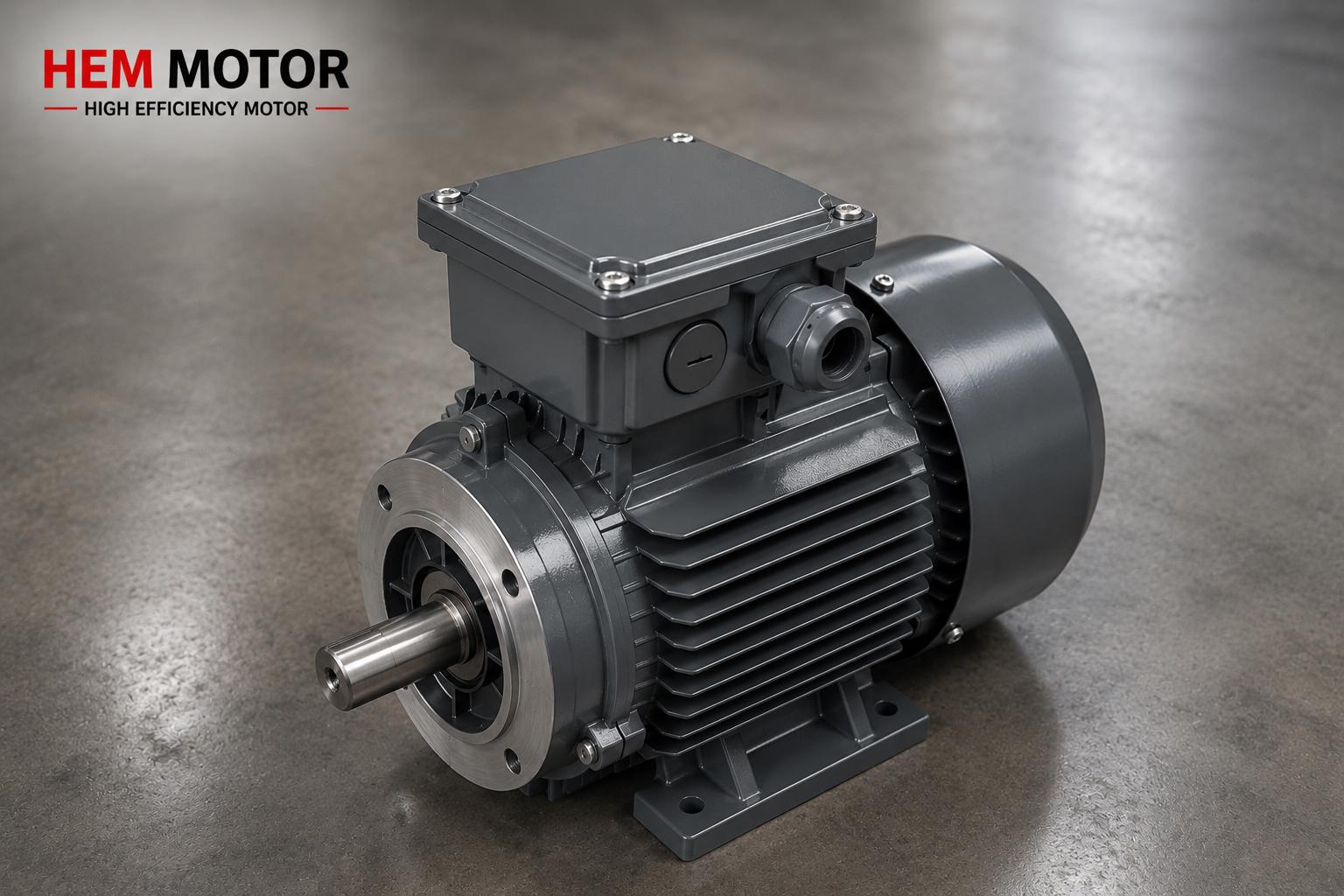
The second half of the catalog is usually devoted to mechanical dimensions. Reading these correctly is essential for the motor to physically fit your machine:
- Frame size: standard IEC frame codes from 63 to 355L. Frame size sets the foot hole spacing, shaft center height and flange dimension.
- Shaft diameter and key: each frame size has a standard shaft diameter; this value is critical for coupling or pulley fit.
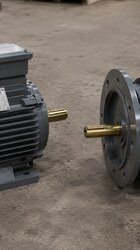
- Mounting type: B3 foot, B5 large flange, B14 small flange, B35 foot+flange combined. Ordering the wrong mounting type is the most common error.
- IP protection: standard IP55; higher protection may be requested for dusty or moist environments.
To match frame size to power correctly, see our article frame size and power matching in cast iron motors. We covered the difference between B5 and B14 mounting in B5 flange or B14 flange. You can review all mounting options on our mounting types product page.
Do Not Skip Shaft Diameter and Key Size
If you will connect the motor to a reducer, coupling or pulley, the shaft diameter and key size must match exactly. In the catalog these values are usually given next to the frame size row. A wrong shaft diameter means the motor cannot be fitted to your machine. For correct ordering, our article motor shaft diameter and key dimensions clarifies coupling and pulley fit. If you will connect a motor to a worm or NMRV reducer, see our article which motor fits the reducer: IEC frame and flange matching.
The 5 Most Common Mistakes When Reading a Catalog
The mistakes buyers most often make when choosing a model from the data table are the main reason the wrong motor arrives. Knowing them does half the work for a correct order:
- Skipping speed: looking only at kW and not stating 2-pole or 4-pole; a motor of the same power arrives at the wrong speed.
- Confusing the mounting type: requesting B3 instead of B5, or B5 instead of B14; the flange and feet do not fit the machine.
- Ignoring the efficiency class: requesting a lower class at a power where IE3 or IE4 is mandatory; this causes both legal and bill problems.
- Overlooking the shaft diameter: when the coupling or pulley does not fit, the motor waits idle on site.
- Not stating the ambient condition: in dusty, moist or hot environments standard protection may be inadequate.
All of these can be prevented by exact matching with nameplate data. Our article covering the topic in depth, the 7 most common mistakes when buying an electric motor, secures the purchasing process. To prevent the wrong motor arriving on site, use our pre-order nameplate matching checklist.
The Regulation Column: Which Efficiency Class at Which Power?
The efficiency class column in the catalog table should be read not only for the bill but also for regulatory compliance. Turkish and EU rules mandate a minimum efficiency class across certain power ranges; so when choosing a model from the table you must check which class your power requires. As a general rule, IE3 stands out at medium and high powers, and IE4 in larger power bands. To clarify which class is required at which power, see our article IE3 efficiency class mandate: which class at which power. The dates and power thresholds of the regulation are explained in detail in our IE3 and IE4 efficiency mandate article. This way the model you pick from the catalog fits your need both technically and legally.
From Table to the Right Model: A 5-Step Reading Method
To find the model that fits your need from a catalog table, follow this order:
- 1. Set the power: choose the kW (or HP) value suited to your load power; an oversized motor lowers efficiency.
- 2. Choose the speed: set the pole count (2/4/6) and speed by application.
- 3. Choose the efficiency class: IE3 or IE4 for regulation and the bill.
- 4. Mounting and frame: match the B3/B5/B14/B35 mounting type and frame size to your machine.
- 5. Environment and protection: verify the IP protection and insulation class against the operating environment.
These steps help you reach the right model among the many electric motor types; for a broader map, see our article electric motor types and buying map. If you wonder which columns affect price, our article factors affecting electric motor prices explains which features drive cost. Requesting a quote directly is the fastest way to a price.
Frequently Asked Questions
Why is the speed in the catalog different from the motor's actual speed?
The catalog usually states synchronous speed (3000, 1500, 1000 rpm). In an asynchronous motor the rotor turns slightly behind the rotating field (slip), so the actual speed is somewhat lower; for example a 4-pole motor turns at about 1440 rpm instead of 1500. This is normal and consistent with the catalog value; when choosing the right model it is enough to set the pole count by synchronous speed.
Can I order a motor by looking only at the kW value?
No. At the same kW power there are motors of different speed, mounting type, frame size and efficiency class. To avoid the wrong model you must also state the speed (poles), mounting type (B3/B5/B35), frame size and shaft diameter together with the kW. Send us your existing motor's nameplate details and we will match the exact model from the catalog and offer a quote.
Why is the rated current in the catalog important?
Rated current is the current the motor draws at 400 V and sets the cable cross-section, fuse and thermal protection selection. If you skip this value you risk choosing inadequate or oversized equipment in the panel. To request the right protection equipment together, simply state the motor's rated current in your quote request.
Get a Quote
Let us find the model that fits your need from the catalog table together. Send us the power (kW/HP), speed (rpm), mounting type (B3/B5/B35), frame size and your ambient conditions; we will match the right IE3 or IE4 motor and offer a fast supply quote. Reach us now at +90 (532) 345 49 86 or send your request via our contact page. HEM Motor is at your side as manufacturer and supplier.