English
 Français
 Türkçe
 Español
 Русский

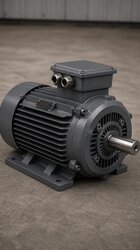

A machine builder writing the spec for a new packaging line types, out of habit, "IP65, class H, PTC, heater, special colour". The line will sit in a closed, dry hall with a stable temperature. The quote comes back higher than expected, with a long lead time, and none of the motors can be swapped for a standard one from stock. The options themselves are not the problem. The problem is that nobody asked which real site condition each one was meant to deal with.
The soundest way to judge an option is to tie it to a problem: does the site actually have this problem, what does the option prevent, and is the cost only money, or also lead time and spare-part flexibility?
What the standard motor already covers
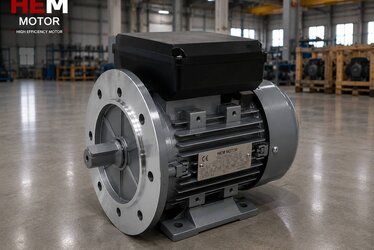
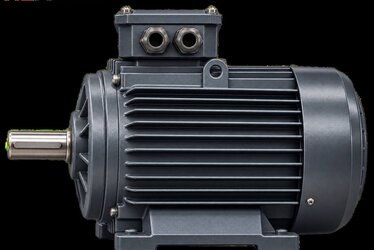
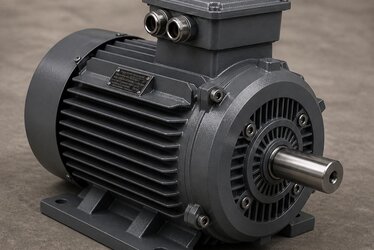
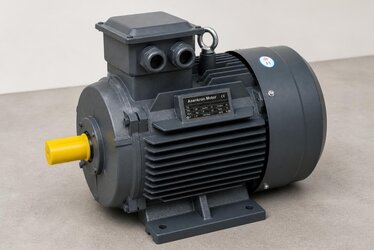
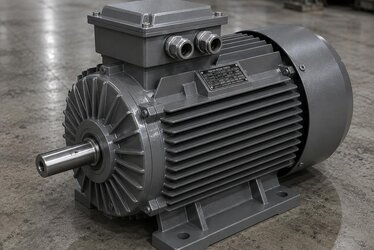
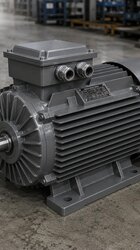
Before adding anything, know the limits of the standard build. HEM Motor's three-phase ranges are based on IP55 protection, class F (155) insulation, S1 continuous duty, IC411 surface cooling, an ambient of −15 °C to +40 °C and altitude up to 1000 m. Inside those limits most options add little technically. Outside them, an option stops being a preference and becomes a requirement.
Moisture and long idle periods: anti-condensation heaters
Outdoor pump stations with cold nights and warm days, seasonal agricultural plants and motors that sit on standby for months all risk condensation inside the winding. A running motor dries itself with its own heat; once it stops, the air inside cools and moisture settles on the winding. A heater keeps the winding slightly above ambient while the motor is idle.
It is a relatively low-cost extra that greatly reduces insulation failures where the risk exists. In a climate-controlled hall on a motor that runs continuously, it is usually unnecessary. Motors held in storage for a long time need their own precautions; see long-term motor storage.
Overheating risk: PTC and PT100 sensors
A thermal overload relay watches current, not winding temperature. On a motor running slowly on a drive for long periods, starting frequently or with restricted airflow, current can look normal while the winding gets hot. A PTC thermistor in the winding trips at a set temperature; a PT100 measures continuously and allows trend monitoring.
The sensor only earns its cost when it is wired to a protection relay or control system. Ordering a sensor-equipped motor and leaving the leads unconnected in the terminal box means paying for an option you do not use. The two sensor types are compared in winding temperature monitoring with PT100 and PTC.
Environment: enclosure and insulation
IP55 is dust-protected and resists water jets from any direction; it covers most general industrial sites. Food lines washed with pressurised water, crushing plants with heavy fine dust or installations exposed directly to rain may justify IP56 or IP65. Higher protection changes seals and sealing details, so it costs more.
Class H insulation widens the thermal margin. It makes sense when ambient regularly exceeds 40 °C or the motor sits near a heat source. Sometimes the same result can be reached by choosing the next power size up; which approach is better depends on the application. See insulation class for hot, dusty sites.
Mechanical fit and finish
Mounting is less an option than a definition: it decides how the motor attaches to the machine. Beyond standard B3 feet, B5, B14, B34, B35 or vertical V1, V3, V5 and V6 positions may need extra parts and machining. The benefit is simple: the motor actually fits.
Standard electrostatic powder coating is available in colours such as RAL 7012 and RAL 7024. A special colour is usually a matter of the machine builder's branding rather than a technical gain. Where there is salt air or chemical vapour, however, corrosion protection is a real requirement and the paint system should be specified for the site; coastal installations are covered in protection for salty coastal environments.