English
 Français
 Türkçe
 Español
 Русский


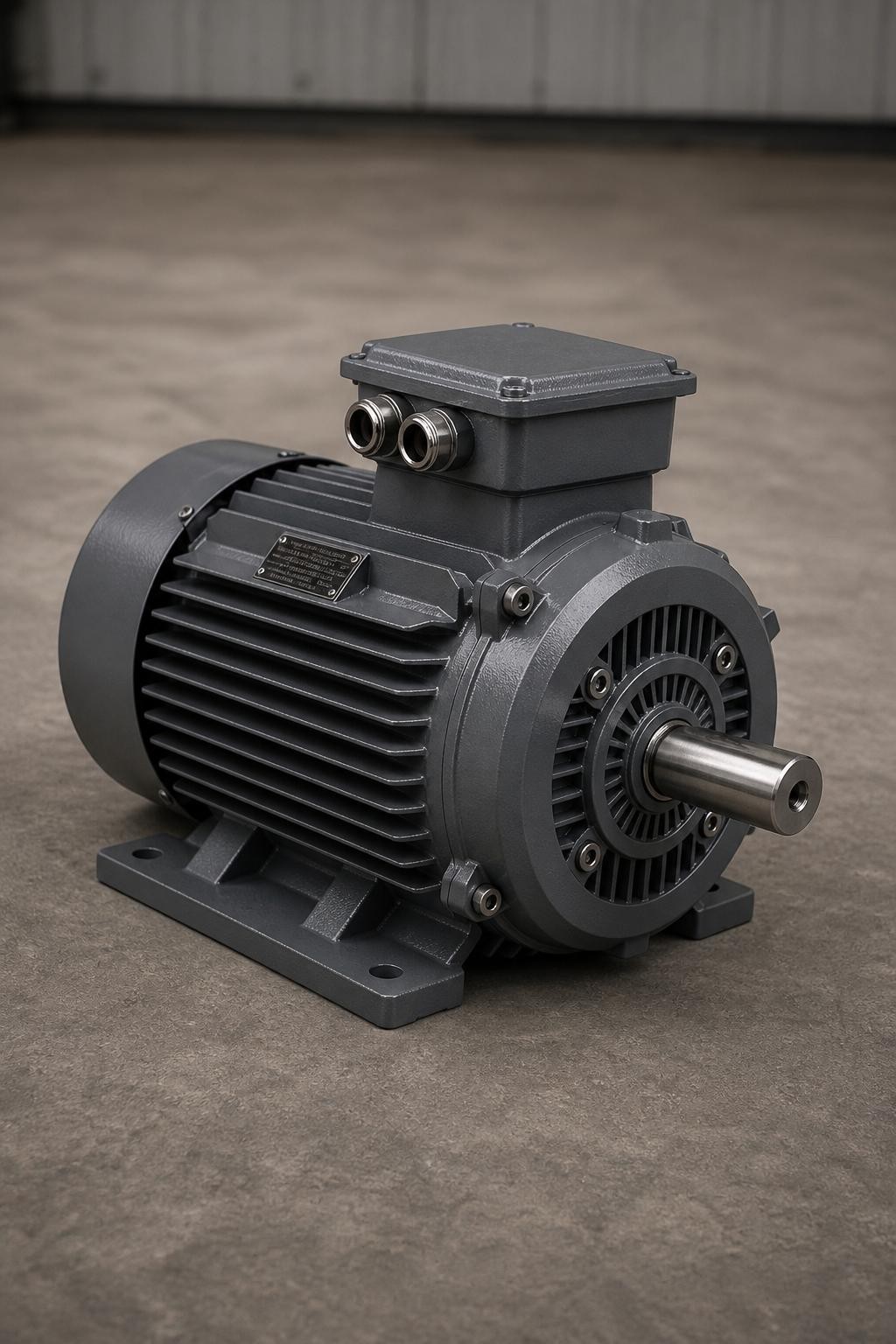
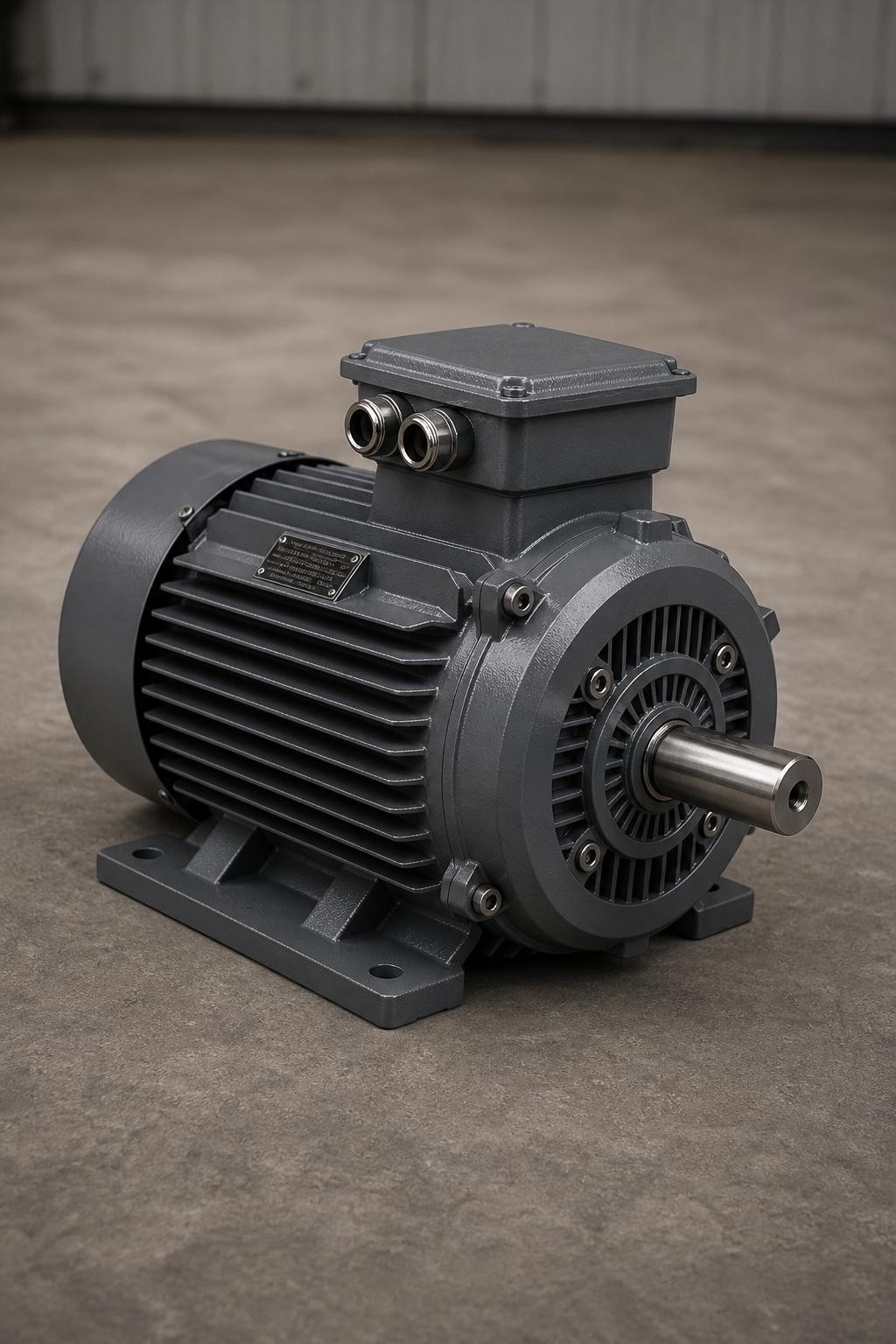

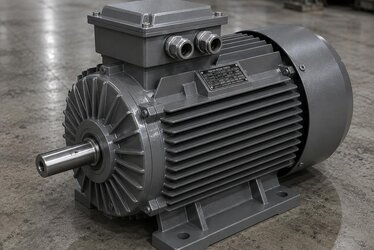
Monday morning, the fan motor on a cooling tower burns out. The maintenance manager has two options: send it for rewinding or buy a new one. Rewinding takes days. A new motor can be on its way quickly, but only if it is already sitting on a warehouse shelf. At that point, the price question stops being "how much does this motor cost?" and becomes "which motor in stock fits my machine, and how soon can I have it?"
This article is for people who have to replace a failed motor from stock. It covers what raises the odds of finding one on the shelf, which requests push an order out of stock, and how to weigh price against the cost of downtime.
The first half hour: identify the failed motor
Almost everything needed for a fast quote is printed on the nameplate, and even if the plate is unreadable, a few measurements will describe the motor. Have these ready before you call:
- Power and speed: the kW and rpm on the plate. Around 1450 rpm means 4 poles; around 2900 rpm means 2 poles.
- Voltage pair: 230/400 V or 400/690 V? If the panel uses a star-delta starter, this is critical.
- Frame size: numbers like 100, 132 or 160 give the shaft centre height in millimetres, which fixes the foot holes and shaft size.
- Mounting: foot (B3), flange (B5, B14) or both (B35, B34).
- Photos: nameplate, terminal box position, shaft end and flange.
If the plate is completely worn away, the frame size can be worked out from the foot hole spacing and shaft height. We explain how in replacing an old-brand motor one-to-one.
What makes a motor more likely to be in stock
Warehouses hold the builds the market uses most: three-phase, IE3, 400 V, 50 Hz, IP55, class F insulation, 4 or 2 poles, B3 or B5 mounting. The closer your requirement is to that description, the better the chance it ships from stock.
These requests, on the other hand, usually move an order into production or special preparation:
- Non-standard voltages, or a 400/690 V winding at small ratings where it is rarely used.
- IP65, class H insulation, a special RAL colour.
- PTC or PT100 winding sensors, anti-condensation heaters, separately driven fans.
- Special shaft ends, non-standard flanges, dedicated vertical-mount builds.
In an emergency it pays to separate what is truly required from what the old motor simply happened to have. A motor in an enclosed pump room, for example, is usually fine with standard IP55 instead of IP65. The difference between stock and made-to-order supply is covered in stock delivery vs production order.
No exact match? Safe substitutions
If the exact motor is not available, some changes are safe and some are not.
Usually acceptable
- A higher efficiency class: an IE4 motor in place of IE3 does the same job with less energy. If frame and shaft share the same IEC number, mounting does not change, though dimensions should still be confirmed.
- One rating up in the same frame: a larger rating that fits the same frame runs fine as long as the protection setting is updated.
- Cast iron instead of aluminium: for the same frame number, IEC fixing dimensions are identical.
Best avoided
- A different speed: a 2-pole motor instead of a 4-pole one completely shifts the operating point of a pump or fan.
- The wrong voltage pair: on a star-delta installation, a 230/400 V motor cannot start properly with the existing panel.
- Mismatched flanges: B5 and B14 flanges are not interchangeable.
Weigh the price against downtime
In an urgent replacement you may have to choose between the motor on the shelf and a cheaper option that arrives several days later. The simplest way to decide is to estimate what one day of downtime costs the plant: lost hourly output, overtime, late-delivery penalties and orders that go elsewhere. On many production lines, a single lost day is worth far more than the price gap between two motors.
Rewinding belongs in the same sum. It looks cheap but takes time and may not fully restore the original efficiency. We compare the two routes in rewind or buy new.