English
 Français
 Türkçe
 Español
 Русский

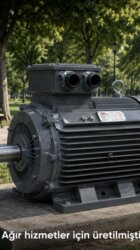
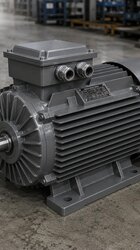
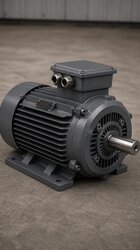
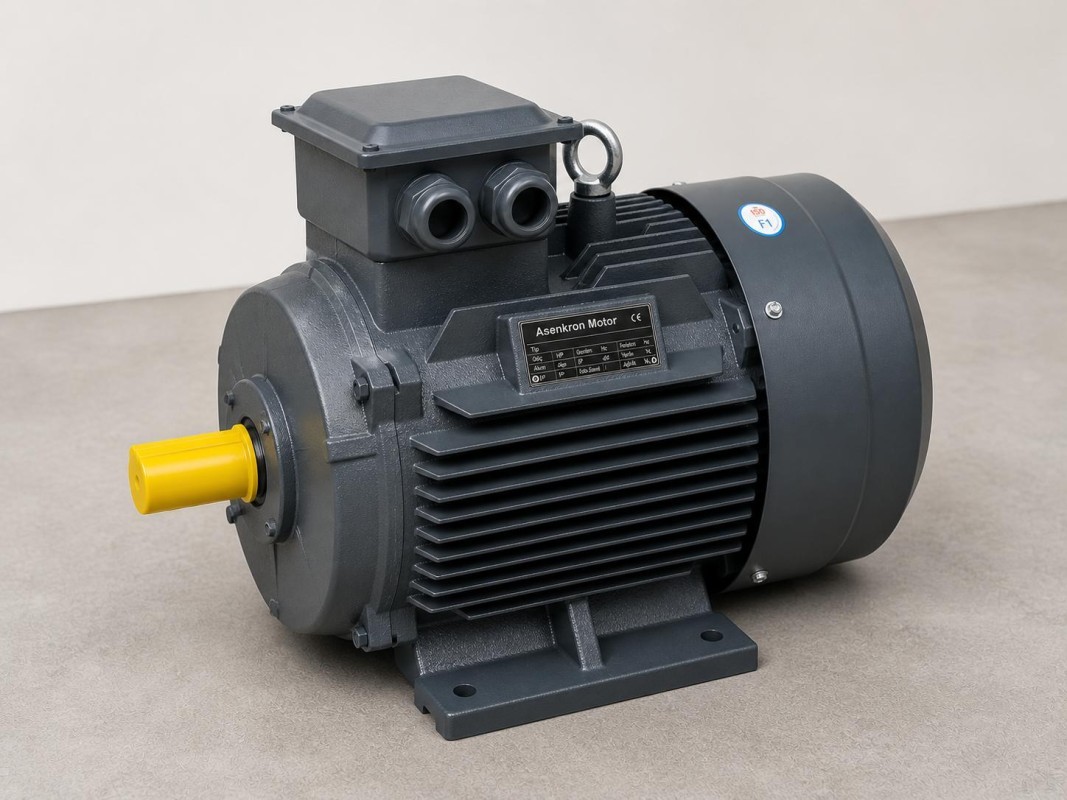
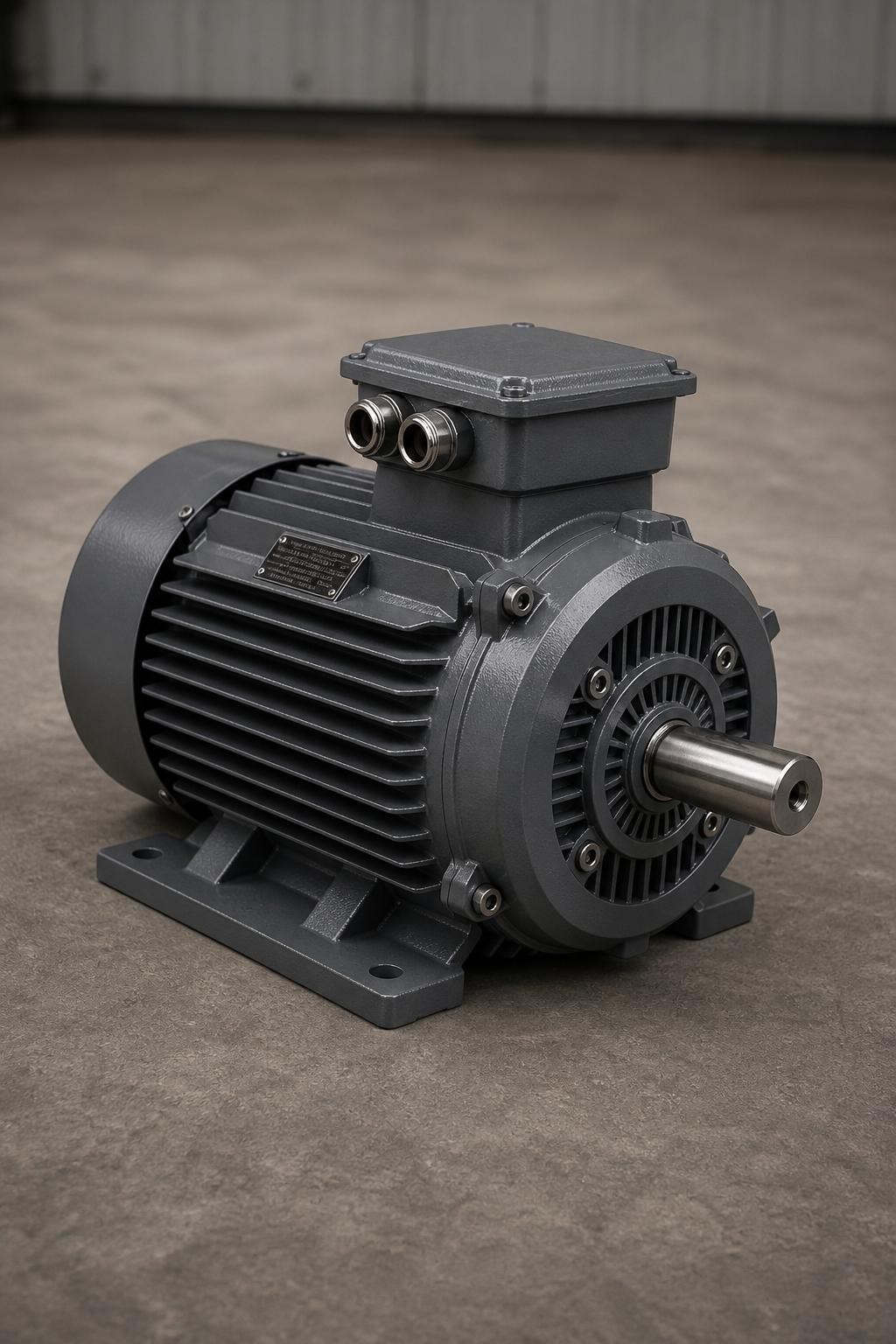

The most honest answer to "How much is a 7.5 kW three-phase motor?" is another question: which 7.5 kW motor? A 4-pole IE3 unit and a 6-pole IE5 unit of the same power come in different frames and sit on different lines of a price list. And over the years the motor runs, its purchase price is often small next to the electricity it consumes.
The quickest way to understand three-phase asynchronous motor prices is to see that most of the choices that move the price are made by the buyer. Below we go through those choices one by one, then put list price next to energy cost with a worked example.
First decision: power
HEM Motor's three-phase squirrel-cage induction motors cover 0.25 to 355 kW. More power means more copper, more lamination steel and a bigger frame, and the price rises accordingly. The most useful thing a buyer can do here is to size power to the real load. A habit of "always going one size up" buys a dearer motor that then runs lightly loaded, with lower efficiency and power factor. To work out the kW a load actually needs, see our guide to motor power calculation for pumps, fans and conveyors.
The overlooked decision: pole count
On a 50 Hz supply, a 2-pole motor runs at about 3000 rpm, 4-pole at about 1500, 6-pole at about 1000 and 8-pole at about 750; the nameplate speed is a little lower because of slip. What matters for price is this: the same power at lower speed means higher torque, and more torque needs a larger magnetic circuit and therefore a larger frame.
Torque is roughly M (Nm) ≈ 9550 × P (kW) / n (rpm). A 7.5 kW motor delivers about 48 Nm at 1500 rpm, about 72 Nm at 1000 rpm and about 96 Nm at 750 rpm. That is why 6- and 8-pole motors are usually in a bigger frame and cost more than a 4-pole motor of the same power.
In practice the question becomes: should the low speed come from the motor itself, or from a 4-pole motor with a belt drive or gearbox? Conveyors, mixers and geared drives often use 6-pole motors. Pumps, fans and general drives mostly use 4-pole motors, which are the most common and usually the easiest to source. 2-pole motors serve compressors, blowers and high-speed pumps.
Efficiency class: purchase price against the power bill
HEM Motor offers its three-phase ranges in three efficiency levels within the same frame system: IE3 Premium, IE4 Super Premium and IE5 Ultra Premium. Higher classes need better lamination steel, more active material and more refined design, which raises the purchase price. In return, the motor produces the same shaft power from less electricity.
To make that concrete, take the catalogue figures for a 50 Hz, 4-pole, 7.5 kW motor: 90.4% for IE3, 92.6% for IE4 and 94.0% for IE5. At full load, input power is roughly 8.30 kW, 8.10 kW and 7.98 kW respectively.
- Choosing IE4 over IE3 saves about 0.20 kW. At 4,000 hours a year that is around 790 kWh; at 6,000 hours, around 1,180 kWh.
- Choosing IE5 over IE3 saves about 0.32 kW. At 4,000 hours a year that is around 1,270 kWh; at 6,000 hours, around 1,910 kWh.
Multiply those kWh by your own electricity tariff and you get a rough idea of how many years the extra cost of a higher class takes to pay back. These figures assume full load, and part-load values will differ. On a single-shift, intermittent drive IE3 is often enough, while on a pump or fan running three shifts IE4 or IE5 can recover the premium much sooner. The payback calculation is covered in more depth in IE3 or IE4: the investment case.
Construction and options: stepping away from standard
List prices assume a standard build. For HEM Motor's three-phase ranges that means a GG20 grey cast iron frame (with an aluminium alternative in selected small ratings), 100% electrolytic copper windings, IP55 protection, class 155 (F) insulation, S1 duty and IC411 surface cooling. Typical departures that change the price:
- Mounting: B5, B14, B34, B35 or vertical V1, V3, V5, V6, V15 instead of foot-mounted B3.
- Protection and insulation: IP56 or IP65, class H insulation.
- Voltage: special voltages beyond 230/400 V or 400/690 V.
- Accessories: PTC or PT100 winding temperature sensors, anti-condensation heater.
- Paint: a non-standard RAL colour or special coating system.
- Site conditions: ambient above +40 °C or altitude above 1000 m may call for derating or the next power size.
How each of these affects a quote is explained in how options and accessories affect motor price.