English
 Français
 Türkçe
 Español
 Русский


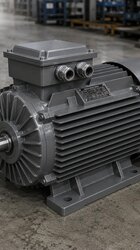
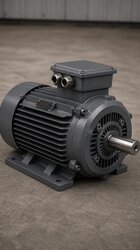
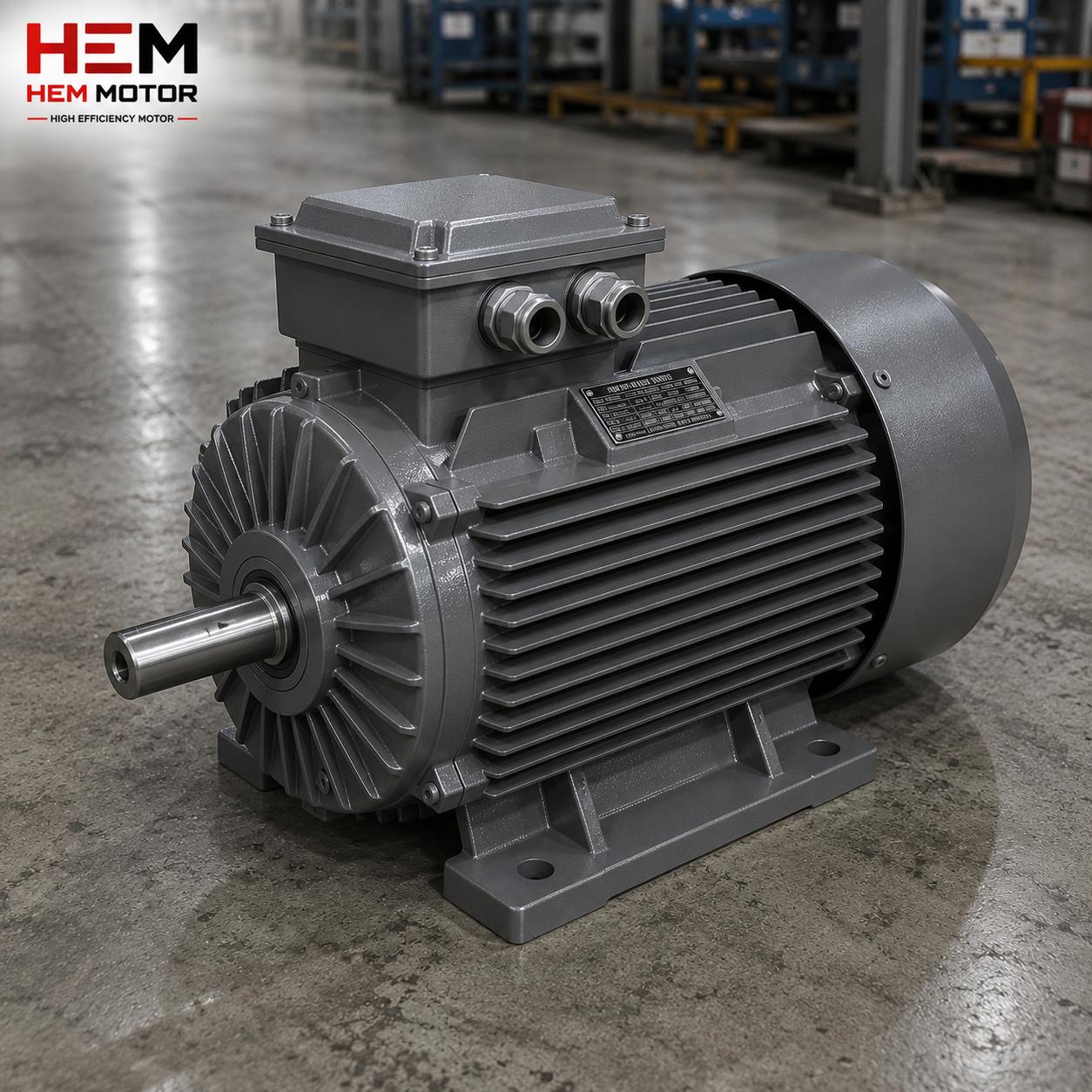

On the capital budget for a new production line, motors often take up a single row: "electric motors, 42 units". As the project moves on, that row grows. Drive-rated motors added late, forgotten flange versions, sensor requests and spares push it over budget. The way to get the motor budget right from the start is to treat motors not as one item but as a list split into groups by how they run.
What follows is a practical route from a motor list to a realistic budget. Your figures will depend on your plant; the method is what matters.
Start with a complete motor list
The budget begins with a list from the machine builders or the project engineer. For each motor it should give at least:
- Power (kW) and speed or number of poles
- Mounting arrangement (B3, B5, B14, B35 and so on)
- Starting method: direct-on-line, star-delta, soft starter or drive
- Estimated running hours per year
- Environment: indoor hall, outdoors, wet area, dusty zone
Any gap in the list gets filled with an assumption at quotation stage or costs another round of emails. Why each item matters is explained in information to include in a quote request.
Group motors by running hours
The biggest budget decision is efficiency class, and it depends on running hours. Three groups make it manageable:
- Continuous duty (6,000 hours a year or more): main fans, process pumps, compressors, extruders.
- Shift duty (2,000–6,000 hours): conveyors and mixers on one or two shifts.
- Occasional duty (under 2,000 hours): standby pumps, maintenance hoists, seasonal fans.
With motors grouped this way, the choice between IE3, IE4 and IE5 can be made per group instead of being argued motor by motor.
Work out the energy gap in kWh
The clearest way to see what efficiency class does to a budget is to calculate annual energy use:
Annual consumption (kWh) ≈ shaft power (kW) × load factor × running hours ÷ efficiency
Take a 4-pole 37 kW fan motor running 7,000 hours a year at about 80% load. Efficiency limits are 93.9% for IE3, 95.2% for IE4 and 96.1% for IE5. Annual consumption comes to roughly 220,600 kWh with IE3, 217,600 kWh with IE4 and 215,600 kWh with IE5. Moving from IE3 to IE4 saves about 3,000 kWh a year, and moving to IE5 about 5,000 kWh. Multiply that by your own electricity tariff and you can see how many years it takes for the higher class to pay back its premium.
If the same motor ran only 1,000 hours a year, the saving would shrink to a seventh and payback would stretch accordingly. That is why IE4 or IE5 for the continuous group and IE3 for the occasional group is a sensible starting point on most projects. How load factor affects efficiency is covered in motor load ratio and correct sizing, and the long-term cost view in maintenance and operating cost versus purchase price.
The hidden extras of drive-fed motors
Motors that will run on a frequency converter bring items that budgets often miss:
- A separately driven fan may be needed where a motor runs at full torque and low speed for long periods.
- Long cables between drive and motor call for a dv/dt or sine filter.
- Larger frames may need an insulated bearing or shaft grounding.
On pumps and fans, a drive can save more than the efficiency class does; we show the numbers in drive savings and the affinity laws. Keeping drives and these extras on a separate line, rather than burying them in the motor price, makes quotes far easier to compare.