English
 Türkçe

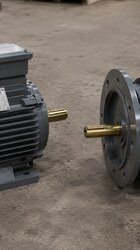
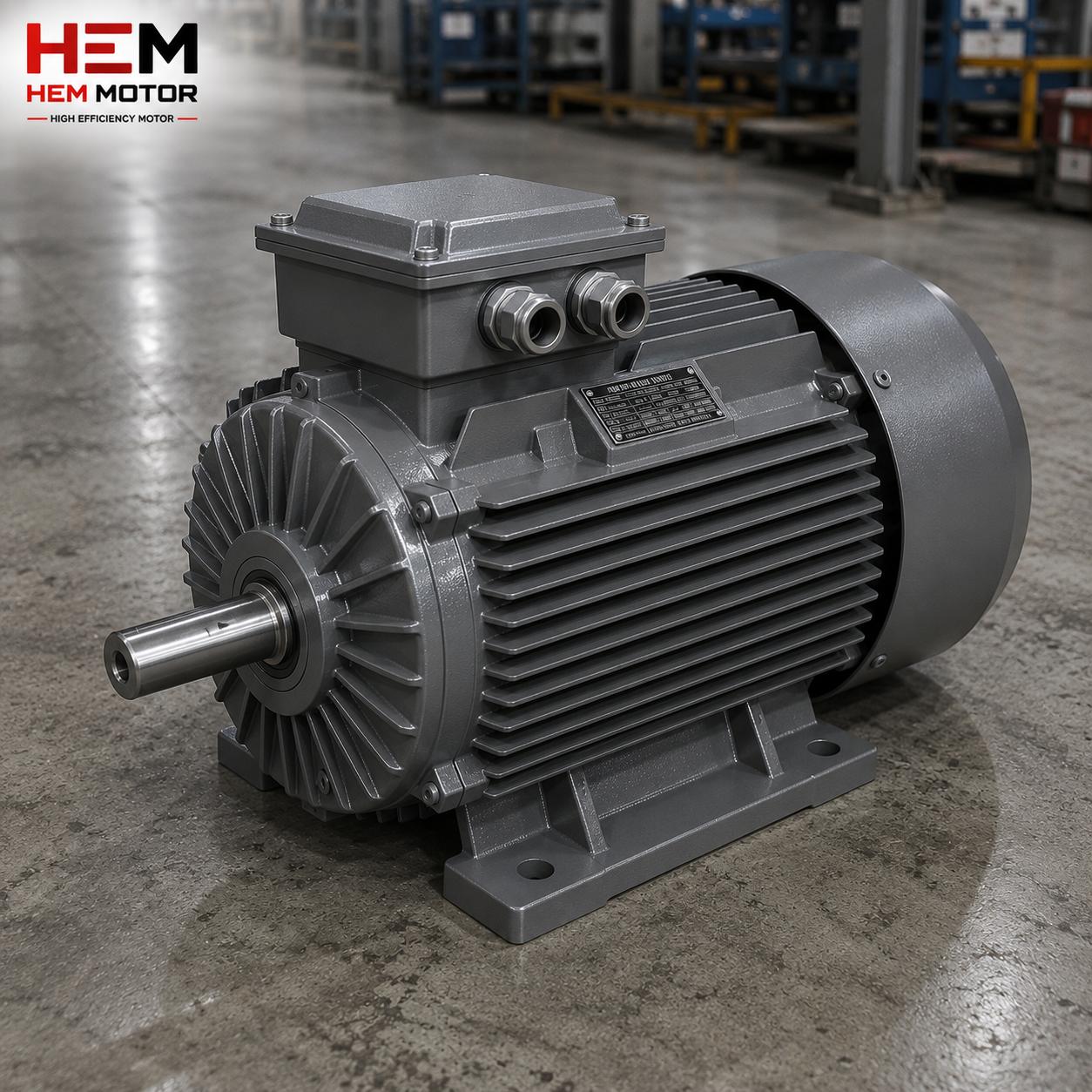

At first glance, an electric motor proforma or quote looks like a single number. Yet behind that number lie dozens of line items: efficiency class, frame material, mounting type, protection rating, accessories, shipping and lead-time terms. A buyer who cannot read these items may pick a seemingly "cheap" quote and end up buying the wrong motor, missing accessories or a long delivery time. This guide explains how to read an electric motor quote line by line, what makes up the price, and how to compare two quotes fairly. We quote no fixed prices here; the right decision comes from understanding the items that make up the number, not the number itself.
Proforma vs. Quote
A proforma invoice is a non-binding preliminary document given to the buyer before the final sale, showing the type, quantity, unit and total amounts, delivery and payment terms. A quote may be broader, including a technical specification, alternative models, options and a validity period. In practice both serve the same goal: agreement between parties before an order is placed. When evaluating a quote, first check the document type, its validity period and the completeness of the technical descriptions inside it.
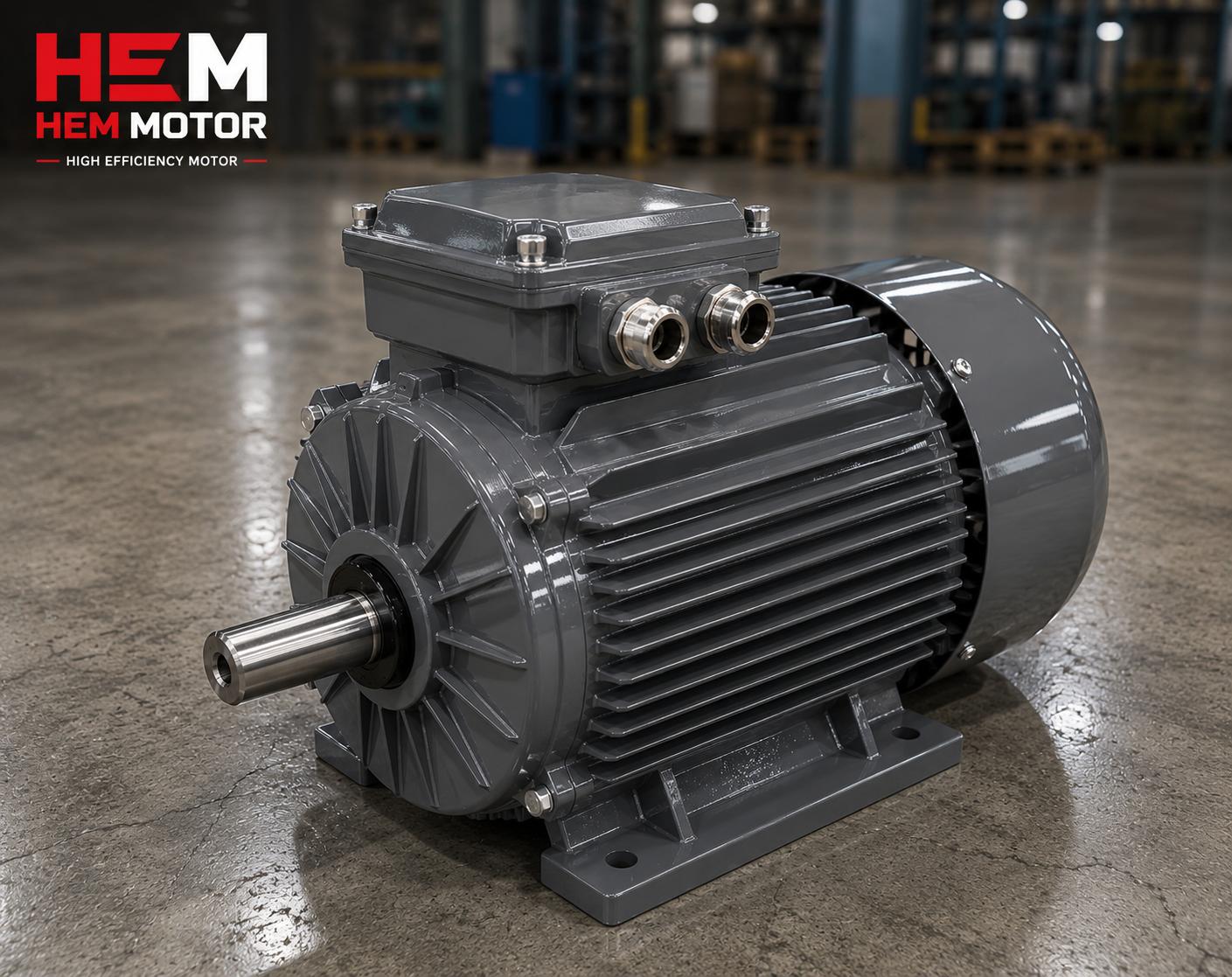
A good quote defines the motor together with its power (kW), speed (rpm), pole count, efficiency class, mounting type, frame material, protection rating, insulation class and duty type. To understand all of these items, start with our electric motor types and purchasing map.
Technical Items That Make Up the Price
1. Power (kW), Poles and Speed
The most basic line item is motor power. Choosing it correctly affects both price and operating cost. An oversized motor is wasted investment; an undersized one means early failure. Pole count (2, 4, 6, 8) sets the speed: 2 poles give about 3000 rpm, 4 poles about 1500 rpm rated speed. At the same kW, a low-speed (high-pole) motor is usually built in a larger frame, so material cost differs. To set power correctly, see our HP-kW power guide and 2-4-6 pole selection.
2. Efficiency Class (IE3 / IE4 / IE5)
Whether the motor is IE3, IE4 or IE5 is among the most decisive price items. A higher-efficiency motor needs more and better copper winding, better steel and more precise manufacturing, so it looks higher as an initial-investment item; in return it lowers energy use. Under Turkish and EU regulation, IE3 is mandatory for direct-on-line (DOL) motors in the 0.75–1000 kW range, and IE4 applies in certain power bands. Check whether the quoted efficiency class fits your application and regulation. Our IE3 vs IE4 investment and IE3/IE4 efficiency mandate articles guide the decision. For total-cost comparison, also review the TCO calculation.
3. Frame Material: Cast Iron or Aluminum?
The frame may be cast iron or aluminum. Cast iron is heavier, more rigid and impact-resistant; preferred for heavy duty, dusty and harsh environments. Aluminum is lighter and common in small powers and geared applications. Frame material is an important item for both cost and life. See our cast iron vs aluminum comparison.
4. Mounting Type (B3, B5, B14, B35)
Mounting type defines how the motor attaches to the machine: B3 foot, B5 large flange, B14 small flange, B35 combined foot + flange. Ordering the wrong mounting type can mean the motor will not fit at all. The quote must state the mounting type (and IM code) clearly. See B5 vs B14 mounting and reading the IM mounting code.
5. Protection (IP) and Insulation Class
The IP rating (e.g. IP55, IP65, IP66) states protection against dust and water. Standard industrial motors are mostly IP55; wet, dusty or washdown environments may need higher IP. Higher IP requires better sealing and different seals, so it can be a separate cost item. Insulation class (F, H) defines the temperature the winding can withstand. For the right choice, see IP protection class selection and insulation class F/H.
6. Duty Type (S1–S8) and Service Factor
Duty type defines whether the motor runs continuously (S1) or intermittently (S2–S8). A frequently starting and stopping application should request the correct duty type rather than an S1 continuous-duty motor; otherwise the motor overheats. The service factor (SF) shows how much overload the motor can briefly carry above rated power. These items belong in the technical section of the quote. See duty type S1-S6 selection.
Commercial Items That Make Up the Price
Accessories and Options
A motor quote is not just the motor itself. PTC thermistor or PT100 sensor, anti-condensation heater, external forced-cooling fan, insulated bearing, extra terminal box, special paint/cataphoresis coating, encoder and brake are options that affect price as separate items. When comparing quotes, remember an accessory included in one may be optional in another. See protection devices to request and PT100 and thermistor.
Shipping, Packaging and Delivery Point
On large motors, weight is a significant shipping item. The quote must be clear about the delivery point (ex-works, delivered) and the shipping/packaging terms. Otherwise a "cheap" quote may become expensive once shipping is added. Review shipping risks and incoming checks in our shipping damage check list.
Lead Time
The difference between from-stock delivery and a production order can be as critical as price for your project. In an emergency replacement, a short-lead stock motor is far more valuable than a cheaper long-lead quote. Ask that the lead time be written clearly. We covered this in from stock or production order.
Warranty and Service
Warranty duration and scope (motor only, winding, bearings), service network and spare-part availability are invisible but valuable price items. Review warranty scope in what the warranty covers and warranty and service network: 7 questions.
Payment Terms and Validity
Cash, deferred or staged payment, and the quote validity period (tied to exchange-rate and raw-material movement) are commercial items. When comparing two quotes, also factor in the payment term and how long each quote stays valid.
Comparing Two Quotes Fairly
Fair comparison requires matching "apples to apples." If one quote is IE3 aluminum IP55 and the other IE4 cast iron IP65, putting the numbers side by side is misleading. When comparing, equalize these axes: same power and speed, same efficiency class, same frame material, same mounting type, same protection rating, same accessory package, same lead time and same warranty. Only when these are equal does the price difference become meaningful. Otherwise the lower number may simply represent a less-equipped motor. To get an accurate quote, see the data you must provide the seller in info to give when requesting a quote. To prevent the wrong motor, also apply our nameplate matching guide.
For the full list of price-affecting factors, our 9 factors affecting electric motor prices and, for picking the right model from a catalog, how to read a motor catalog offer a thorough framework. For geared applications, worm gear reducer price factors and geared motor vs separate motor clarify the cost items.
Manufacturing and Material Items That Affect Price
Behind a motor's quoted price lie manufacturing and material items that are invisible to the eye yet directly drive cost. First among them is the winding material: 100% copper winding is more expensive than aluminum but more efficient and longer-lived. Even if two quotes show the same kW and same IE class, a different winding material splits price and life. We covered the copper vs aluminum winding difference in detail in copper vs aluminum winding.
The second item is bearing quality. Heavy duty, high speed or side-load (belt-pulley) applications need reinforced or insulated bearings, which raise cost. Review bearing life and quality marks in bearing and journal life in cast-iron motors. The third item is paint and coating: corrosive, salty or open-site environments demand cataphoresis coating and special paint; if a standard quote omits this item, the motor may wear out early in the environment. Find corrosion protection in paint and cataphoresis coating. These three items are often the invisible answer to "why is there a gap between these two quotes?"
Quote Items for Geared Drives
If the quote is for a geared drive (motor + gearbox) rather than a bare motor, the number of items grows. Gearbox type (worm or bevel-helical), reduction ratio, output speed, mounting position and input flange (IEC connection) are additional items that set the price. Whether a monoblock geared motor or a separate motor + gearbox is chosen affects both price and maintenance; we covered this in geared motor vs separate motor. For an economical gearbox-type choice see bevel-helical vs worm gear, for motor-gearbox matching reducer motor matching, and for mounting position mounting positions and lubrication. Factors affecting price on the gearbox side are in reducer price factors.
Initial Investment or Total Cost? Reading the Quote in the Right Frame
The number in a quote shows only the initial investment (purchase). Yet a motor's real cost includes the energy it consumes over its life. On a continuously running motor, energy cost rises far above purchase cost. So a low-number IE3 quote may cost more in the long run than a high-number IE4 quote. When reading a quote, look not just at the initial investment but at the total cost of ownership (TCO). Find the real energy-saving calculation in replacing an old motor with IE4 and efficiency-class selection together with right-sizing in motor load ratio and right-sizing. Correct sizing keeps you from the trap of oversizing, which means both excess investment and low efficiency at part load.
Quote Validity and Exchange-Rate Effect
Some of the items that make up electric motor prices (copper, steel, casting) depend on international commodity prices. So a quote's validity period is limited; exchange-rate and raw-material movement can affect it. When comparing two quotes, one offering a longer validity period is a valuable item because it reduces uncertainty for your project. Before confirming, clarify the validity period and under what conditions the price stays fixed. On stock motors, price is often more predictable than on a production order, which once again highlights the stock advantage in projects needing fast decisions.
Common Mistakes When Reading Quotes
The most common mistake is looking only at the total and skipping the technical items. The second is failing to ask whether accessories are included. The third is overlooking lead time and warranty. The fourth is not checking that the quoted efficiency class meets regulation. The fifth is assuming two quotes are equal without asking about invisible items like winding material, bearing quality and coating. The sixth is treating the quote as initial investment only and ignoring lifetime energy cost. We collected the broader purchasing mistakes in mistakes when buying an electric motor; review it before evaluating any quote.
Frequently Asked Questions
Does a proforma invoice commit me to an order?
A proforma invoice is a non-binding preliminary document; the confirmed order triggers the final sale and delivery. Even so, the technical definitions in the proforma (kW, speed, IE class, mounting type, IP, duty type) form the specification of the motor that will arrive; read the proforma as carefully as the order. A missing or wrong technical item can lead to the wrong motor.
Why can the price gap between two quotes be so large?
Because two quotes often do not describe the same motor. If efficiency class (IE3/IE4/IE5), frame material (aluminum/cast iron), protection rating (IP55/IP65), accessory package, lead time and warranty differ, the numbers diverge sharply. Before comparing, equalize all technical and commercial items; only then is the gap a real price difference.
What must a quote always contain?
Power (kW), speed/poles, efficiency class (IE), frame material, mounting type (and IM code), protection rating (IP), insulation class, duty type, included accessories, delivery point and shipping term, lead time, warranty duration/scope, payment term and the quote validity period. If any of these is missing, ask the seller to clarify before confirming.
Get a Quote
For an electric motor quote tailored to your need, with all technical and commercial items clearly defined, contact us. Our expert team will determine the right power, efficiency class, mounting type and accessories with you and prepare a transparent proforma. Call +90 (532) 345 49 86 now or reach us via our contact page.
Quote Evaluation Checklist
- Are power (kW), speed and pole count clearly stated?
- Does the efficiency class (IE3/IE4/IE5) fit the application and regulation?
- Is the frame material (cast iron/aluminum) specified?
- Are the mounting type (B3/B5/B14/B35) and IM code correct?
- Do the protection (IP) and insulation (F/H) classes suit the environment?
- Are duty type (S1–S8) and service factor defined?
- Which accessories are included, which are optional?
- Are shipping, packaging and delivery point clear?
- Is the lead time written?
- Are warranty duration and scope stated?
- Are the payment term and quote validity period present?
- Are the two quotes compared on the same axes?
For more technical content visit our blog, and for our product range our home page.