Have you ever wondered why the quotes you receive for a gear reducer differ so widely? Two requests built on the very same description — "1.5 kW, 1/40 ratio worm gear reducer" — can come back with a serious price gap, because what determines the price is not that short description but a chain of technical and commercial factors that runs from body size and material quality to the type of output shaft and the delivery time. Quotes that are compared incorrectly cost a business in two ways: either an unnecessarily large and expensive reducer is purchased, or a reducer that looks cheap but has an inadequate service factor stops the line within a few months as the gear wears out. In this article, drawing on the sales engineering experience of HEM Motor — an electric motor manufacturer and reducer supplier since 1979 — we explain the 7 factors that determine the price of a worm gear reducer one by one, and we show how to make the right selection across the body range that runs from HEM30 to HEM130. Instead of specific figures, we offer a lasting framework that lets you read quotes correctly; for a current price you can get a same-day quote through the contact channels at the end of the article.

The 7 Factors That Determine Worm Gear Reducer Pricing

1. Body Size (HEM30–HEM130)

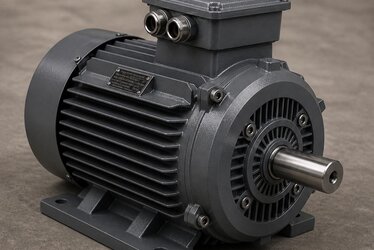
The number-one determinant of price is body size. In worm gear reducers, the body number expresses the centre distance: in the HEM30 series the distance between the worm and the wheel is 30 mm, while in HEM130 it is 130 mm. As the body grows, the wheel diameter, the amount of bronze used, the bearing sizes and the machining time all increase; the price therefore rises step by step. The series — HEM30, HEM40, HEM50, HEM63, HEM75, HEM90, HEM110 and HEM130 — covers every torque requirement from small dosing belts to heavy-duty mixers. What determines the correct body is not the motor power but the torque required at the output shaft; with the same 1.5 kW motor a small body may be enough at a 1/10 ratio, while at a 1/60 ratio you may need to step up to the next body size.

2. Reduction Ratio and Efficiency

Worm gear reducers are typically produced with ratios between 1/5 and 1/100. As the ratio increases, the number of worm thread starts decreases, friction rises and efficiency drops; an efficiency of 85–90% at a 1/5 ratio falls to around 60% at a 1/100 ratio. This affects the price in two ways: a high-ratio reducer may require a larger body for the same output torque, and the low efficiency returns as electricity cost over the operating life. When a very high ratio is needed, double-stage solutions or helical pre-stage types come into play.

3. Material Quality: Wheel Bronze and Worm Steel

The heart of a worm gear reducer is the hardened and ground steel worm together with the bronze wheel that meshes with it. The quality of the bronze alloy used in the wheel directly determines the reducer's life and makes up a significant part of the cost. In low-priced imported reducers it is common to use low-alloy material instead of proper bronze; these products, cheap at first glance, wear out quickly under continuous load. When comparing quotes, always ask about the wheel material: the difference between a centrifugally cast phosphor bronze wheel and ordinary cast material is the real explanation behind a price gap.

4. Body Material: Cast Iron or Aluminium?

In small bodies (the HEM30–HEM63 band) an aluminium body is common: it is light, corrosion-resistant and ideal for food, packaging and light conveyor applications. In larger bodies and heavy duty, cast iron is the standard: its vibration damping, rigidity and heat capacity are superior. You can review the aluminium-body options on our aluminium body worm gear reducers page. Within the same body size, the material choice affects the price; choosing a material unsuited to your application means either unnecessary cost or premature failure.

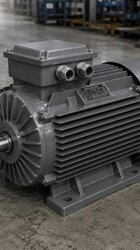
HEM30 ile HEM130 arasi sonsuz dişli redüktör gövde serisi

5. Input and Output Configuration

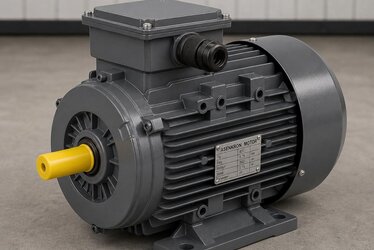
Even within the same body, the configuration changes the price. On the input side, whether a motor-flanged (PAM) type or a free input-shaft type is requested, and whether a complete unit with motor or the reducer alone is being bought, directly affect the quote. On the output side, a hollow (bored) shaft is the standard solution, while a single or double output shaft, torque arm, output flange and foot-mounting kit are additional items. On the motor side, the choice between a B5 or B14 flange also defines the connection; our B5 vs B14 motor mounting type selection guide makes this decision easier.

6. Service Factor and Operating Regime

The service factor is the safety margin between the reducer's catalogue capacity and the real demand of the application. For a belt running 8 hours a day under a smooth load, a service factor around 1 is enough; for an application that runs 24 hours, carries shock loads or has frequent stop-starts, 1.5 and above is required. A high service factor often means stepping up to the next body size and raises the price, but that difference is the cheapest insurance you can pay to keep the line from unplanned stops. The secret behind a cheap quote is often hidden in a service factor that has been kept low.

7. Stock Availability, Delivery Time and Supply Channel

The commercial dimension of price is at least as important as the technical one. With reducers coming through an importer channel, exchange-rate fluctuation and lead-time risk are reflected in the price, and every intermediary link adds its own margin. At HEM Motor, in its position as manufacturer and main supplier, common bodies and ratios are ready in stock in Turkey: most items, including complete motor-reducer units, ship from stock the same or next day. Every day your line waits in an emergency stoppage costs more than the price of the reducer; so when comparing quotes, treat delivery time as part of the price.

Correct Body Selection: Which Body for Which Application, HEM30–HEM130?

The practical method for body selection is this: first calculate the output speed (motor speed / ratio), then the output torque (9550 x kW / output speed, Nm); then multiply by the service factor and choose from the catalogue table the smallest body that meets this torque. The table below roughly positions the series for a 1500 rpm input:

BodyTypical Motor PowerTypical Application
HEM300.18–0.37 kWDosing belts, small mixers, packaging machines
HEM400.25–0.75 kWLight conveyors, rotary tables, door automation
HEM500.37–1.5 kWBelt conveyors, screw feeders
HEM630.55–2.2 kWMedium-load belts, packaging lines
HEM750.75–4 kWScrew conveyors, mixer drives, crane travel
HEM901.1–7.5 kWHeavy belts, mixers
HEM1102.2–11 kWFeed and mill equipment, heavy screw conveyors
HEM1304–15 kWHeavy-duty mixer and conveyor drives

On the page for the entry body of the series, the HEM30 body worm gear reducer, you can find dimension and ratio details; you can review the whole series under the worm gear reducers category.

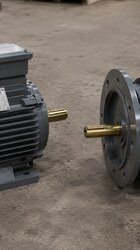
Sonsuz dişli redüktörde bronz çark ve sertleştirilmiş vida detayi

Worm Gear or Helical Worm Gear?

A high ratio with relatively low efficiency is inherent in the classic worm gear. In continuously running applications where energy cost is the priority, helical worm gear reducers — with a helical stage added at the input — are an important alternative: the helical pre-stage raises total efficiency, the same output torque is achieved with a smaller worm body, and the running noise drops. Although the initial investment cost is somewhat higher than the classic type, for drives that run more than 16 hours a day the energy saving pays back this difference in a reasonable period. Based on your operating hours, our sales engineers compare the total cost of ownership between the two types for you at the quotation stage.

The Hidden Cost of a Cheap Reducer: The Bill for the Wrong Choice

The scenario we see most often in the field is this: the buyer collects three quotes and picks the lowest; six months later the bronze wheel wears, the reducer develops backlash and the line stops unplanned. Replacing the worn wheel, together with labour and downtime, usually exceeds the cost of the right reducer in the first place. The second common scenario is an insufficient service factor: a reducer that appears to have enough capacity on the catalogue gets fatigued within a few months under three shifts of shock load. The third is oil and mounting errors: when the wrong mounting position is reported, the oil level ends up wrong and the worm bearings run dry. All of these are costs that can be prevented by sharing the right information at the ordering stage. When evaluating a reducer, look not at the sticker price but together at the electricity cost of efficiency loss, the expected life and spare-part availability. Manufacturer assurance comes in here: HEM Motor supplies the wheel, worm and bearings of every reducer it sells, even years later.

A Realistic Worked Example: Reducer Selection for a Screw Conveyor Drive

Let us select a reducer for a feed-plant screw conveyor with a capacity of 12 tonnes per hour. The conveyor needs: 60 rpm output speed and about 350 Nm of torque. If the motor speed is 1500 rpm, the required ratio is 1500/60 = 1/25. The required motor power works out roughly to 350 x 60 / 9550 = 2.2 kW; against the possibility of the conveyor starting full, choosing 3 kW is a common and correct practice in the field. Since operation is 16 hours a day and the load is moderately shock-loaded, a service factor of 1.25–1.5 is taken; the corrected torque rises to the 450–520 Nm band. In the catalogue table, the body that meets this torque at a 1/25 ratio is HEM90; even if HEM75 appears borderline in the catalogue, in a plant that may switch to three shifts, stepping up one body size is the right decision. The result: a HEM90 complete unit with a 3 kW 1500 rpm IE3 motor, 1/25 ratio, hollow shaft and torque arm. Our sales team performs this entire calculation for you when you share your application data, and presents it in writing together with the quote.

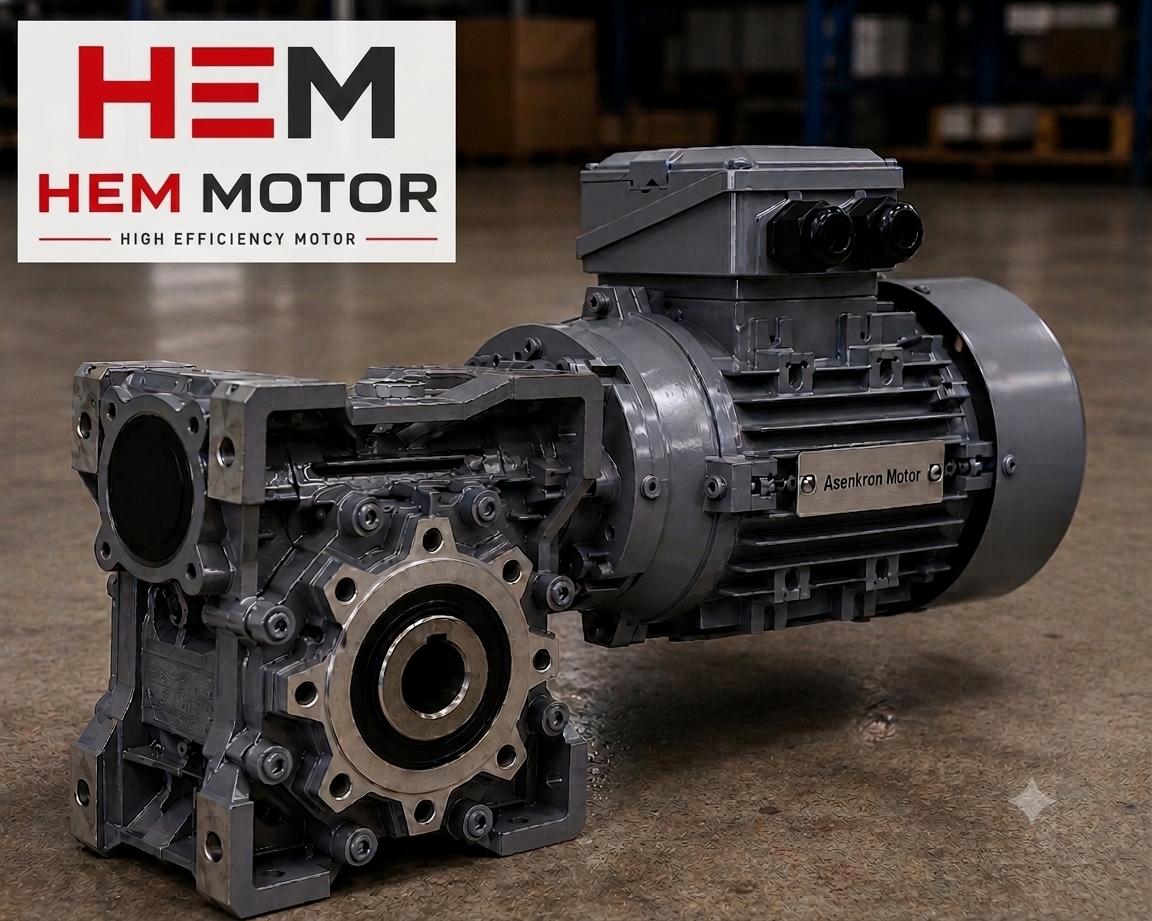
Motorlu sonsuz dişli redüktör grubu sevkiyata hazir

Mounting Position and Lubrication: The Critical Detail Skipped in Orders

Although it does not directly affect the price, the last item that determines whether the delivered product runs correctly is the mounting position. Whether the reducer is mounted horizontally, vertically or on a wall changes the position of the oil fill, level and drain plugs and the required oil quantity. Small bodies usually come sealed with lifetime synthetic oil, while larger bodies are filled according to position. If you state the mounting position at the ordering stage, your reducer ships with the correct plugs and the correct oil level; in the field, all you need to do at first start-up is check the bearing temperature and the sealing.

Stock and Delivery Advantage

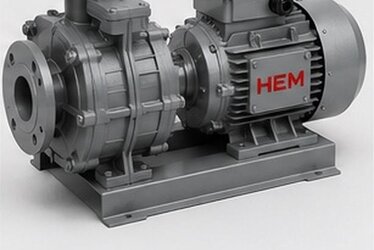
At HEM Motor, reducers are offered from a single source as complete units with the IE3/IE4 electric motors we manufacture in the 0.55–355 kW range. This brings three practical benefits to the buyer: motor-reducer flange compatibility is guaranteed by the manufacturer, there is a single delivery note and a single warranty contact, and common combinations ship very fast from stock in Turkey. If you are wondering how to select the motor side for the belt drives in crusher and stone-crushing plants, we also recommend reading our crusher and stone-crushing plant electric motor selection guide.

A Checklist for Comparing Quotes Correctly

Before you place your reducer quotes side by side, check the items below; you will see that the quote that looks "expensive" is usually the one that is complete:

  • Is the body size the same? If one quote is based on HEM75 and another on HEM63, these two cannot be compared; first fix the correct body according to the torque requirement.
  • Is the wheel material specified? The life difference between centrifugally cast phosphor bronze and standard casting is greater than the price difference.
  • Has the service factor been taken into account? If you did not state your operating regime, the quotes may have been given for the most optimistic scenario.
  • Is the motor included, and in which efficiency class? In a complete unit, whether the motor is IE3 or IE4 changes both the price and the operating cost.
  • Are the accessories within scope? Torque arm, output flange, foot kit and oil fill are separate items in some quotes.
  • Is the delivery time in writing? The difference between delivery from stock and an 8–10 week import lead time is worth far more than a price gap for a line that is experiencing downtime.
  • Who is the warranty and spare-parts contact? When buying from the manufacturer, warranty and the supply of wheel, worm and bearings are gathered under a single contact.

Once you clarify these seven items, the reasons for the price differences become visible, and the decision is made according to the lowest total cost of ownership rather than the lowest sticker price. Our experience is this: when the right body, the right material and delivery from stock come together, the most economical solution almost always comes from the manufacturer channel.

Frequently Asked Questions

What information should I provide when requesting a reducer price quote?

For a fast and accurate quote, these six pieces of information are enough: motor power (or required output torque), input speed, reduction ratio (or output speed), output shaft type (hollow shaft, single/double shaft), mounting position and daily operating hours. If you are replacing an existing reducer, a photo of the nameplate replaces all of this information, and an exact equivalent is confirmed from stock.

Should I buy a complete unit with motor, or the reducer separately?

For a new installation we recommend the complete unit: flange and shaft compatibility is tested at the manufacturer, the risk of mounting error is eliminated, and you get a more advantageous price overall. If your existing motor is sound, we also supply on its own a PAM-input reducer suited to your motor's body size and B5/B14 flange dimension.

What range do stock reducers cover, and how soon are special ratios delivered?

Across all bodies from HEM30 to HEM130, the common ratios (1/10, 1/15, 1/20, 1/25, 1/30, 1/40, 1/50, 1/60, 1/80, 1/100) and the majority of combinations with 0.18–15 kW motors ship from stock. For non-stock special ratios and configurations, the lead time is stated in writing at the moment of ordering, and we work with timelines well below those of import alternatives.

Get a Quote

For your worm gear or helical worm gear reducer requirement, send us your application details; let us make the body selection and torque verification free of charge, and send you a manufacturer price the same day together with stock availability and delivery time. You can reach us by phone at +90 (532) 345 49 86 or create a written request through our contact us page. HEM Motor: manufacturer assurance, Turkey stock and fast delivery since 1979.