English
 Türkçe

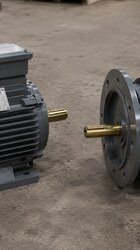
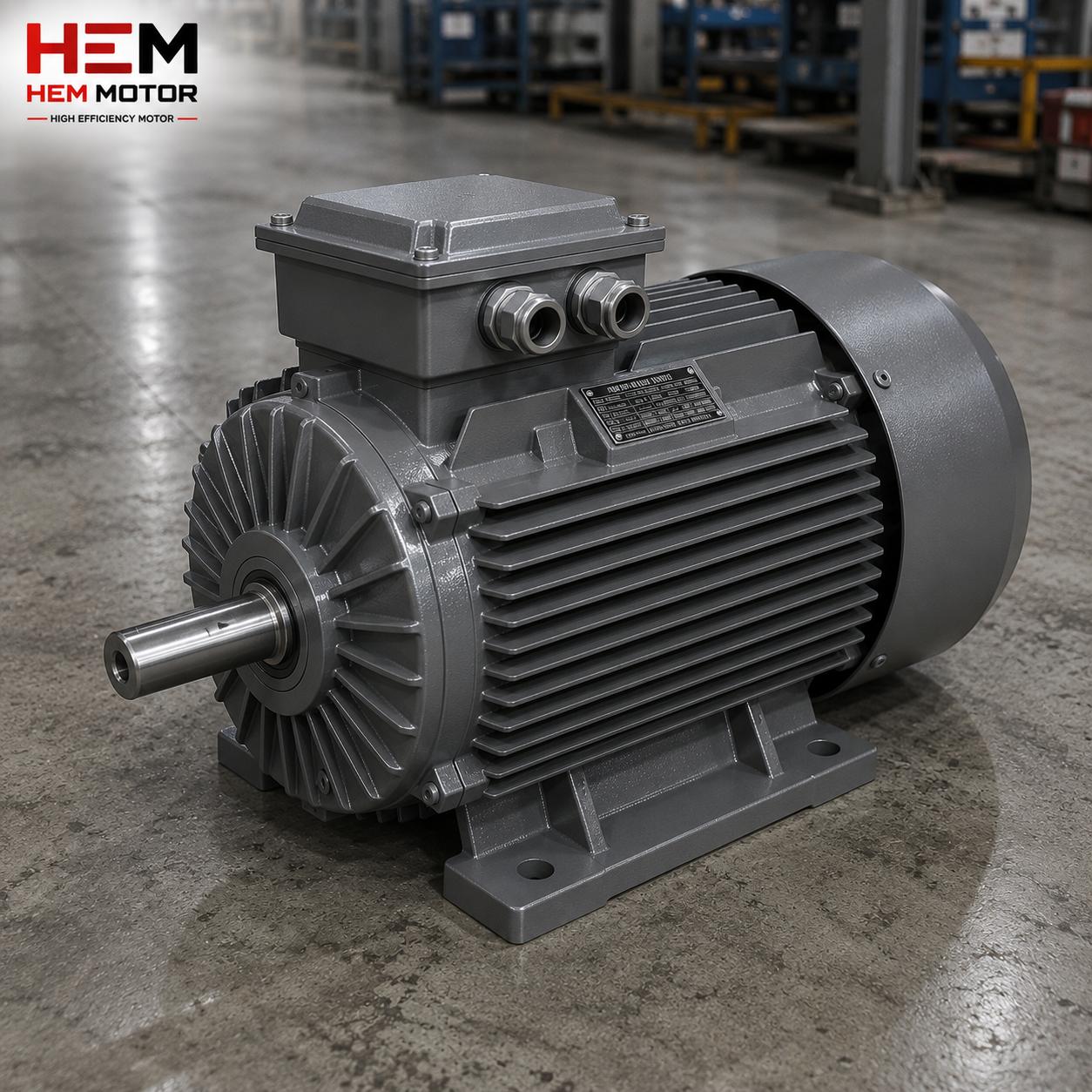

The first question asked when buying an electric motor is usually "how much does it cost?" Yet that question, on its own, is misleading. Two motors of the same power (kW) can show very different figures on the price tag, and behind that gap lies a series of technical choices ranging from efficiency class and body material to mounting type and warranty. The purpose of this guide is to break down the line items that make up the price one by one, so you can see which configuration delivers the lowest total cost for your application. Because the right question is not "what is the price?" but "which configuration meets this need at the lowest total cost?"
A well-budgeted motor purchase is not just about finding the cheapest option; it is about selecting the product with the lowest total cost of ownership (TCO), one that is available in stock and fits the application exactly. To make a sound comparison of current electric motor prices, you first need to understand which components the price is built from.
The Core Line Items That Make Up Motor Price
The price of an electric motor is not a single number but the sum of several technical decisions. Two motors with the same kW rating are priced differently because of differences in the items below. Recognizing these items is the only way to compare quotes apple-to-apple.
1. Efficiency Class (IE2 / IE3 / IE4 / IE5)
The efficiency class is one of the most important items that determine price. A higher efficiency class requires more and higher-quality copper, better lamination and more precise manufacturing, which raises the purchase price. But there is a critical balance here: a high-efficiency motor consumes less electricity during every hour it runs. In a high-runtime application, the extra purchase cost of the higher class is recovered over time through the lower energy bill. That is why the efficiency-class decision should be made by looking at running hours, not at the purchase price alone.
2. Body Material
The material of the motor body determines both price and suitability for the application:
- Aluminum-body motors: Light, corrosion-resistant and usually more affordable; common in small and medium powers.
- Cast-iron-body motors: Heavier and more durable, superior against mechanical shocks and vibration; preferred in heavy industrial applications and high powers, and usually priced higher.
3. Mounting Type (B3 / B5 / B35)
The motor's connection form (foot-mounted B3, flange-mounted B5, foot-and-flange B35) affects both manufacturing cost and suitability for the application. Choosing the wrong mounting type creates incompatibility in the field and extra adaptation cost; that is why the mounting type must be clarified at the quotation stage.
4. Origin, Warranty and Accessories
The origin of manufacture, the brand, the warranty period and the accessories that come with the motor (terminal box type, protection class IP55/IP66, thermal protection, encoder, brake, forced-cooling fan) directly affect the price. A longer warranty and a higher protection class raise the initial price but can lower the total cost by reducing the risk of failure and downtime.
Same kW, Different Price: Why?
The situation that confuses many buyers is this: both motors are, say, 7.5 kW, but one is noticeably more expensive. The reason is the differences in the items we just listed. The more expensive motor may be in a higher efficiency class, may have a cast-iron body, a higher protection class and a longer warranty, or a special winding compatible with a variable speed drive. The "cheap"-looking motor lacks some of these features. That is why, when comparing two quotes, not only the kW but all the technical items must be aligned.
The Logic of Total Cost of Ownership (TCO)
The real cost of a motor is far more than its label price. The Total Cost of Ownership (TCO) consists of three main components:
- Purchase cost: The initial price of the motor. Most often people look only at this item, yet it is frequently a small part of the total.
- Energy cost: The cost of the electricity the motor consumes over its lifetime. In a high-runtime motor, this item rises far above the purchase price and is the largest component of TCO.
- Maintenance and downtime cost: Spare parts, periodic maintenance and especially the production loss caused by unexpected failure. A motor that stops on a critical line can cause a loss many times its price.
TCO logic is the key to building the budget around real need. In an application running thousands of hours a year, a more expensive but high-efficiency motor almost always yields a lower TCO. By contrast, in an application running a few hours a day, the energy item shrinks, so the purchase price gains weight and a more affordable motor makes sense. That is why one should not blanket-buy "the cheapest" or "the most expensive," but optimize according to the operating profile.
Budgeting: Clarify the Need First
A correct budget starts with a correct technical specification. Answering the following questions before asking for a price determines both the right product and the right budget:
- What is the application? (pump, fan, compressor, conveyor, crane, etc.)
- What is the required power (kW) and the speed/number of poles?
- How many hours per day/year will the motor run?
- Is it a continuous fixed load, or is there variable load and a drive requirement?
- What are the ambient conditions? (dust, humidity, temperature, outdoor)
Once these questions are answered, you avoid spending money either on an over-specified expensive motor or on a cheap motor that will fall short. Correct budgeting is finding the configuration that fits the need exactly. For broader options, you can evaluate three-phase electric motor and efficient industrial motor alternatives together.
Reading the Proforma Invoice Correctly
The proforma invoice from your supplier is the most important document that lets you see the items making up the price. A good proforma should clearly state: the exact motor type and power, efficiency class, speed, body material, mounting type, protection class, warranty period, any accessories, delivery time and stock status. When comparing two proformas, make sure these items are identical one-to-one; otherwise you compare apples to oranges.
In terms of stock and supply, conveying your need with a clear specification lets your supplier give you a fast and accurate quote. A vague request leads both to wrong pricing and to wasted time. Clear technical specifications are the shortest route to quickly matching the right product in stock and reaching a realistic budget.
How Price Behaves Across the Power Range
Motor prices do not rise linearly with power; each power range has its own cost behavior. At small powers (0.18-3 kW) the material cost is low but the price per kW stays relatively high, because the fixed manufacturing and assembly costs take a larger share in a small motor. At medium powers (4-37 kW) the unit cost is at its most balanced point and the variety of options is highest. At high powers (45 kW and above), the amount of material, cooling solutions and special winding requirements pull the price noticeably upward. For this reason, when sizing an application, you should also factor in the cost impact of stepping up to the next standard power; sometimes a small power difference causes a larger jump in price than expected.
Speed also affects price. Low-speed (6- and 8-pole) motors are usually more expensive than their high-speed (2-pole) equivalents, because producing the same power at a lower speed requires a larger body and more material. The question of whether your application will be direct drive or run through a gearbox directly affects both the speed and the price decision.
The Budget Impact of the Drive and Accessories
Most modern applications are now planned together with a frequency converter (drive/VFD). The drive adds an extra item to the motor price, but by providing energy savings, soft starting and precise speed control it often pays for itself. When building the budget, it is more correct to evaluate the drive not as a separate line but as a system together with the motor. Similarly, accessories such as thermal protection (PTC/PT100), a high protection class and special insulation raise the initial price, but they lower the total cost by increasing motor life and reliability.
- Frequency converter: Provides energy savings and flexibility in variable-load applications; it should be included in the budget as a system.
- Thermal protection sensors: Monitor winding temperature to prevent early failure; a small cost that reduces a large risk.
- High protection class (IP66): Extends motor life in dusty and humid environments and lowers maintenance cost.
Frequently Asked Questions
Why are two motors of the same kW priced differently?
Because power alone does not determine the price. Efficiency class (IE2/IE3/IE4/IE5), body material (aluminum/cast iron), mounting type, protection class, warranty period, origin and the accessories that come with the motor all directly affect the price. When comparing two quotes, you must ensure all these items are the same.
Should I always buy the highest efficiency class?
No. A high efficiency class repays its extra cost through a lower energy bill only if the motor runs a lot. In an application running just a few hours a day, the purchase price is more decisive, so a more affordable motor may make more sense in terms of total cost. The decision should be made according to running hours.
Should I build my budget on the purchase price alone?
No. The right approach is Total Cost of Ownership (TCO) logic: evaluating purchase, energy and maintenance-downtime costs together. Especially in high-runtime motors, the energy cost overtakes the purchase price in a short time, so building the budget on the label price alone would be misleading.