English
 Türkçe


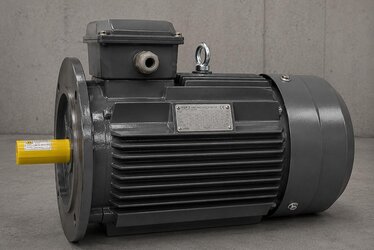
When ordering an electric motor, most plants look only at power, speed and connection type. Yet ordering the motor on its own means completing just half of the investment. On the day the motor goes into the panel, if the hardware that should protect it against overload, phase faults and winding temperature is not ready, commissioning stalls, the field team waits and a last-minute supply scramble begins. A motor run without protection also tends to announce its very first fault in the most expensive way possible: a burnt winding.
In this article we cover the protection devices that should be ordered together with the motor, how these elements match the panel, and the items that belong on the order list. The goal is to assemble a complete package that can be commissioned the moment the motor is delivered. When you source a motor from stock, building a single quote that also covers the protection elements is the soundest path in terms of both time and cost.
Why Plan Protection Together With the Motor?
A motor is a rotating machine that houses copper windings, bearings and a rotor. All of these components are designed to operate within a defined window of temperature, current and mechanical load. Step outside that window and damage is only a matter of time. The task of the protection hardware is to keep the motor inside this safe window and, the moment it leaves it, to take the motor out of circuit quickly.
The most common consequence of not planning protection together with the motor is that the motor gets run "temporarily" unprotected. The field team is under pressure to start the machine, the protection elements have not yet arrived, and the motor is connected straight to the grid. This temporary solution usually becomes permanent, and at the first overload, the first lost phase or the first jam, the winding burns out. Sourcing a brand-new motor is many times more expensive than buying the right protection element in the first place.
For this reason, while making the motor selection, the protection architecture should be put on the table together with the electric motor solutions that feed it. As soon as power, speed and frame type are settled, the next question is: "Which elements will protect this motor and which of them are included in the order?"
Protection Against Overload: Thermal Relay and Motor Protection Circuit Breaker
The hazard a motor meets most often is overload. When load rises the motor draws more current, more current means more heat, and that heat ages the winding insulation. A thermal overload relay continuously monitors the current the motor draws and, if the current stays above its set value for a defined period, trips the contactor and stops the motor.
Selecting the thermal relay correctly requires knowing the motor's nameplate current. The relay is set according to this current. Remember that a thermal relay does not work alone; it operates together with a contactor. For this reason the following trio should nearly always be ordered together with the motor:
- Contactor: The main switching element that brings the motor in and out of circuit; its coil voltage must match the panel's control voltage.
- Thermal overload relay: Set to the motor's nameplate current, it protects the motor during overload.
- Motor protection circuit breaker (MPCB): An alternative that offers both short-circuit and overload protection in a single body, preferred in compact panels.
At small and medium powers, a motor protection circuit breaker can replace the contactor-plus-thermal-relay pair with a single device. Which approach is chosen depends on panel architecture, control needs and available stock. Clarifying this choice at the quote stage prevents incomplete material from reaching the field.
Protection Against Phase Faults: Phase Sequence and Phase Loss Relay
One of the most insidious threats to three-phase motors is phase loss. If one of the three phases is interrupted for any reason, the motor does not stop; it tries to keep turning by drawing far higher current through the remaining two phases. Within minutes this overheats the winding. While a thermal relay catches this to a degree, a phase protection relay that monitors phase events directly provides much faster and more reliable protection.
Phase protection relays usually combine three functions: they monitor phase loss, phase sequence error and phase imbalance. Phase sequence protection is especially critical in applications such as pumps, cranes and compressors where running in the wrong direction can damage the machine. A wrong phase sequence can turn a pump backward, lowering efficiency and risking mechanical damage.
For this reason, in directional applications such as pumps and fans, adding a phase protection relay to the quote alongside the motor eliminates surprises on commissioning day. In three-phase motor applications, this element is the first line of defence that protects the winding.
Protection Against Winding Temperature: PTC Thermistor and PT100
A thermal relay monitors current but does not directly measure the actual winding temperature. With poor ventilation, clogged cooling fins, high ambient temperature or frequent starting, the winding can overheat even when the current looks normal. This is where temperature sensors embedded in the winding come into play.
There are two common solutions. PTC thermistors sharply increase their resistance once a threshold temperature is reached; a thermistor protection relay detects this change and stops the motor. PT100 sensors measure temperature continuously and numerically, offering both protection and monitoring. An important point: these sensors are usually embedded in the winding while the motor is being manufactured. They therefore have to be requested at order time; adding them after delivery is impractical.
- In frequent start-stop applications, PTC thermistor protection provides strong extra safety.
- In critical processes that need continuous monitoring and logging, PT100 is preferred.
- Both sensors must be stated clearly on the order note; otherwise the standard motor arrives without sensors.
Panel Compatibility: Thinking of the Hardware as a Whole
Selecting protection elements correctly one by one is not enough; they must match each other and the panel. The contactor coil voltage must equal the control circuit voltage. The thermal relay's setting range should bracket the motor nameplate current; a relay sitting at the very edge of its range will not operate reliably. The space that the phase relay and thermistor relay occupy on the DIN rail must be accounted for when sizing the panel.
The easiest way to ensure all this compatibility is to source the motor and the protection elements from a single source, within a single quote. That way the thermal relay suited to the nameplate current, the contactor with the correct coil voltage and the sensors embedded in the winding all arrive pre-matched. For a complete package you can review our product and solution range and plan the right protection set for your motor together.
What to Write on the Order List
So that no item is missing on commissioning day, it is a good habit to write the following onto the order note:
- Motor nameplate current and a thermal relay setting range suited to it.
- Contactor coil voltage (for example, the panel control voltage).
- Whether a phase protection relay is needed and whether phase sequence protection is required.
- A request to embed a PTC thermistor or PT100 in the winding.
- Whether a motor protection circuit breaker or a contactor + thermal relay combination is preferred.
This short list lets the quote be completed in one pass and ensures a complete package reaches the field. Thinking of protection not as a separate item from the motor but as an inseparable part of it both protects the initial investment and lays the foundation for years of fault-free operation.
How the Starting Method Affects Protection
How the motor is started directly affects the protection hardware it needs. In the direct-on-line (DOL) method, the motor draws a starting current several times its nameplate current at the moment of start-up. This brief high current must be considered in the rating and selection of the thermal relay; otherwise an unnecessary trip occurs at every start. With star-delta starting the inrush current is reduced, but two contactors and a timer relay come into play; in this case the protection architecture expands accordingly.
In systems using a soft starter or a frequency inverter, the situation is a little different. Because these devices control the starting current, they reduce mechanical strain; however, protecting the motor against winding temperature is still necessary. Especially on motors running continuously at low speed via an inverter, the motor's own cooling fan may not push enough air and the winding temperature can rise. For this reason, PTC thermistor protection is almost always recommended in inverter applications.
To summarise the protection need by starting method:
- Direct-on-line: A thermal relay rated for high starting current and the correct setting are critical.
- Star-delta: Two contactors, a timer relay and a suitable thermal relay must be planned together.
- Soft starter: Start is controlled; winding temperature protection is still needed.
- Frequency inverter: Because cooling weakens at low speed, PTC thermistor protection is recommended.
Panel Layout and Heat Management
Placing the protection elements correctly in the panel is as important as selecting them correctly. Thermal relays, contactors and drives all produce heat while running. Letting this heat build up inside the panel lowers the reliability of both the protection elements and the other devices in the panel. A thermal relay operating at a high ambient temperature can respond differently from its set value.
For this reason, when sizing the panel, the heat produced by the protection elements must be accounted for, and panel ventilation or a cooling fan planned if needed. Leaving the minimum clearances recommended by the manufacturer between devices eases both ventilation and access during maintenance. When planning a complete protection package, thinking of the panel layout from the start eliminates surprises in the field.
Planning all these elements under a single supply logic ensures the motor and the protection elements arrive fully matched. A well-designed package speeds up commissioning day, lightens the load on the field team and extends the motor's life.
The Return on the Protection Investment
A protection element may look like a small item next to the cost of the motor. But the damage this small item prevents is enormous. Rewinding a burnt winding or replacing the motor entirely means both a direct cost and production downtime. Every hour production stops costs most plants far more than the motor itself.
The right protection hardware minimises these risks. A thermal relay that stops the motor on overload, a phase relay that saves the winding on phase loss and a thermistor that monitors temperature directly work together to keep the motor inside the safe window. The return on this investment usually pays for itself many times over with a single prevented failure. For this reason, protection should be seen not as a cost item but as one of the most profitable forms of insurance.
Frequently Asked Questions
Are all protection elements necessary even for a small motor?
Whatever the power, a three-phase motor must be protected against overload and phase loss. At small powers, a motor protection circuit breaker (MPCB) is often sufficient on its own, offering both short-circuit and overload protection in one body. A winding temperature sensor is still useful even on small motors that start and stop frequently or run at high temperatures. So basic protection is needed in every power class; extra sensors are added according to how demanding the application is.
Can I add a PTC thermistor after the motor is delivered?
In practice this is very difficult, because PTC thermistors and PT100 sensors are embedded in the winding during manufacturing. Adding a sensor after delivery means opening the winding and effectively rewinding the motor, which is both costly and risky. For this reason, if a temperature sensor is needed it must be stated at order time. If you want a sensor on a motor sourced from stock, the cleanest approach is to settle it at the quote stage.
Why is a phase protection relay needed when there is already a thermal relay?
A thermal relay primarily protects by monitoring overcurrent and can catch phase loss indirectly, but its response can be slow. A phase protection relay, on the other hand, monitors phase loss, phase imbalance and phase sequence error directly and reacts much faster. Phase sequence protection is also critical in applications such as pumps, cranes and compressors where the wrong rotation direction can cause mechanical damage. The two relays do not replace each other; they work to complement one another.