English
 Türkçe

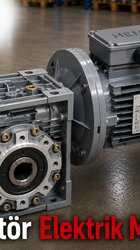
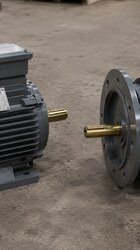
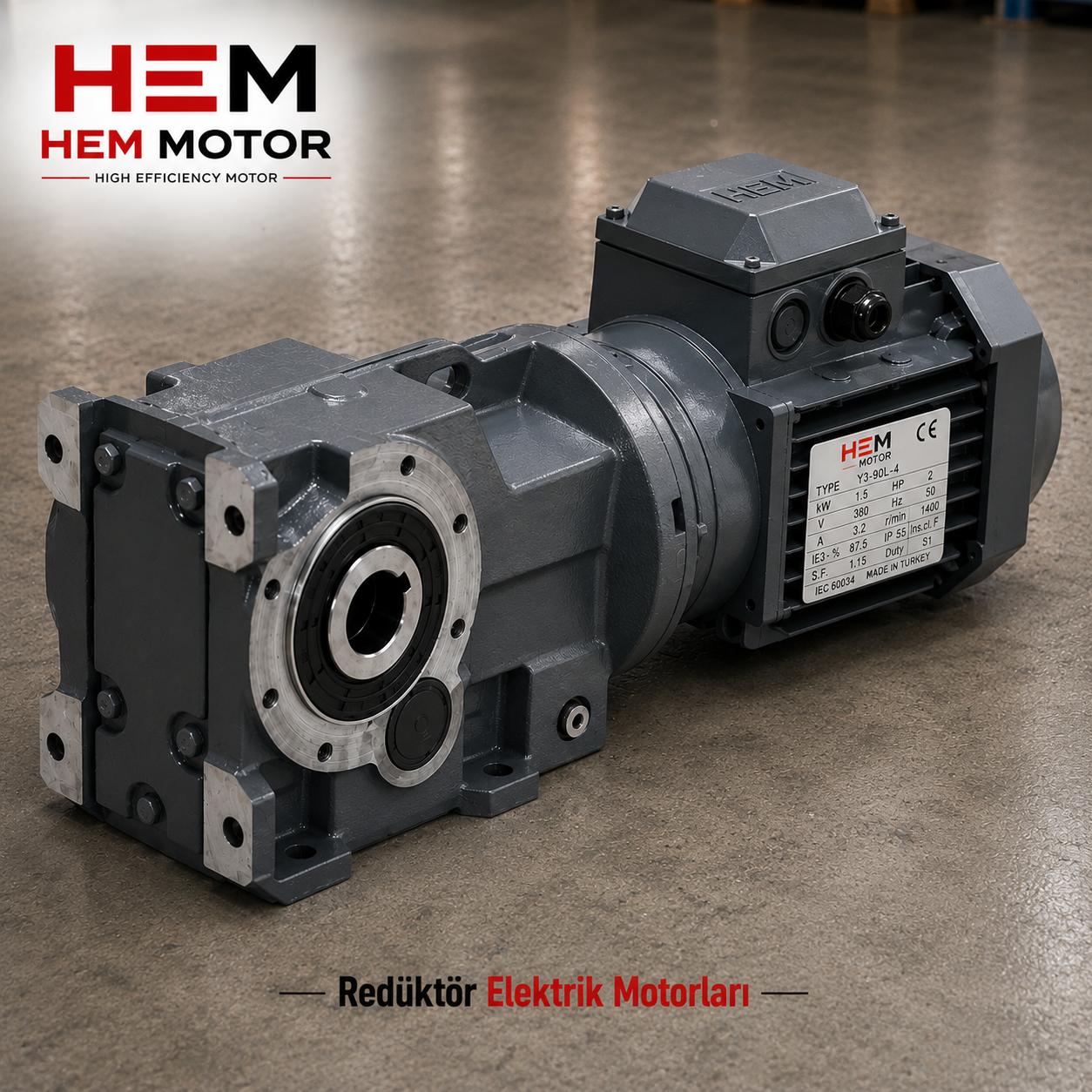

The most common mistake in choosing a reducer is making the decision on purchase price alone. Yet a reducer generates cost not by the price you pay on the day you buy it, but by the sum of the energy it consumes over years, the maintenance it demands and the line stoppages it causes. In engineering terms this sum is called the cost of ownership, and it is what truly determines the choice between a worm gear reducer and a K-series helical bevel reducer. In this article we cover the real differences between the two reducer families in efficiency, heating, maintenance and application fit; and we explain, scenario by scenario, in which job the helical bevel pays itself back quickly and in which the worm gear is still the sensible choice.
Worm gear reducers have been used confidently in industry for decades; they are cheap, compact and practical solutions delivering right-angle drive. However, the friction-based power transmission inherent in their working principle puts them at an efficiency disadvantage in certain jobs. K-series helical bevel reducers, by contrast, transmit power with far lower loss thanks to their gear-tooth contact geometry. A correct comparison of the two technologies comes down to understanding the fundamental difference between sliding friction and rolling tooth engagement.
Cost of Ownership: The Real Decision Criterion
To see a reducer's true cost you must look beyond the price tag. Two reducers doing the same job, even with close purchase prices, can generate completely different total costs over years. Four core items make up this cost:
- Energy consumption: a low-efficiency reducer continuously draws more electricity to do the same work; on long-running lines this difference reaches annual figures larger than the reducer itself.
- Heat loss: inefficiency turns into heat; an overheating reducer degrades the oil faster, shortens seal life and raises the ambient temperature.
- Maintenance frequency: high heat and wear mean more frequent oil changes and shorter overhaul intervals.
- Line stoppage: an unexpected reducer failure is the most expensive item, counted as lost production and emergency intervention cost.
Where Does the Efficiency Gap Come From?
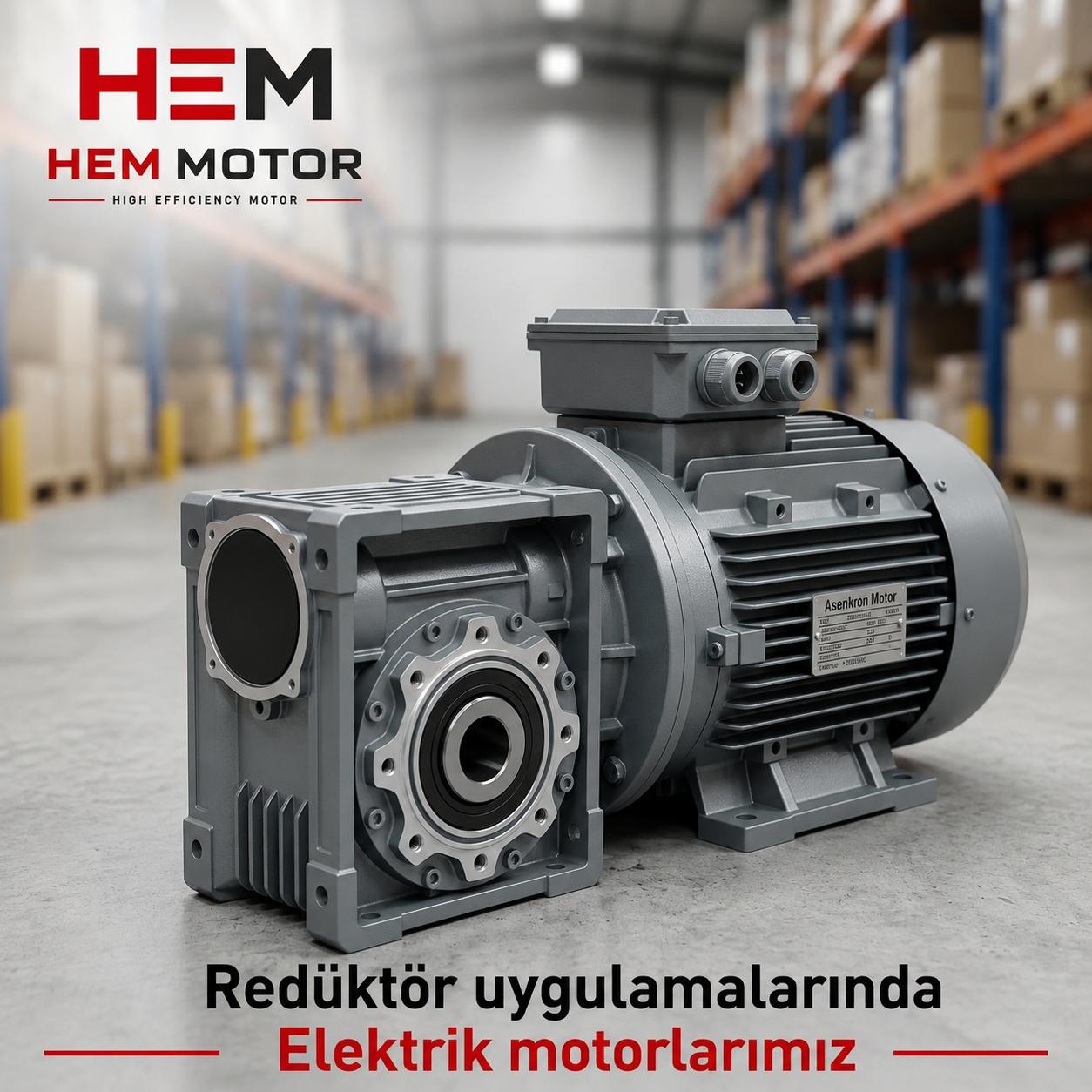
The most decisive difference between the two reducer families is efficiency, and that difference arises from the power transmission principle. In a worm gear reducer power is transmitted as the worm slides while turning over the gear wheel; this sliding inherently produces friction and therefore energy loss. As the reduction ratio rises this loss grows; in high-ratio worm reducers efficiency can drop markedly.
In a K-series helical bevel reducer, by contrast, power is transmitted as helical and bevel gears engage by rolling. Rolling contact produces far less friction than sliding; this is why helical bevel reducers offer high and stable efficiency at every reduction ratio. This efficiency gap feeds directly into the energy bill when the reducer runs for long hours a day.
- At low ratios: the efficiency gap between the two types is relatively small; here the worm gear can still be economical.
- At high ratios: the worm gear's efficiency falls while the helical bevel holds its efficiency; the gap becomes marked and energy saving comes to the fore.
- In continuous operation: on a line turning for long hours a day, the helical bevel's efficiency advantage quickly closes the purchase-price gap.
In Which Job Does the Helical Bevel Pay Itself Back?
Although the helical bevel reducer usually has a higher purchase price than the worm gear, in certain scenarios it earns that difference back quickly. Here are the cases where the helical bevel is the clear winner:
- Long running hours: on conveyor, mixer and line drives running many hours a day, often without interruption, the efficiency gap turns directly into energy saving.
- High power: as power grows, the energy cost created by the efficiency gap grows too; on large drives the helical bevel is a net advantage.
- High reduction ratio: as the ratio rises the worm gear's efficiency falls; the helical bevel provides marked superiority at this point.
- Heat sensitivity: in applications where ambient temperature is critical, the low-heat helical bevel reduces the need for extra cooling.
In these scenarios the energy and maintenance saving the helical bevel provides usually repays the purchase-price gap within a few years, and turns into pure gain thereafter. When determining the reducer type suited to the application, the right choice can be made by reviewing our broad reducer range according to power, ratio and operating regime.
In Which Job Is the Worm Gear Still Sensible?
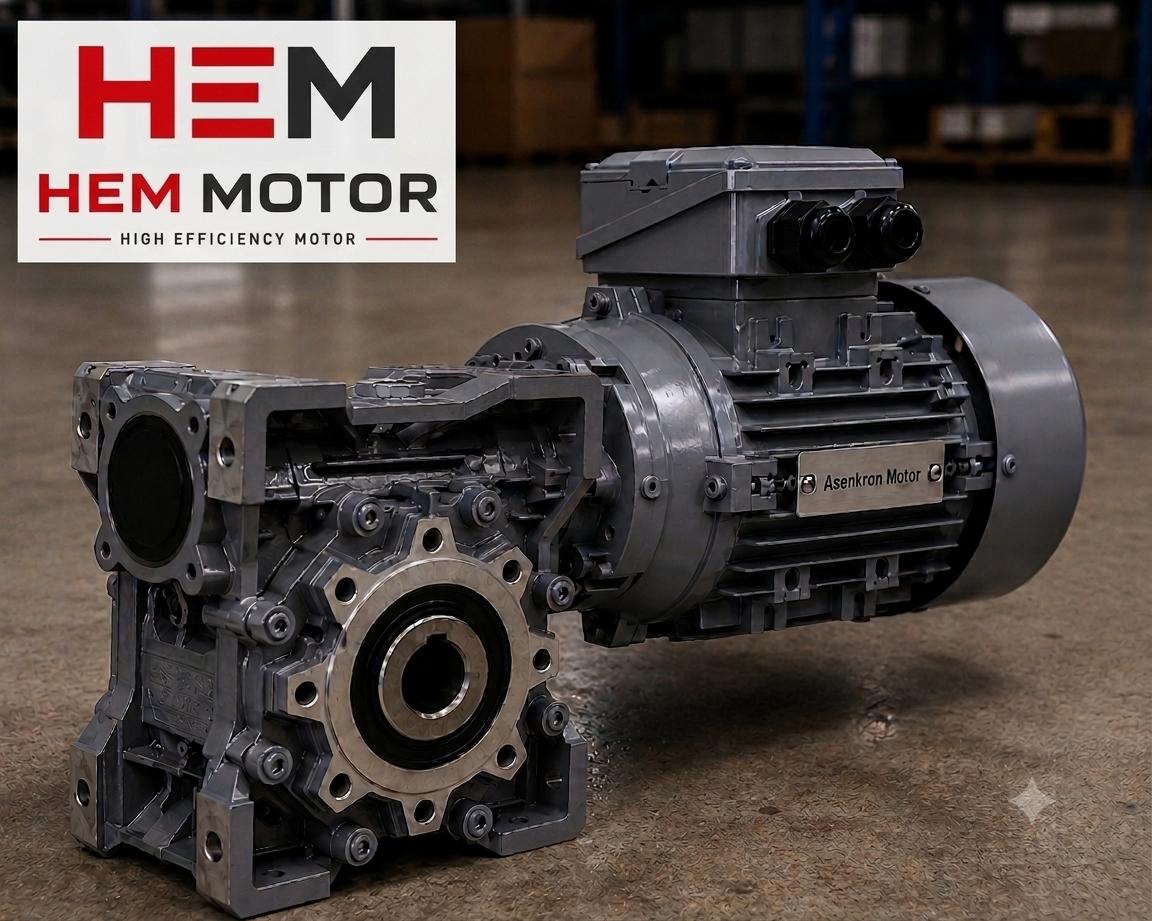
Despite the helical bevel's efficiency superiority, the worm gear reducer is still the smart choice in some applications. The most expensive solution is not always the right one for every job; the right decision comes from looking at the real need of the work:
- Short, infrequent operation: on a drive running only a few minutes a day or occasionally, the annual effect of the efficiency gap is low; here the worm gear's low purchase price stands out.
- Need for self-locking: the worm gear's natural self-locking feature reduces the need for an extra brake in lifting and positioning applications where the load must not run back.
- Compact right-angle drive: in very tight mounting spaces, the compact structure of the worm gear provides a practical advantage.
- Quiet operation: in some applications requiring low noise, the smooth running of the worm gear may be preferred.
As can be seen, the choice is made not with the question "which is better" but "which is more sensible for this job". When running hours, power, ratio and special requirements are evaluated together, the right reducer type becomes clear.
Decision Steps for the Right Choice
To make a sound decision between the two reducers, the following steps offer a practical road map:
- Define the operating regime: how many hours a day will the reducer run? Long, continuous operation favours the helical bevel; short, infrequent operation favours the worm gear.
- Clarify power and ratio: high power and high ratio amplify the helical bevel's efficiency advantage.
- Question special needs: requirements such as self-locking, compactness or low noise may make the worm gear sensible.
- Calculate total cost: add energy, maintenance and possible downtime cost to the purchase price to make the real comparison.
When these steps are complete, the decision rests on data rather than guesswork. Evaluating suitable models for the right power and ratio and obtaining a clear quote is the most practical way to learn both stock status and lead time in advance.
Heating and Lubrication: Two Factors That Set Maintenance Cost
The most concrete reflection of the efficiency gap is heat. The friction-based worm gear reducer turns part of its inefficiency into heat, and that heat affects the reducer's entire maintenance economy. In the helical bevel reducer, by contrast, low friction means low heat and therefore a more comfortable maintenance regime. The maintenance difference between the two technologies becomes clear at these points:
- Oil life: in an overheating reducer the oil oxidises faster and loses its properties, meaning more frequent oil changes. In a low-heat helical bevel reducer the oil-change interval lengthens.
- Seal and gasket life: high temperature hardens seals and makes them prone to leaking; low heat extends the life of these parts.
- Environmental effect: a reducer producing high heat also warms its surroundings; in temperature-sensitive plants this creates an extra cooling load.
- Overhaul interval: low heat and low wear extend the life of gears and bearings, delaying major overhauls.
For this reason heating is not only an instant performance indicator but also a herald of the reducer's long-term maintenance cost. When selecting a reducer suited to the operating regime, taking lubrication and heat management into account too is an inseparable part of calculating the cost of ownership correctly.
Scenario-Based Quick Decision Guide
To make the choice between the two reducers concrete, it helps to summarise the scenarios most often met on site and the sensible preference in each:
- Main conveyor running all day: long hours, high power and continuous load; the helical bevel is the clear winner.
- Occasionally running gate or damper drive: short, infrequent operation; the worm gear is economical and sufficient.
- Inclined conveyor or lifting: application where the load must not run back; the worm gear's self-locking feature is an advantage.
- High-ratio continuous mixer: high reduction and long operation; the helical bevel's efficiency is decisive.
- Very tight mounting space: compactness is the priority; the worm gear's structure offers a practical solution.
These scenarios show clearly why a "one reducer for every job" approach does not work. The right choice is set according to the job's operating regime, power, ratio and special requirements. Reviewing our broad motor and reducer range to clarify the model best suited to the application is a practical starting point.
Frequently Asked Questions
Is a helical bevel reducer always better than a worm gear?
No, not always. The helical bevel provides marked superiority in efficiency and energy saving especially in applications running long hours, at high power and at high reduction ratio. However, in applications running only a few minutes a day, requiring self-locking or mounted in a very tight space, the worm gear can still be more sensible and economical. The right choice is made with the question "which is more suitable for this job", not "which is better in general".
How much difference does the efficiency gap make in practice?
The impact of the efficiency gap depends directly on running hours. On a drive running only briefly each day the difference can be negligible. But on a conveyor or mixer running long hours a day, often without interruption, the helical bevel's higher efficiency accumulates as serious energy saving across the year. In high-power, high-ratio applications this saving usually repays the purchase-price gap within a few years.
Why is the worm gear's self-locking feature important?
Self-locking means the reducer mechanically prevents the load from running back when it stops. This feature is valuable especially in applications such as lifting, positioning and inclined conveyors where the load must not slip back, because it can reduce the need for a separate brake system. Since this feature is not naturally present in helical bevel reducers, the worm gear can be a sensible choice if self-locking is a critical requirement.